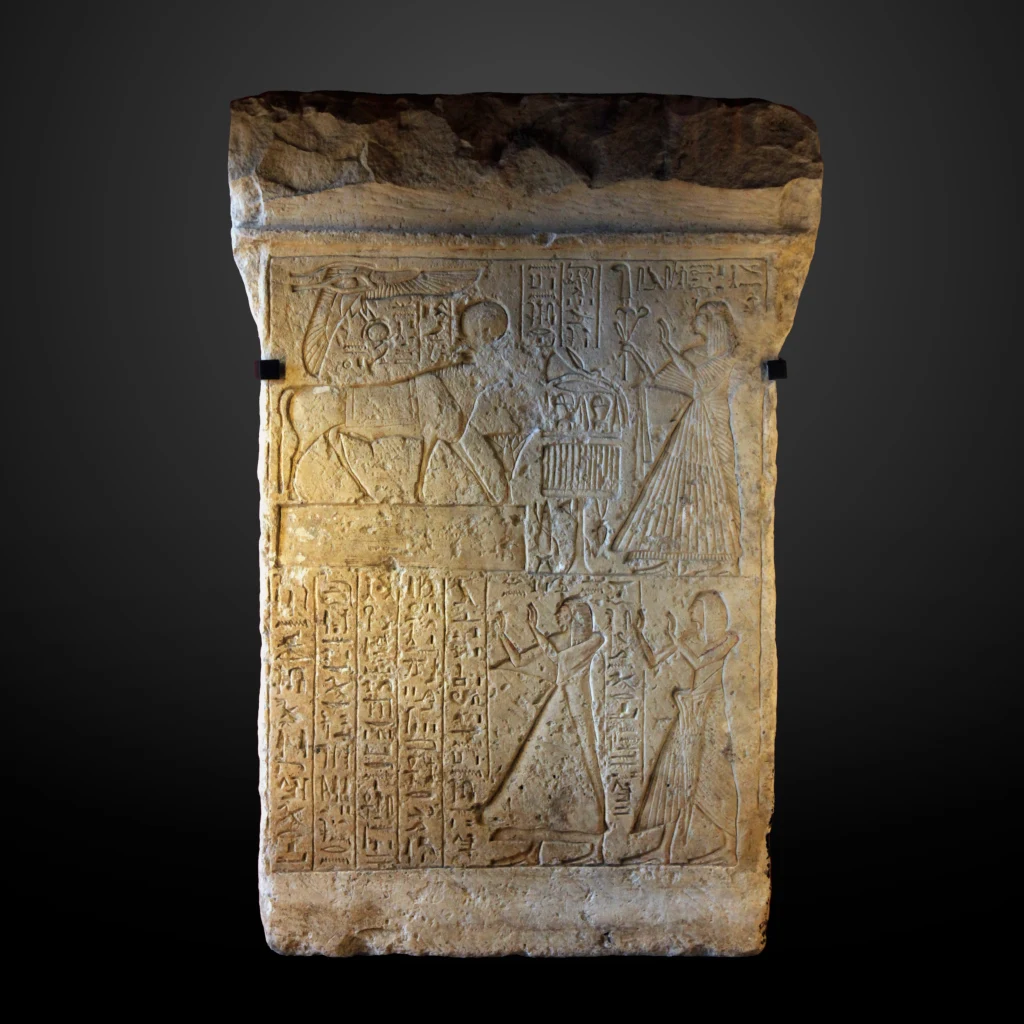
Stele with the Adoration of the Apis Bull
Details
The story
The Apis was a living bull, kept in a temple at Memphis as the sacred animal of the god Ptah. When one died it was mummified and laid in a tomb cut into the desert at Saqqara, the place later called the Serapeum. Under Ramesses II these burials were reorganised, and a long underground gallery with side chambers, now known as the Lesser Vaults, was dug so that one bull after another could be buried along it. Officials left stelae there, and this one was found in a collapsed room of those vaults on the 26th of February 1852, during the excavations of the French archaeologist Auguste Mariette. In the upper scene the bull stands on a base before a table of offerings, a sun disc between its horns and a cloth over its back, with a winged eye spread above it. Facing it, a man in a pleated kilt and sleeved shirt stands in adoration, holding a fan and a crook sceptre. Below, two more men raise their hands beside the columns of a hymn. The inscriptions name a Merenptah with the titles royal scribe, general-in-chief and eldest son of the king. Under Ramesses II those titles point to the king's son of that name, who would later succeed him on the throne. The stele also names men of his household, his scribe Tchay, a scribe called Ta, and a follower named Sementaouy.
More works by Unknown Egyptian artist (Ramesside period)
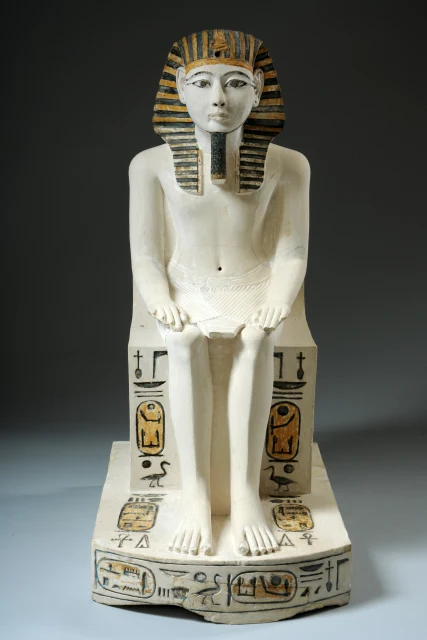 Cult Statue of Amenhotep IUnknown Egyptian artist (Ramesside period), -1242
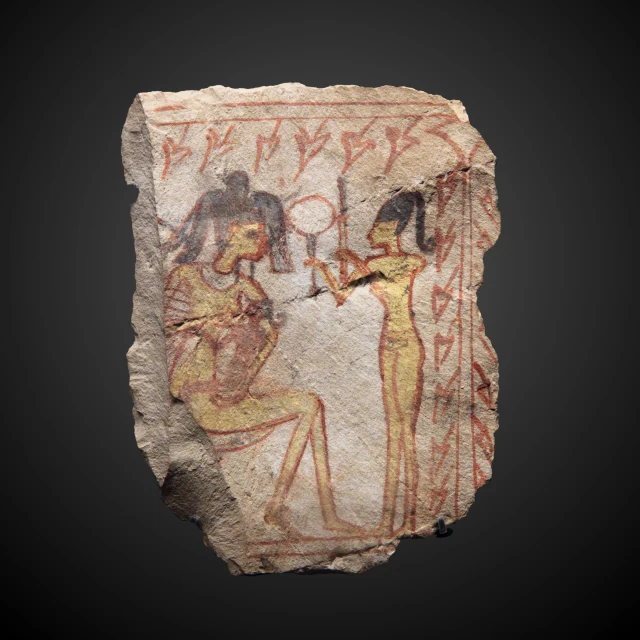 Figured Ostracon: Servant Presenting a Mirror to Her MistressUnknown Egyptian artist (Ramesside period), -1182
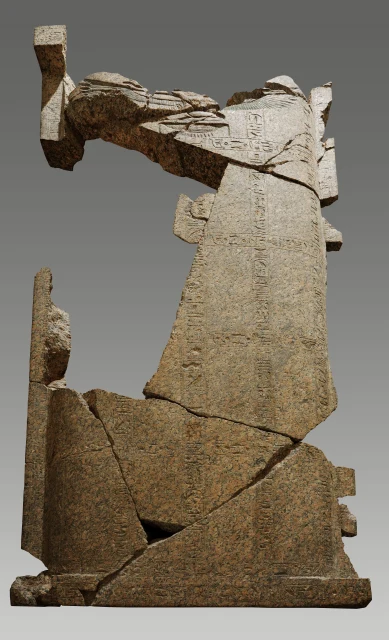 Lid of the Sarcophagus of Queen NefertariUnknown Egyptian artist (Ramesside period), -1246
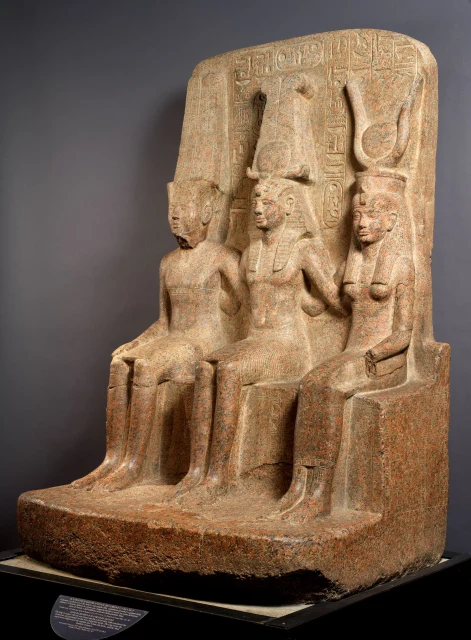 Ramesses II Seated between Amun and MutUnknown Egyptian artist (Ramesside period), -1246
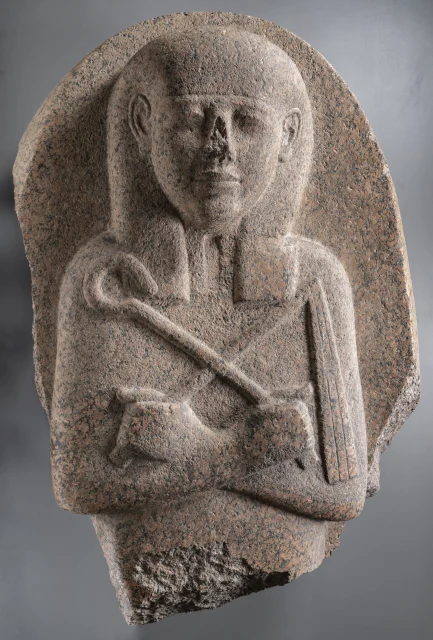 Sarcophagus Lid of Prince KhaemwasetUnknown Egyptian artist (Ramesside period), -1168