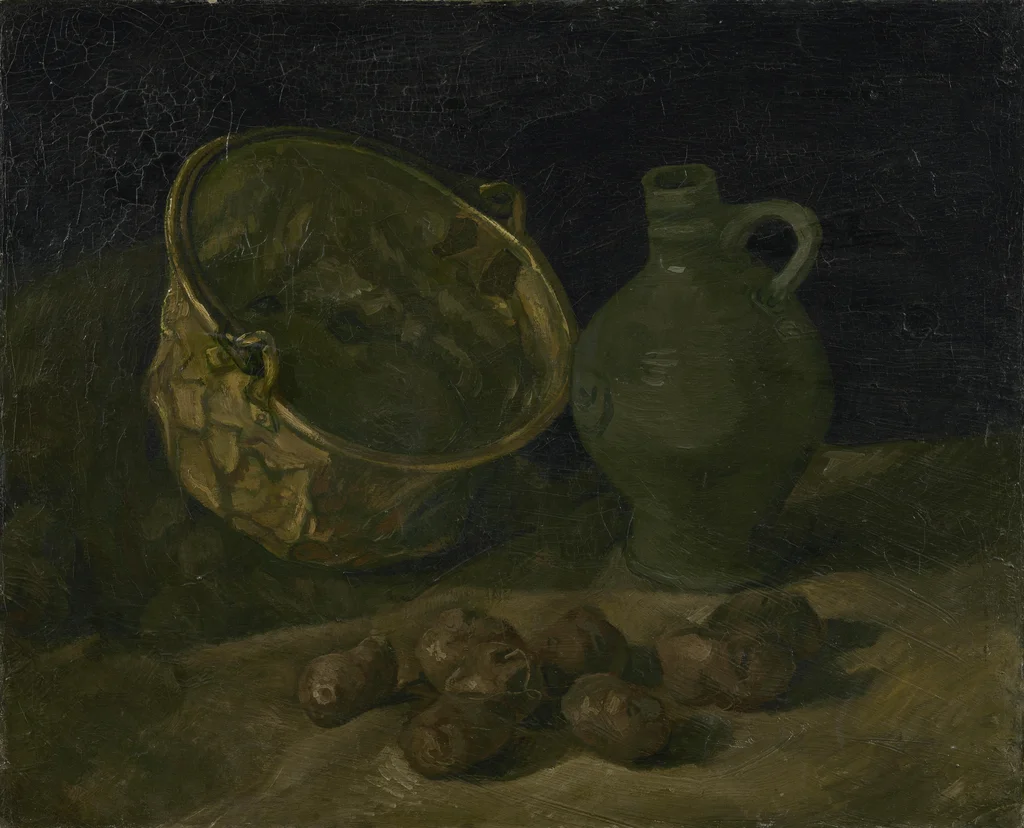
Vincent van Gogh, Still Life with Brass Cauldron and Jug, 1885. Wikimedia Commons. · PD
Still Life with Brass Cauldron and Jug
Details
The story
Nuenen, autumn 1885. Van Gogh was living in the Brabant village where his father had been the Protestant minister until his death that March, painting the weavers and farm labourers around him. Then the models stopped coming. The Catholic priest of the village had told his parishioners not to sit for the minister's son, and in a place that size that settled it.
So he painted things that could not walk out. The cooking pot, the earthenware jug and the potatoes went on a table in the two rooms he rented from the sacristan of that same Catholic church. He worked big for a still life, about 65 by 80 centimetres, and he wrote to Theo in October that such pictures were hard to sell and devilishly useful all the same, and that he meant to keep making them through the winter.
He had a few weeks. In November 1885 he packed up for Antwerp, and this group of kitchen still lifes is close to the last work he made in the village.