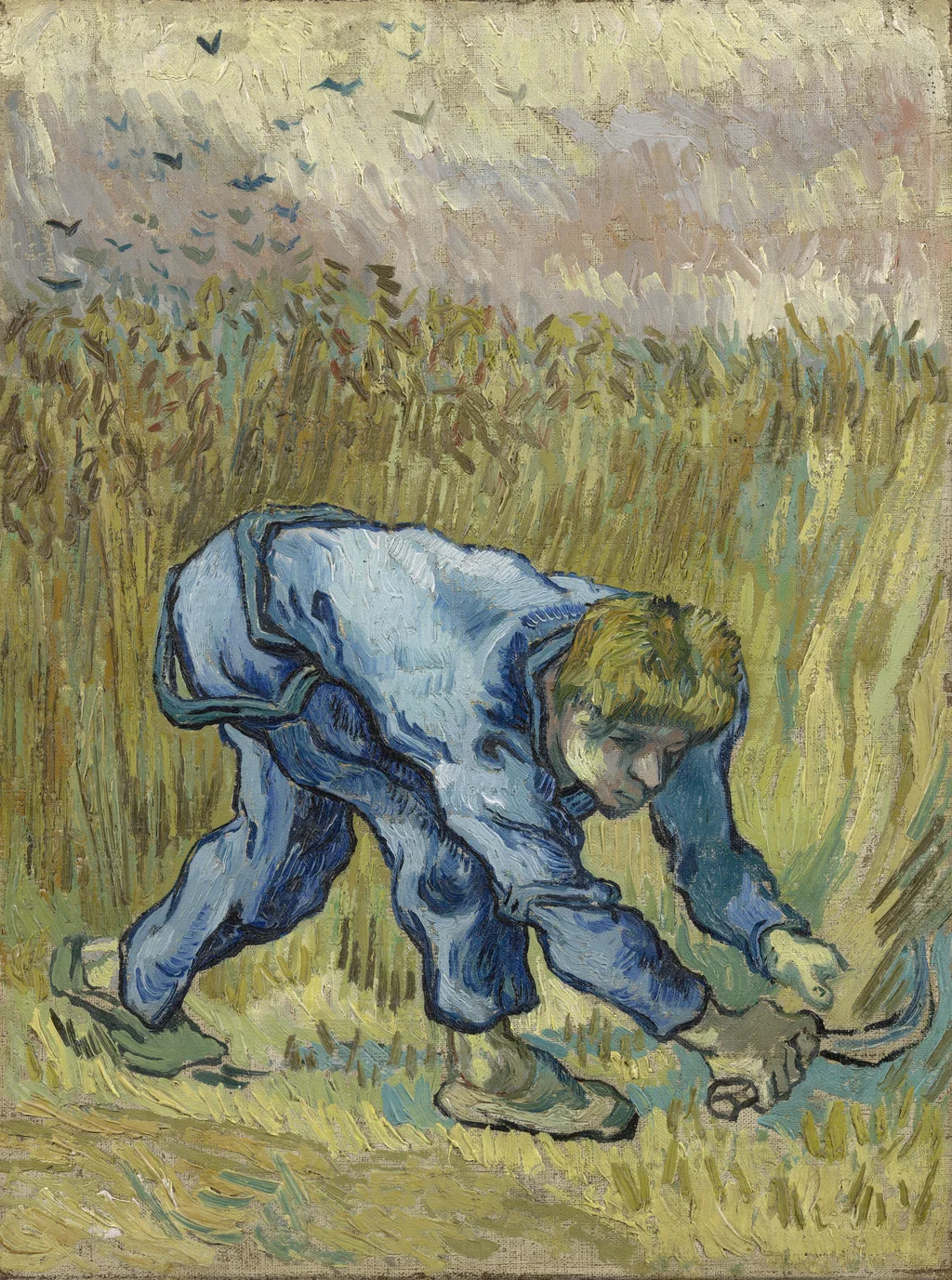
Vincent van Gogh, The Reaper (after Millet), 1889. Wikimedia Commons. · PD
The Reaper (after Millet)
Details
The story
In 1889 Van Gogh was a voluntary patient at the asylum in Saint-Rémy, in Provence, where his health and the weather regularly kept him from working outdoors. He asked Theo to send prints instead, and from September onwards he painted from them. This reaper comes from a wood engraving after Jean-François Millet, the French painter of peasant labour whose work Van Gogh had been copying since his first years as an artist. He was clear that it was not imitation. He described what he was doing as translating black and white into the language of colour, the way a musician performs another man's score rather than reciting it. Across that autumn and winter he made about 21 of these translations after Millet. The engraving in front of him carried no colour at all, so the tone of the wheat, the sky and the reaper's clothes were his own decisions.