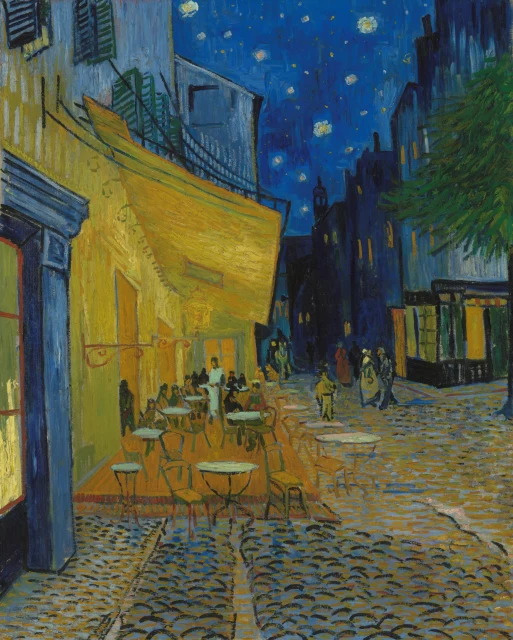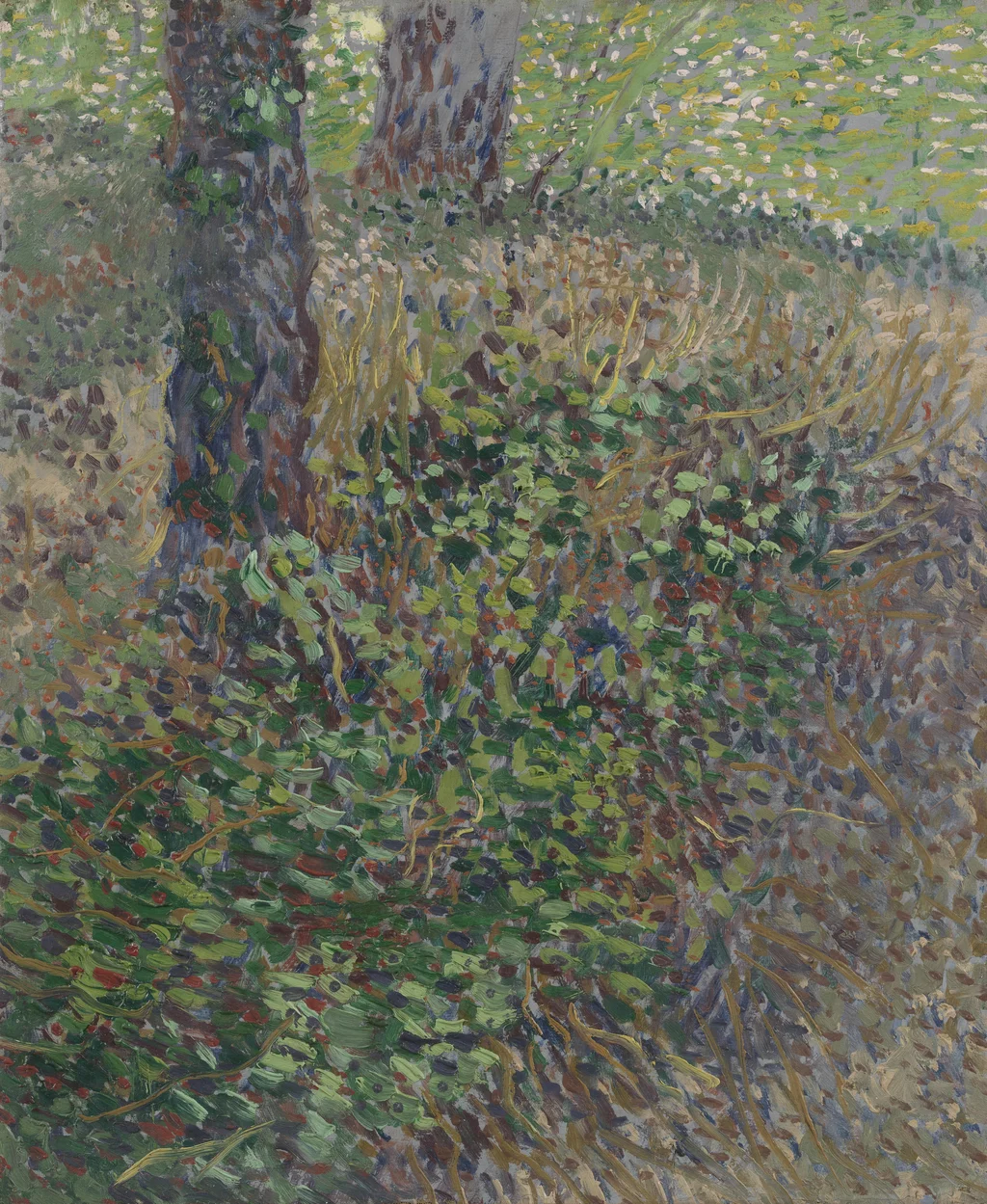
Vincent van Gogh, Undergrowth, 1887. Wikimedia Commons. · PD
Undergrowth
Details
The story
July 1887. Van Gogh had been in Paris about a year and a half, sharing his brother Theo's flat in Montmartre, and in that time he had rebuilt the way he painted. The dark Dutch canvases he arrived with were gone. He was laying colour down in short separate strokes, the way the young painters he had fallen in with were doing it; that spring he had gone out along the Seine at Asnieres with Paul Signac, who was working in dots of pure colour.
Then he walked into the trees. A view like this one has its own name in French painting, sous-bois, undergrowth. You stand inside the wood rather than looking at it from a field, so the horizon goes, the sky mostly goes, and what is left is trunks, low plants and light coming down in patches. The Barbizon painters he had admired since he was a beginner had made the motif respectable, and it suited a man testing a new technique, because a floor of broken light is almost all pattern.
He made several of these in Paris that year, and the motif stayed with him. Undergrowth turns up again in the asylum garden at Saint-Remy, and once more in his last weeks at Auvers.