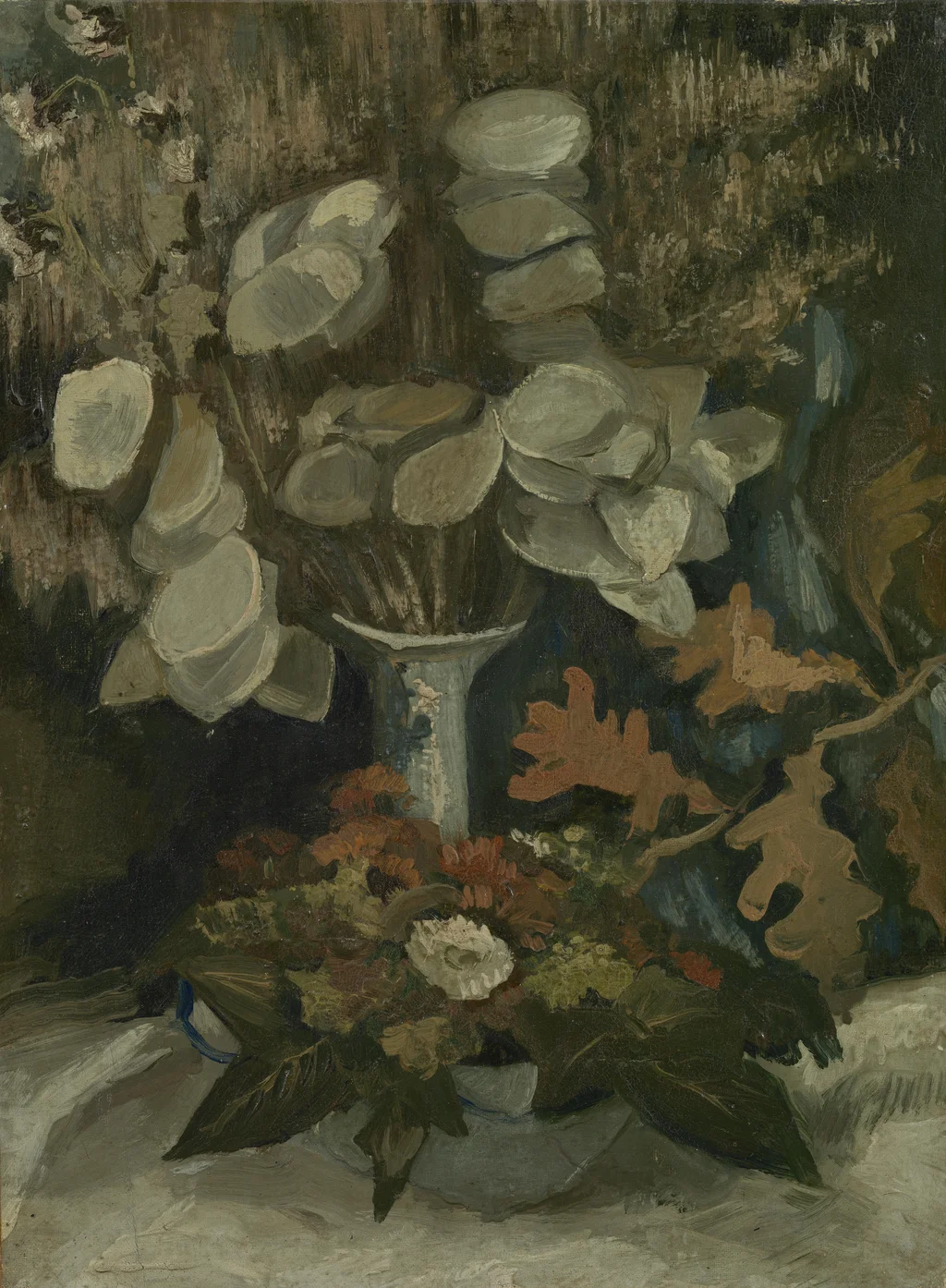
Vincent van Gogh, Vase with Honesty, 1884. Wikimedia Commons. · PD
Vase with Honesty
Details
The story
In the autumn of 1884 Van Gogh acquired three pupils. Three men in Eindhoven, the town nearest the village where his parents lived, wanted to learn to paint, and he started them on still lifes, the way he had started himself three years earlier. He set up arrangements and painted his own versions beside theirs.
The plant in this vase is honesty. The Dutch call it judaspenning, the Judas coin, after the flat round seed pods that dry out in autumn into thin silvery discs you can see daylight through. What he was after, he wrote, was dry leaves against blue.
Everything in the vase is past its season. Honesty only turns papery once the flowering is finished, which is the state he picked it in, and this is one of the first still lifes he ever painted.