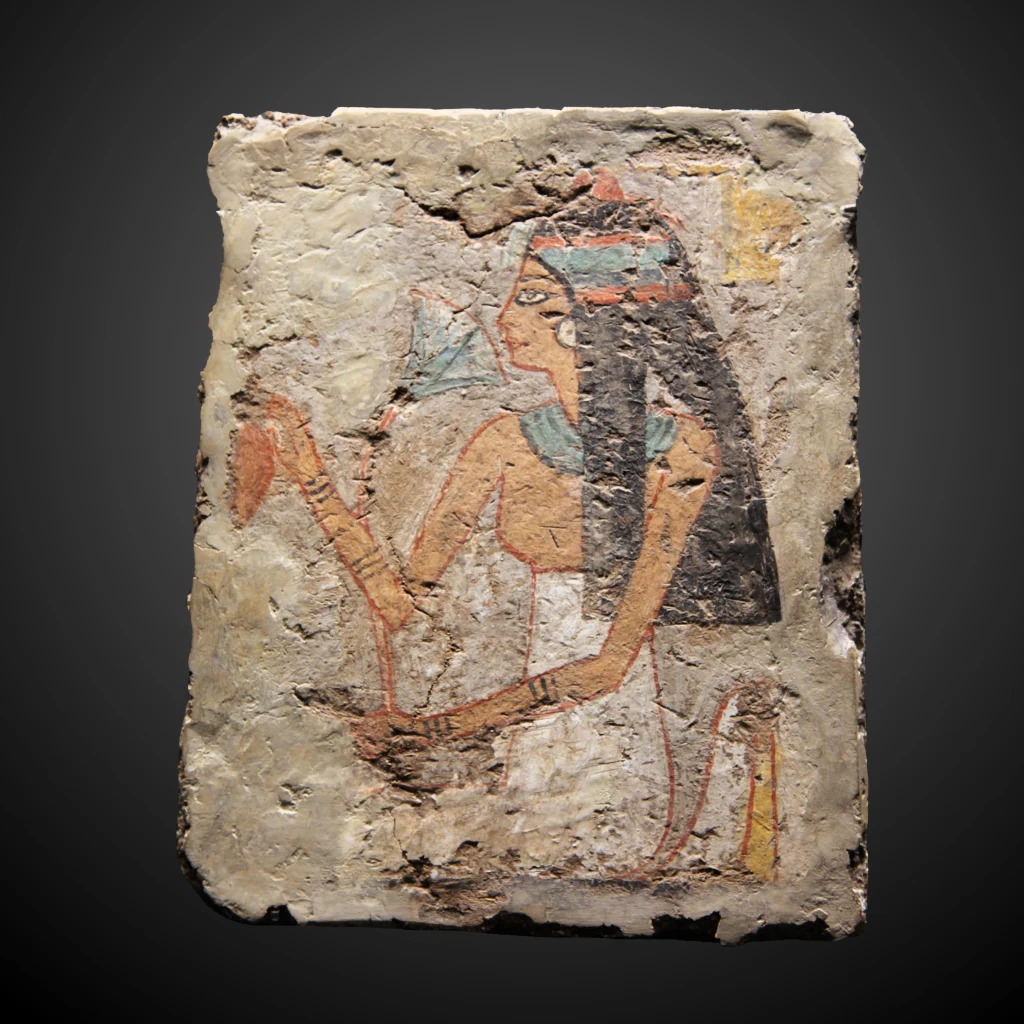
Wall Painting Fragment with a Seated Woman Smelling a Lotus Flower
Details
The story
Everything this woman wears can still be read after more than 3,000 years. She sits holding a lotus flower to her face, under a heavy wig divided into three masses, the style Egyptologists call tripartite. A broad collar of beads, the kind the Egyptians called usekh, covers her shoulders, and there are rings in her ears and bangles on her wrists and upper arms. Earrings had come into Egyptian fashion only a few centuries earlier, at the start of the New Kingdom, and by the time of the Ramesside kings, in the 13th to 11th centuries BC, a woman of standing was rarely painted without them. That is why the Louvre shows this fragment in its room on jewellery and adornment. It reached the museum in 1907 from the Cabinet des Médailles, the coin and antiquities collection of the French national library, and its origin was long unclear. In 2009 Christiane Ziegler, a former head of the Louvre's Egyptian department, published a study of where it came from, and the museum now links it to a Theban tomb that belonged to a man named Hori.
More works by Unknown Egyptian artist (Ramesside period)
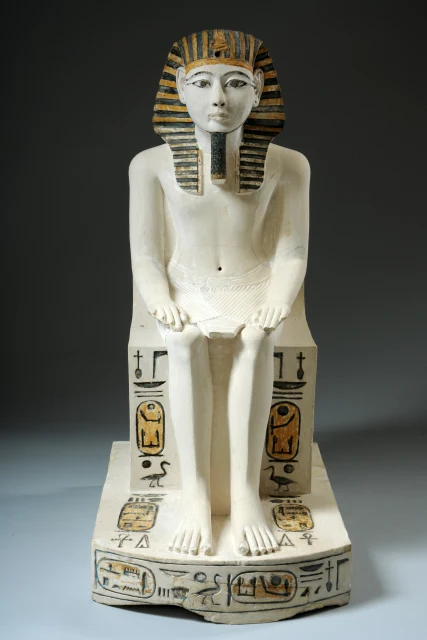 Cult Statue of Amenhotep IUnknown Egyptian artist (Ramesside period), -1242
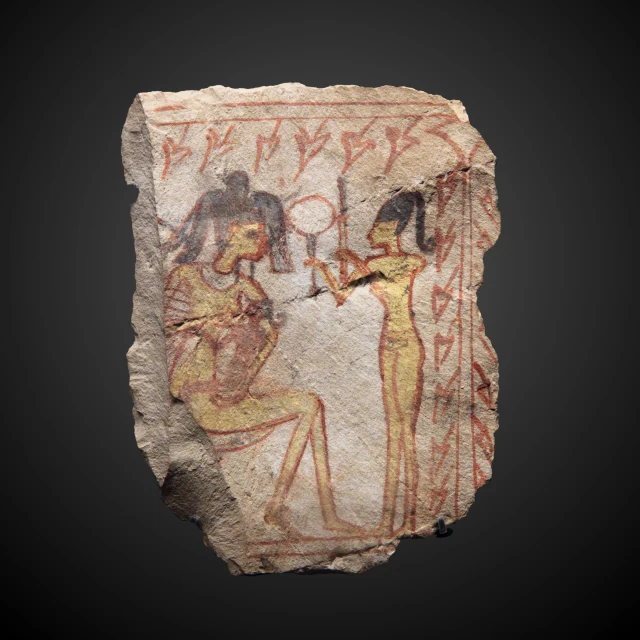 Figured Ostracon: Servant Presenting a Mirror to Her MistressUnknown Egyptian artist (Ramesside period), -1182
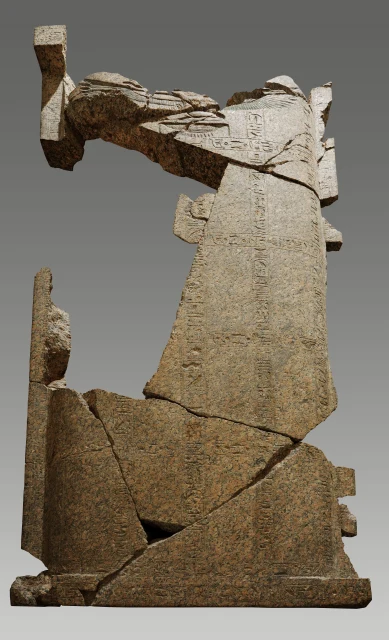 Lid of the Sarcophagus of Queen NefertariUnknown Egyptian artist (Ramesside period), -1246
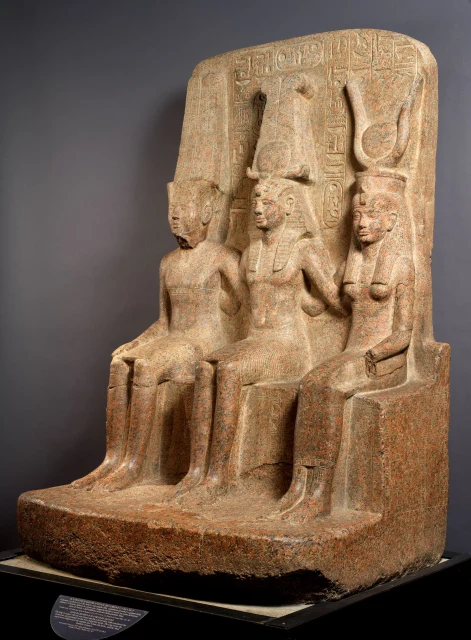 Ramesses II Seated between Amun and MutUnknown Egyptian artist (Ramesside period), -1246
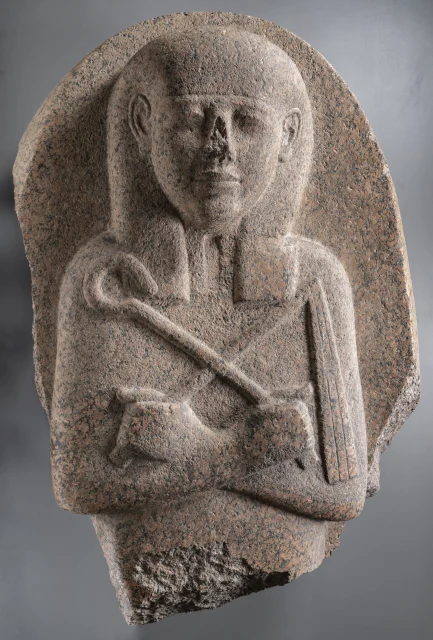 Sarcophagus Lid of Prince KhaemwasetUnknown Egyptian artist (Ramesside period), -1168