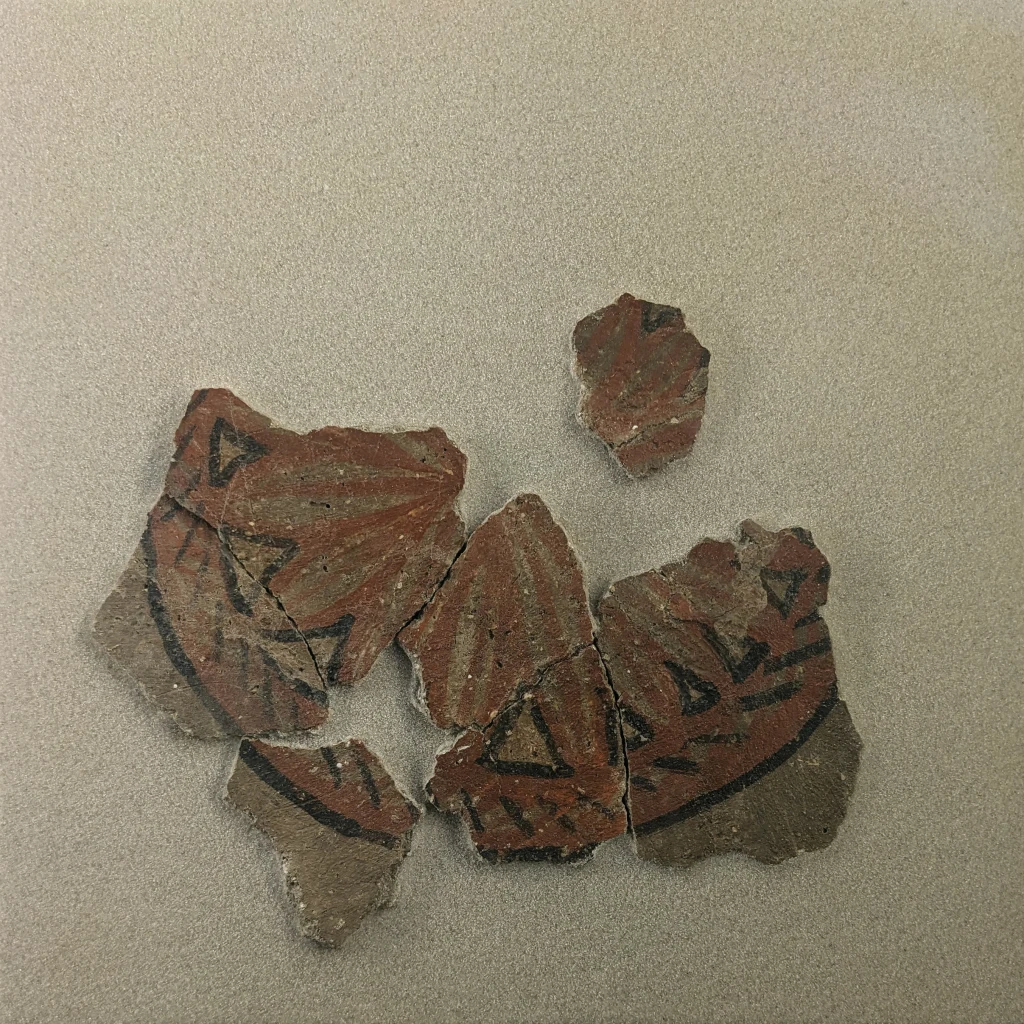
Wall Painting Fragments with a Half-Rosette, from Dura-Europos
Details
The story
The paintings of Dura-Europos came to light by accident. In 1920 British soldiers digging positions on the Euphrates, in what is now eastern Syria, hit painted walls under the sand. Two years later the Belgian historian Franz Cumont arrived to excavate for the French Academy of Inscriptions. In 1922 and 1923 he worked in the temple of Artemis, and from one of its rooms, which he labelled C, he lifted these pieces of painted plaster. He published them in 1926 in his report on the dig.
What survives is half a circle in red and black, a rosette or perhaps a wheel. The Louvre's record keeps a question mark on it. The pattern was painted and also incised into the plaster, and the whole piece is about 32 centimetres each way.
More works by Unknown Dura-Europos painter
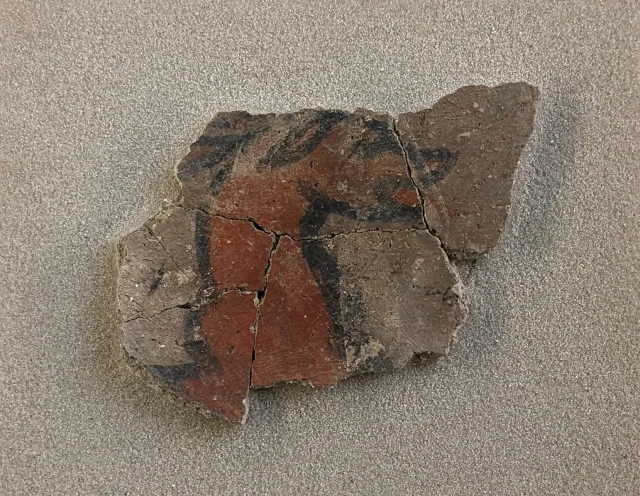 Wall Painting Fragments with an Animal Head, from Dura-EuroposUnknown Dura-Europos painter, 200
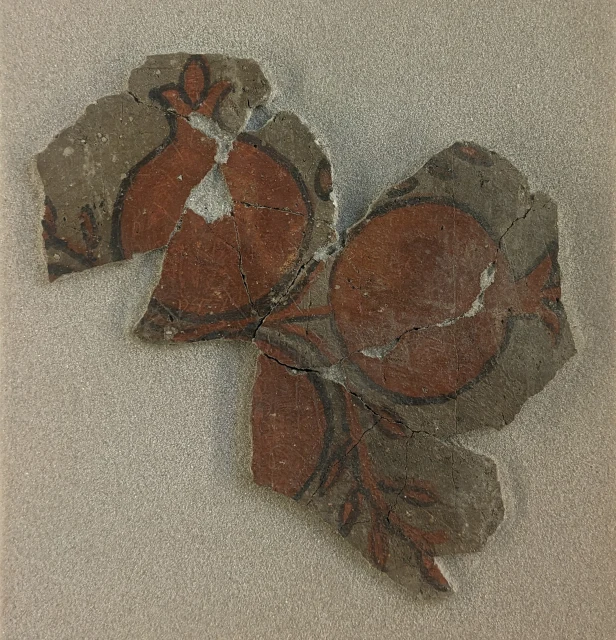 Wall Painting Fragments with Pomegranates and a Greek Inscription, from Dura-EuroposUnknown Dura-Europos painter, 200
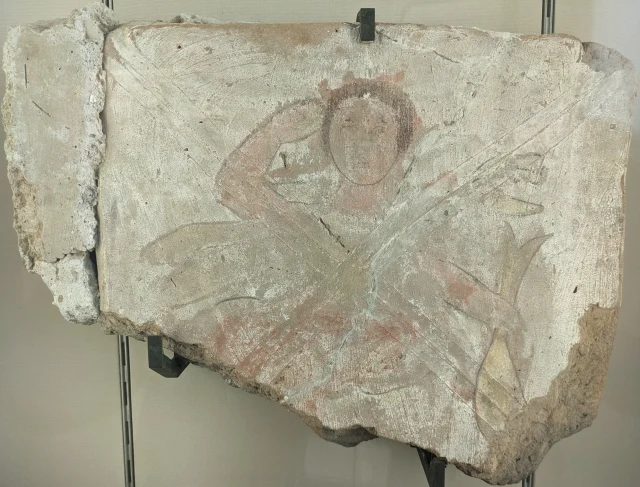 Wall Painting with a Figure Holding a Fish, from Dura-EuroposUnknown Dura-Europos painter, 245
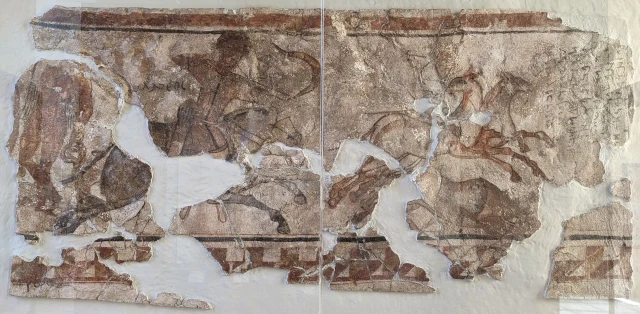 Wall Painting with an Onager Hunt, from Dura-EuroposUnknown Dura-Europos painter, 194