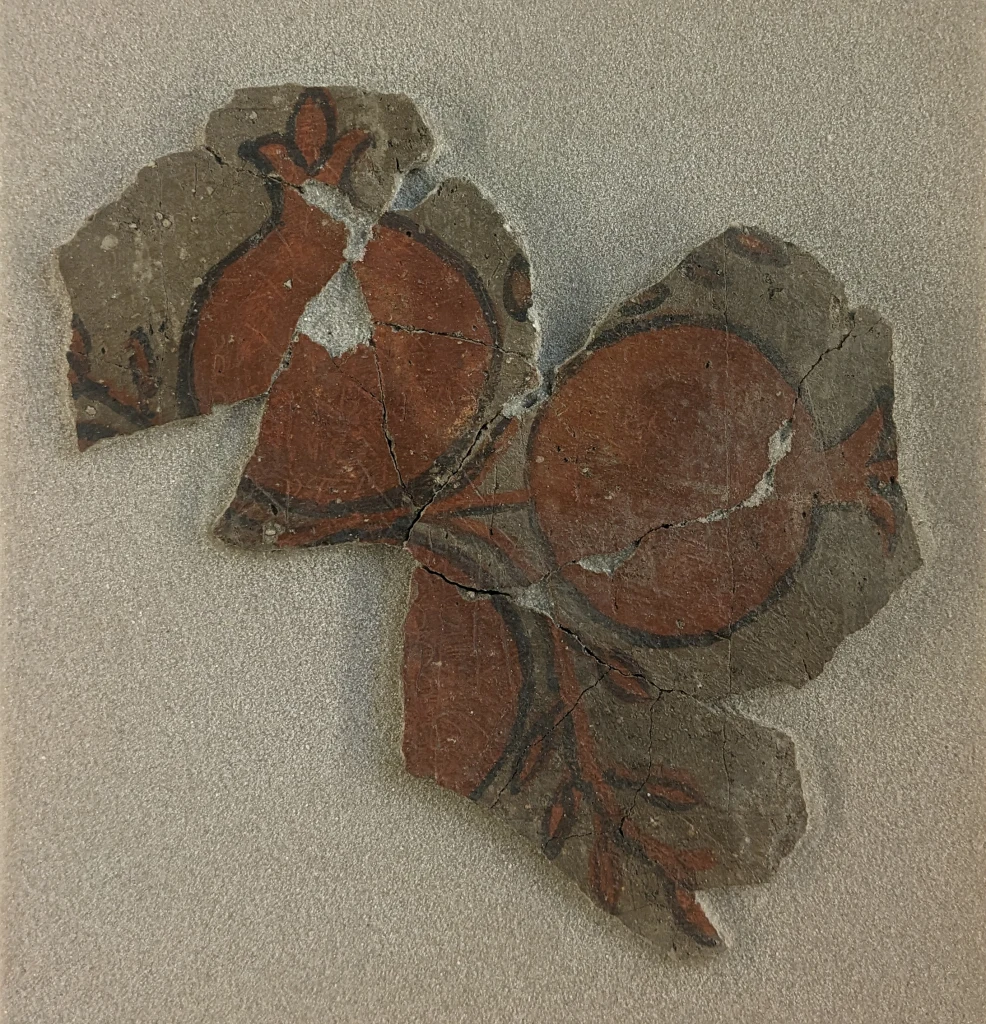
Wall Painting Fragments with Pomegranates and a Greek Inscription, from Dura-Europos
Details
The story
Three pomegranates hang among leafy garlands here, painted in red and black on the plaster of a room in the temple of Artemis at Dura-Europos. Scratched into the same surface are nine lines of Greek. The Louvre records the inscription but does not publish a reading of it.
Greek on a wall by the Euphrates is less surprising than it sounds. Dura was founded around 300 BC as a Macedonian garrison town under Seleucus, one of the generals who divided Alexander's empire, and its second name, Europos, was borrowed from his home town in Macedonia. Five centuries later, under Parthian and then Roman rule, people in Dura were still writing in Greek, from legal contracts to names scratched on walls. These fragments came to the Louvre from the French excavation of 1922 and 1923, together with a half-rosette and an animal head from the same room.
More works by Unknown Dura-Europos painter
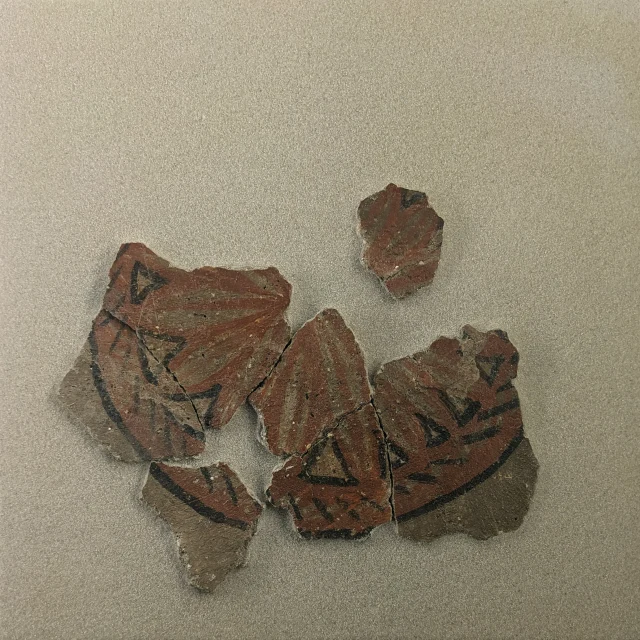 Wall Painting Fragments with a Half-Rosette, from Dura-EuroposUnknown Dura-Europos painter, 200
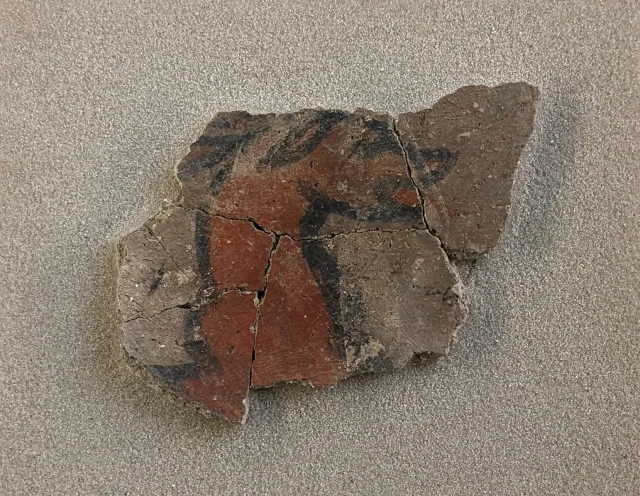 Wall Painting Fragments with an Animal Head, from Dura-EuroposUnknown Dura-Europos painter, 200
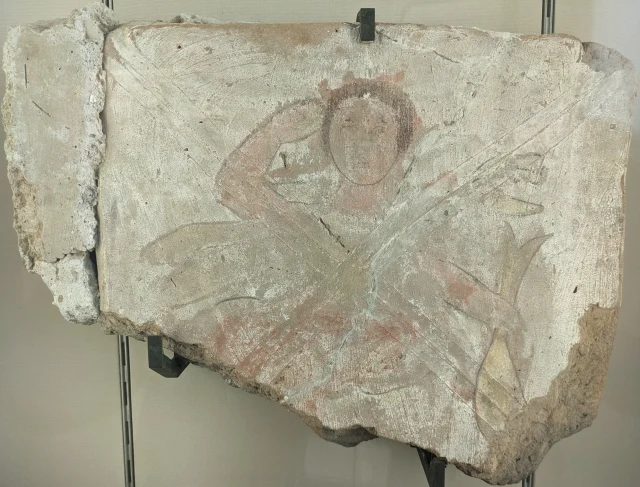 Wall Painting with a Figure Holding a Fish, from Dura-EuroposUnknown Dura-Europos painter, 245
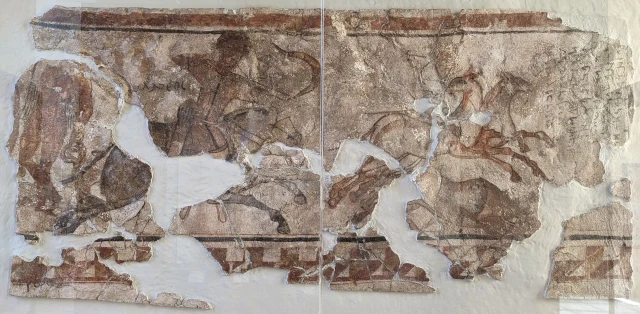 Wall Painting with an Onager Hunt, from Dura-EuroposUnknown Dura-Europos painter, 194