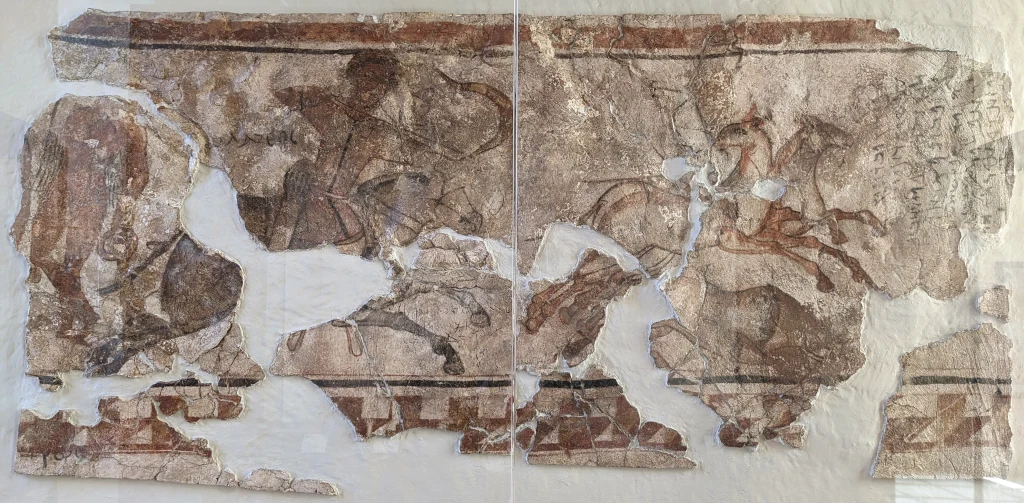
Wall Painting with an Onager Hunt, from Dura-Europos
Details
The story
Onagers are the wild asses of the Syrian steppe, fast and hard to catch, and here horsemen with bows ride them down along a frieze more than two metres long. Hunts like this turn up often in the paintings and graffiti of Dura-Europos, the town on the Euphrates where this wall stood. It belonged to a house near the gate that faced Palmyra, the caravan city in the desert to the west, and the Louvre dates the painting to 194.
Palmyra is written all over it. A Greek inscription on the wall is a dedication to four gods of Palmyra, and later someone added graffiti in Palmyrene, the Aramaic script of that city. A small Eros belonged to a banquet scene that was left on the wall in Syria.
The house was dug in 1936 and 1937, in the last seasons of the joint excavation run by Yale University and the French Academy of Inscriptions, under the American archaeologist Frank Brown. The finds were shared out. Other paintings from the same house went to New Haven, and this section reached the Louvre as a gift.
More works by Unknown Dura-Europos painter
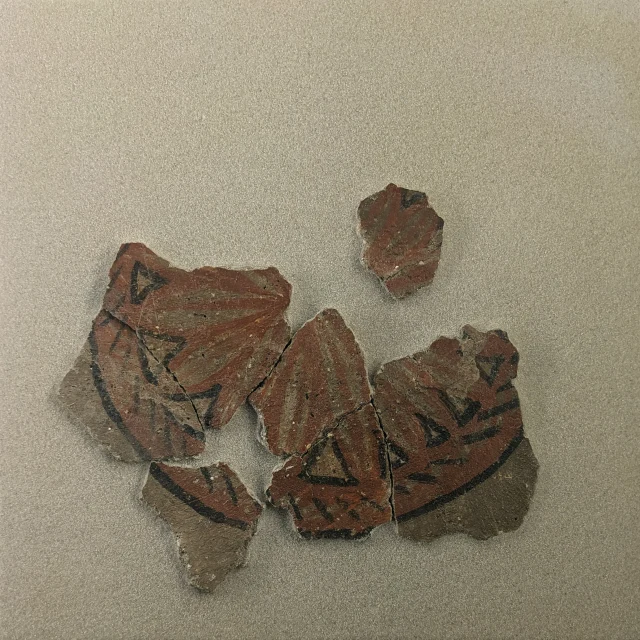 Wall Painting Fragments with a Half-Rosette, from Dura-EuroposUnknown Dura-Europos painter, 200
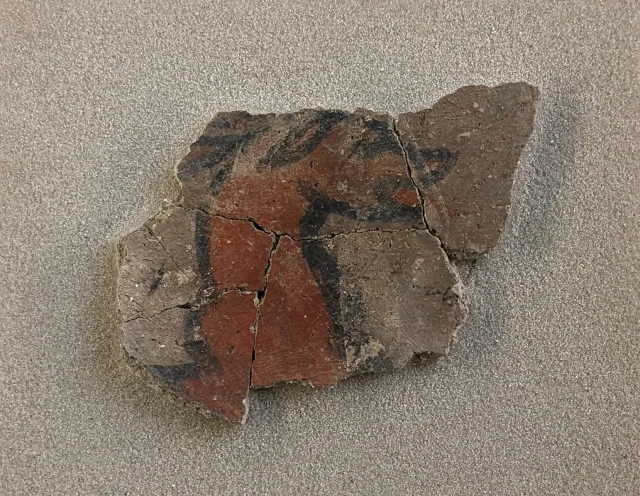 Wall Painting Fragments with an Animal Head, from Dura-EuroposUnknown Dura-Europos painter, 200
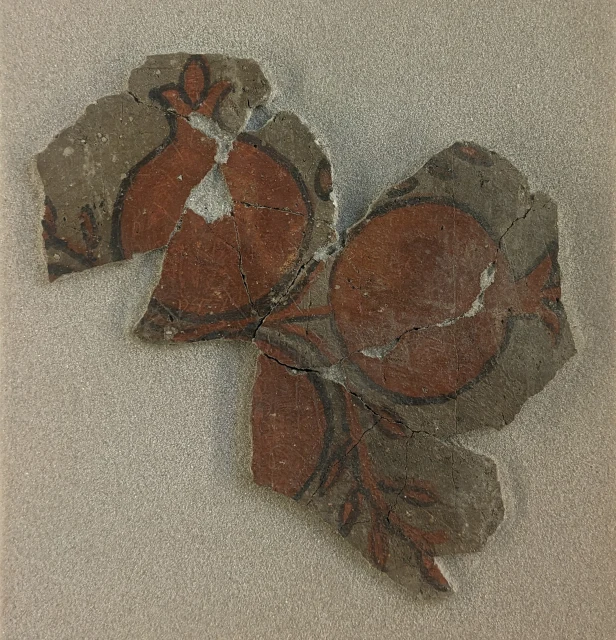 Wall Painting Fragments with Pomegranates and a Greek Inscription, from Dura-EuroposUnknown Dura-Europos painter, 200
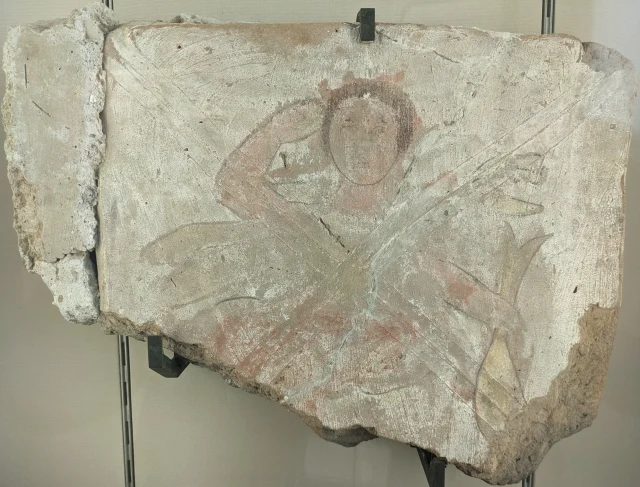 Wall Painting with a Figure Holding a Fish, from Dura-EuroposUnknown Dura-Europos painter, 245