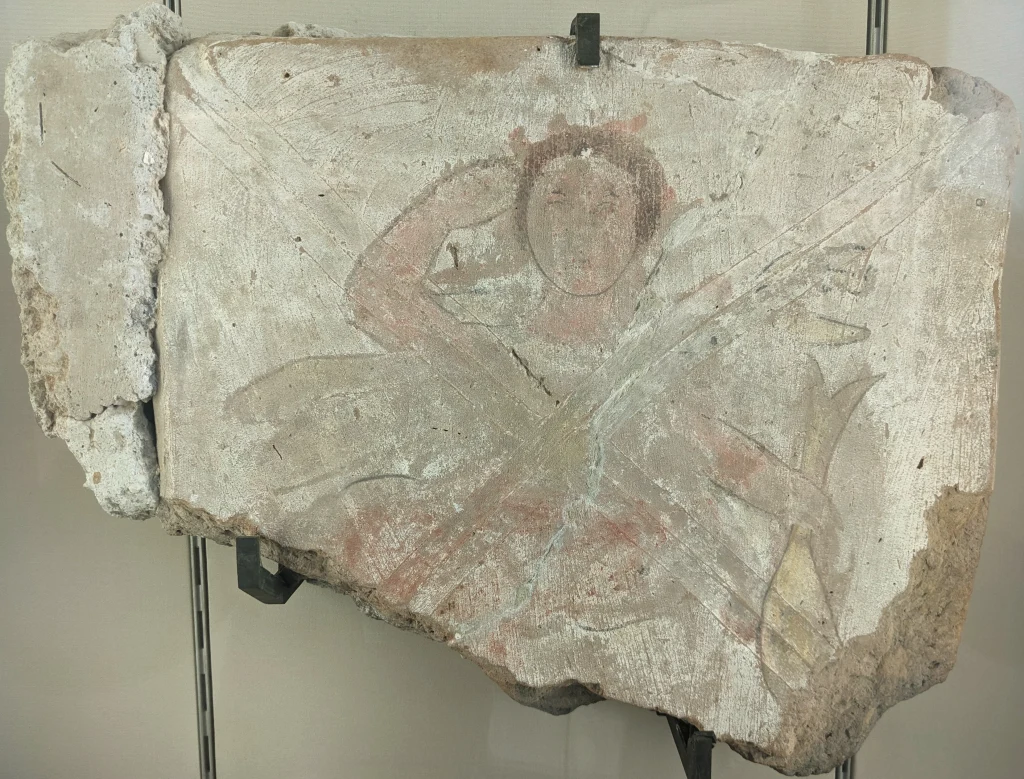
Wall Painting with a Figure Holding a Fish, from Dura-Europos
Details
The story
The Louvre records where this piece was found, in the synagogue of Dura-Europos, the Jewish house of prayer in the Roman garrison town on the Euphrates. Excavators uncovered the building in 1932. An Aramaic inscription dates the rebuilding and decoration of its main hall to 244 or 245, which is where the Louvre's date of around 245 comes from.
The famous painted walls of that hall, with their scenes from the Hebrew Bible, went to the National Museum in Damascus. Its ceiling was made of several hundred painted tiles, clay slabs coated with plaster and set between wooden beams, showing women's heads, fruit, animals and creatures such as centaurs. This piece is built the same way, painted plaster on a slab of unbaked clay, and it shows a figure, seen to the chest, holding a fish. The Louvre catalogues it simply as a wall painting, and it came to Paris as a gift in 1935.
More works by Unknown Dura-Europos painter
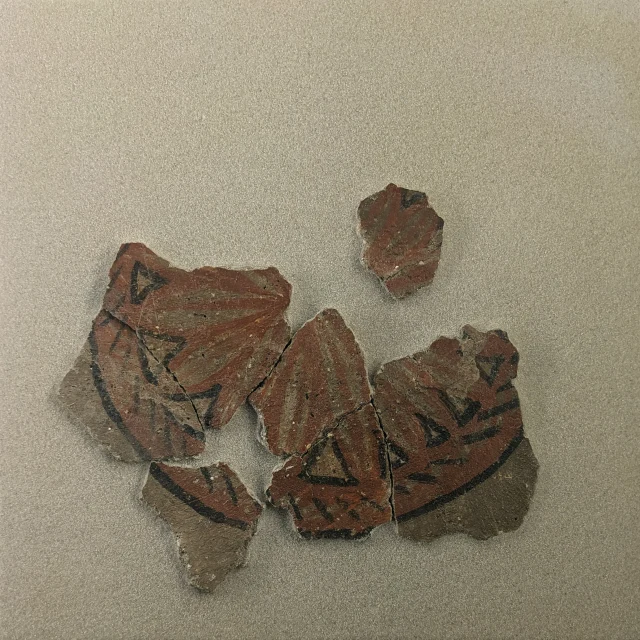 Wall Painting Fragments with a Half-Rosette, from Dura-EuroposUnknown Dura-Europos painter, 200
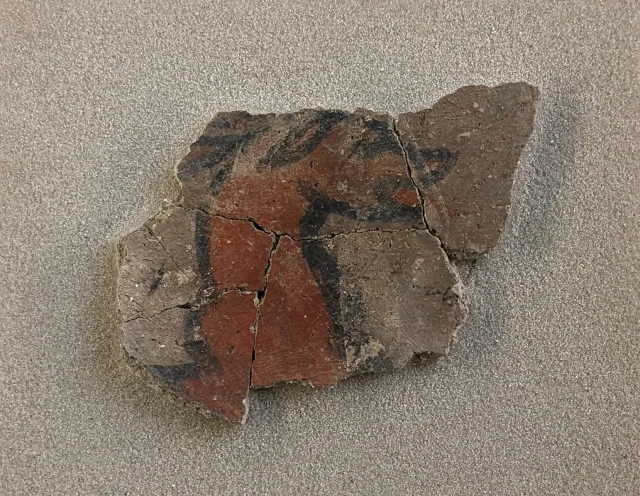 Wall Painting Fragments with an Animal Head, from Dura-EuroposUnknown Dura-Europos painter, 200
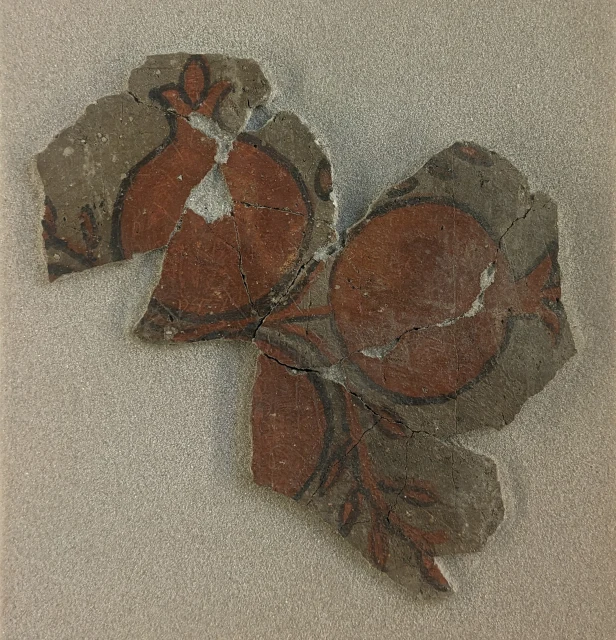 Wall Painting Fragments with Pomegranates and a Greek Inscription, from Dura-EuroposUnknown Dura-Europos painter, 200
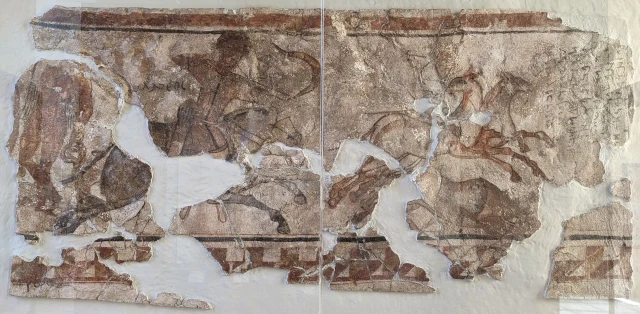 Wall Painting with an Onager Hunt, from Dura-EuroposUnknown Dura-Europos painter, 194