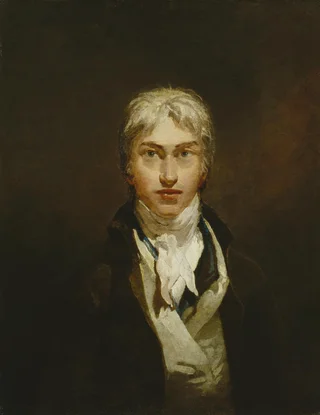
J. M. W. Turner
1775–1851 · Reino de Gran Bretaña · Romanticismo
La historia
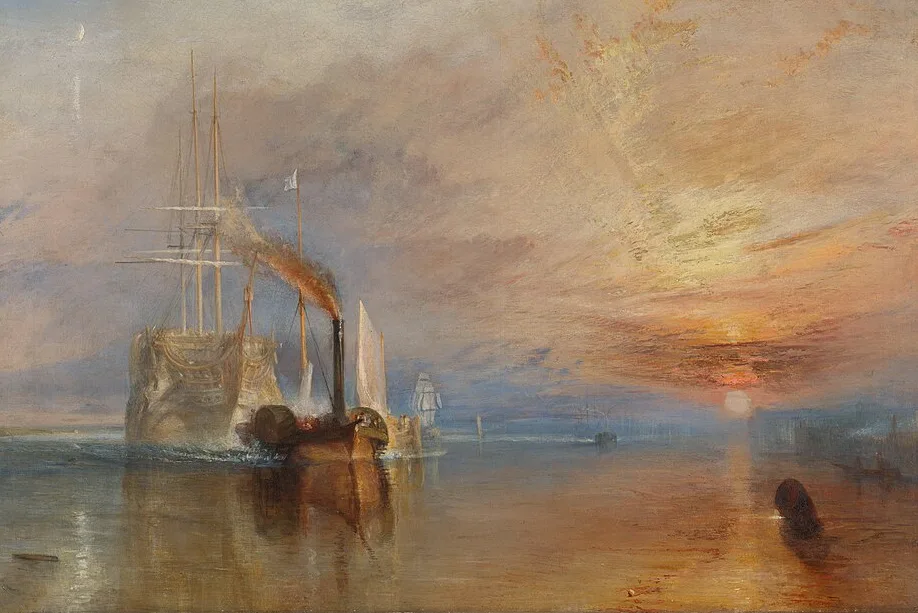
En 1838 un viejo navío de guerra fue remolcado Támesis arriba para ser desguazado. Era el Temeraire, que había combatido en la batalla de Trafalgar en 1805, y ahora un pequeño remolcador de ruedas, tiznado de hollín, arrastraba su casco hacia el desguace. Turner pintó ese momento con el pálido fantasma del velero resplandeciendo contra un ocaso incendiado mientras el remolcador negro resopla por delante de él, y el cuadro se convirtió en una callada despedida de la era de la vela mientras el vapor ocupaba su lugar. Se negó a venderlo el resto de su vida.
Turner era hijo de un barbero de Covent Garden, entró en las escuelas de la Royal Academy a los 14 años y pasó luego 60 años persiguiendo una sola cosa por encima de todo: el comportamiento de la luz en el aire. Viajaba constantemente con un cuaderno de bocetos, observando tormentas, incendios y la nueva bruma de la industria, y llevó sus lienzos tardíos hasta que la forma sólida casi se disolvía en resplandor y vapor.
Siguió pintando el mundo cambiante que tenía delante. En Lluvia, vapor y velocidad, de 1844, lanzó un tren del Great Western Railway a toda velocidad sobre un puente en medio de un aguacero, una de las primeras grandes imágenes de la era de la máquina. Cuando murió en 1851 dejó a la nación británica casi 300 cuadros terminados y decenas de miles de bocetos y acuarelas, con la condición de que se conservaran juntos.
Más artículos
Obras
173 obras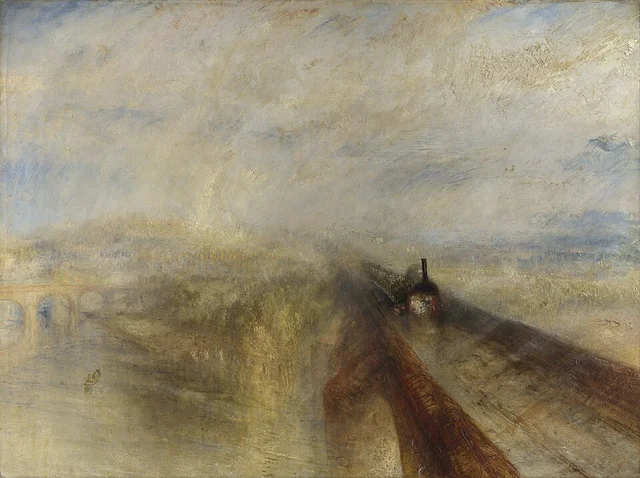 Lluvia, vapor y velocidad – El Gran Ferrocarril del OesteJ. M. W. Turner, 1843
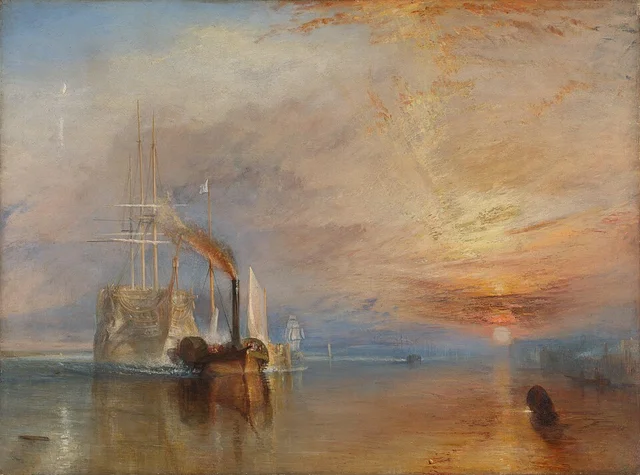 El último viaje del TemerarioJ. M. W. Turner, 1839
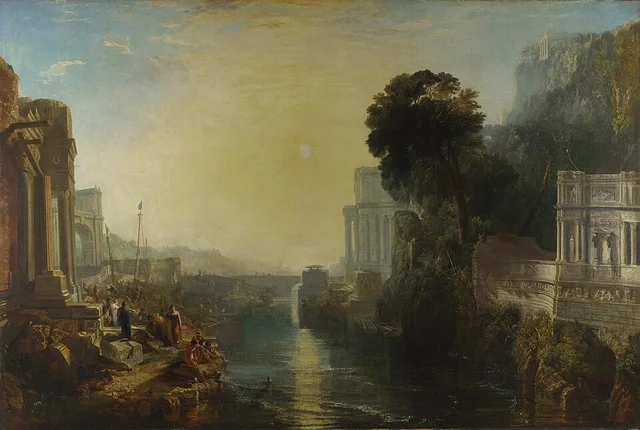 Dido construyendo CartagoJ. M. W. Turner, 1815
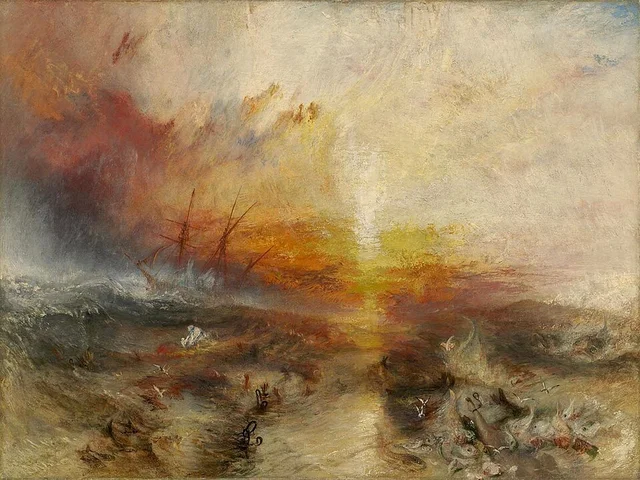 El barco de esclavosJ. M. W. Turner, 1840
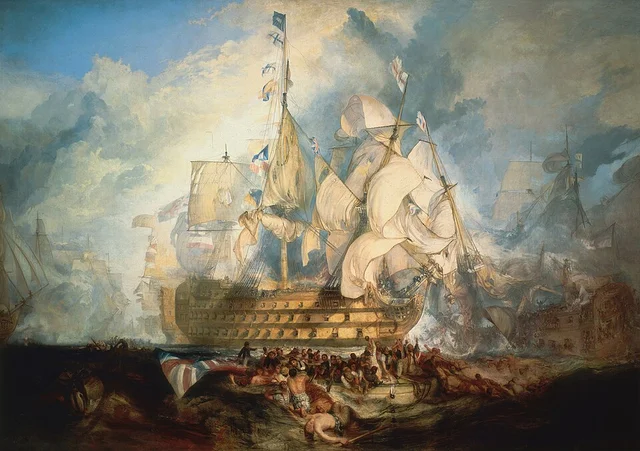 La batalla de TrafalgarJ. M. W. Turner, 1823
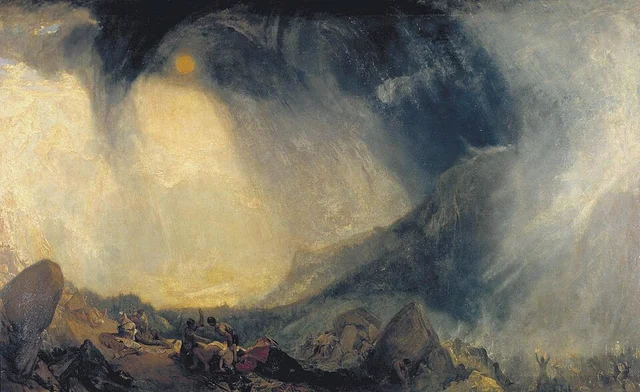 Tormenta de nieve: Aníbal y su ejército cruzando los AlpesJ. M. W. Turner, 1812
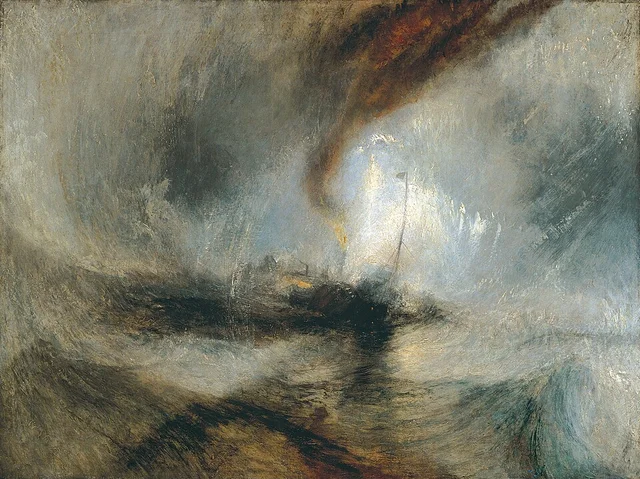 Tormenta de nieve: barco de vapor frente a la bocana de un puertoJ. M. W. Turner, 1842
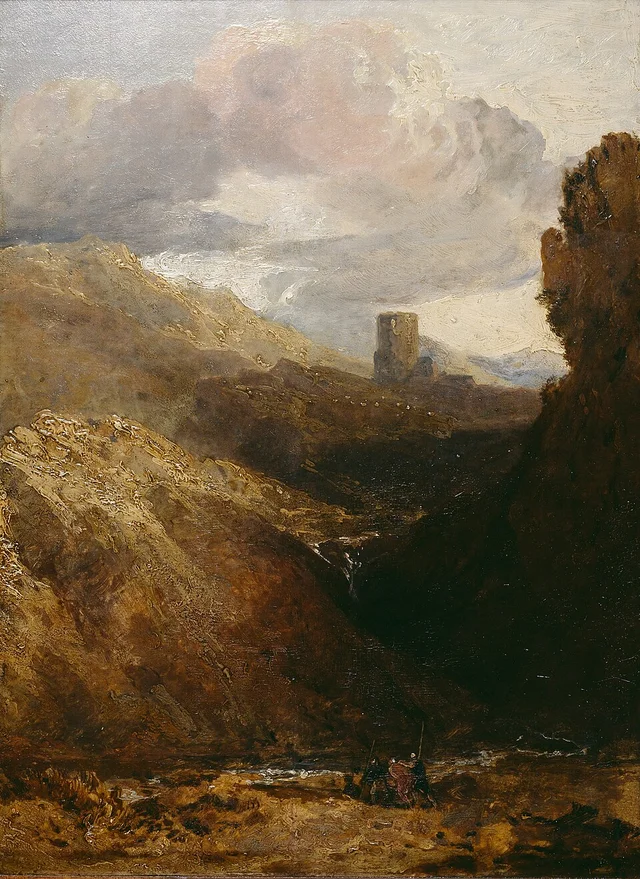 Castillo de DolbadarnJ. M. W. Turner, 1800
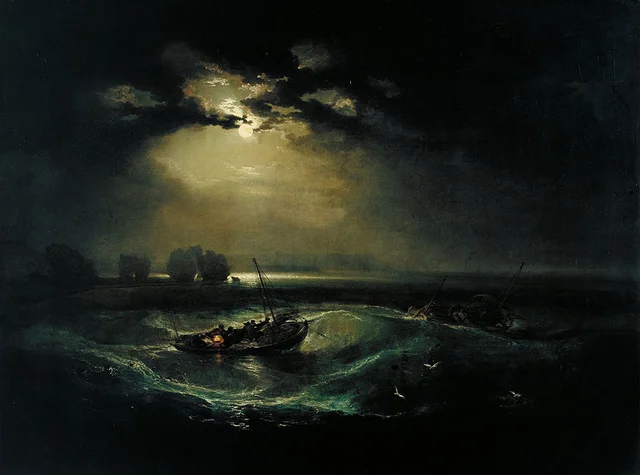 Pescadores en el marJ. M. W. Turner, 1796
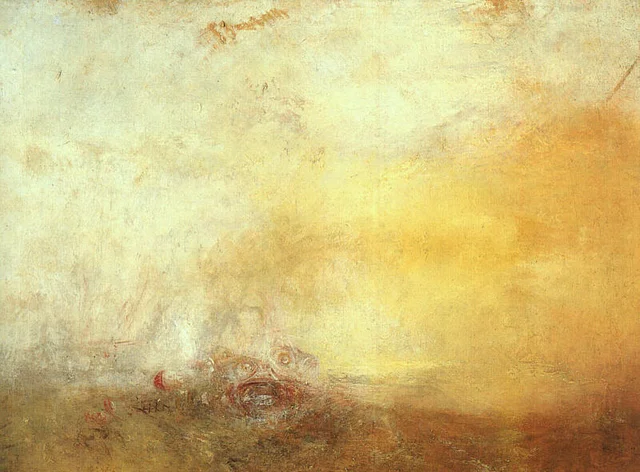 Amanecer con monstruos marinosJ. M. W. Turner, 1845
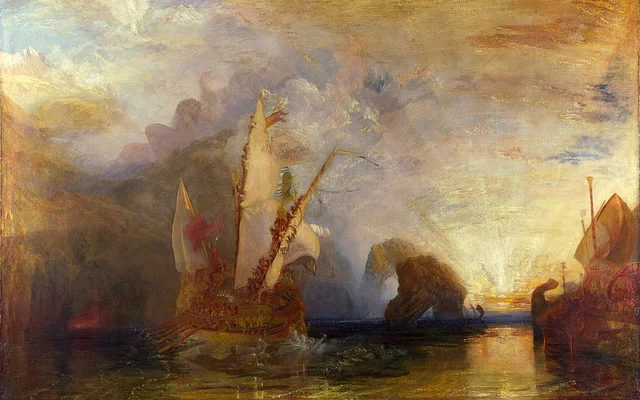 Ulises burlándose de PolifemoJ. M. W. Turner, 1829
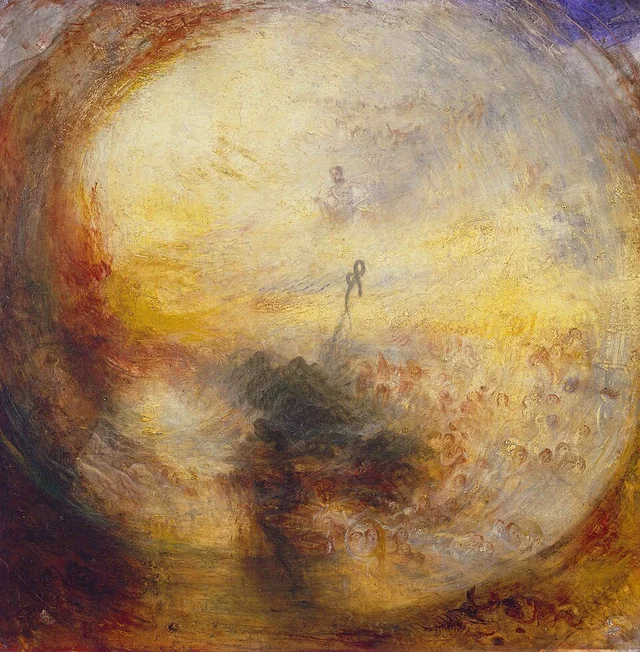 Luz y color (la teoría de Goethe) – La mañana después del Diluvio – Moisés escribiendo el GénesisJ. M. W. Turner, 1843
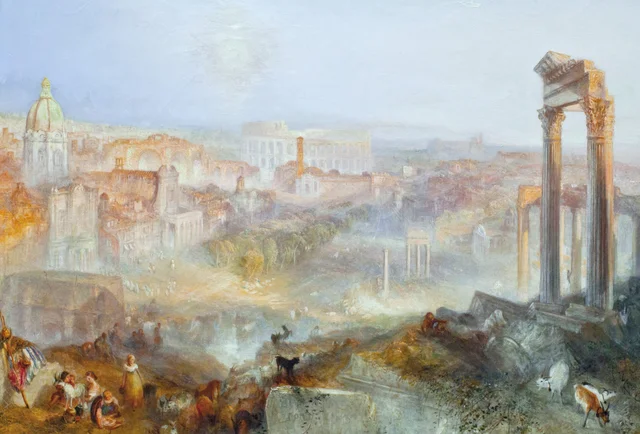 Roma moderna – Campo VaccinoJ. M. W. Turner, 1839
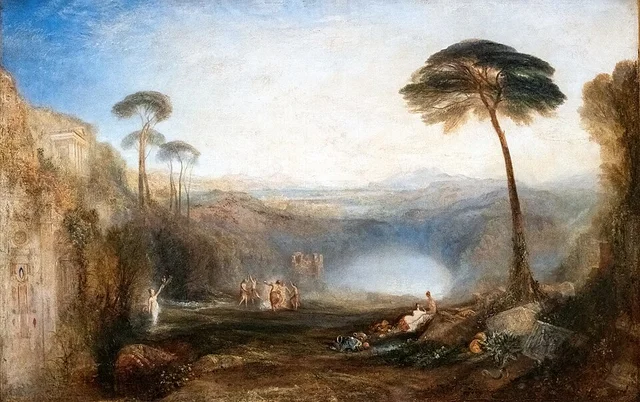 La rama doradaJ. M. W. Turner, 1834
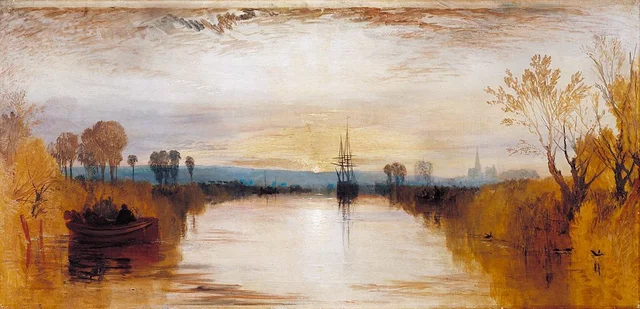 Canal de ChichesterJ. M. W. Turner, 1828
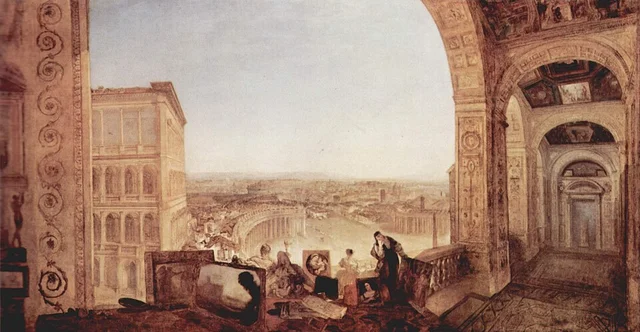 Roma, desde el Vaticano. Rafael, acompañado por la Fornarina, preparando sus cuadros para la decoración de las LogiasJ. M. W. Turner, 1820
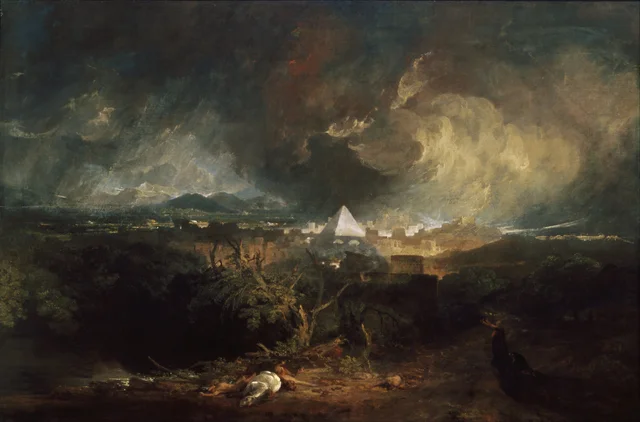 La quinta plaga de EgiptoJ. M. W. Turner, 1800
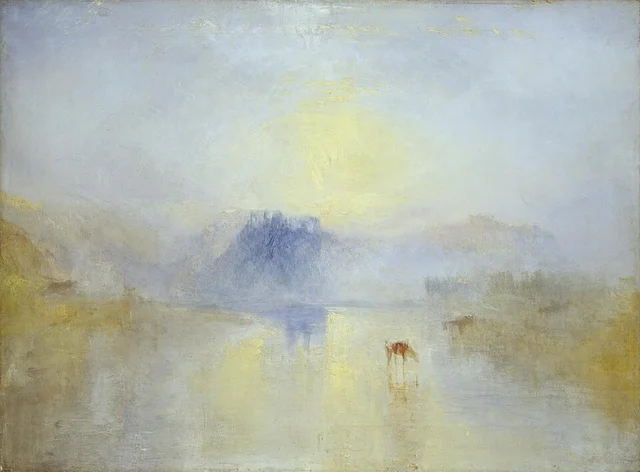 Castillo de Norham al amanecerJ. M. W. Turner, 1845
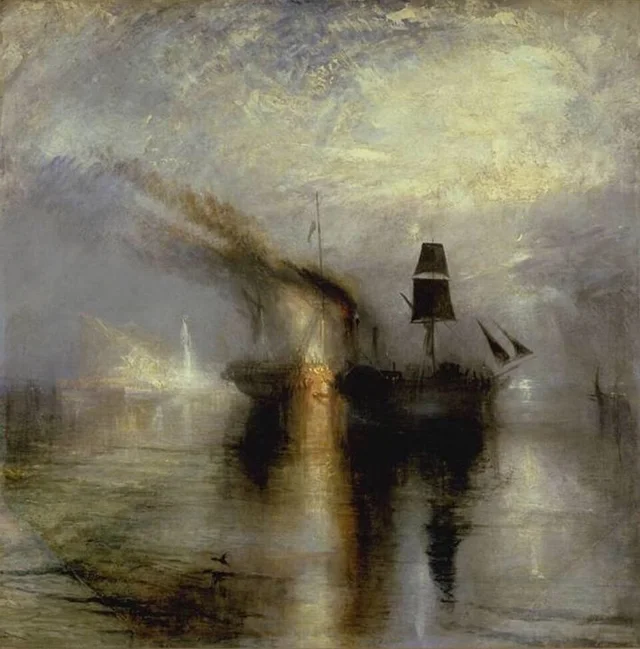 Paz: entierro en el marJ. M. W. Turner, 1842
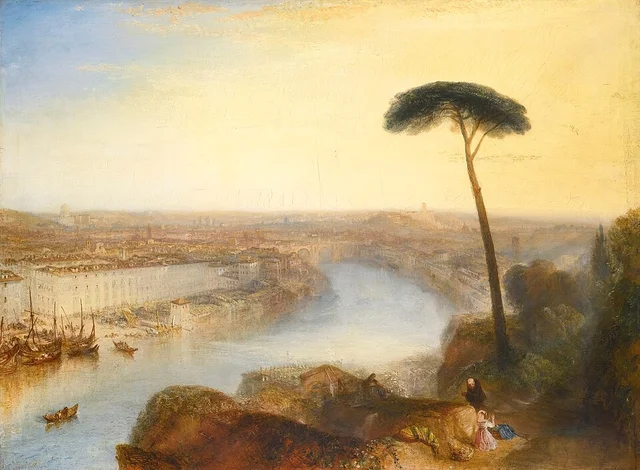 Roma desde el monte AventinoJ. M. W. Turner, 1835
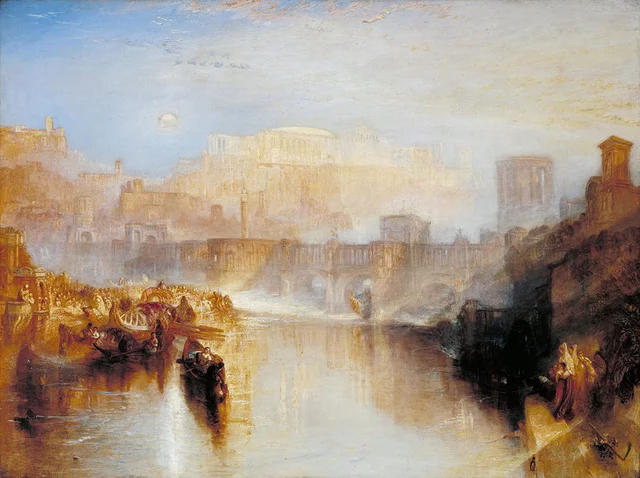 Roma antigua; Agripina desembarcando con las cenizas de GermánicoJ. M. W. Turner, 1839
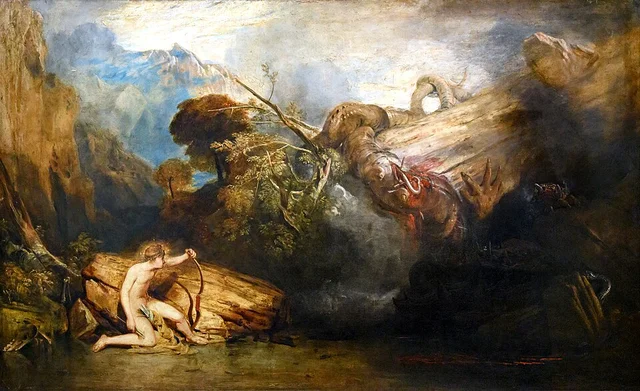 Apolo y PitónJ. M. W. Turner, 1811
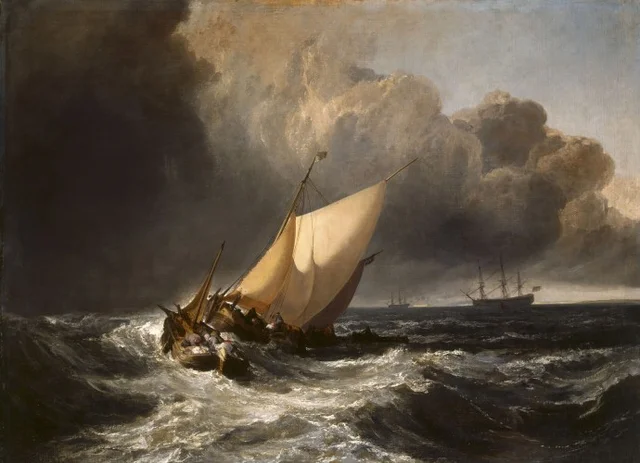 Barcos holandeses en el temporalJ. M. W. Turner, 1801
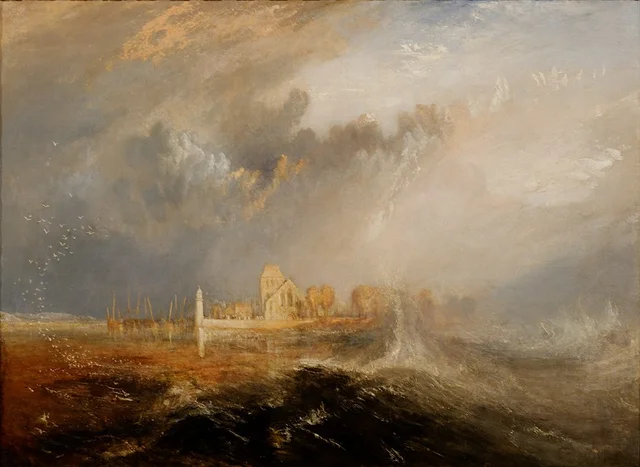 Quillebeuf, desembocadura del SenaJ. M. W. Turner, 1833
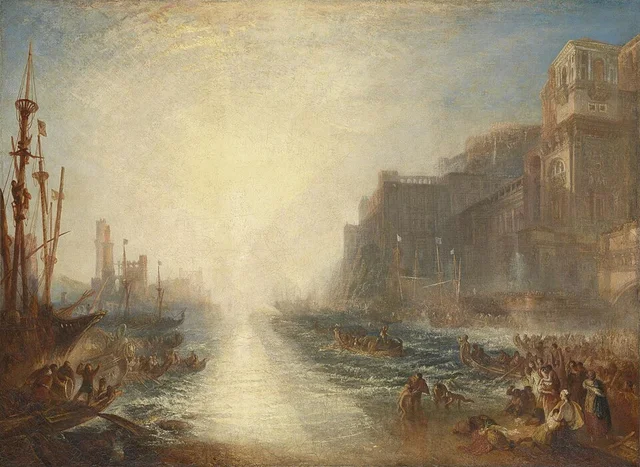 RéguloJ. M. W. Turner, 1828