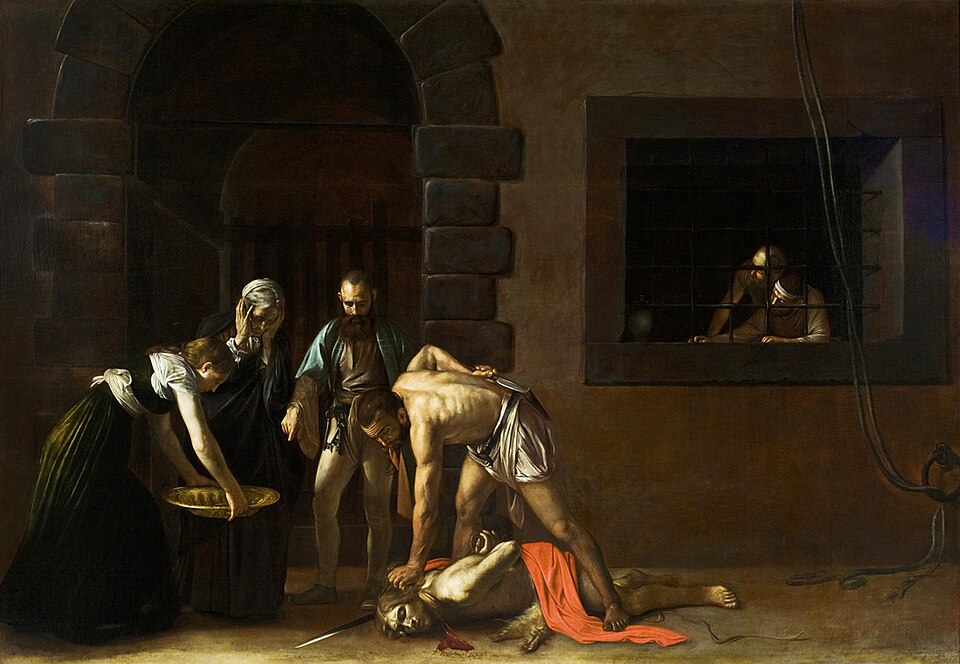
Caravaggio, The Beheading of Saint John the Baptist, 1608. Wikimedia Commons. · PD
La decapitación de san Juan Bautista
Ficha
La historia
Caravaggio llegó a Malta en 1607 huyendo de Roma, donde había matado a un hombre en una reyerta y pesaba sobre él una condena a muerte. En la isla buscó la protección de los Caballeros de San Juan, y para su iglesia pintó en 1608 esta enorme tela, la mayor que hizo nunca. Muestra el momento en que un verdugo, cuchillo en mano, remata la decapitación de san Juan Bautista en el patio de una prisión, mientras Salomé acerca la bandeja y una vieja se lleva las manos a la cabeza. Es una escena de un silencio terrible, casi vacía, con las figuras arrinconadas contra un enorme muro de sombra. Y hay un detalle único: en la sangre que brota del cuello del santo, Caravaggio escribió su firma, la única que dejó en toda su obra. Poco después fue nombrado caballero, pero también aquí, en Malta, volvió a meterse en líos, fue encarcelado y expulsado de la orden, y siguió huyendo hasta el final de su vida.