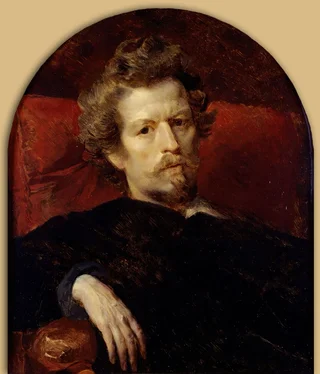
Karl Brioullov
1799–1852 · Empire russe · Romantisme
L'histoire
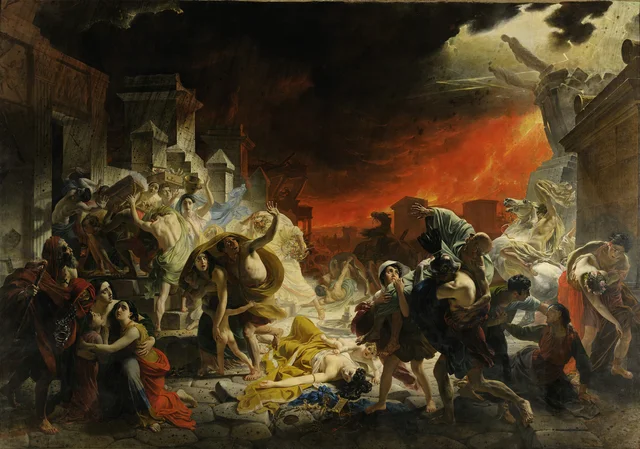
Dans les années 1830, la peinture russe répondait encore à l'Académie de Saint-Pétersbourg, où le modèle était le calme ordre classique emprunté à la Rome antique. Karl Brioullov passa ces années en Italie, et près de Naples il arpenta les rues déterrées de Pompéi, la ville ensevelie par le Vésuve en 79 après J.-C. La rue des Tombeaux le marqua tant qu'il y installa une immense toile, parmi les statues qui tombent et un ciel couleur de cendre.
Il l'acheva en 1833, large d'environ six mètres. Brioullov avait lu la lettre de témoin oculaire de Pline le Jeune sur l'éruption, celle où l'oncle de Pline meurt, et il éclaira toute la scène par la foudre et la lueur rouge du volcan. Le comte Anatole Demidov, riche collectionneur russe, la paya. La toile alla d'abord à la galerie de Brera à Milan, puis au Salon de Paris en 1834, où elle remporta une médaille d'or.
Presque du jour au lendemain, Brioullov devint le premier peintre russe à jouir d'une vraie réputation à l'étranger. Le tableau inspira un roman anglais, Les Derniers Jours de Pompéi de Bulwer-Lytton, et quand il parvint à Saint-Pétersbourg les écrivains Pouchkine et Gogol traitèrent son arrivée en événement national. Il est aujourd'hui au Musée russe, où il fut transféré en 1897.