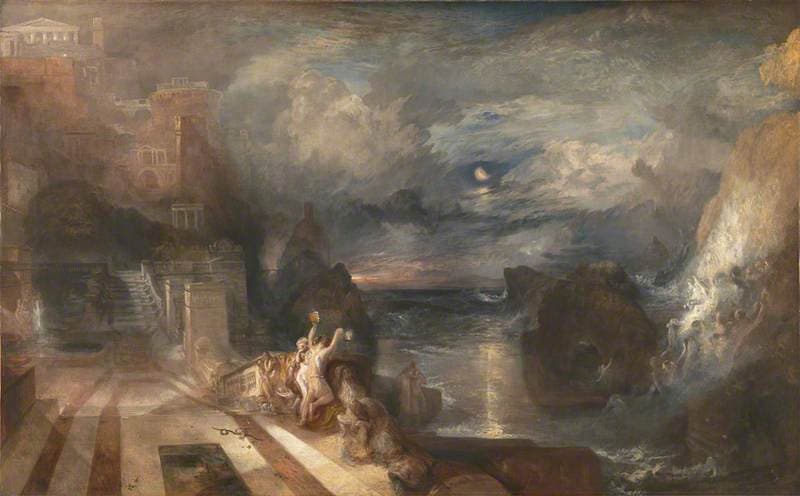
J. M. W. Turner, The Parting of Hero and Leander, 1834. Wikimedia Commons. · PD
La séparation d'Héro et Léandre
Détails
L'histoire
When Turner showed this at the Royal Academy in 1837, he was in his early sixties and near the end of his exhibiting life, still reaching back to an old Greek story most of his rivals had left alone. It comes from Musaeus, a late-antique poet. Hero, a priestess on one shore of the narrow Hellespont, kept a lamp burning so that Leander could swim across to her each night, until the night the flame went out and he drowned. Turner keeps the lovers small and half-lost in shadow at the water's edge, the parting barely visible, while the sea and a stormy sky take up most of the canvas. Above them a winged Cupid holds up a lamp and a torch. He thought well enough of the picture to print seven lines of his own verse beside it in the exhibition catalogue.