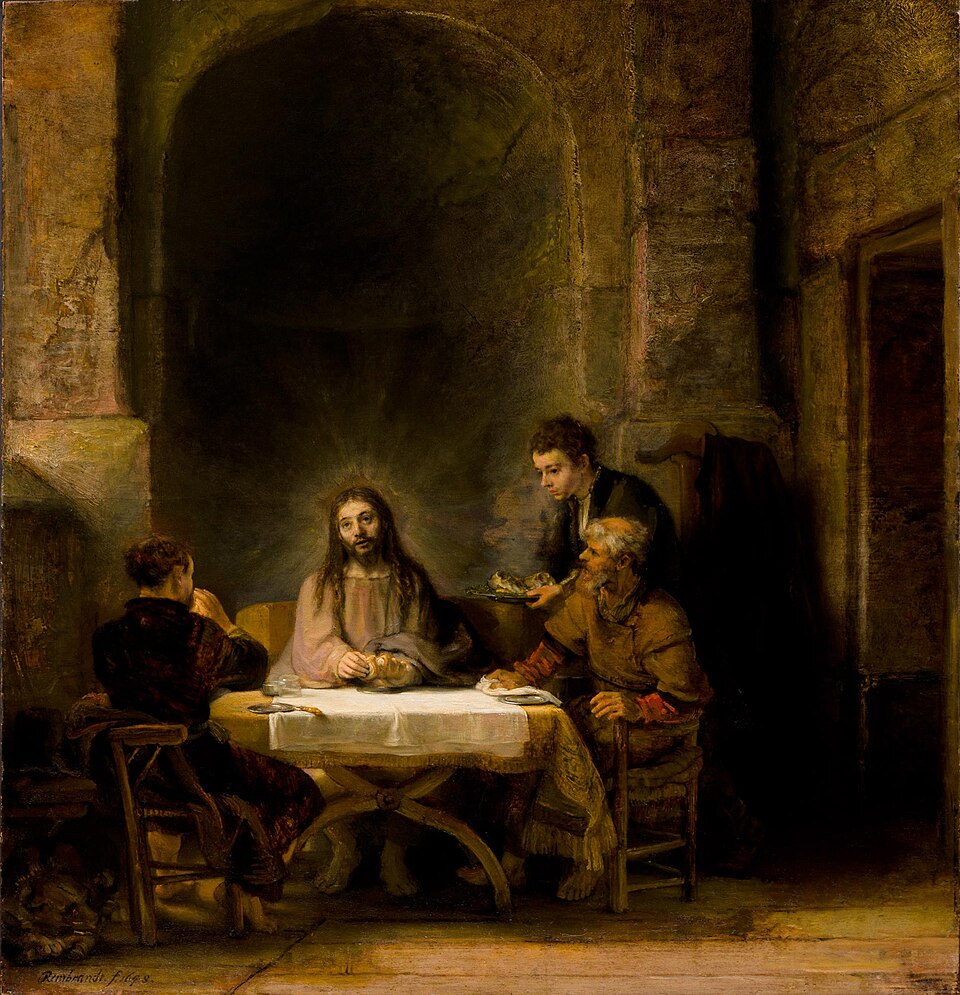
Rembrandt, The Pilgrims of Emmaus, 1648. Wikimedia Commons. · PD
Les Pèlerins d'Emmaüs
Détails
L'histoire
En 1648, l'année où l'Europe signait enfin la paix qui mettait fin à des décennies de guerre, Rembrandt peignit ce petit panneau d'acajou, à peine plus grand qu'un livre ouvert. Il fixe un instant de l'Évangile de Luc: deux disciples partagent le repas à Emmaüs avec un inconnu et, au moment où celui-ci rompt le pain, reconnaissent soudain le Christ ressuscité. C'était le sujet préféré de Rembrandt, sur lequel il revint toute sa vie. Jeune, il l'avait traité avec éclat, la figure découpée à contre-jour. Ici tout est silencieux: une lumière dorée enveloppe un Christ calme et vu de face, tandis qu'un serviteur, qui ne se doute de rien, continue son service. Le disciple de gauche a lâché sa serviette et joint les mains, saisi à la seconde même où il comprend.