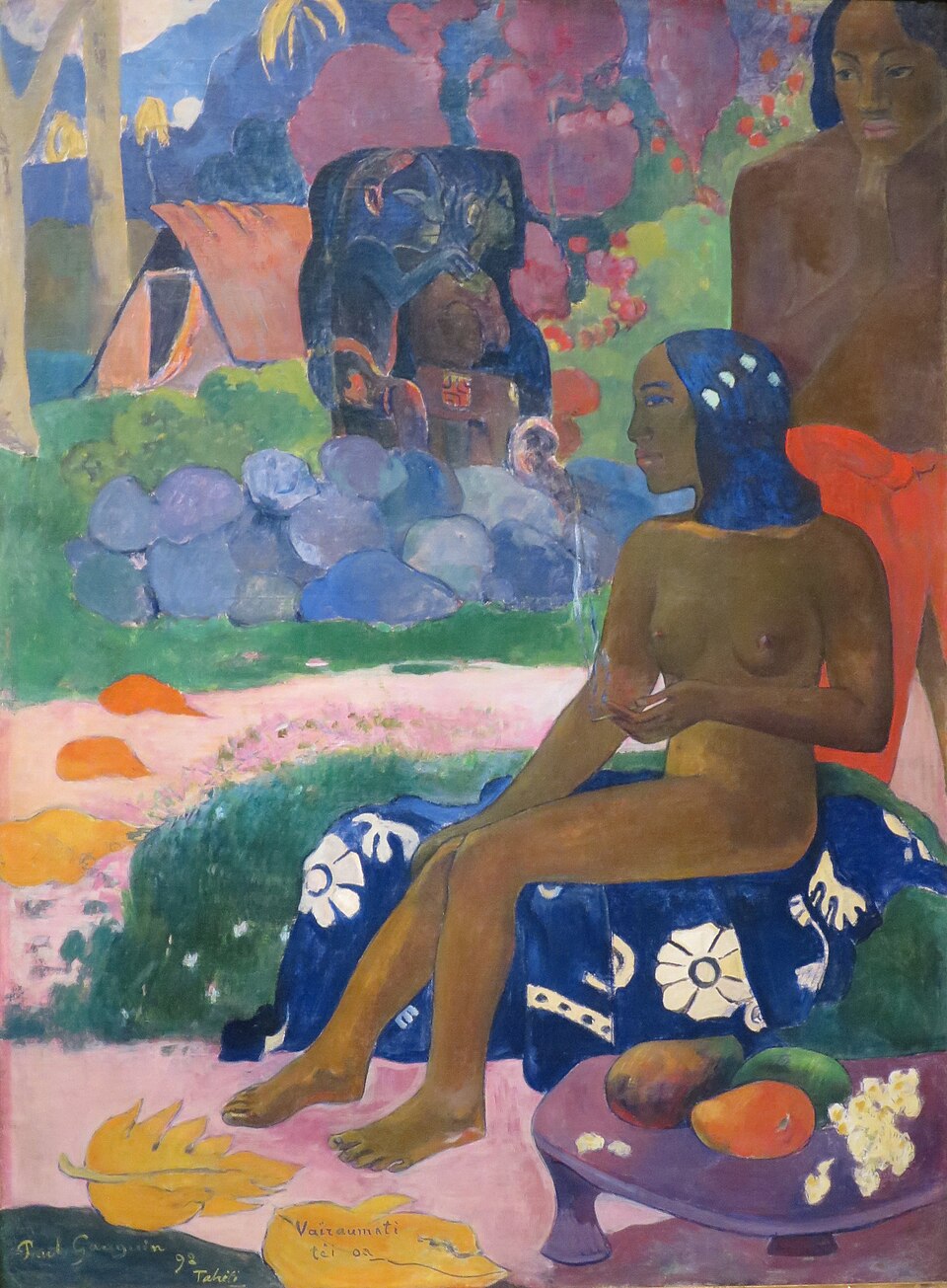
Paul Gauguin, Vairumati tei oa, 1892. Wikimedia Commons. · PD
Son nom est Vairaumati
Détails
L'histoire
By 1892 Gauguin had been in Tahiti about a year, and the untouched paradise he'd sailed from France to find turned out to be a French colonial town, its old religion mostly gone. So he rebuilt it from books and imagination. The woman here carries the name Vairaumati, a mortal chosen by the god Oro to help found a new race, though the young Tahitian who actually sat for him bore no such name. Gauguin sets her against flat bands of hot colour, a white bird and two figures behind, closer to a painted idol than a portrait. Sergei Shchukin, the Moscow textile merchant, bought it in 1904, which is how a Tahitian goddess ended up in a Russian collection.