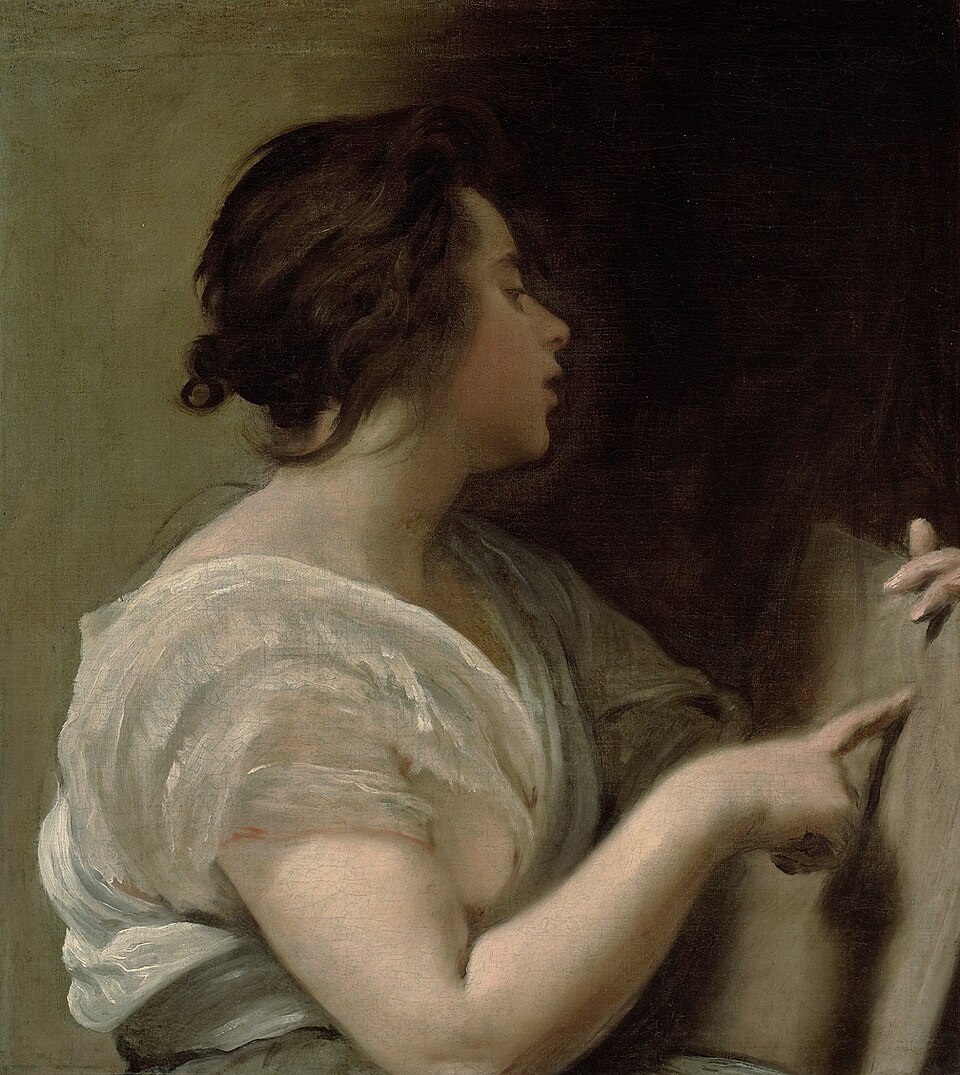
Diego Velázquez, Female Figure (Sibyl with Tabula Rasa), 1648. Wikimedia Commons. · PD
Figura femminile (Sibilla con tabula rasa)
Dettagli
La storia
È uno degli enigmi del Velázquez maturo, e nessuno sa chi sia la donna. La si chiama di solito sibilla, un'antica profetessa, perché richiama un'altra figura che il pittore aveva dipinto anni prima con una tavoletta in mano. Qui è di profilo, un dito posato su una lavagna dove non c'è scritto proprio nulla, una tabula rasa. I capelli sciolti, qualche ciocca sul collo nudo, le labbra appena dischiuse, come sul punto di parlare. La piccola tela rimase probabilmente non finita, e forse per questo appare così viva, stesa con bianchi perlacei e una pennellata libera che Velázquez aveva imparato guardando Tiziano in Italia. La dipinse verso il 1648, quando era pittore di corte di Filippo IV a Madrid.