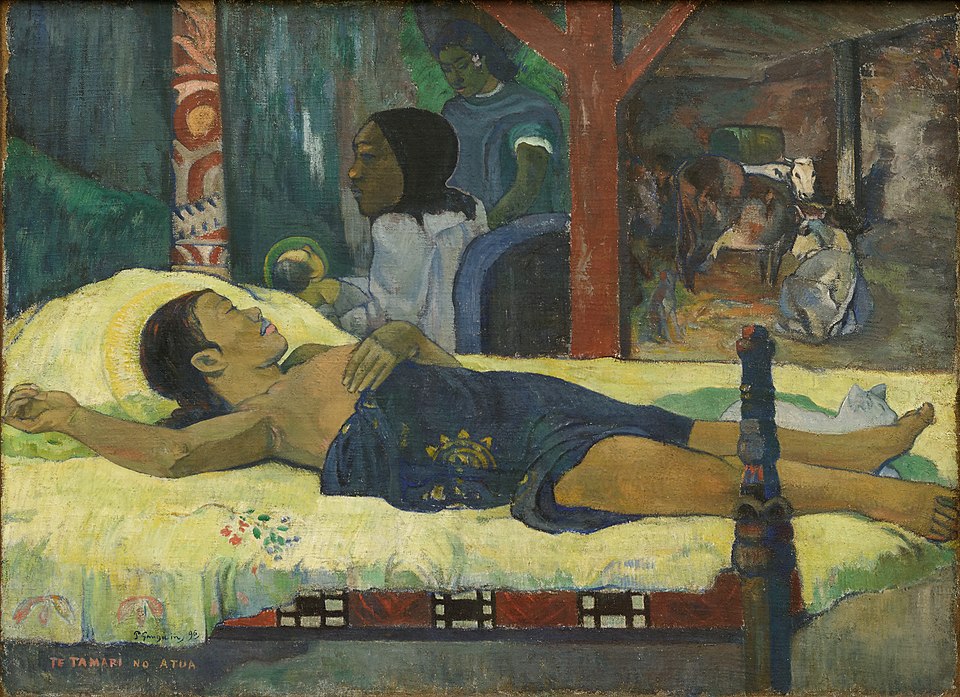
Paul Gauguin, Te tamari no atua, 1896. Wikimedia Commons. · PD
Te tamari no atua
Dettagli
La storia
Nel 1896 Gauguin era tornato a Tahiti e viveva in una capanna vicino a Papeete con Pau'ura, una ragazza tahitiana che quell'anno aspettava un bambino. Da questa vicenda personale nasce una Natività ambientata ai tropici. In primo piano la giovane madre giace sfinita su un letto, mentre alle sue spalle un'altra donna regge il neonato, entrambi circondati da una sottile aureola d'oro. Sullo sfondo, in una stalla, si intravedono alcune mucche, e accanto al letto veglia una figura scura, simile agli spiriti dei morti che il pittore aveva già dipinto. La bambina nata da Pau'ura quell'inverno morì dopo pochi giorni.