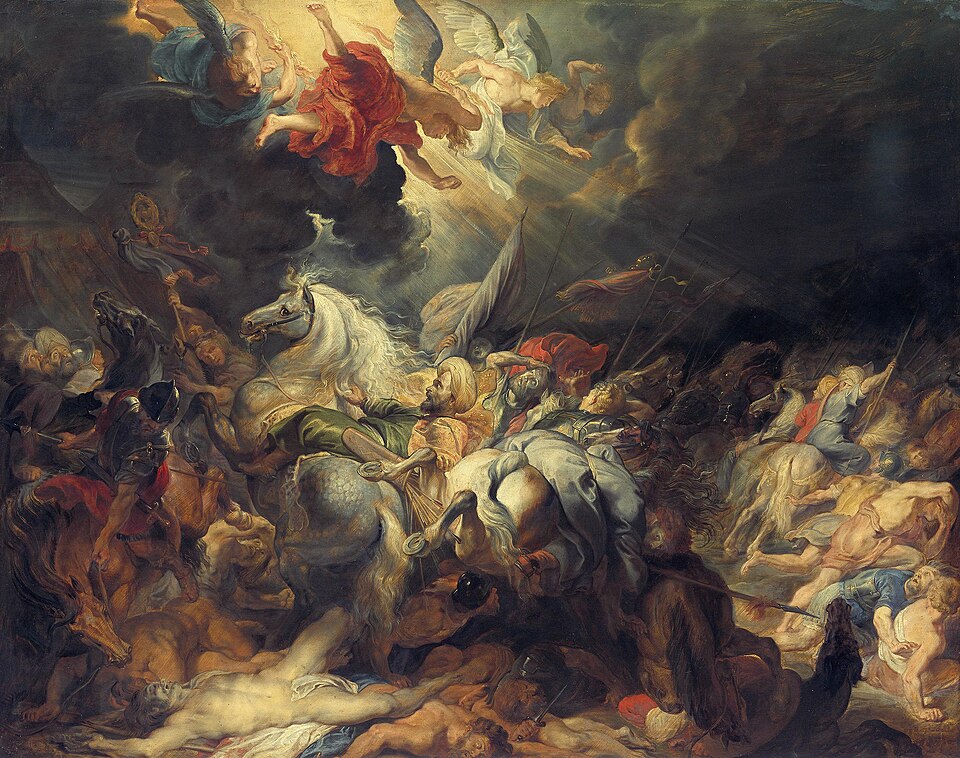
Peter Paul Rubens, The Defeat of Sennacherib, 1614. Wikimedia Commons. · PD
La sconfitta di Sennacherib
Dettagli
La storia
Nel 701 avanti Cristo il re assiro Sennacherib assediava Gerusalemme, e secondo l'Antico Testamento Dio mandò di notte un angelo che ne sterminò l'esercito. Rubens condensa quel culmine, intorno al 1617, in una composizione serrata e dosa la luce con precisione. Colpisce i morti a terra, i fuggiaschi all'estrema destra e soprattutto Sennacherib, con il volto atterrito. Il magnifico cavallo grigio che s'impenna deriva, secondo il museo, da un'invenzione di Leonardo da Vinci. Il quadro aveva un pendant, la Conversione di san Paolo, dove anche un cavaliere viene sbalzato di sella da una luce dal cielo, e quell'opera si trova oggi alla Courtauld Gallery di Londra.