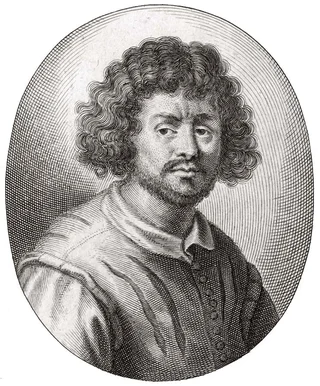
クロード・ロラン
1600–1682 · ロレーヌ公国 · 古典主義
ストーリー
1600年代半ばのローマで、ロレーヌ公国出身のある画家が、他の者たちが彼の作品を贋作して儲けようとするほど引く手あまたになっていた。クロード・ジュレ、単にクロード・ロランとして知られる彼は、柔らかく昇るあるいは沈む太陽に浸された光あふれる港や牧歌的な風景を描き、ヨーロッパの枢機卿や貴族が高値でそれを求めた。
贋作者への彼の答えは一冊の本だった。1635年ごろから彼は「リベル・ヴェリタティス」、真実の書をつけ続けた。工房を出ていくほぼすべての完成作を丁寧に写した素描を綴じた画帳で、しばしば買い手の名と日付を記した。それは約200点の素描に及び、本物のクロードを贋作と見分けることを可能にした。
彼は本当は場所よりも光の画家だった。彼の場面の神話や聖書の人物はしばしば小さく、隅に押しやられ、目は地平線の霞んだ太陽へと奥へたどっていく。その効果は理想的風景というヨーロッパの観念を2世紀近くにわたって定めた。100年余り後、英国の画家ターナーは、自作の2点をロンドンでクロードの絵の隣に掛けてほしいと遺言で求めた。
作品
34点の作品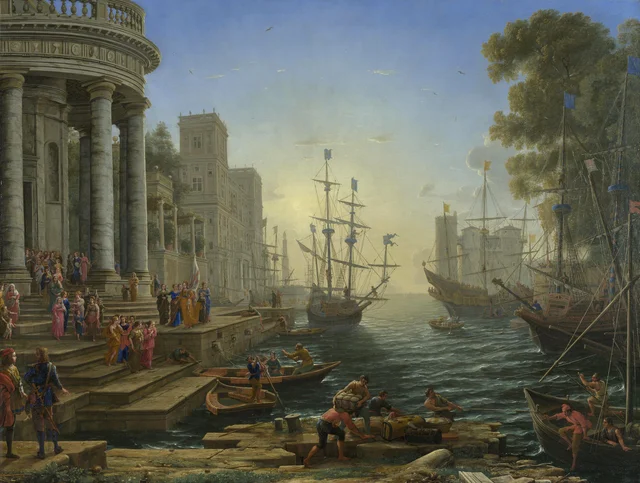 聖ウルスラの乗船のある港クロード・ロラン, 1641
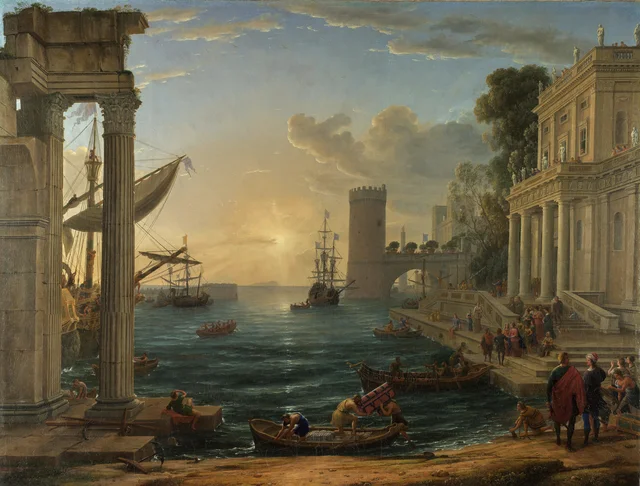 シバの女王の乗船クロード・ロラン, 1648
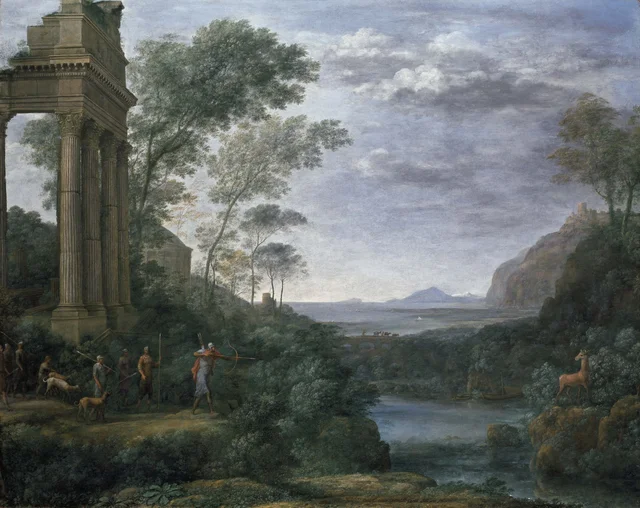 シルウィアの牡鹿を射るアスカニウスクロード・ロラン, 1682
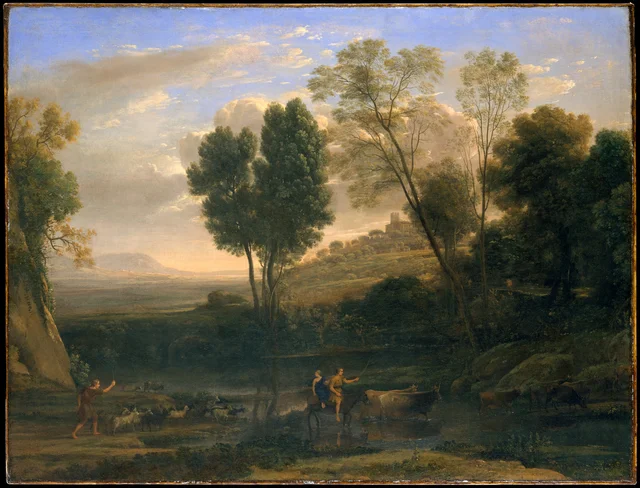 日の出クロード・ロラン, 1646
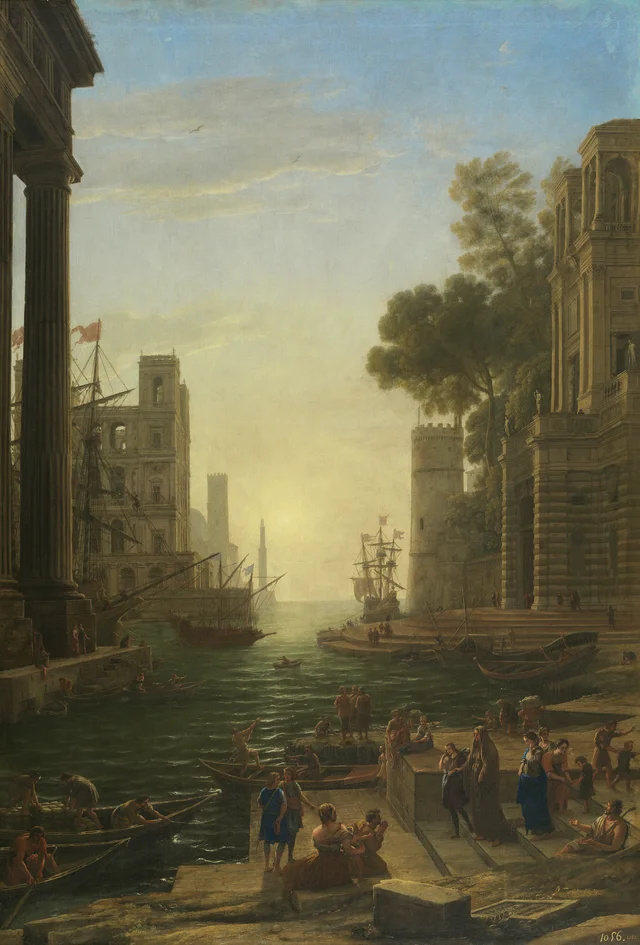 オスティアで乗船する聖パウラ・ロマーナのいる風景クロード・ロラン, 1639
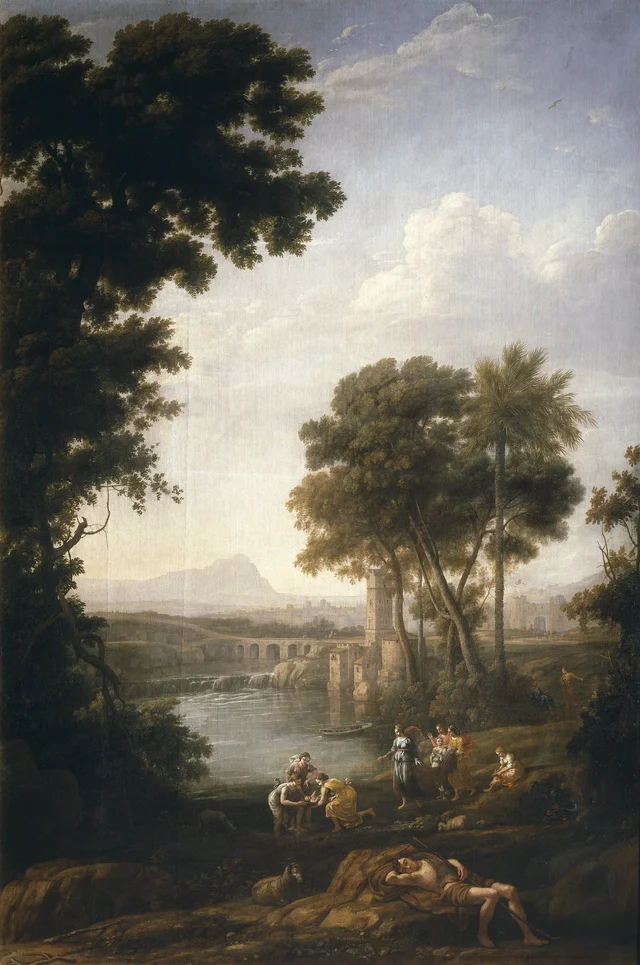 モーセの発見のある風景クロード・ロラン, 1639
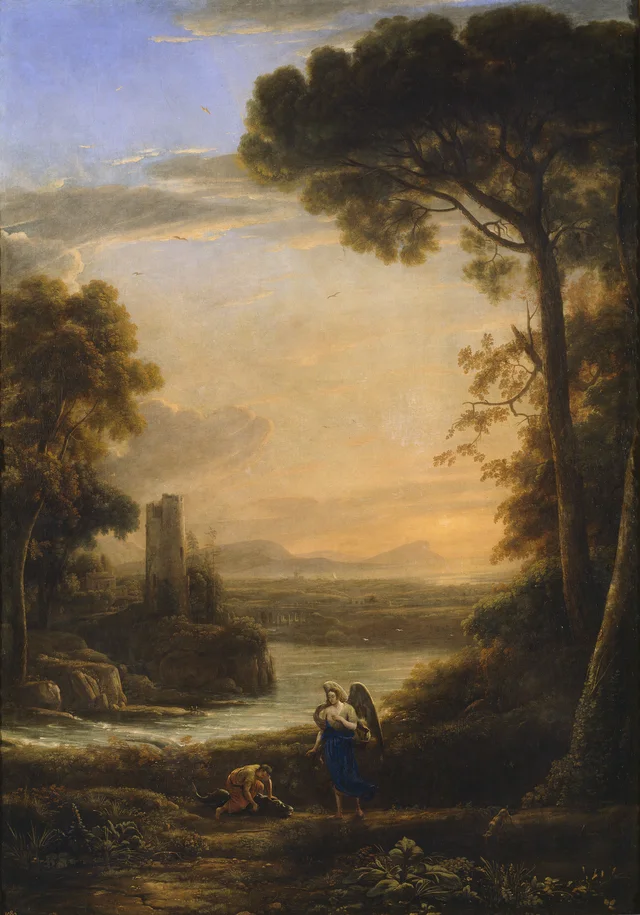 トビアスと天使のいる風景クロード・ロラン, 1639
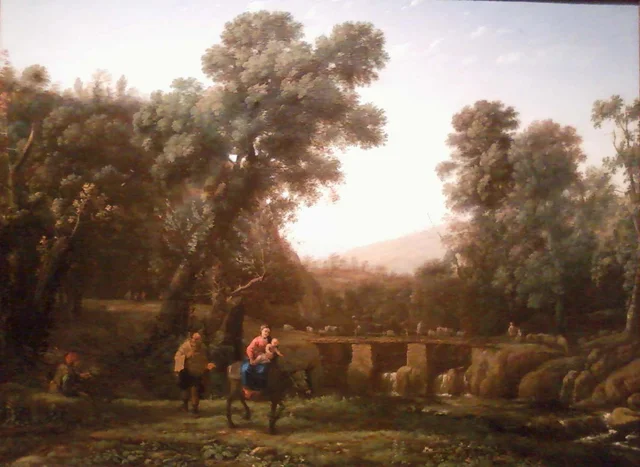 エジプトへの逃避クロード・ロラン, 1635
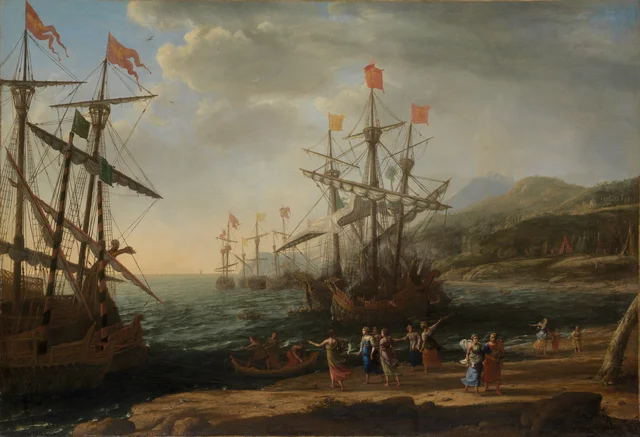 艦隊に火を放つトロイアの女たちクロード・ロラン, 1643
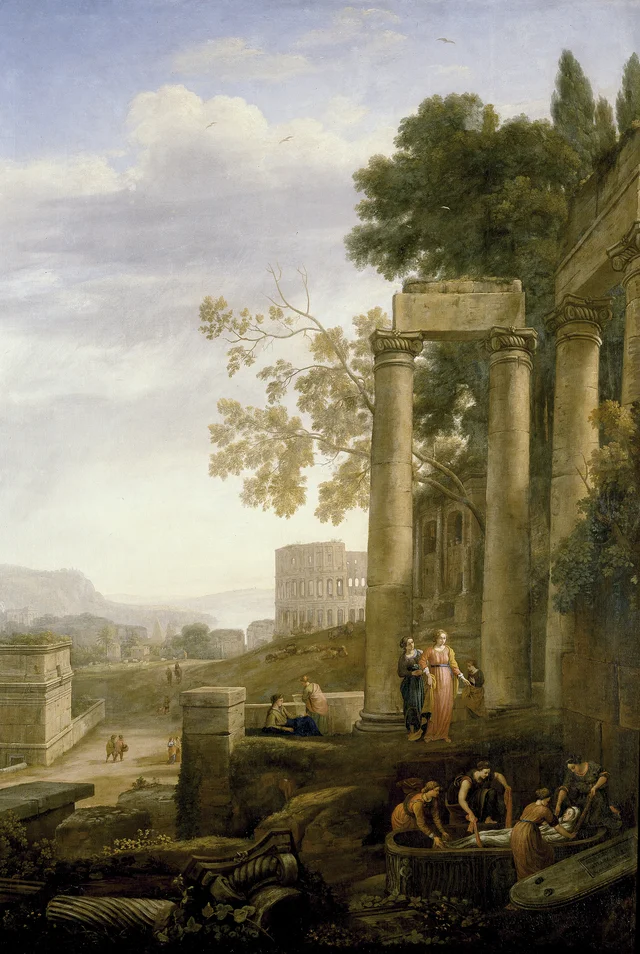 聖セラピアの埋葬のある風景クロード・ロラン, 1639
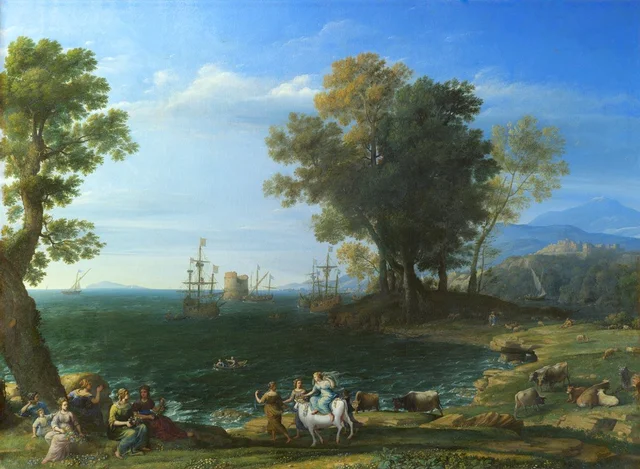 エウロペの略奪クロード・ロラン, 1655
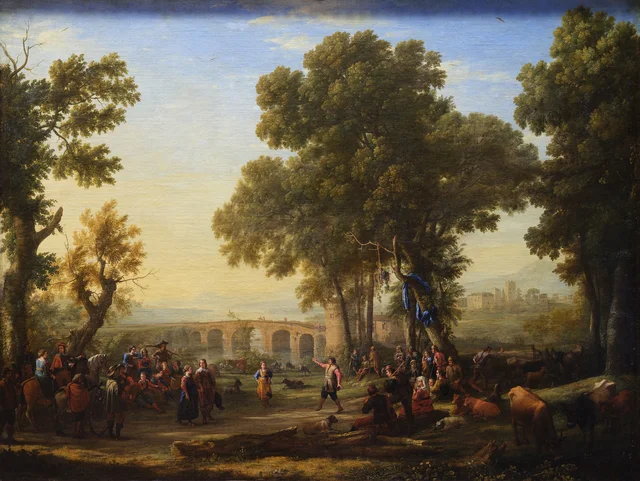 村祭りクロード・ロラン, 1639
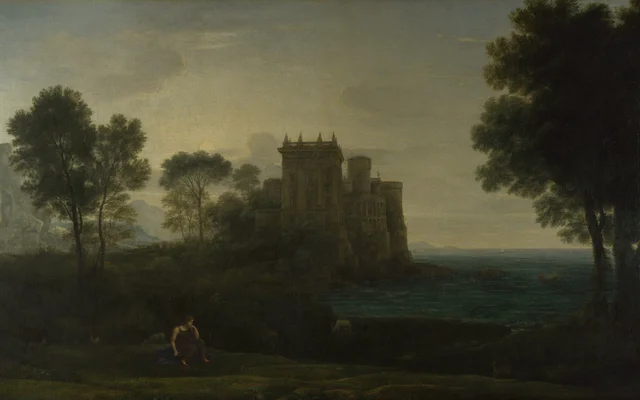 クピドの宮殿の前のプシュケのいる風景クロード・ロラン, 1664
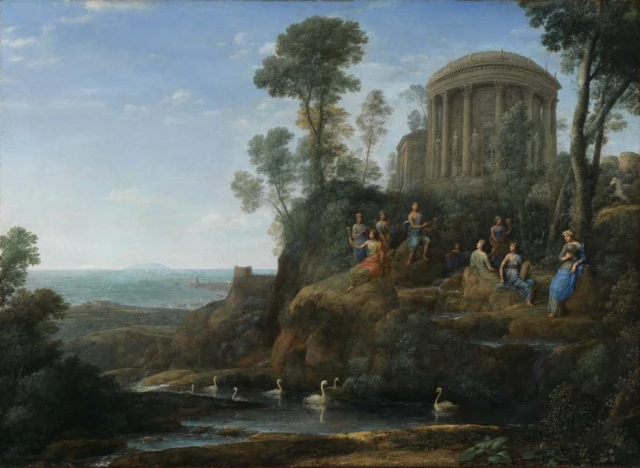 ヘリコン山のアポロンとムーサたちクロード・ロラン, 1680
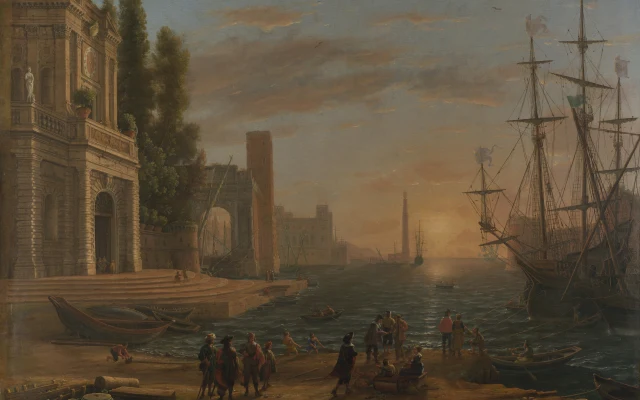 海港クロード・ロラン, 1644
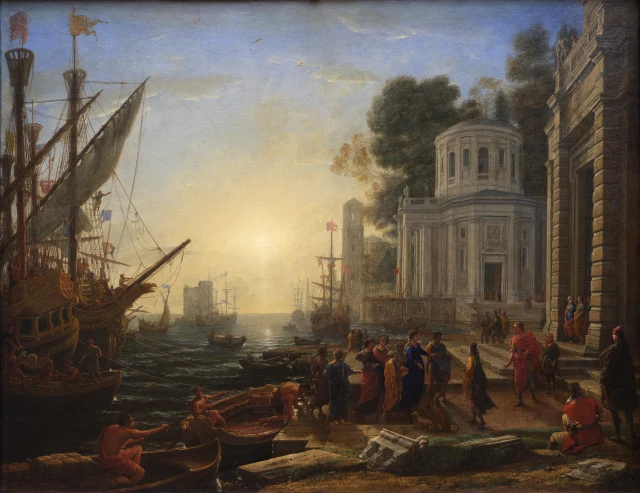 タルソスに上陸するクレオパトラクロード・ロラン, 1642
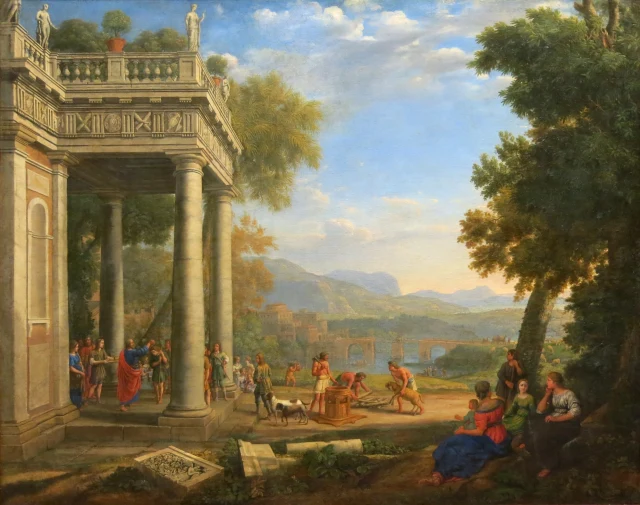 サムエルにより王として油を注がれるダビデクロード・ロラン, 1647
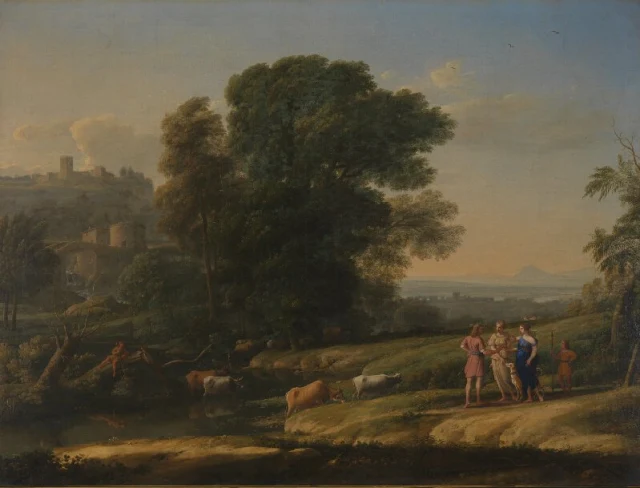 ディアナによって再会するケファロスとプロクリスのいる風景クロード・ロラン, 1645
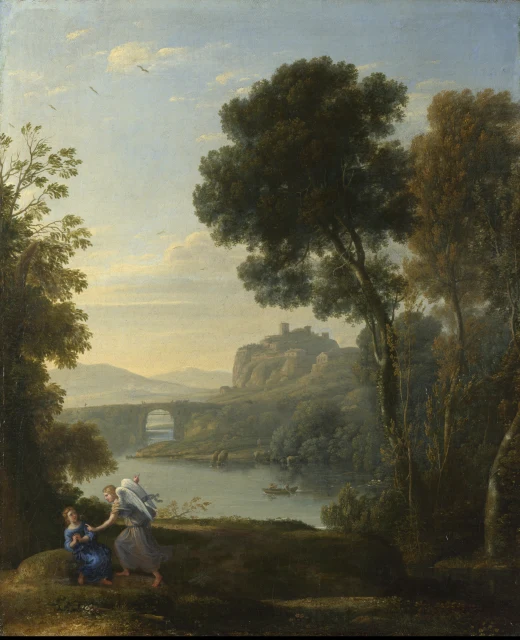 ハガルと天使のいる風景クロード・ロラン, 1646
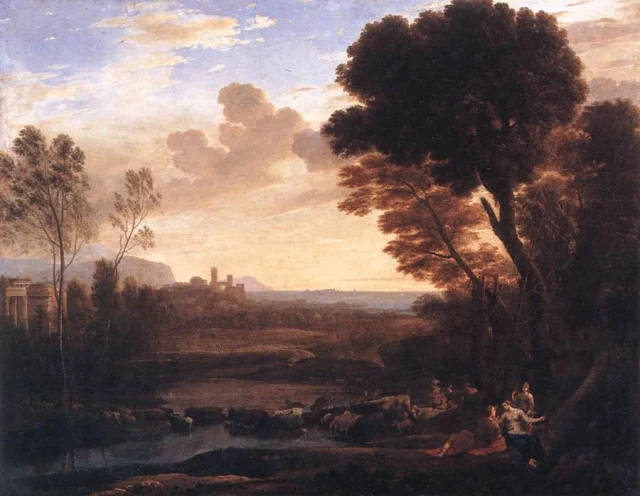 パリスとオイノネのいる風景(「浅瀬」)クロード・ロラン, 1648
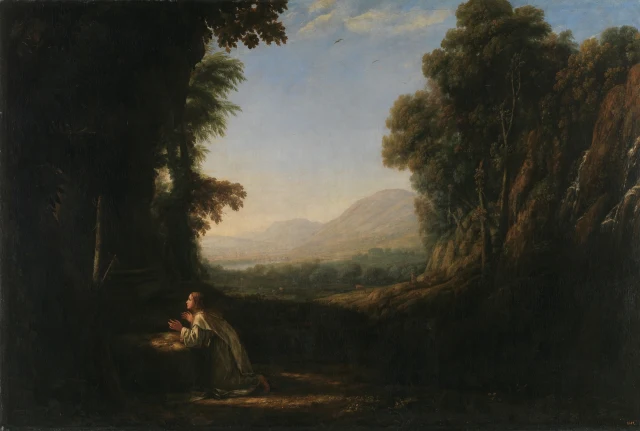 聖マリア・デ・セルベリョーのいる風景クロード・ロラン, 1637
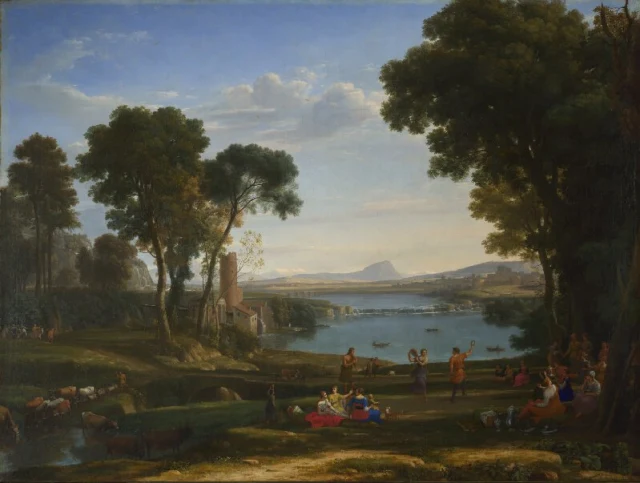 イサクとリベカの結婚のある風景(『水車小屋』)クロード・ロラン, 1648
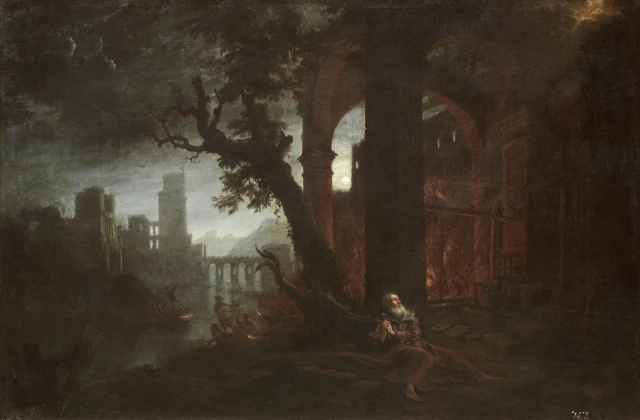 聖アントニウスの誘惑のある風景クロード・ロラン, 1638
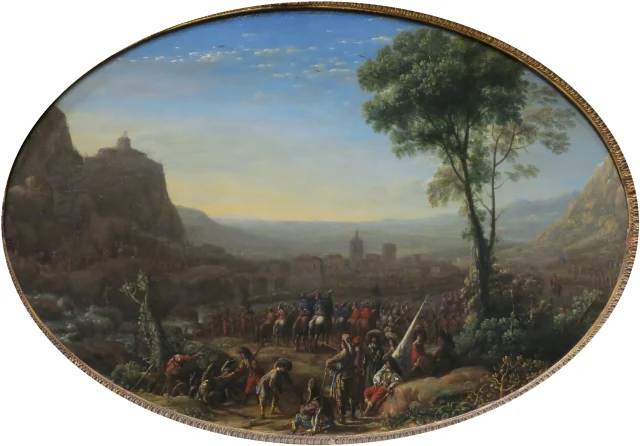 スーザの隘路を突破するルイ13世クロード・ロラン, 1632