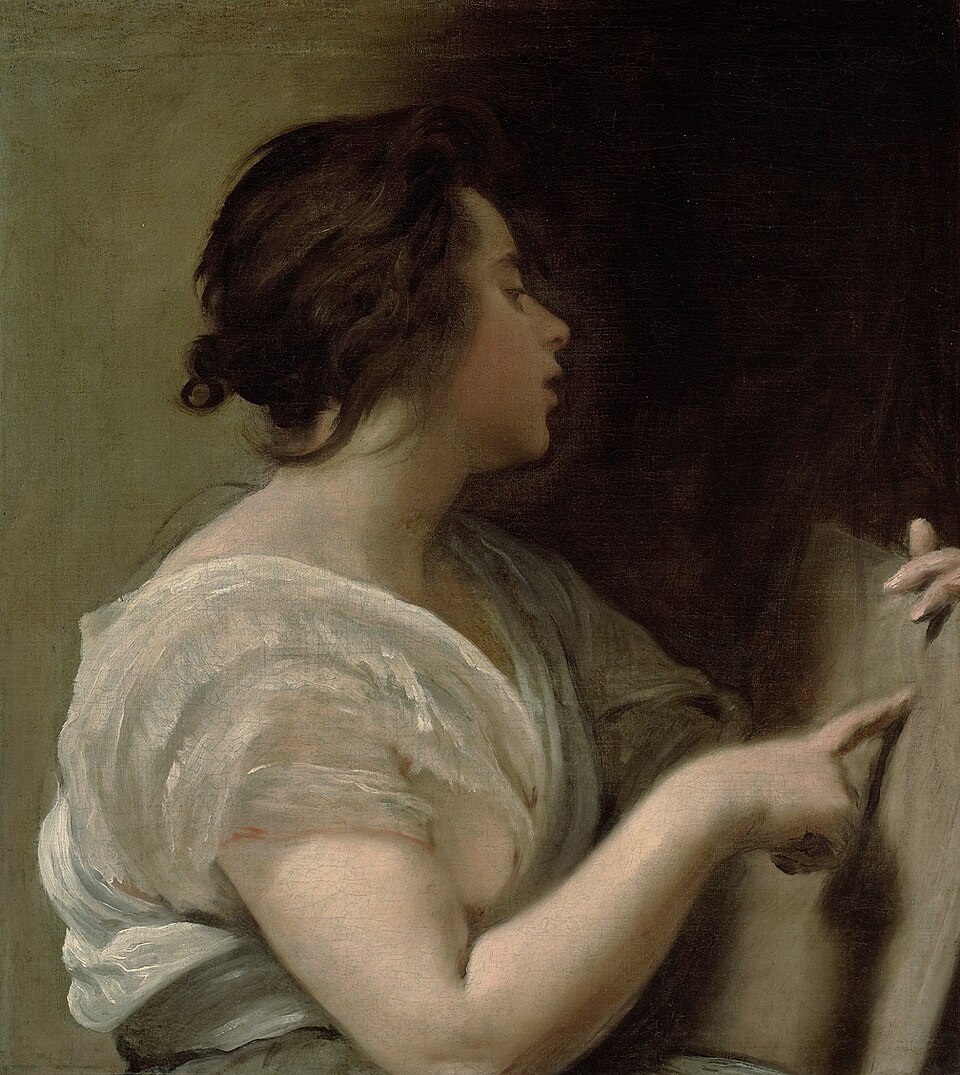
Diego Velázquez, Female Figure (Sibyl with Tabula Rasa), 1648. Wikimedia Commons. · PD
女性像(タブラ・ラサを持つシビュラ)
作品情報
ストーリー
これは晩年のベラスケスが残した謎の一つで、描かれた女性が誰なのかは分かっていない。ふつうは古代の予言者シビュラと呼ばれる。数年前に画家が板を手にした別の女性像を描いており、それを思わせるからだ。ここでは横顔で立ち、一本の指を石板に添えているが、その板には何ひとつ書かれていない。ラテン語でいうタブラ・ラサ、白紙の板である。髪はほどけ、数筋が裸の首にかかり、唇はわずかに開いて、今にも話しだしそうだ。この小さな画布はおそらく未完のまま残された。だからこそ、これほど生き生きと見えるのかもしれない。真珠のような白、そしてイタリアでティツィアーノを前に身につけた自在な筆づかい。制作は1648年ごろ、マドリードでフェリペ4世の宮廷画家をつとめていた時期にあたる。