セナケリブの敗北

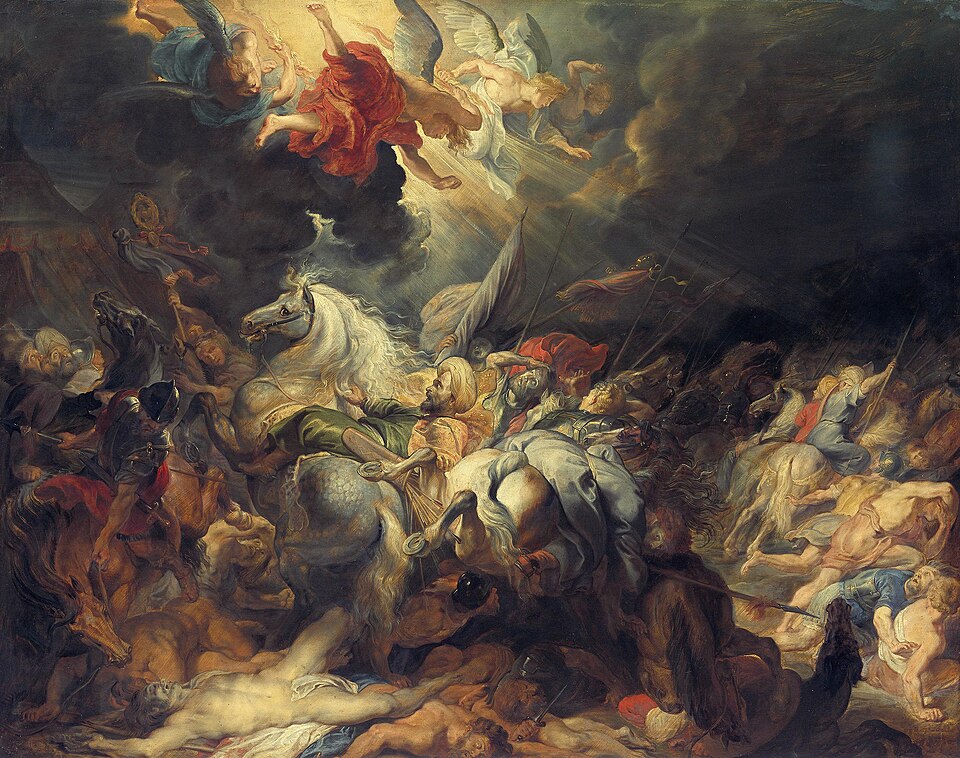
Peter Paul Rubens, The Defeat of Sennacherib, 1614. Wikimedia Commons. · PD

セナケリブの敗北


作品情報

制作年
1614
技法
板に油彩
種類
絵画
寸法
97.7 × 122.7 cm

ストーリー

Rubens had come home to Antwerp in 1608 after nearly a decade studying in Italy, and by the mid-1610s he was turning out charged, crowded action scenes like this one. The story is from the Hebrew Bible. The Assyrian king Sennacherib has marched on Jerusalem, and in the night an angel falls on his army. Rubens paints the instant of panic. A shaft of light breaks from the dark, armored angels swoop down with weapons raised, horses rear, and the king clings to his horse's mane as his men tumble into the dust. He built it as a companion piece to another sudden divine intervention, the Conversion of Saint Paul, where a rider is likewise thrown from the saddle by a blast of light from above.

セナケリブの敗北 — ピーテル・パウル・ルーベンス — MuseScope