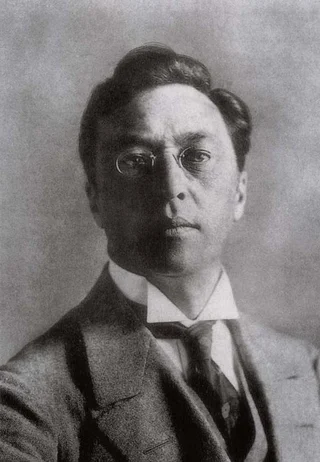
Wassily Kandinsky
1866–1944 · Russisches Kaiserreich · Expressionismus
Die Geschichte
Wassily Kandinsky kam spät und aus freien Stücken zur Malerei. Geboren 1866 in Moskau, ließ er sich zunächst zum Juristen ausbilden und war so erfolgreich, dass ihm eine Professur für römisches Recht angeboten wurde – die er mit 30 Jahren ausschlug, um nach München zu ziehen und malen zu lernen. Später nannte er zwei Erlebnisse, die ihn dazu bewogen hätten: einen Heuhaufen von Monet, den er kaum als solchen erkennen konnte, und eine Wagner-Oper, die seinen Kopf beim Hören mit Farben füllte.
Das war keine bloße Redewendung. Kandinsky scheint tatsächlich Klang als Farbe und Farbe als Klang empfunden zu haben, und er kam zu der Überzeugung, ein Gemälde könne auf den Betrachter wirken wie Musik, ganz ohne ein erkennbares Objekt zu zeigen. Um 1910 begann er einige der ersten rein abstrakten Bilder der europäischen Kunst zu malen, Leinwände voller schwebender Flecken und Linien mit Titeln aus der Musik entlehnt, wie "Komposition" und "Improvisation".
1911 gründete er zusammen mit dem Maler Franz Marc in München den "Blauen Reiter", lose verbunden durch die Idee, Kunst müsse nach dem Geistigen streben. Der Erste Weltkrieg zerstreute die Gruppe und trieb Kandinsky zurück nach Russland. In den 1920er Jahren kehrte er nach Deutschland zurück, um am Bauhaus, der berühmten Gestaltungsschule, zu lehren; dort wurden seine Formen strenger und geometrischer, voller Kreise und harter Winkel. Als die Nationalsozialisten das Bauhaus schlossen und sein Werk als "entartet" brandmarkten, ging er nach Paris. Er starb kurz davor, in Neuilly, im Jahr 1944.
Weitere Artikel
Werke
312 Werke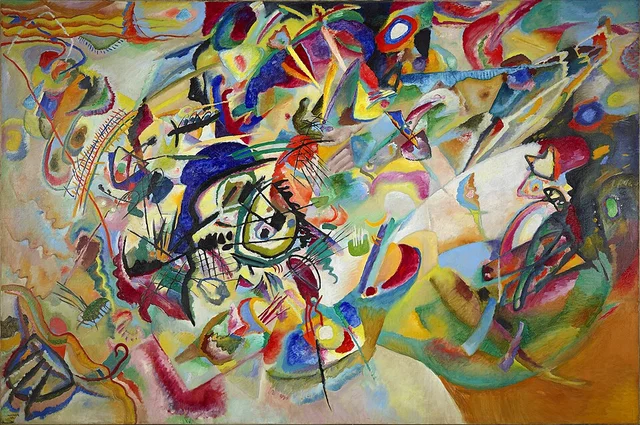 Komposition VIIWassily Kandinsky, 1913
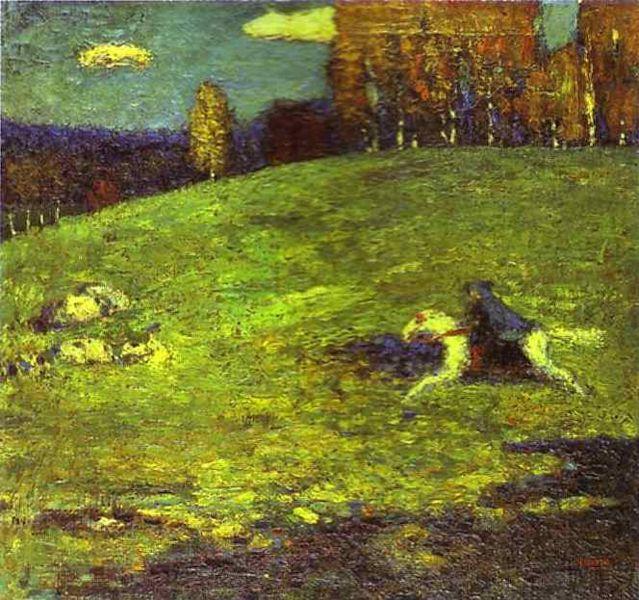 Der Blaue ReiterWassily Kandinsky, 1903
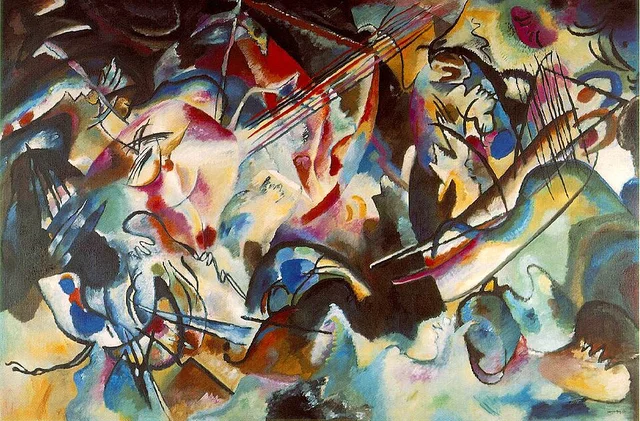 Komposition VIWassily Kandinsky, 1913
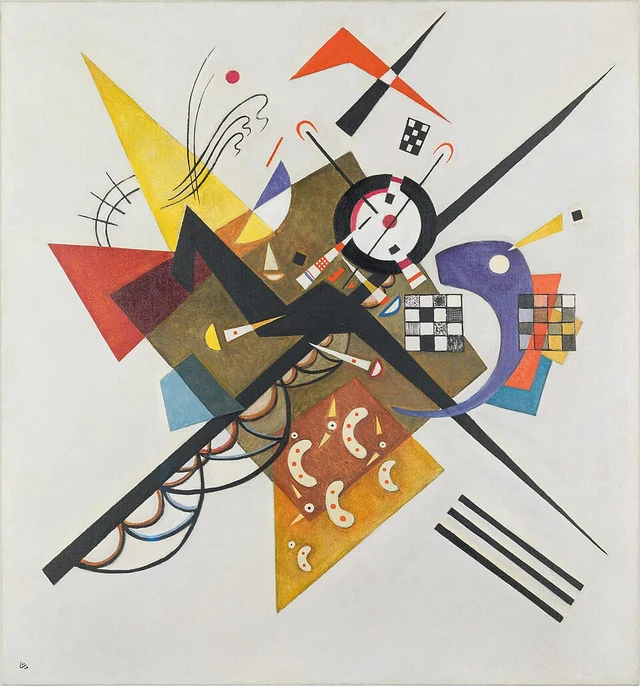 Auf Weiß IIWassily Kandinsky, 1923
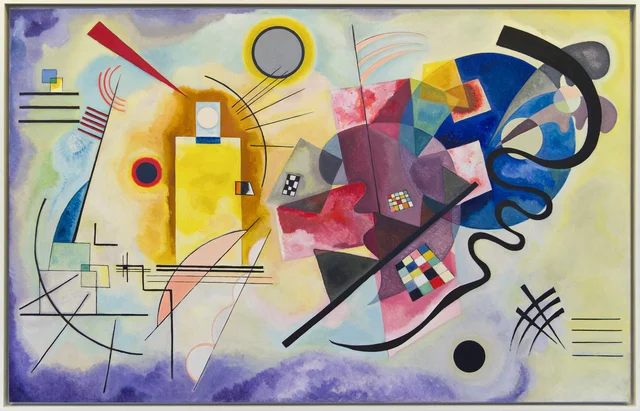 Gelb-Rot-BlauWassily Kandinsky, 1925
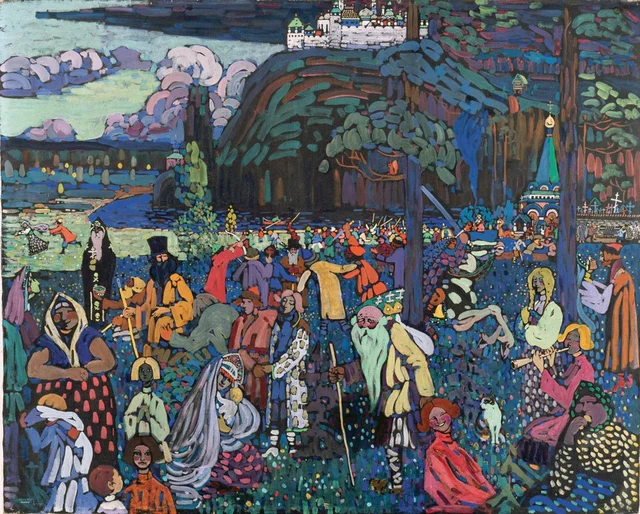 Das bunte LebenWassily Kandinsky, 1907
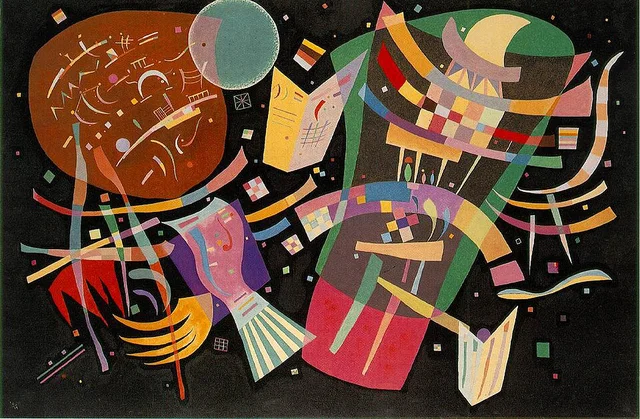 Komposition XWassily Kandinsky, 1939
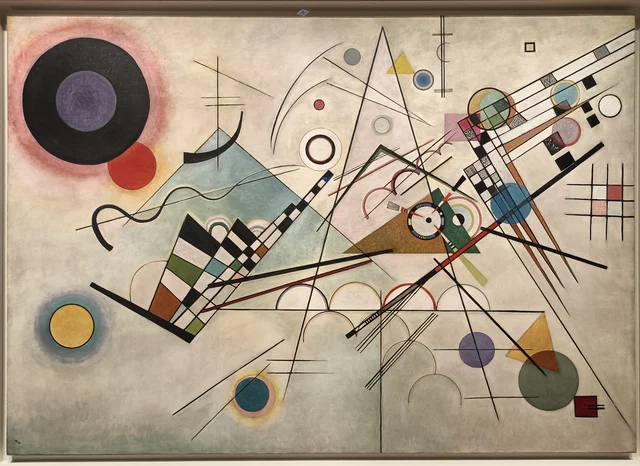 Komposition VIIIWassily Kandinsky, 1923
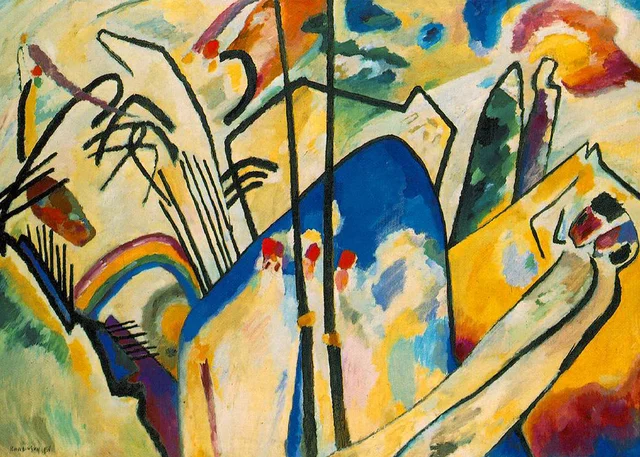 Komposition IVWassily Kandinsky, 1911
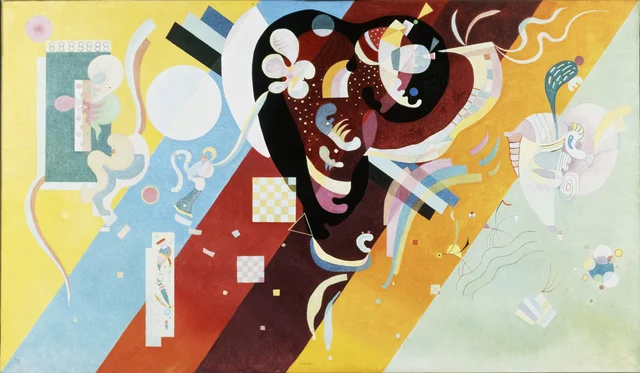 Komposition IXWassily Kandinsky, 1936
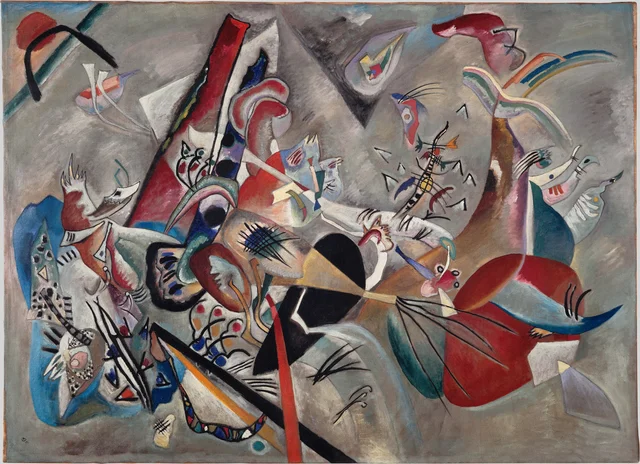 Im GrauWassily Kandinsky, 1919
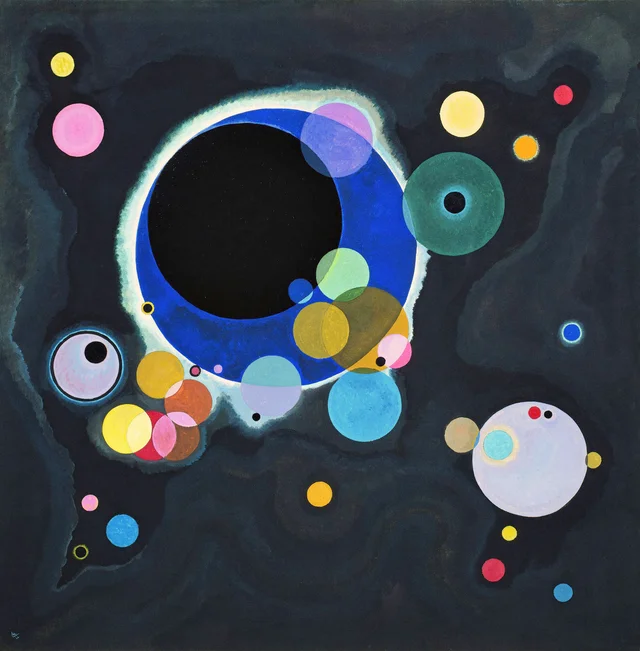 Einige KreiseWassily Kandinsky, 1926
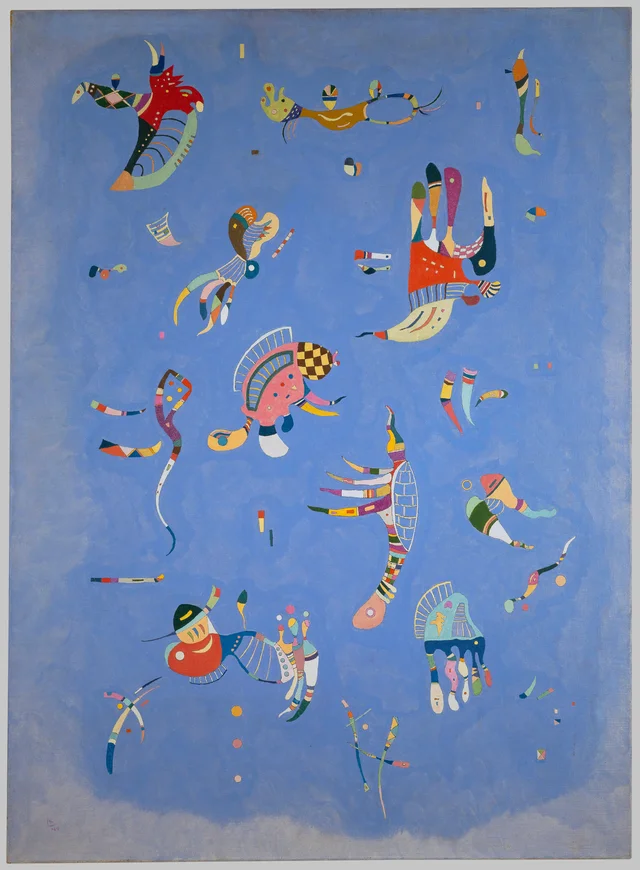 HimmelblauWassily Kandinsky, 1940
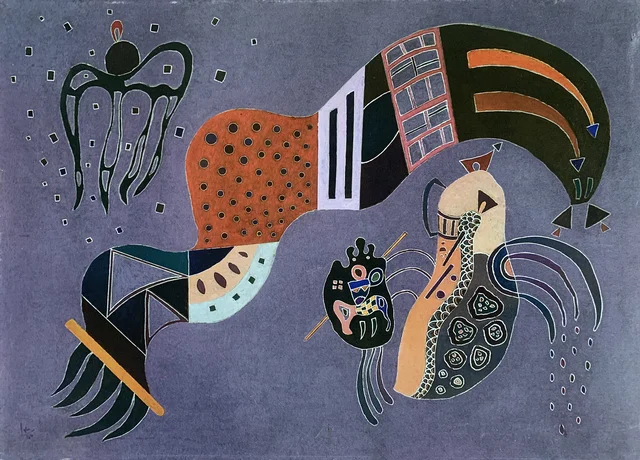 Gemäßigter SchwungWassily Kandinsky, 1944
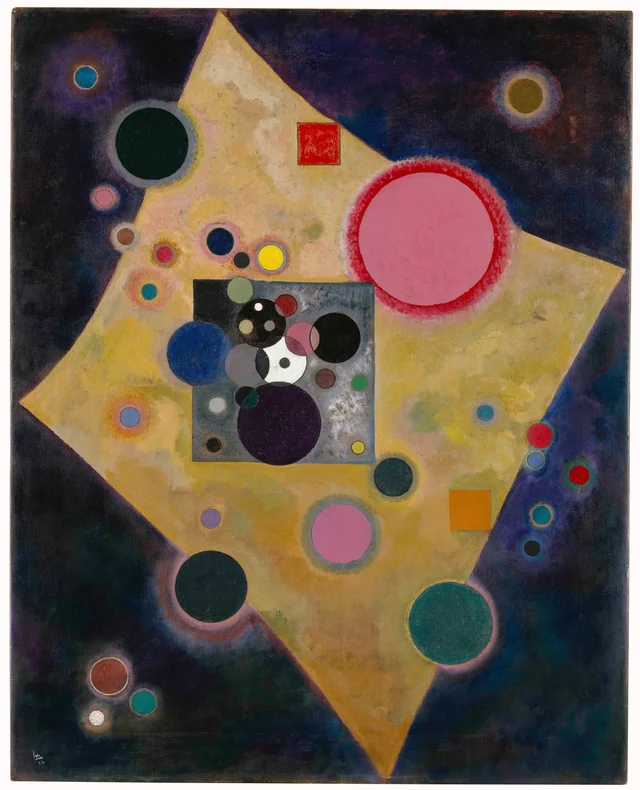 Akzent in RosaWassily Kandinsky, 1926
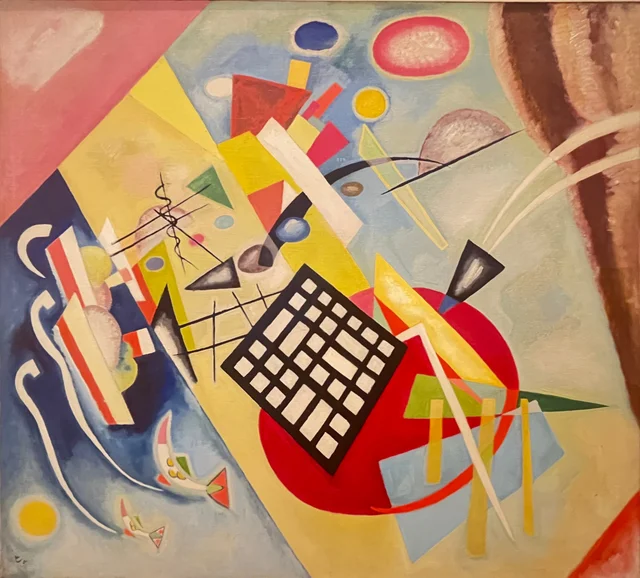 Schwarzer RasterWassily Kandinsky, 1922
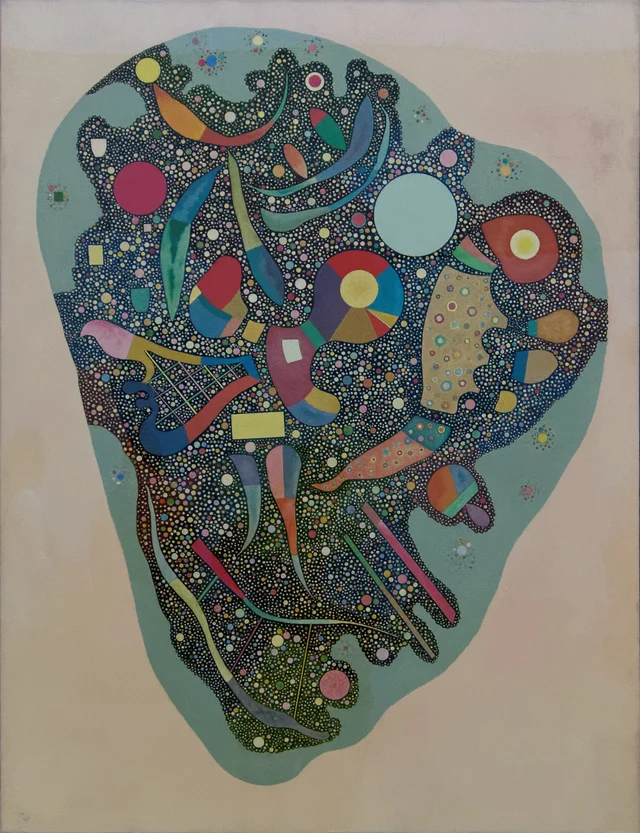 Buntes EnsembleWassily Kandinsky, 1938
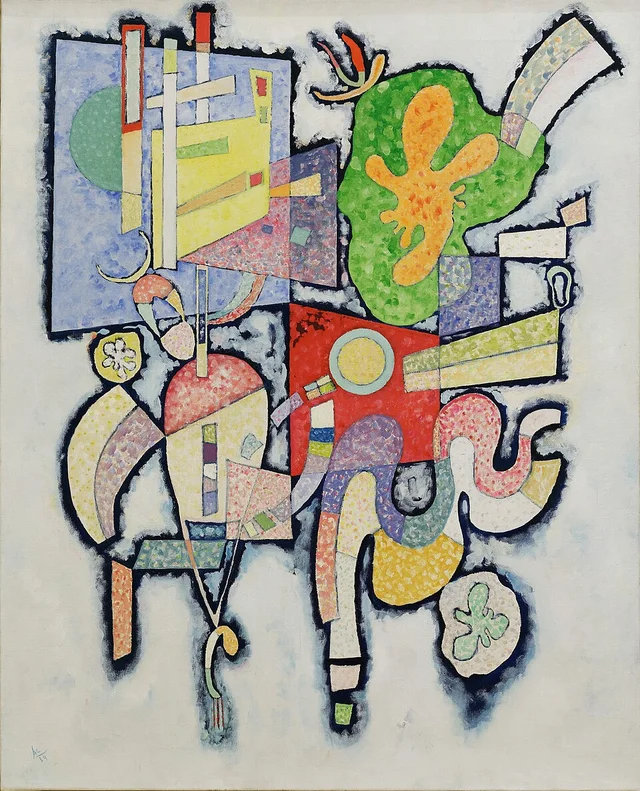 Komplex-einfachWassily Kandinsky, 1939
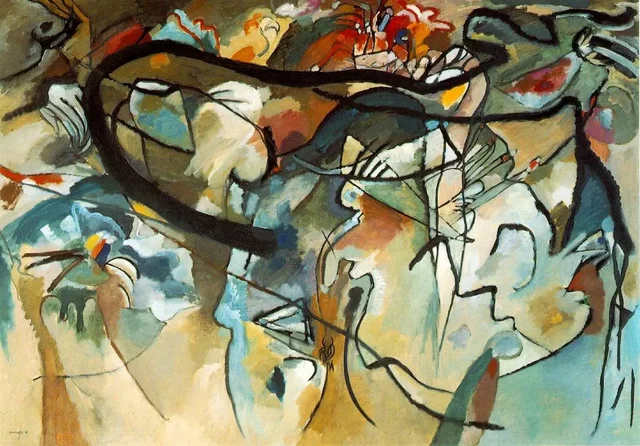 Komposition VWassily Kandinsky, 1911
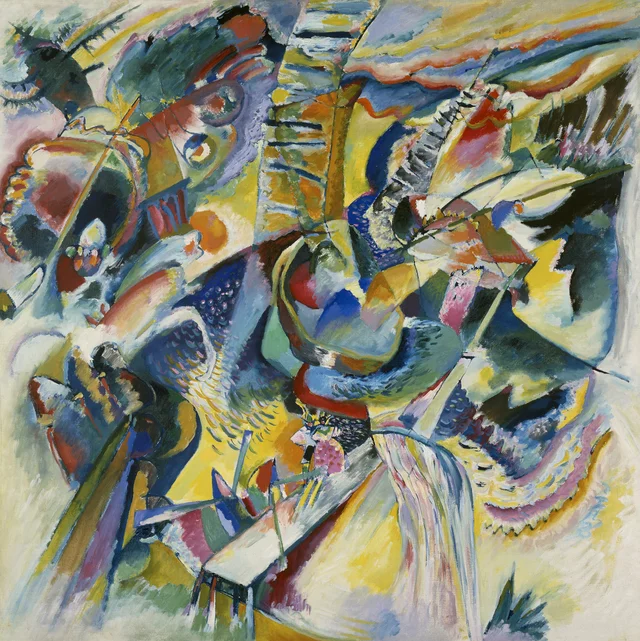 SchluchtWassily Kandinsky, 1914
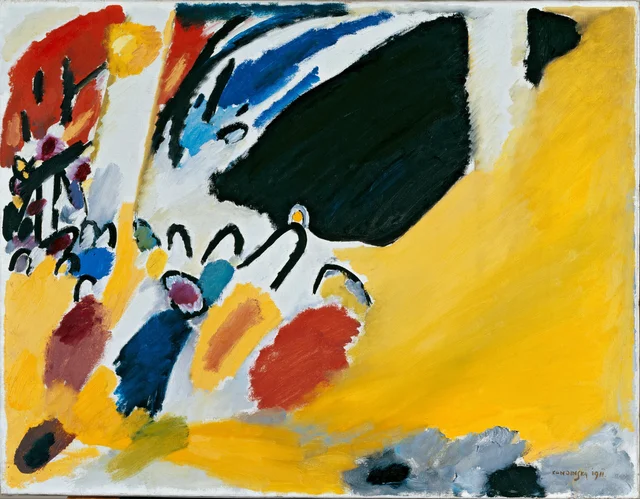 Impression III (Konzert)Wassily Kandinsky, 1911
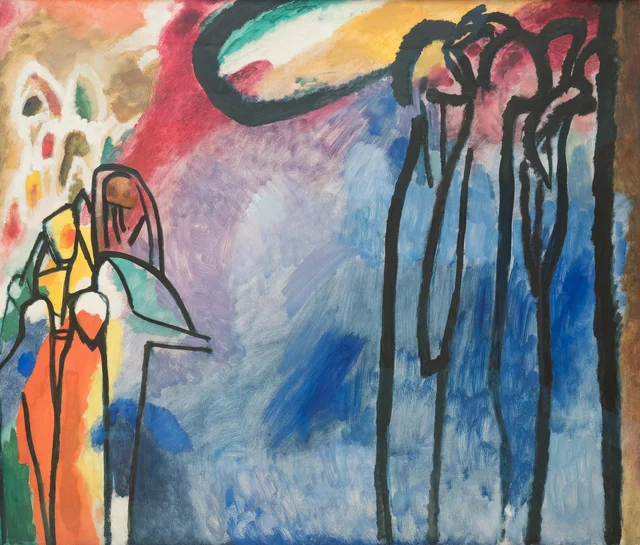 Improvisation 19Wassily Kandinsky, 1911
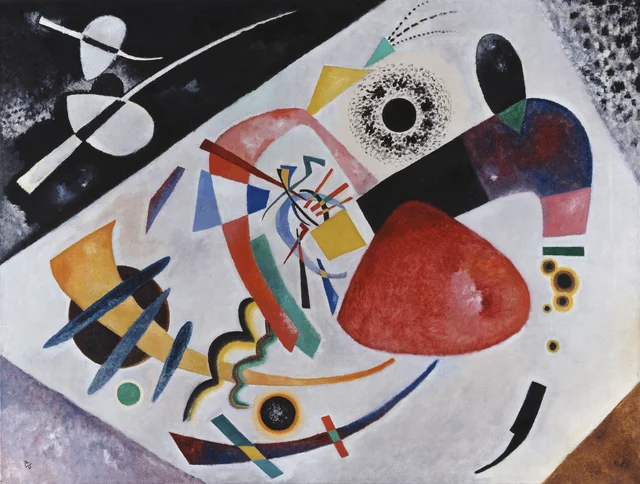 Roter Fleck IIWassily Kandinsky, 1921
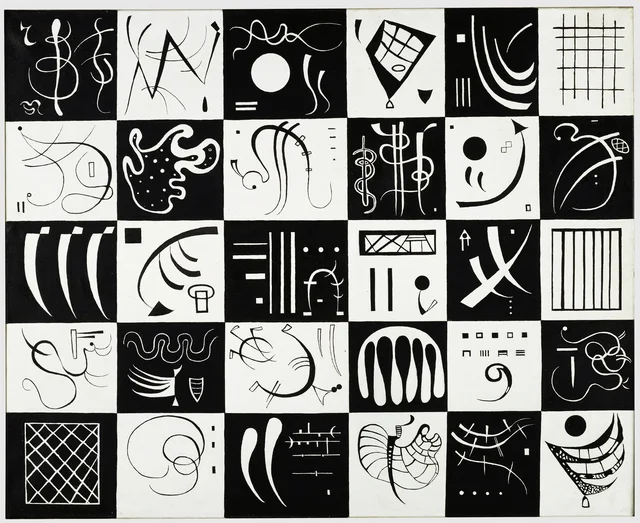 DreißigWassily Kandinsky, 1937
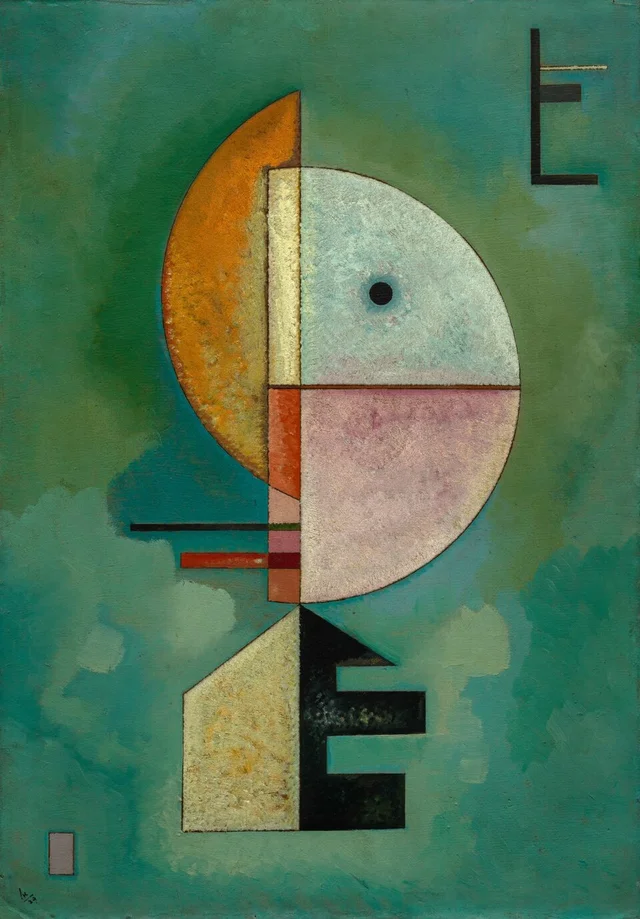 EmporWassily Kandinsky, 1929