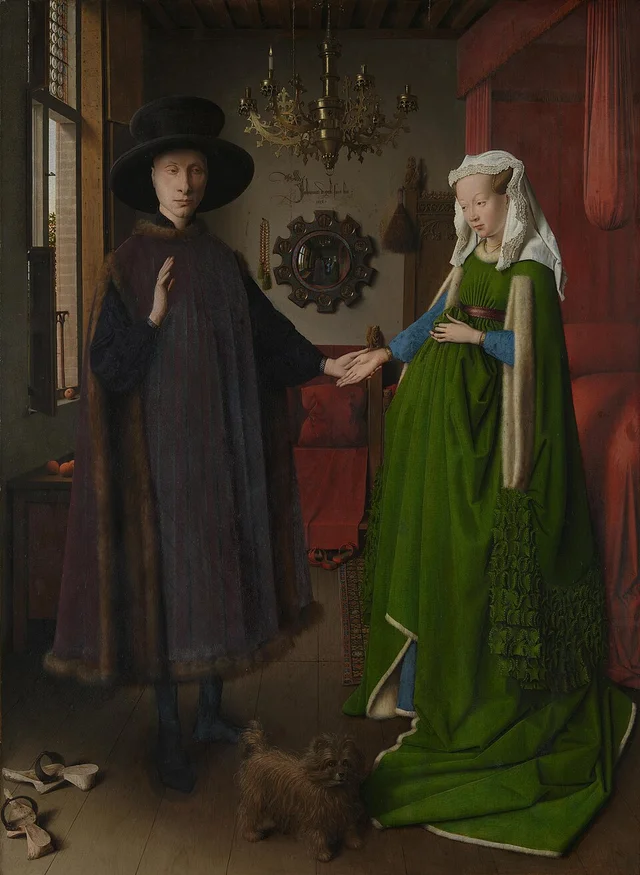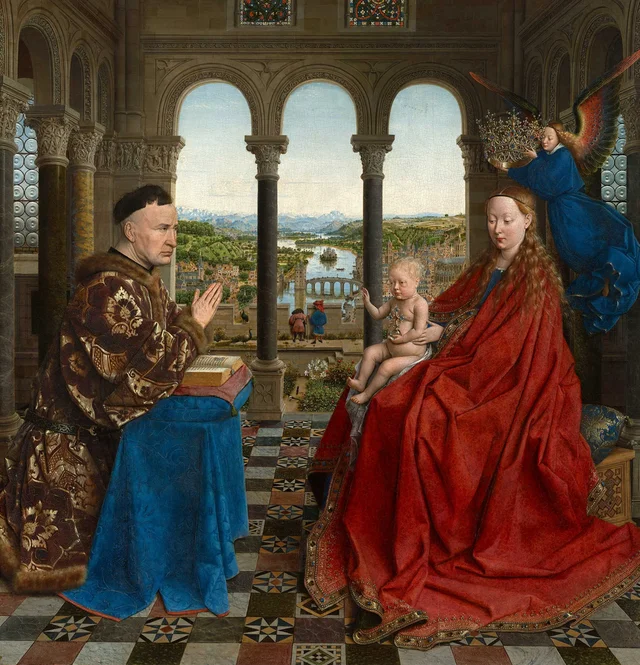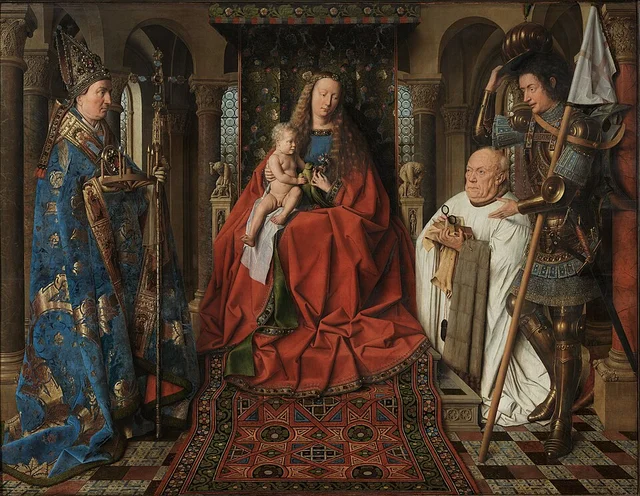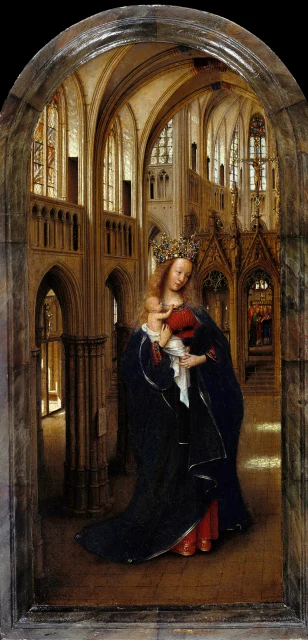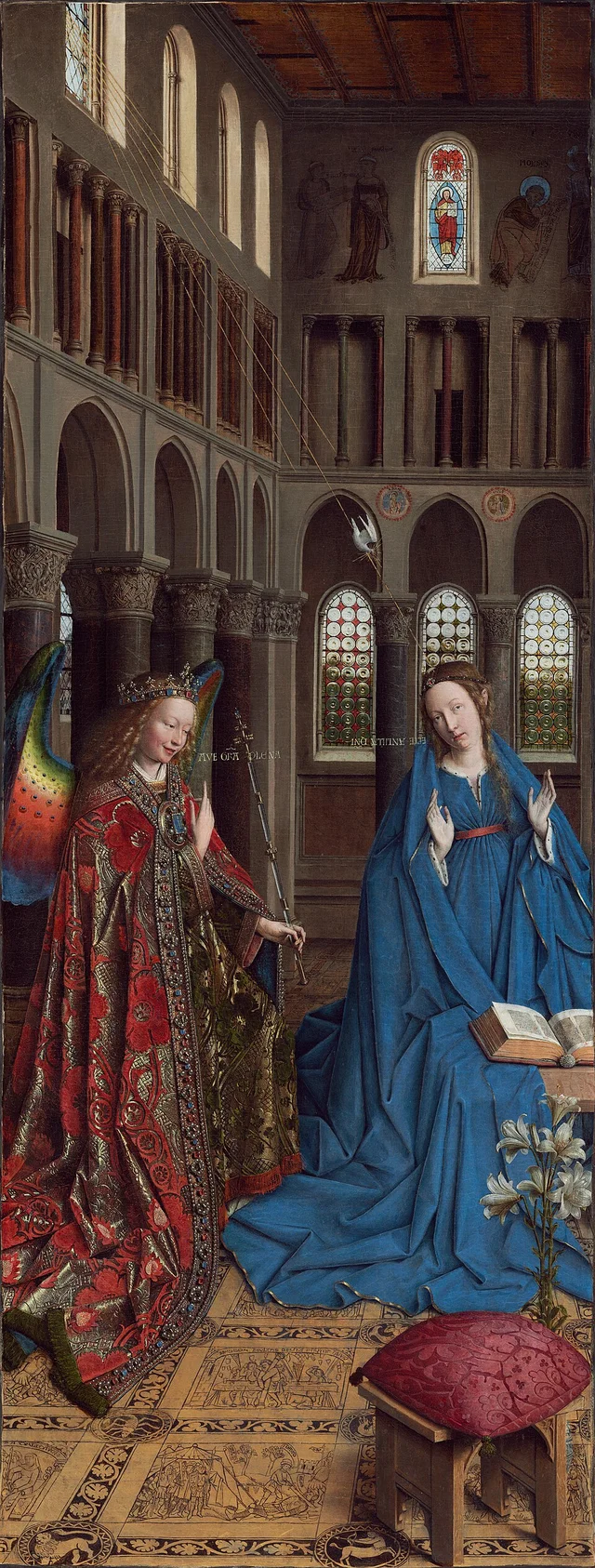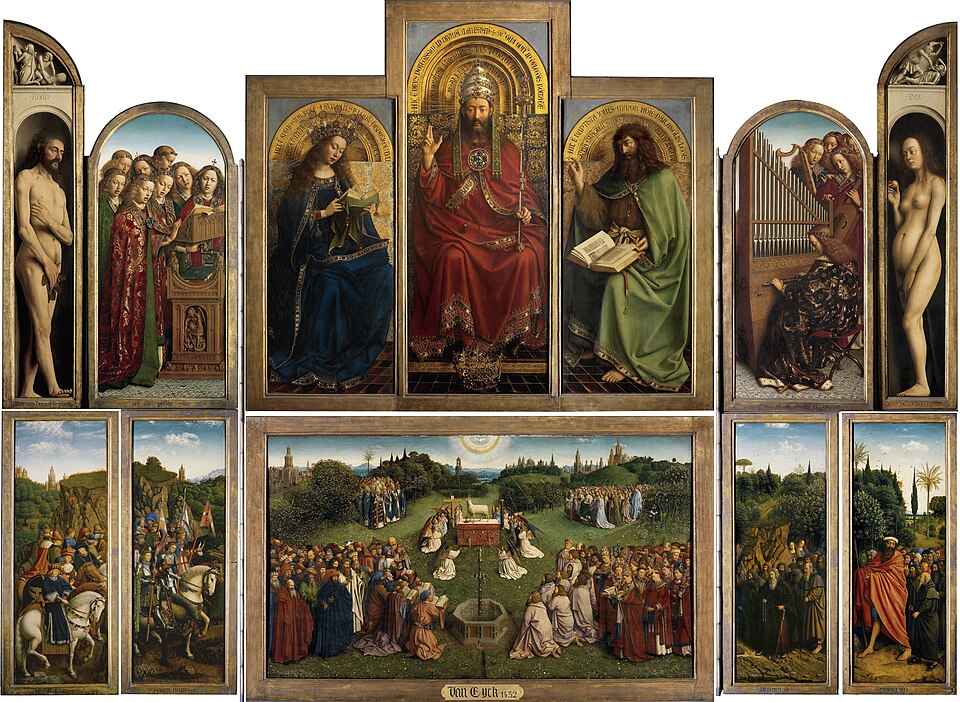
Jan van Eyck, Ghent Altarpiece, 1432. Wikimedia Commons. · PD
Genter Altar
Details
Die Geschichte
Eine Inschrift auf dem Rahmen nennt 1432 als Jahr der Vollendung und zwei Brüder als Urheber, Hubert und Jan van Eyck, wobei bis heute unklar ist, wie viel jeder von beiden beitrug. Der aufklappbare Wandelaltar gehört zu den frühesten großen Werken in Ölmalerei, einer Technik, die van Eyck zu solcher Leuchtkraft brachte, dass man lange glaubte, er habe sie erfunden. Kein anderes Kunstwerk hat eine so bewegte Geschichte des Raubs hinter sich. Napoleons Truppen nahmen Tafeln mit nach Paris, im Zweiten Weltkrieg ließ Hitler das Werk in ein Salzbergwerk bei Altaussee schaffen, wo es die Alliierten kurz vor der geplanten Sprengung bargen. Eine Tafel mit den Gerechten Richtern wurde 1934 gestohlen und ist bis heute verschwunden, ersetzt durch eine Kopie. Bei der jüngsten Restaurierung um 2019 kam unter späteren Übermalungen das ursprüngliche Gesicht des Lammes zum Vorschein, das die Gläubigen anblickt, mit erstaunlich menschlichen Zügen und nach vorn gerichteten Augen.