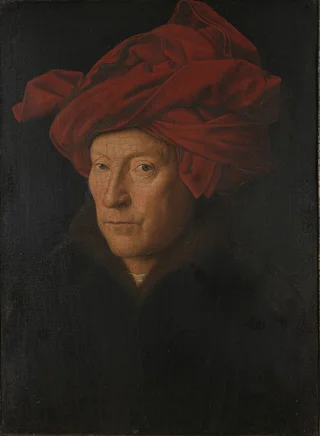
Jan van Eyck
1390–1441 · Südliche Niederlande · Altniederländische Malerei
Die Geschichte
Jan van Eyck arbeitete für einen der reichsten Männer im Europa des 15. Jahrhunderts, Philipp den Guten, Herzog von Burgund, dessen Ländereien sich über das heutige Belgien, Holland und Ostfrankreich erstreckten. Van Eyck war sein Hofmaler und Kammerdiener, mit großzügigem Gehalt bezahlt und weit über das Atelier hinaus mit Vertrauen bedacht. 1428 schickte ihn der Herzog im Rahmen einer Heiratsgesandtschaft nach Portugal, und Teil seiner Aufgabe dort war es, die Braut Isabella zu porträtieren, damit Philipp sehen konnte, welche Frau er zu heiraten im Begriff war.
Zurück in Brügge vervollkommnete er ein Verfahren, das seine Bilder von innen heraus beleuchtet erscheinen ließ. Erfunden hat er die Ölmalerei nicht, doch er lernte, ein Bild aus vielen dünnen, durchscheinenden Lasuren aufzubauen, Schicht über Schicht, sodass das Licht in die Farbe einzusinken und wieder herauszuleuchten schien. So konnte er einen Messingleuchter, einen konvexen Spiegel und den tiefen Flor eines Pelzbesatzes mit einer Schärfe wiedergeben, die kein Maler zuvor erreicht hatte, am berühmtesten im Arnolfini-Doppelporträt von 1434.
Sein größtes erhaltenes Werk ist der Genter Altar, vollendet 1432, ein großes Klappretabel, das sein Bruder Hubert begonnen hatte. Die Rahmeninschrift benennt Jan als denjenigen, der es vollendete, und auf dem Arnolfini-Porträt signierte er die Wand selbst mit geschwungener lateinischer Schrift: Jan van Eyck war hier, über dem Datum, an dem er es malte.
Weitere Artikel
 Artikel · 35 Min. LesezeitNational Gallery of Art in Washington: Zwanzig Bilder aus privater Hand
 Artikel · 39 Min. LesezeitWas Sie im Louvre sehen sollten: die 25 wichtigsten Werke
 Artikel · 38 Min. LesezeitMuseo Thyssen-Bornemisza: Zwanzig Bilder, die Vater und Sohn gekauft haben
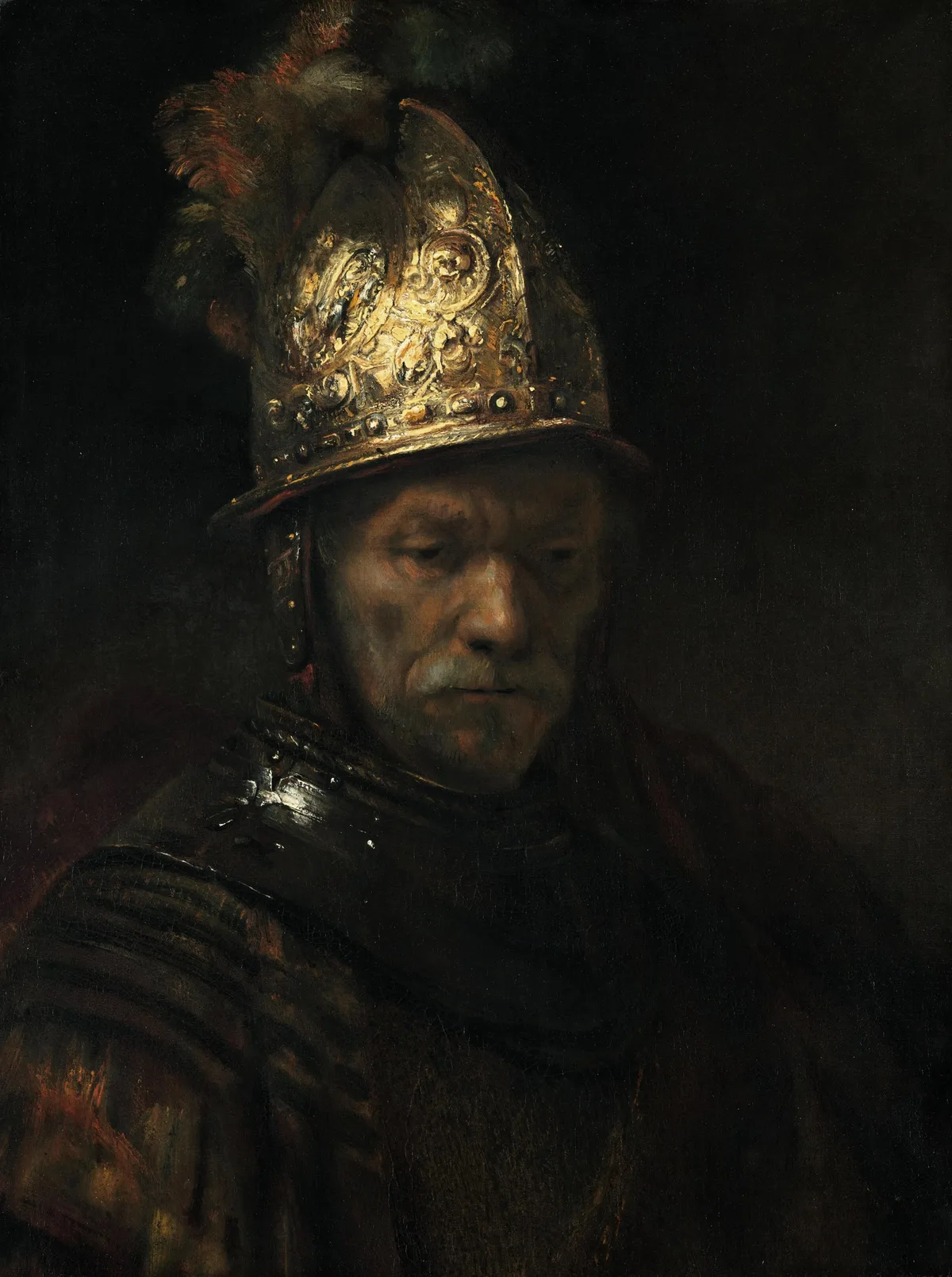 Artikel · 39 Min. LesezeitGemäldegalerie Berlin: 20 Bilder, die Berlin kaufte, verlor und teilte
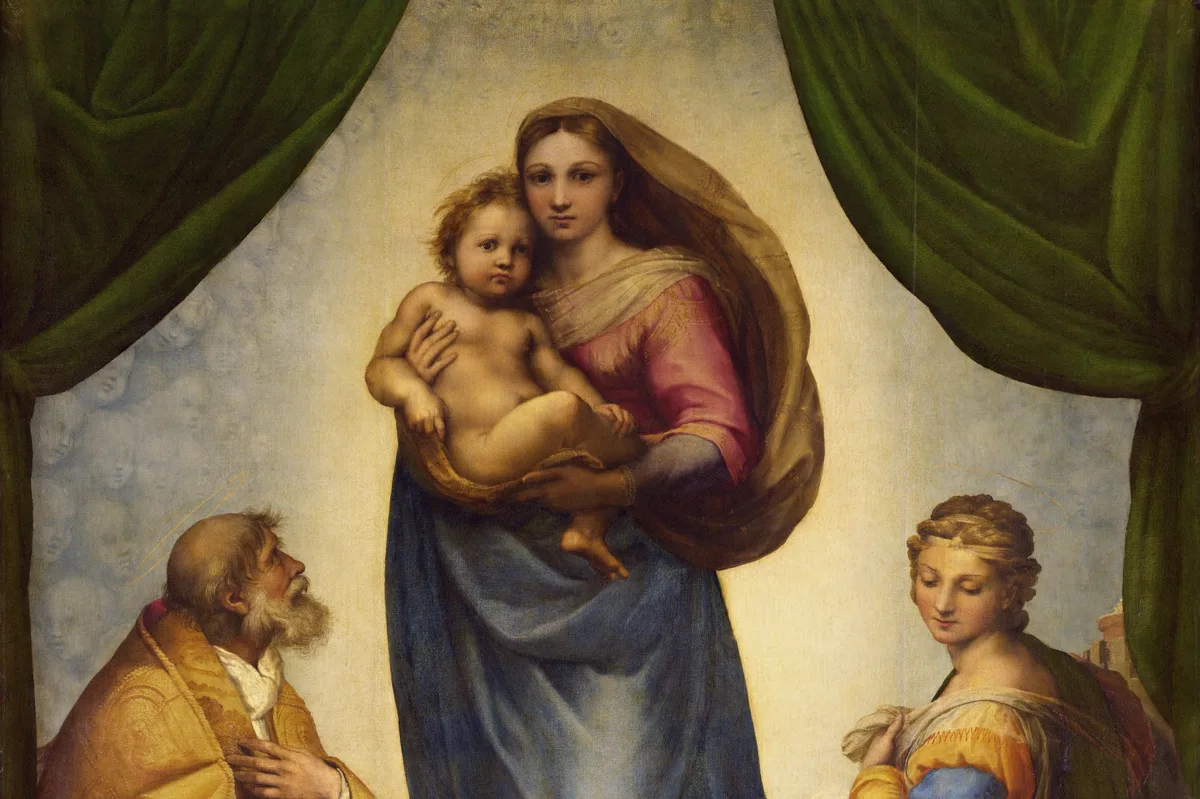 Artikel · 33 Min. LesezeitDie Gemäldegalerie Alte Meister in Dresden: wie 15 Bilder gekauft, umbenannt und zurückgegeben wurden
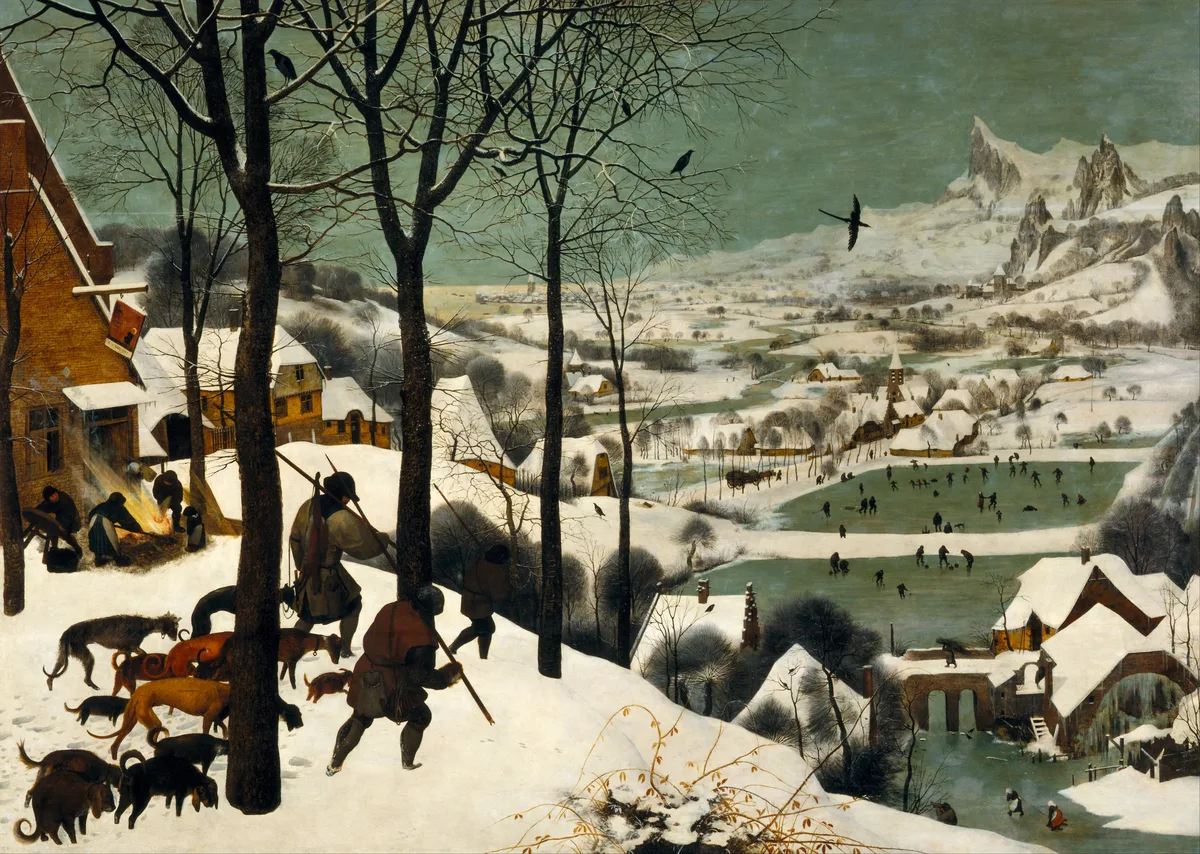 Artikel · 43 Min. LesezeitKunsthistorisches Museum Wien: 25 Werke und wie sie zu den Habsburgern kamen
Werke
37 Werke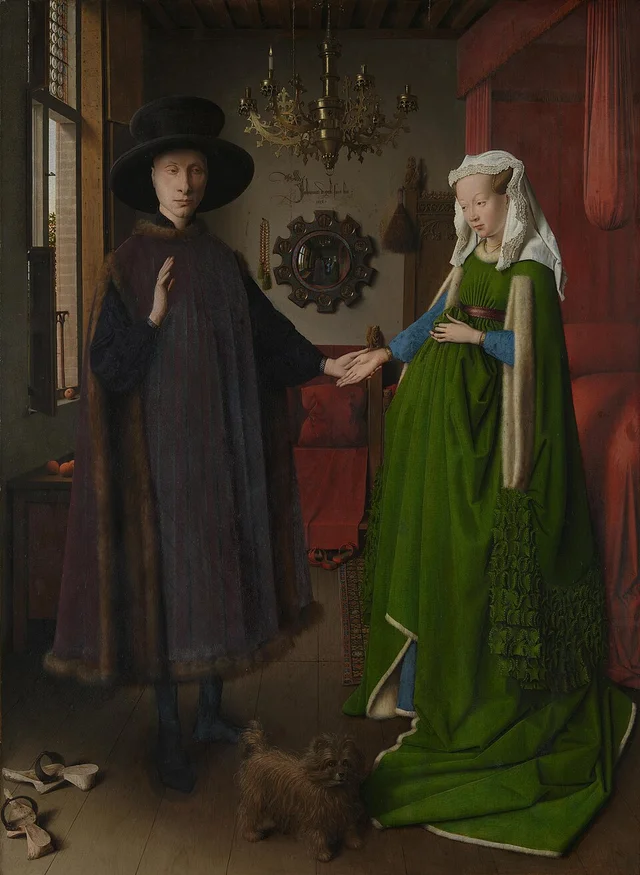 Die Arnolfini-HochzeitJan van Eyck, 1434
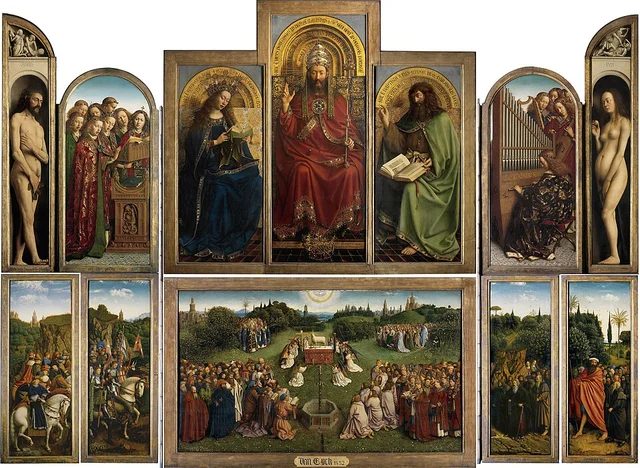 Genter AltarJan van Eyck, 1432
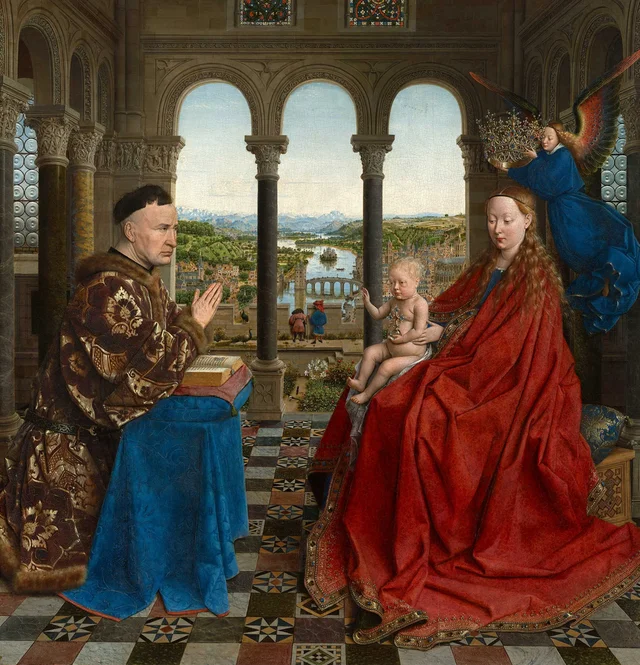 Madonna des Kanzlers RolinJan van Eyck, 1435
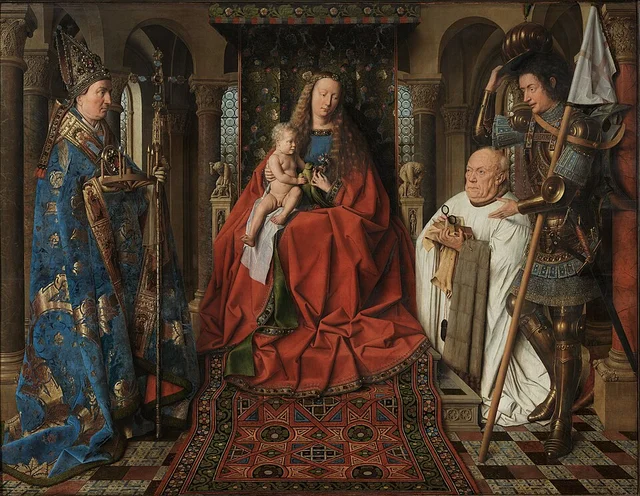 Madonna des Kanonikus van der PaeleJan van Eyck, 1436
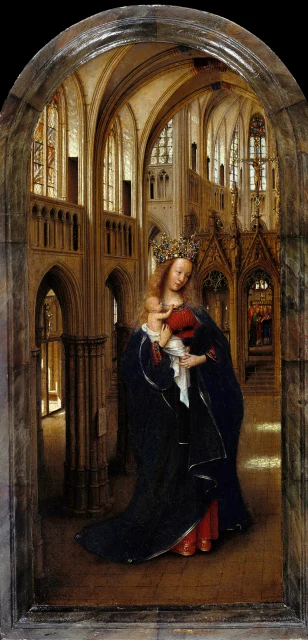 Die Madonna in der KircheJan van Eyck, 1440
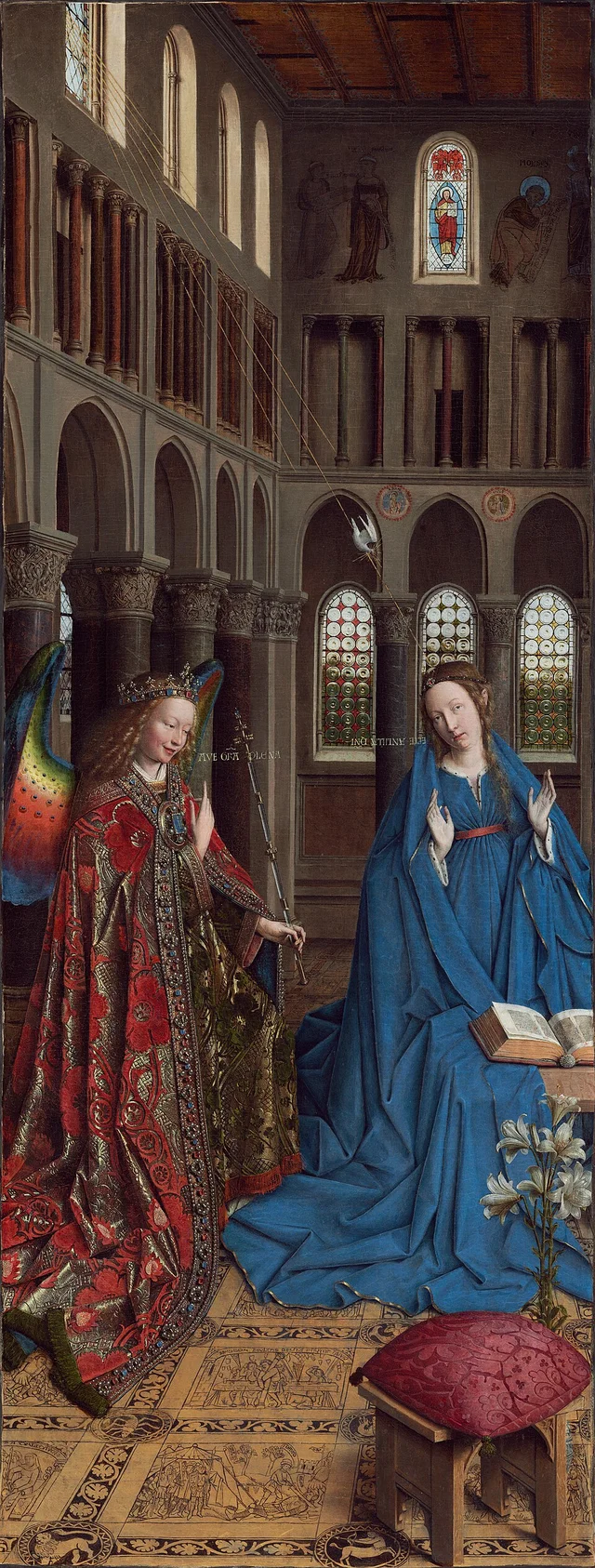 VerkündigungJan van Eyck, 1435
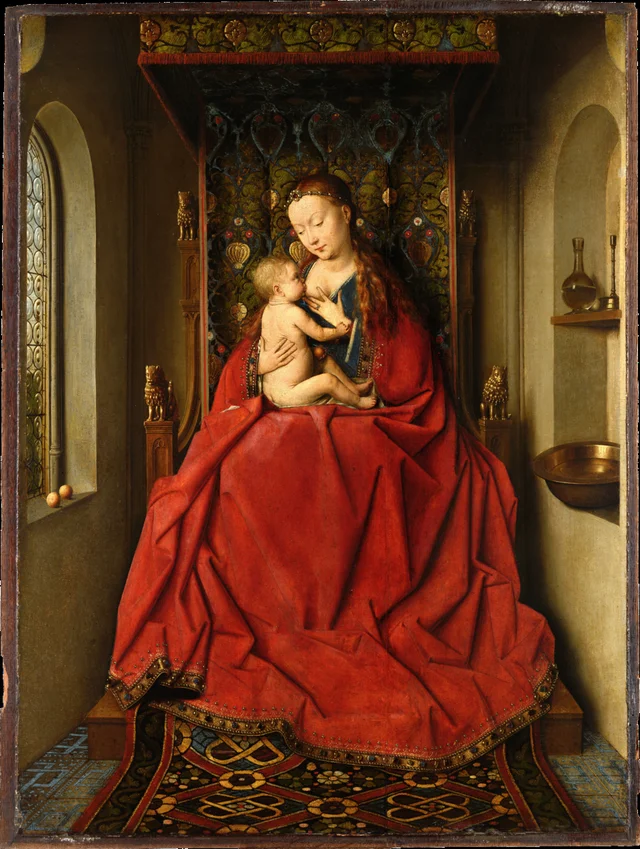 Lucca-MadonnaJan van Eyck, 1437
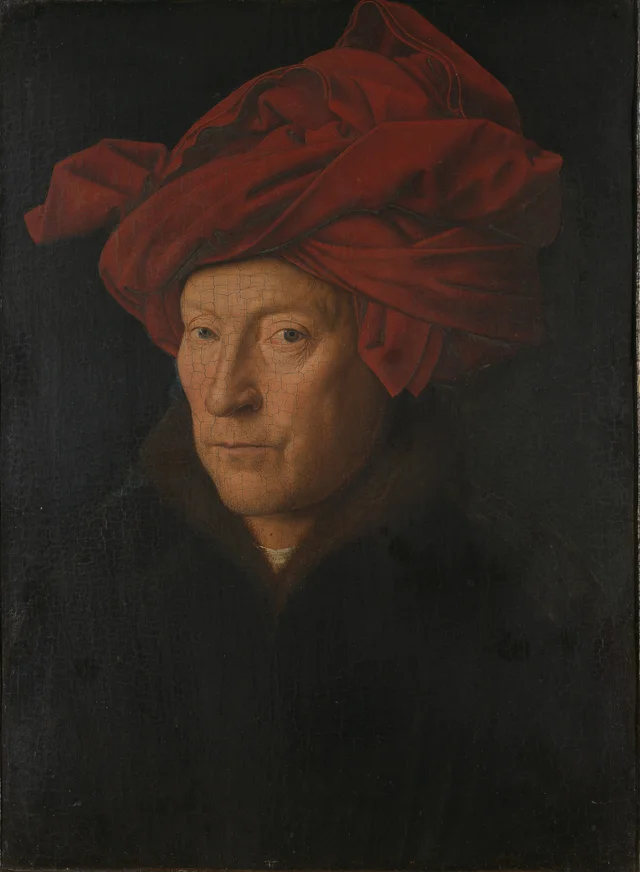 Porträt eines Mannes (Selbstporträt?)Jan van Eyck, 1433
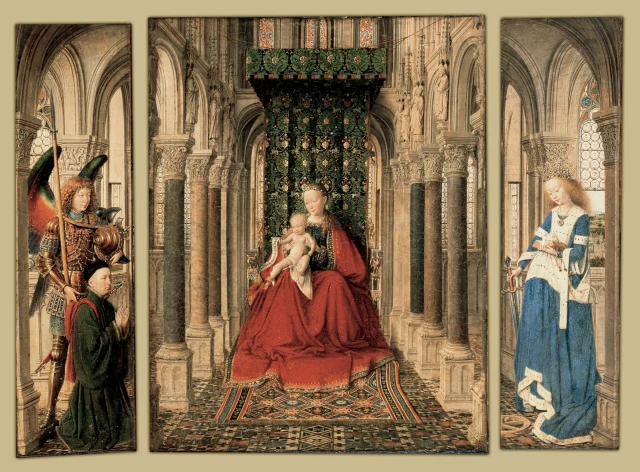 Dresdner TriptychonJan van Eyck, 1437
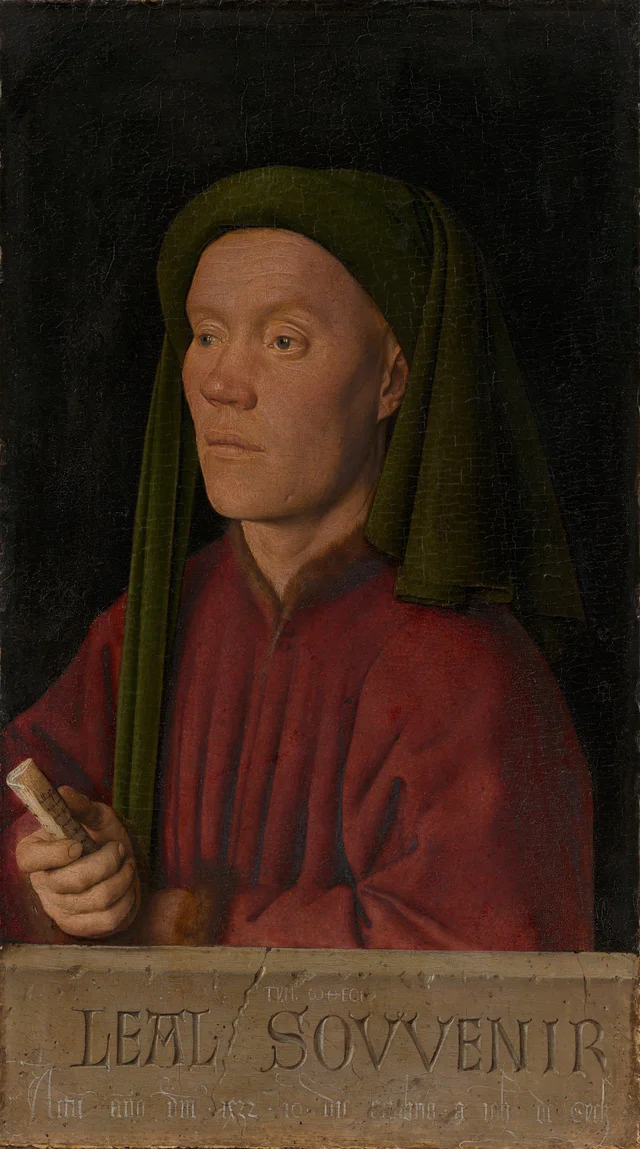 Léal SouvenirJan van Eyck, 1432
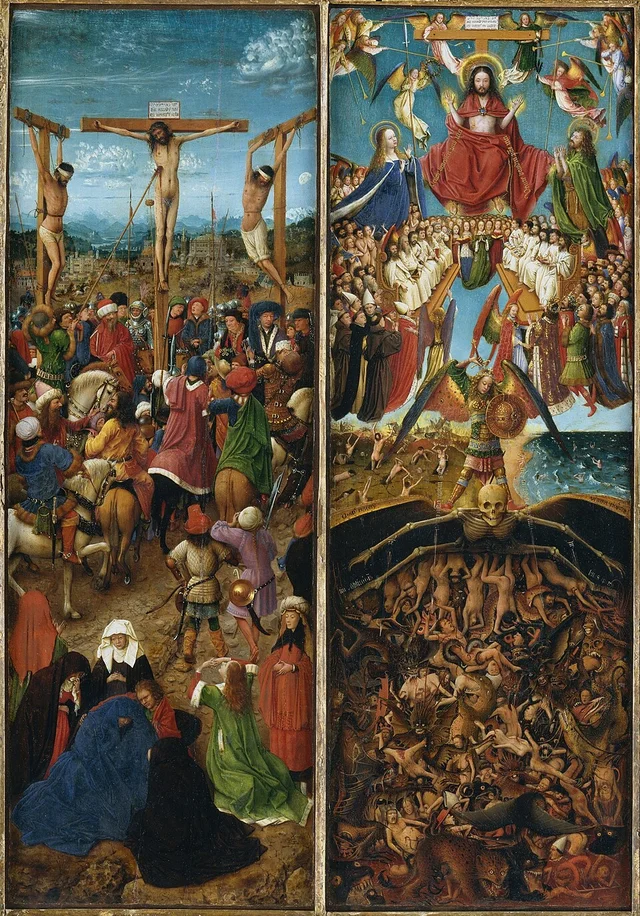 Diptychon mit Kreuzigung und Jüngstem GerichtJan van Eyck, 1440
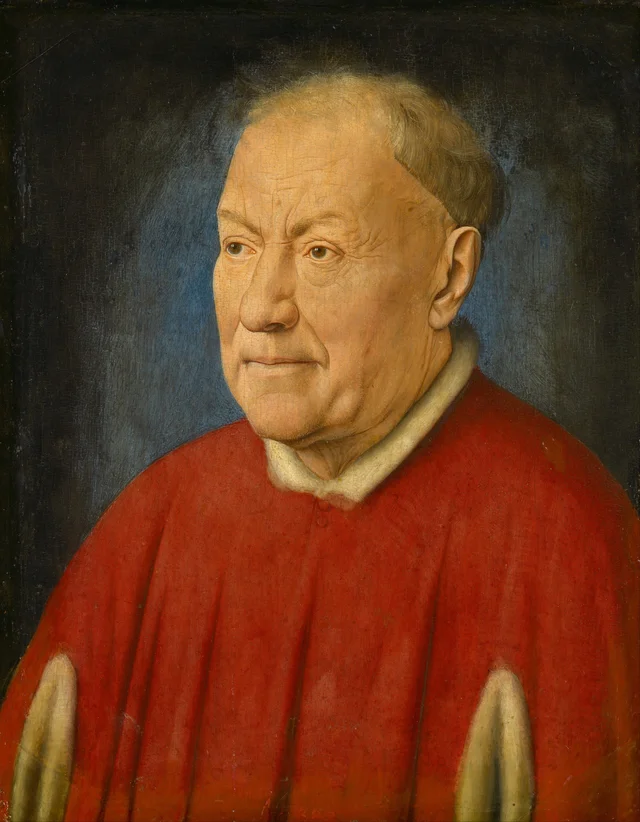 Bildnis eines Mannes (Kardinal Niccolò Albergati?)Jan van Eyck, 1431
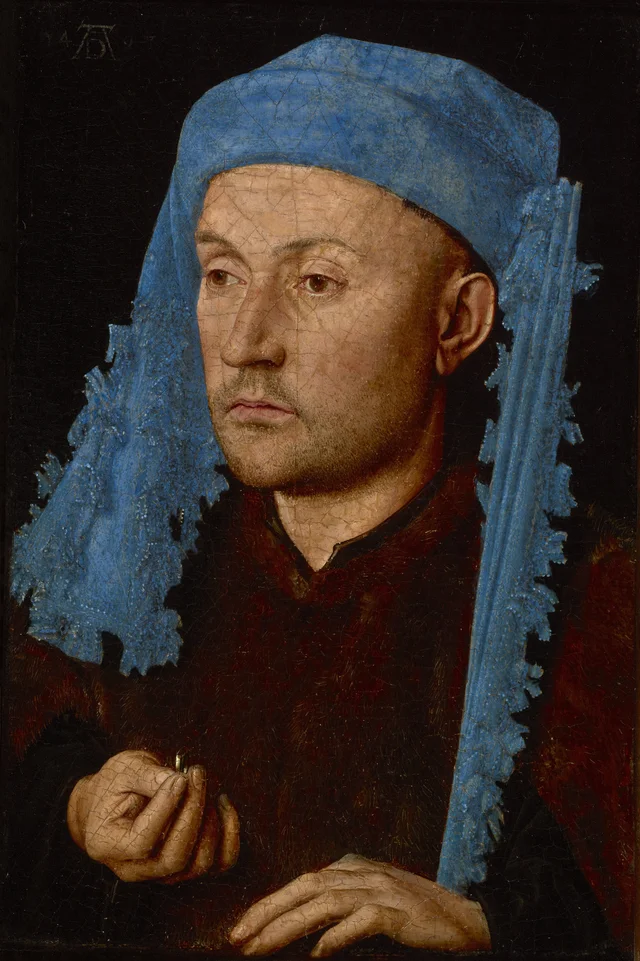 Bildnis eines Mannes mit blauem ChaperonJan van Eyck, 1435
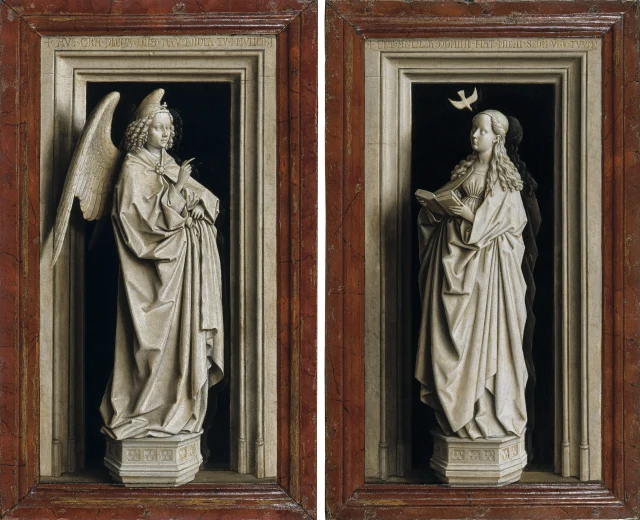 VerkündigungJan van Eyck, 1440
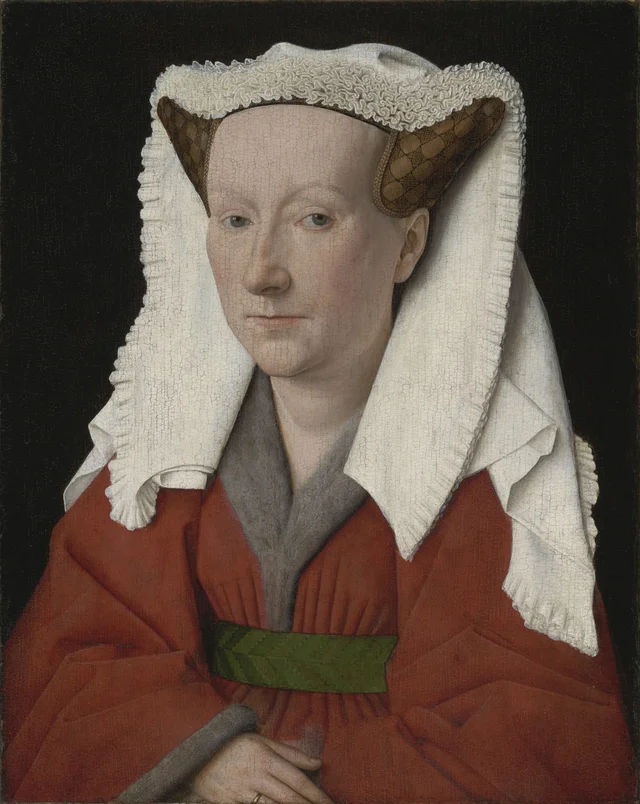 Bildnis der Margarete van EyckJan van Eyck, 1439
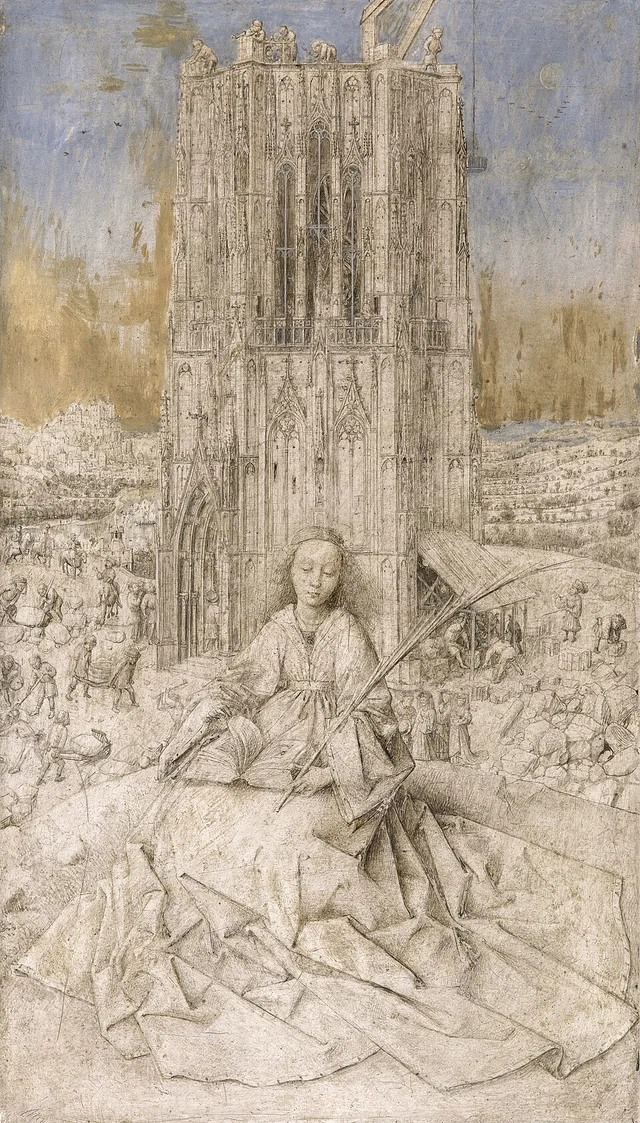 Die heilige BarbaraJan van Eyck, 1437
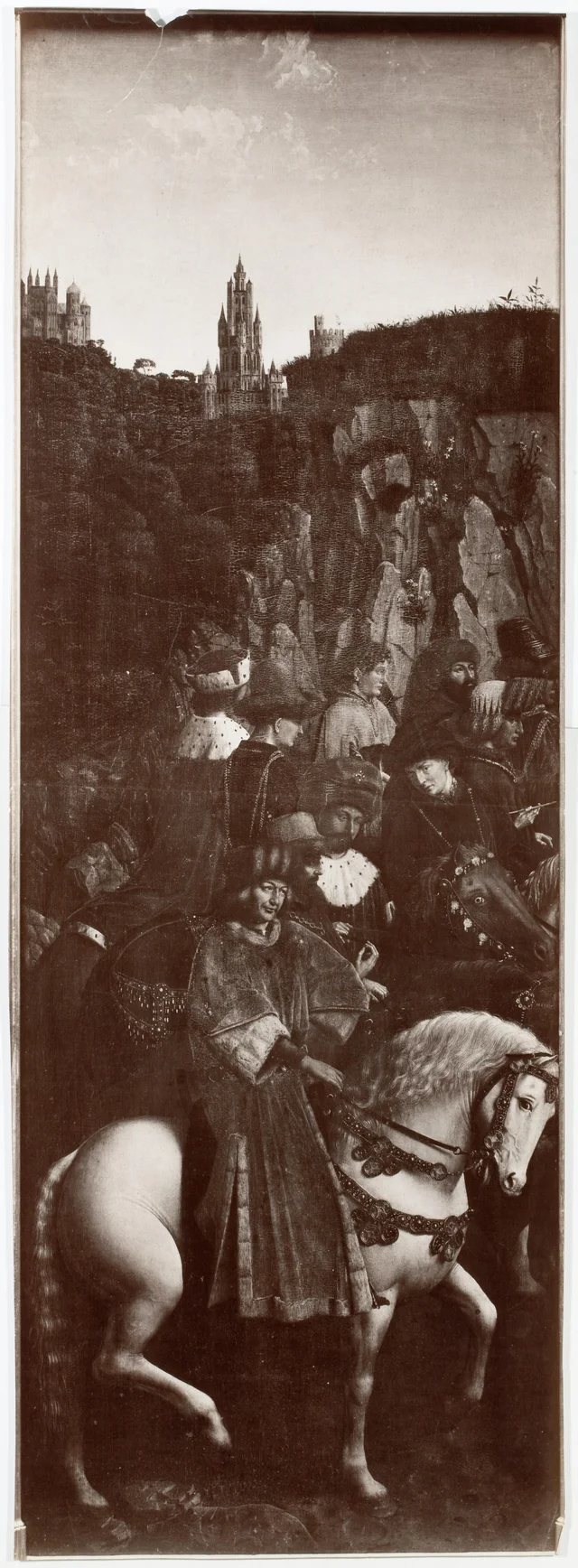 Die gerechten RichterJan van Eyck, 1432
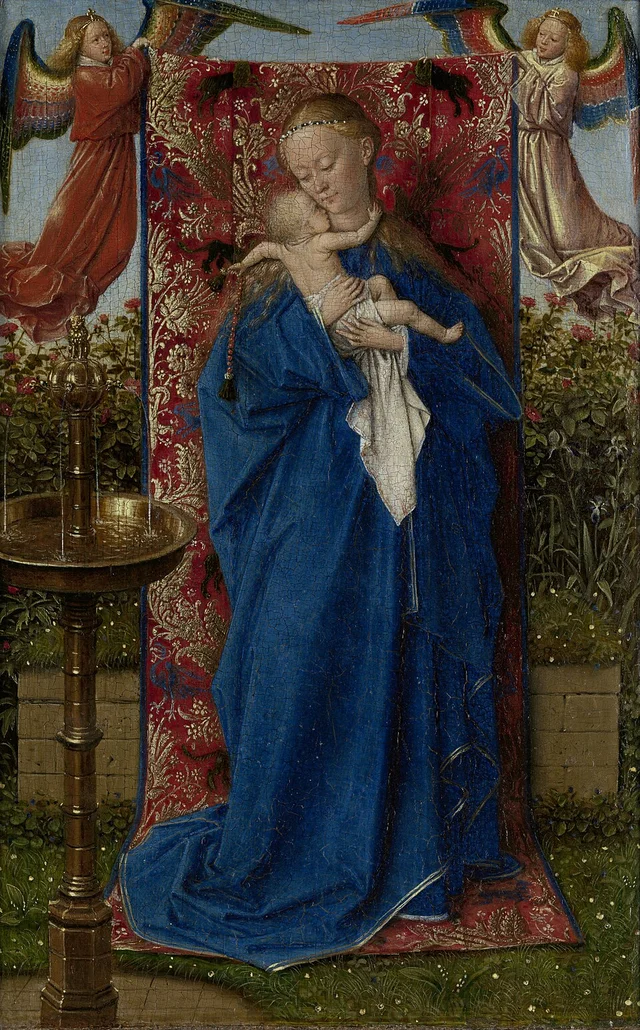 Madonna am BrunnenJan van Eyck, 1439
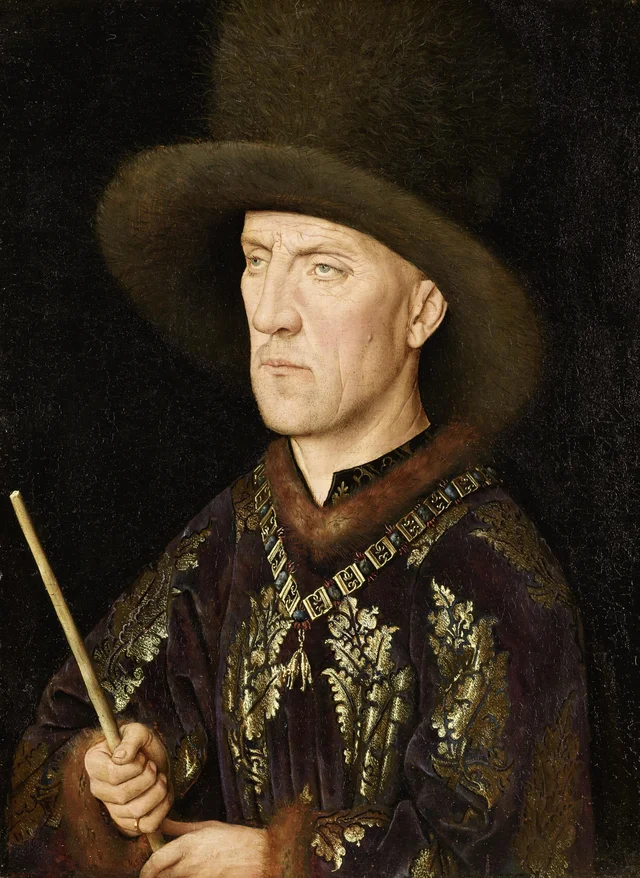 Bildnis des Baudouin de LannoyJan van Eyck, 1435
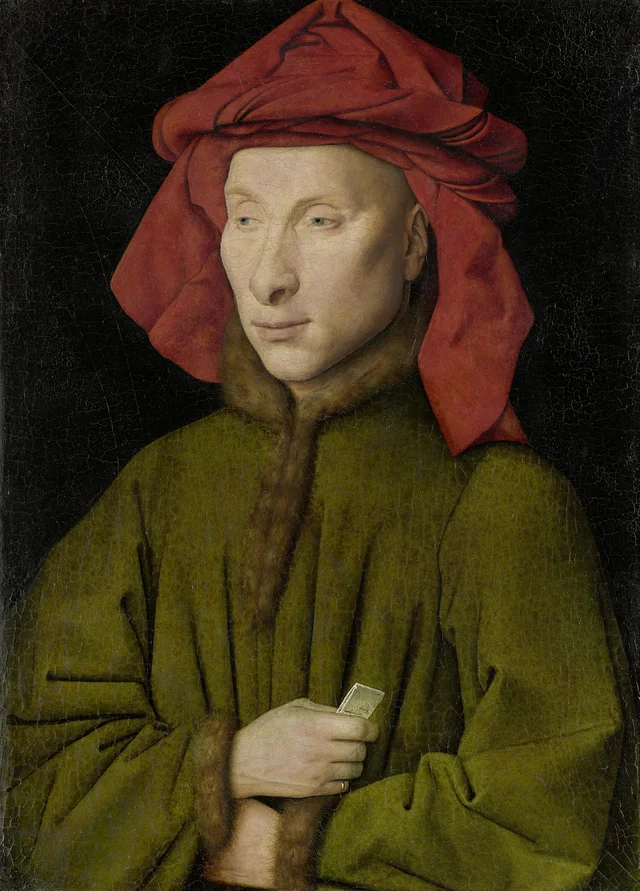 Bildnis des Giovanni di Nicolao ArnolfiniJan van Eyck, 1440
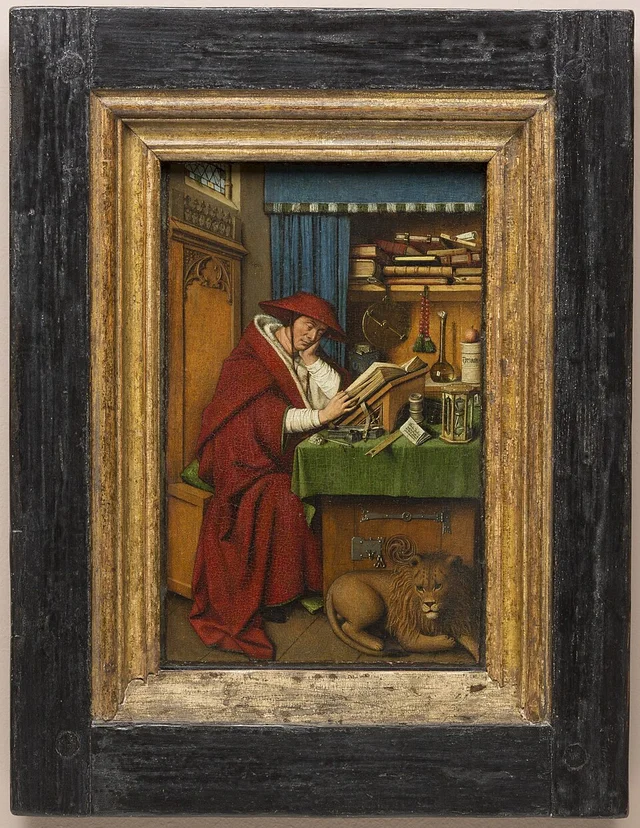 Der heilige Hieronymus im GehäusJan van Eyck, 1435
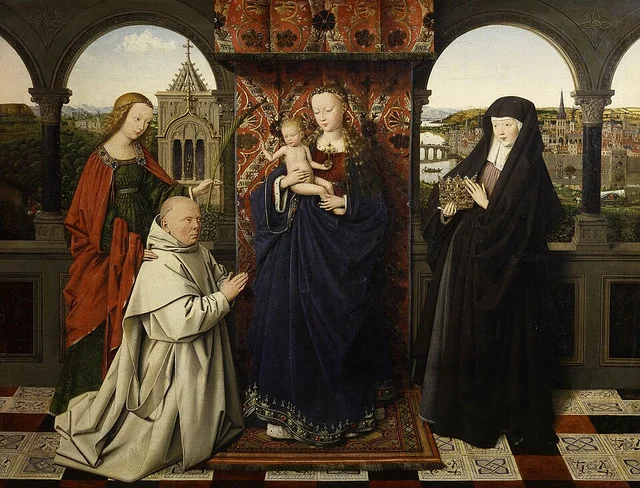 Madonna mit Kind, Heiligen und StifterJan van Eyck, 1441
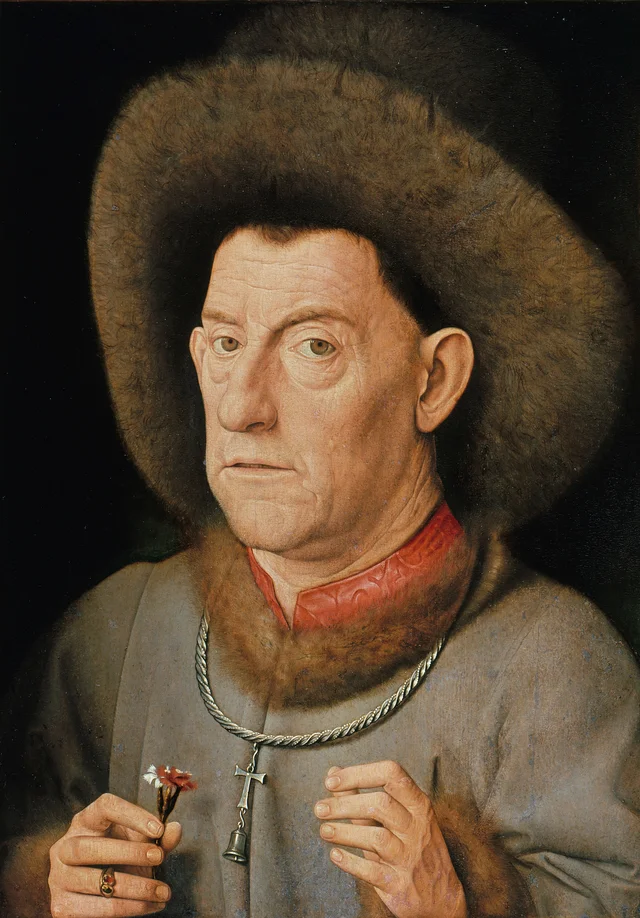 Bildnis eines Mannes mit NelkeJan van Eyck, 1435
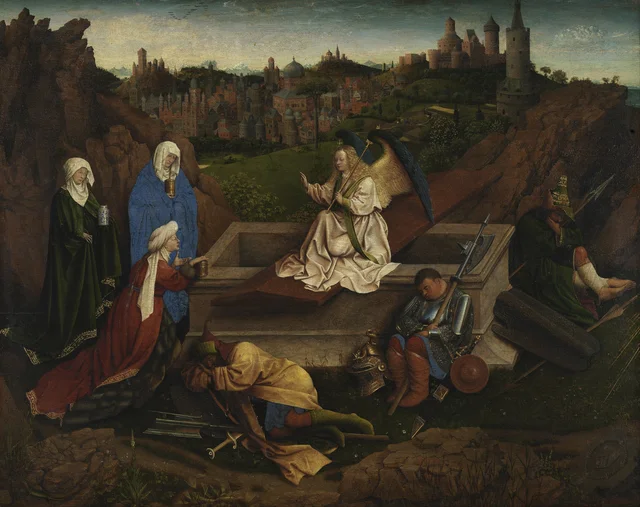 Die drei Marien am GrabeJan van Eyck, 1430
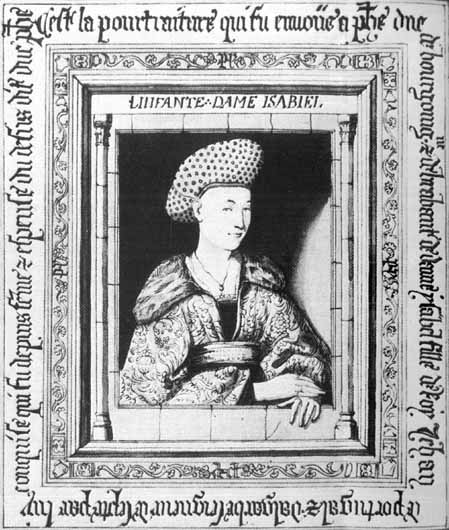 Bildnis Isabellas von PortugalJan van Eyck, 1428