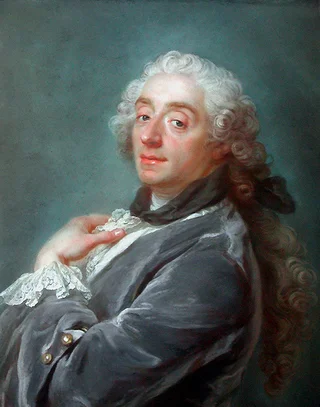
François Boucher
1703–1770 · France · Rococo
The story
In 1745, a marquise not yet thirty took over as Louis XV's closest companion at Versailles, and within a few years she had made a Parisian painter named François Boucher the taste of an entire court. Jeanne-Antoinette Poisson, known to history as Madame de Pompadour, sat for Boucher again and again, and in 1751 she appointed him her personal drawing teacher. He returned the favor by giving Versailles exactly the mood it wanted: plump cupids, pink-cheeked shepherdesses, mythological scenes with none of the moral weight the old history painters demanded.
Boucher had trained under an engraver close to Watteau and spent time in Rome before settling into a Paris workshop that turned out an astonishing volume of work, tapestry designs for the Gobelins and Beauvais manufactories, opera sets, porcelain patterns, alongside the paintings. In 1765 the king made him Premier Peintre, the top court post, and director of the Royal Academy.
By the time he died in 1770, tastes were already turning. A new generation, led by his own former pupil Jean-Baptiste Greuze and later by Jacques-Louis David, dismissed his frivolity as exactly the decadence the coming Revolution would condemn. His paintings of Madame de Pompadour, though, still hang in the Wallace Collection in London and the National Gallery of Scotland, dated exactly to the years she shaped the artistic life of France.
More articles
Works
37 works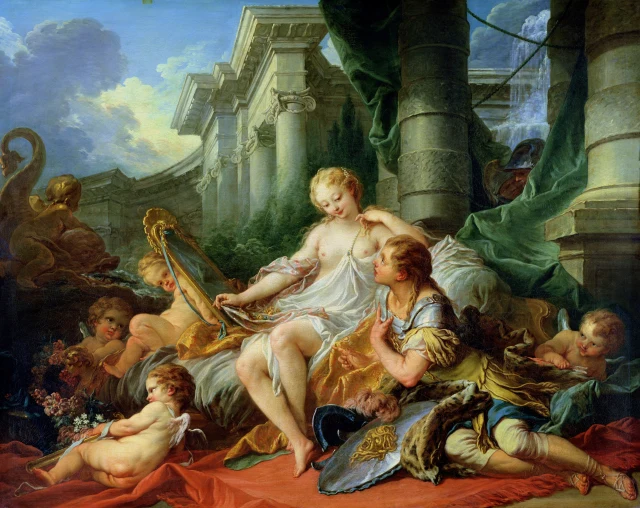 Rinaldo and ArmidaFrançois Boucher, 1734
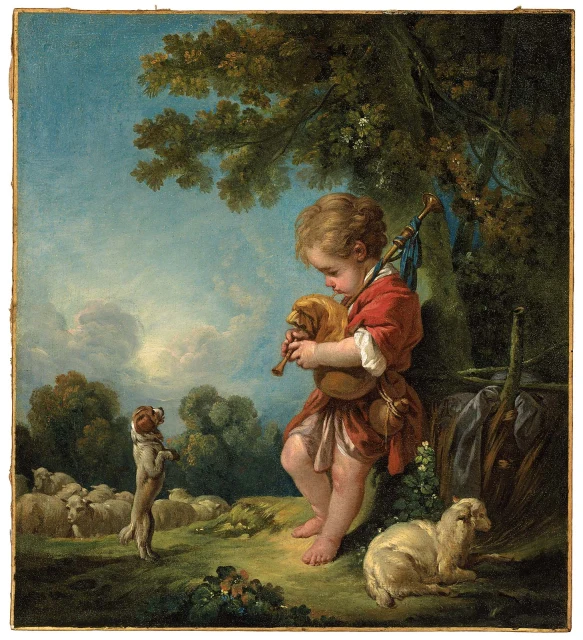 Shepherd Boy Playing BagpipesFrançois Boucher, 1754
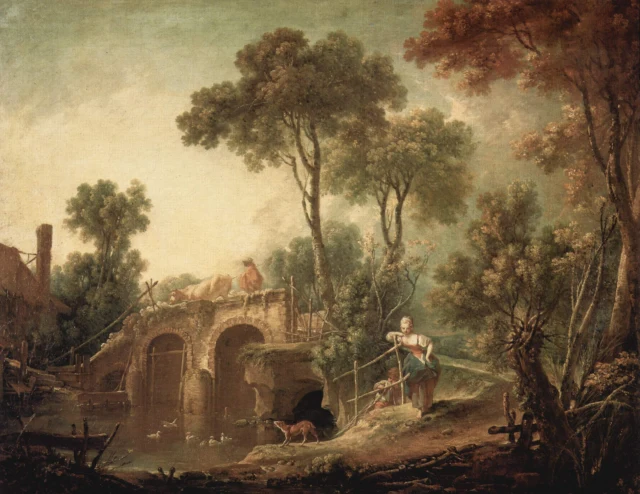 The BridgeFrançois Boucher, 1751
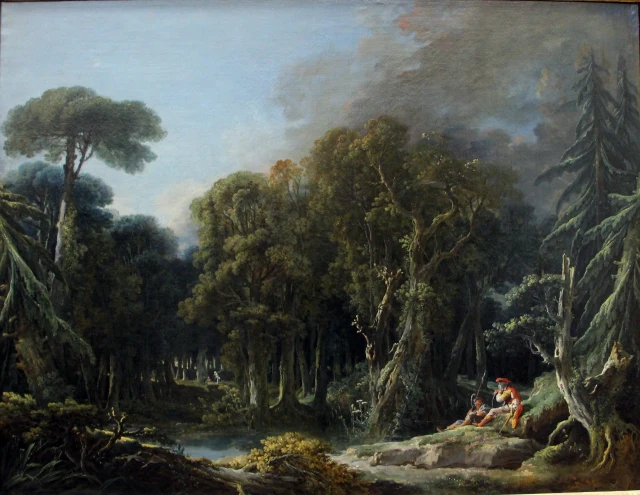 The ForestFrançois Boucher, 1740
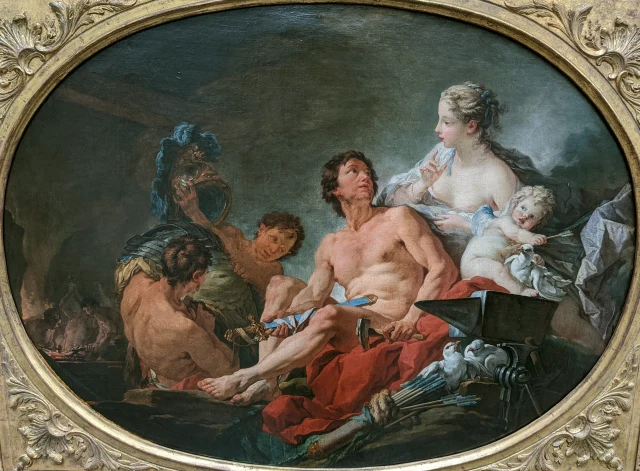 The Forge of VulcanFrançois Boucher, 1747
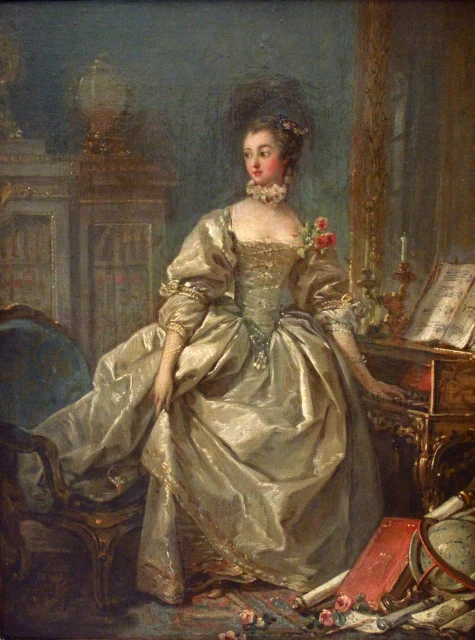 The Marquise de PompadourFrançois Boucher, 1750
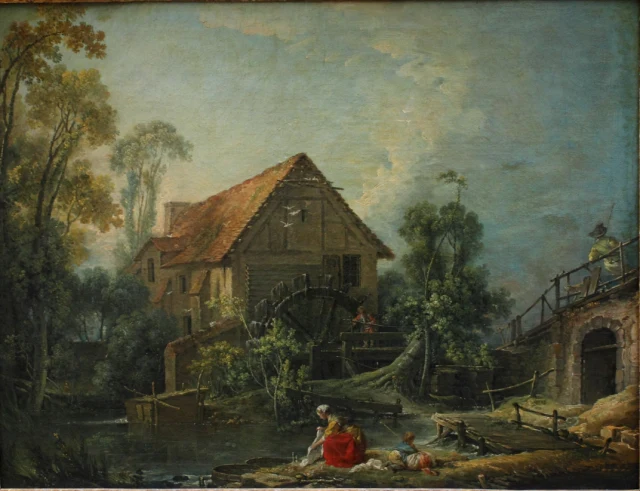 The MillFrançois Boucher, 1751
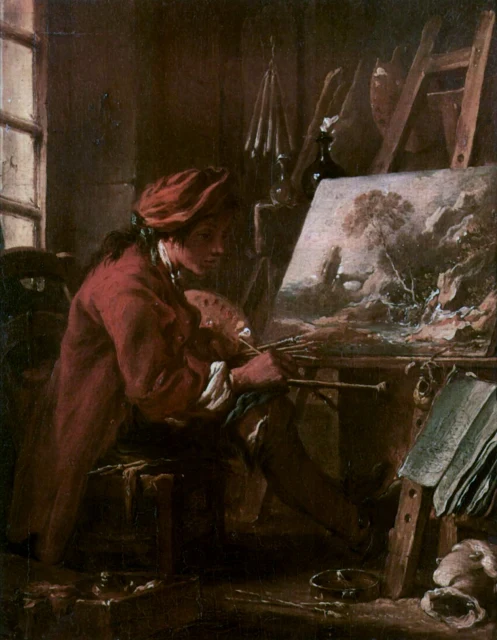 The Painter in His StudioFrançois Boucher, 1728
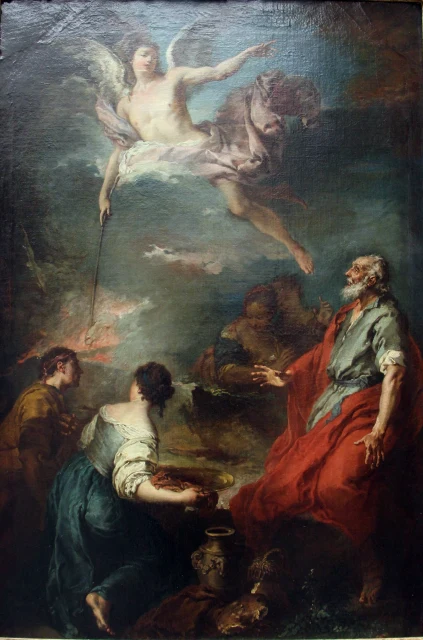 The Sacrifice of GideonFrançois Boucher, 1728
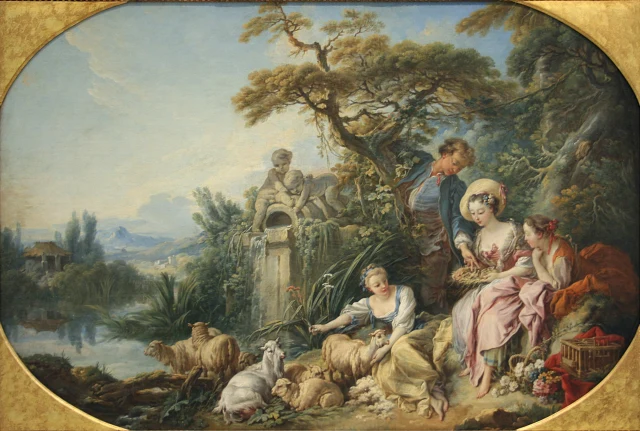 The Shepherd's Gifts, or The NestFrançois Boucher, 1740
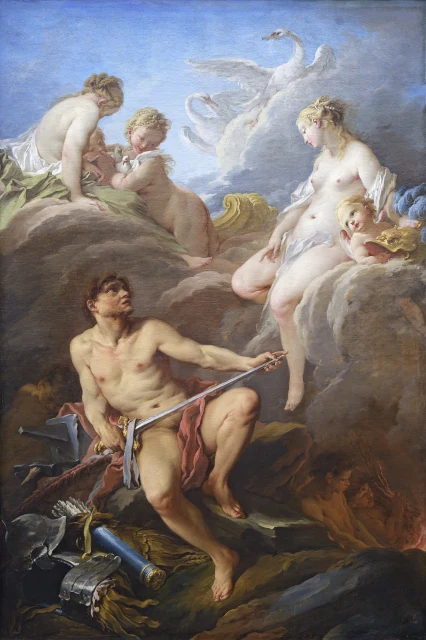 Venus Asking Vulcan for Arms for AeneasFrançois Boucher, 1732
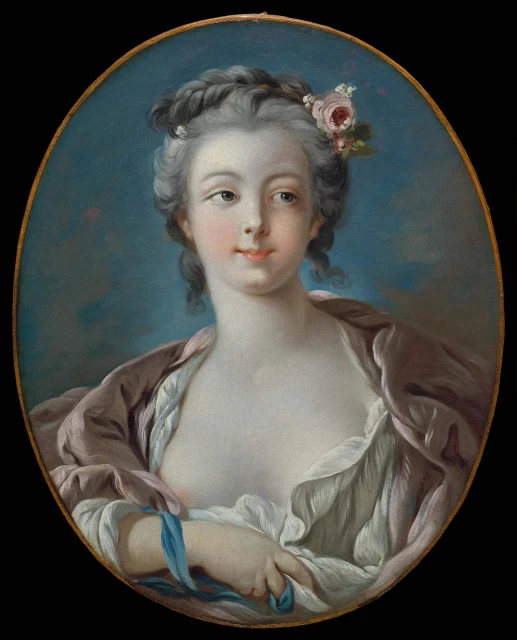 Young Woman with Flowers in Her HairFrançois Boucher