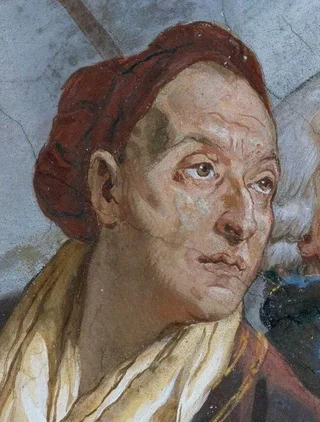
Giovanni Battista Tiepolo
1696–1770 · Republic of Venice · Rococo
The story
In December 1750 Giovanni Battista Tiepolo arrived in Würzburg, a city in Bavaria in southern Germany, with his two sons, invited by the local prince-bishop Carl Philipp von Greiffenclau to fresco the ceiling of his new palace's dining hall. The prince-bishop was so pleased that he asked Tiepolo to take on a second job, the ceiling above the palace's grand staircase.
What Tiepolo painted there, finished in 1753, is still the largest fresco in the world, covering more than 600 square meters of unsupported vaulted ceiling with allegorical figures representing Europe, Africa, Asia and the Americas, the four continents as Europeans then understood them, gathered around the sun god Apollo. It was the high point of a career spent painting airy, light-filled ceilings for churches and palaces across the Republic of Venice and beyond.
Near the end of his life, in 1762, King Charles III of Spain summoned Tiepolo to Madrid to fresco the new royal palace, and he stayed there the rest of his career, even as a younger, more austere Neoclassical taste was starting to displace the Rococo style he had spent decades perfecting. He died in Madrid in 1770, having never returned to Venice.
More articles

Works
76 works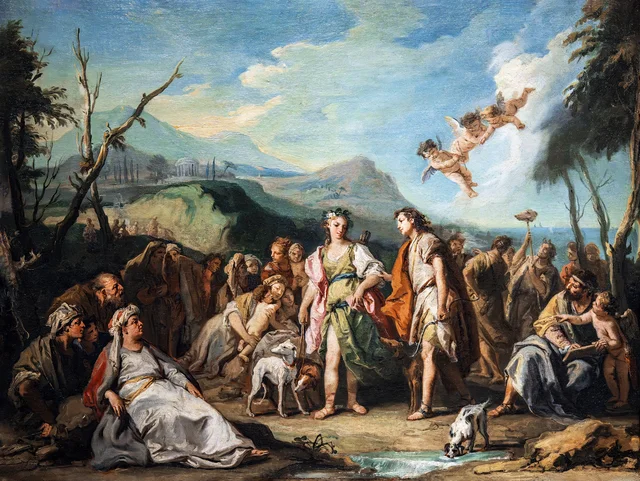 Anzia and Abrocome meet at the Feasts of DianaGiovanni Battista Tiepolo, 1743
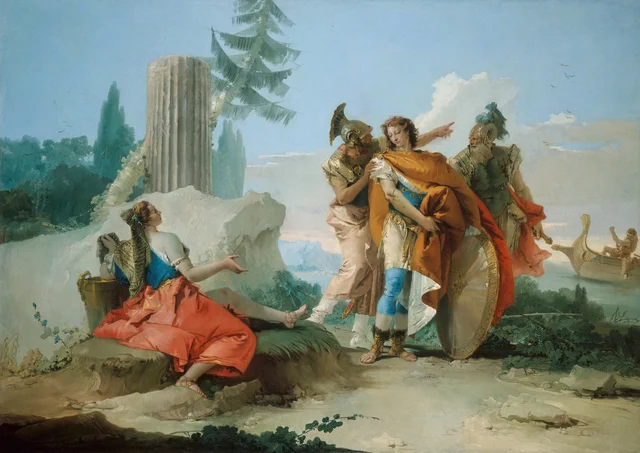 Armida Abandoned by RinaldoGiovanni Battista Tiepolo, 1743
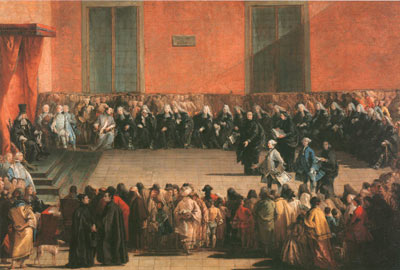 Consular MeetingGiovanni Battista Tiepolo, 1750
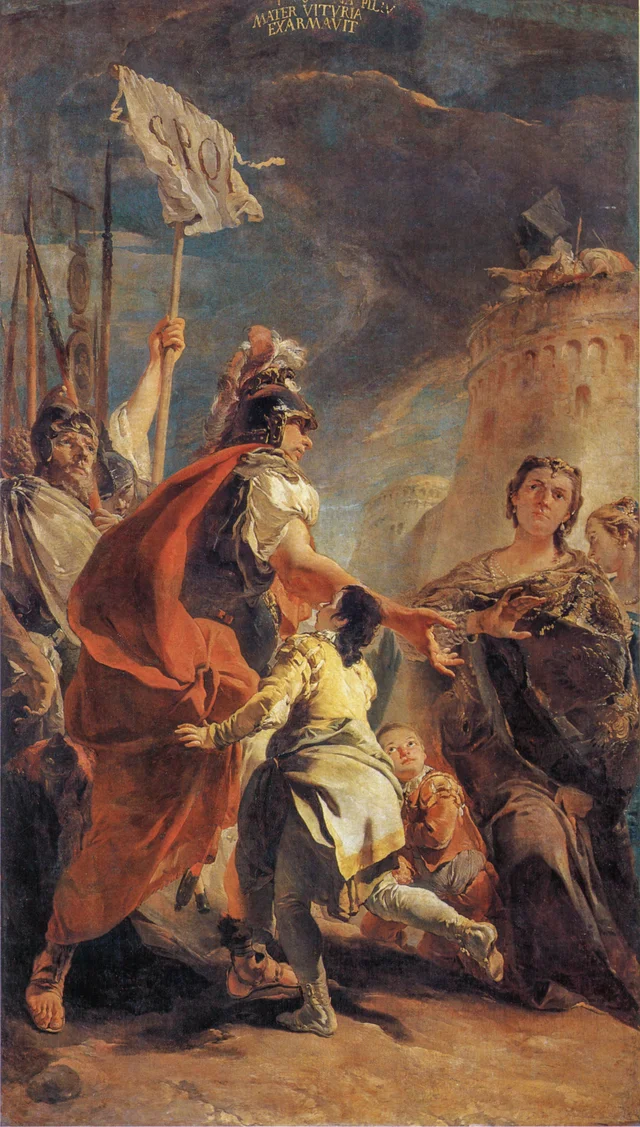 Coriolanus at the Walls of RomeGiovanni Battista Tiepolo, 1730
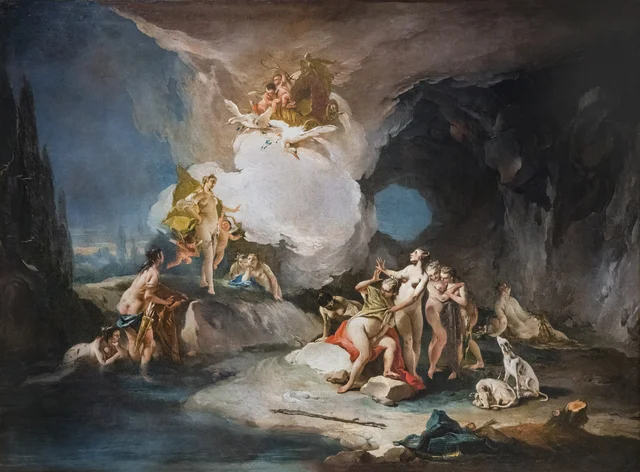 Diana and CallistoGiovanni Battista Tiepolo, 1720
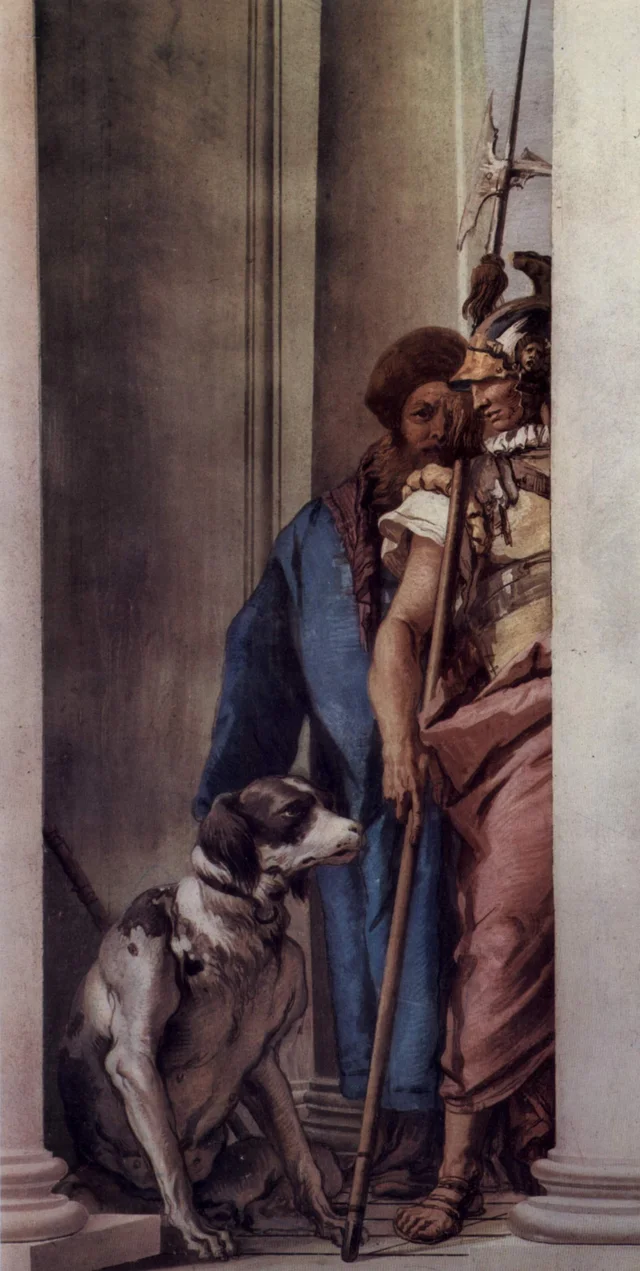 Die griechische Flotte in AulisGiovanni Battista Tiepolo, 1757
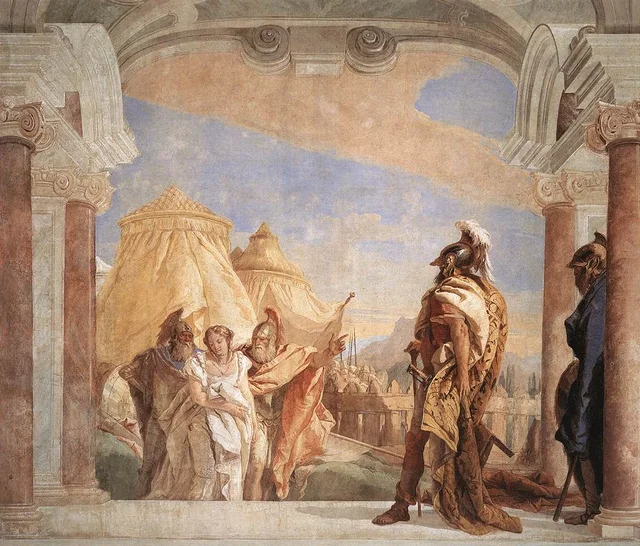 Eurybates and Talthybios Lead Briseis to AgamemmonGiovanni Battista Tiepolo, 1757
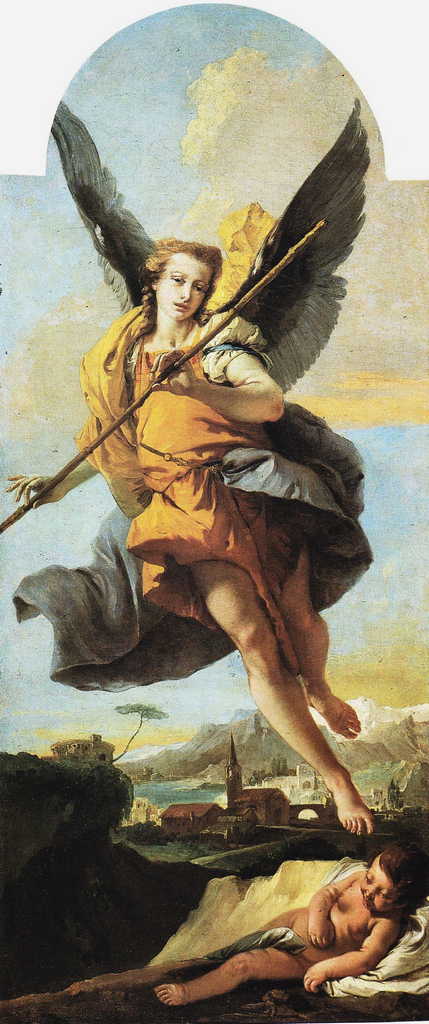 Guardian angelGiovanni Battista Tiepolo, 1737
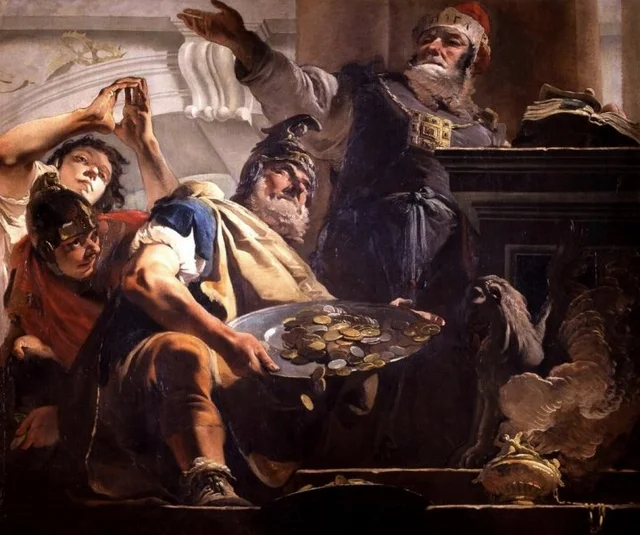 Heliodorus and OniasGiovanni Battista Tiepolo, 1724
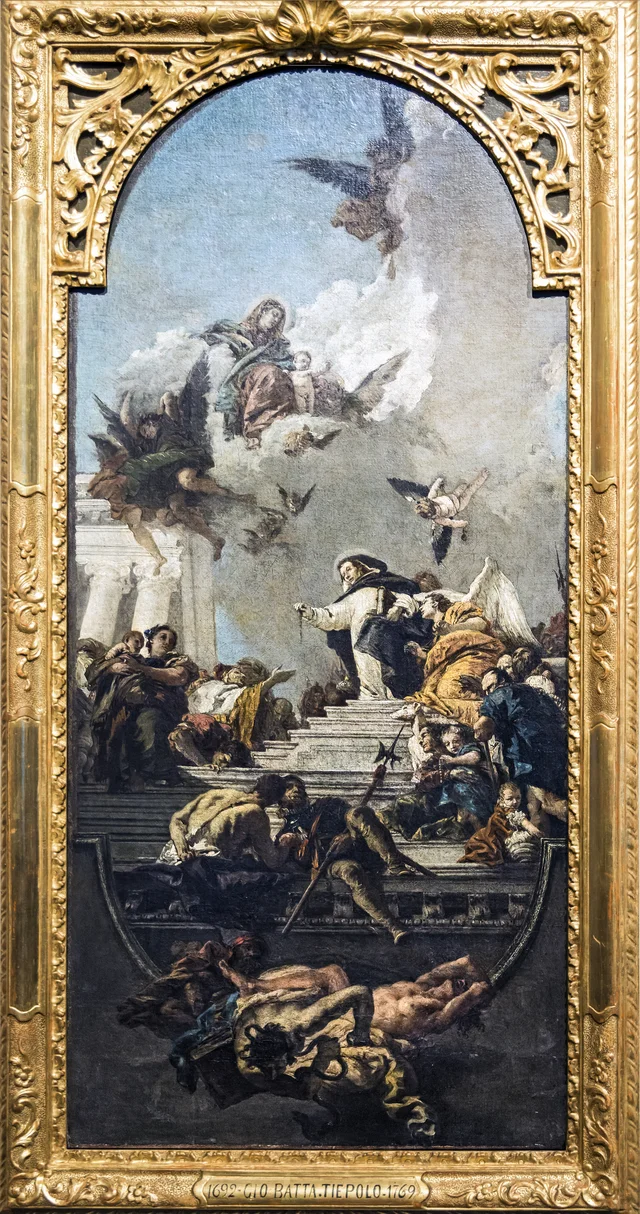 Institution of the RosaryGiovanni Battista Tiepolo, 1737
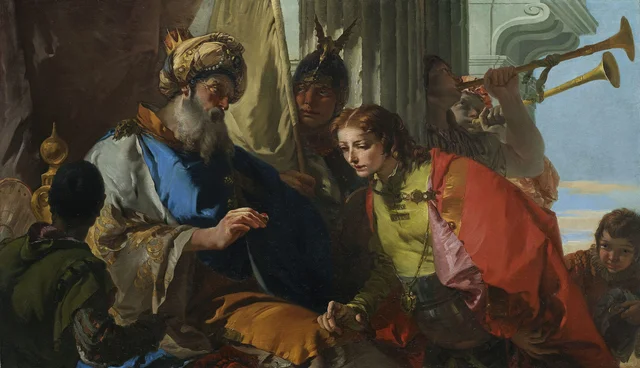 Joseph receiving Pharaoh's RingGiovanni Battista Tiepolo, 1733
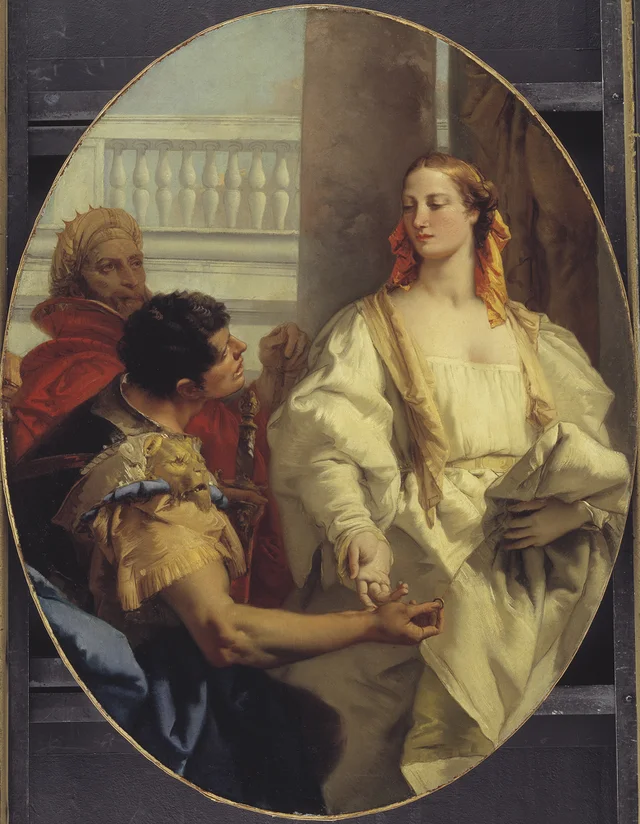 Latinus Offering his Daughter Lavinia to Aeneas in MatrimonyGiovanni Battista Tiepolo, 1753
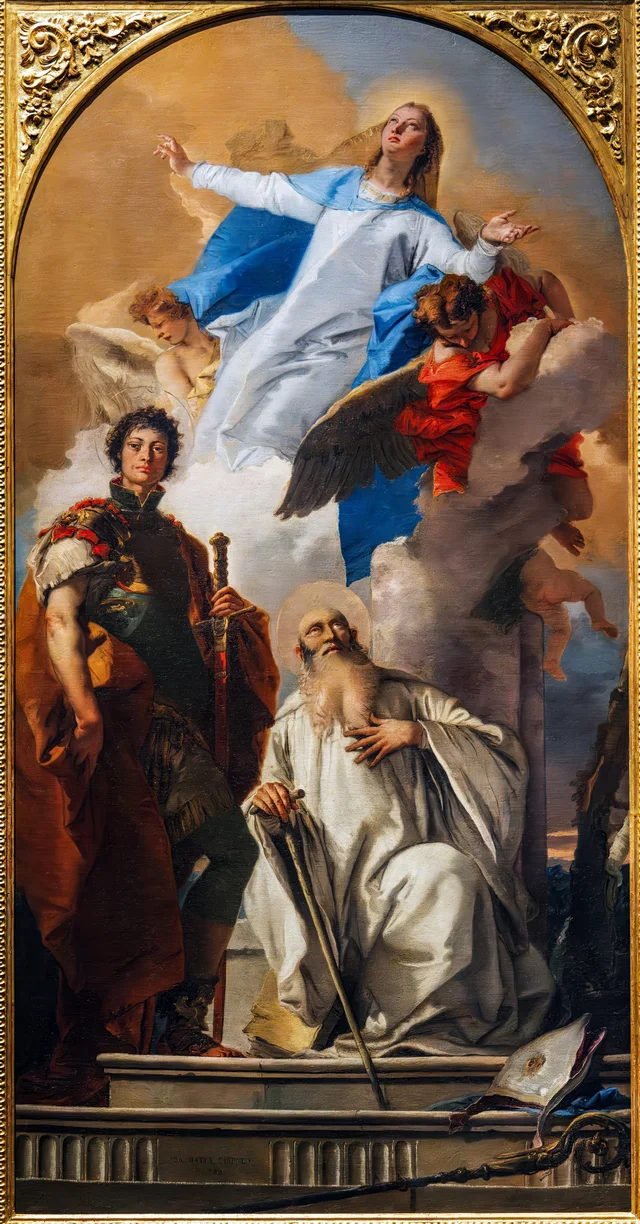 Madonna in Glory between Saints George and RomualdGiovanni Battista Tiepolo, 1735
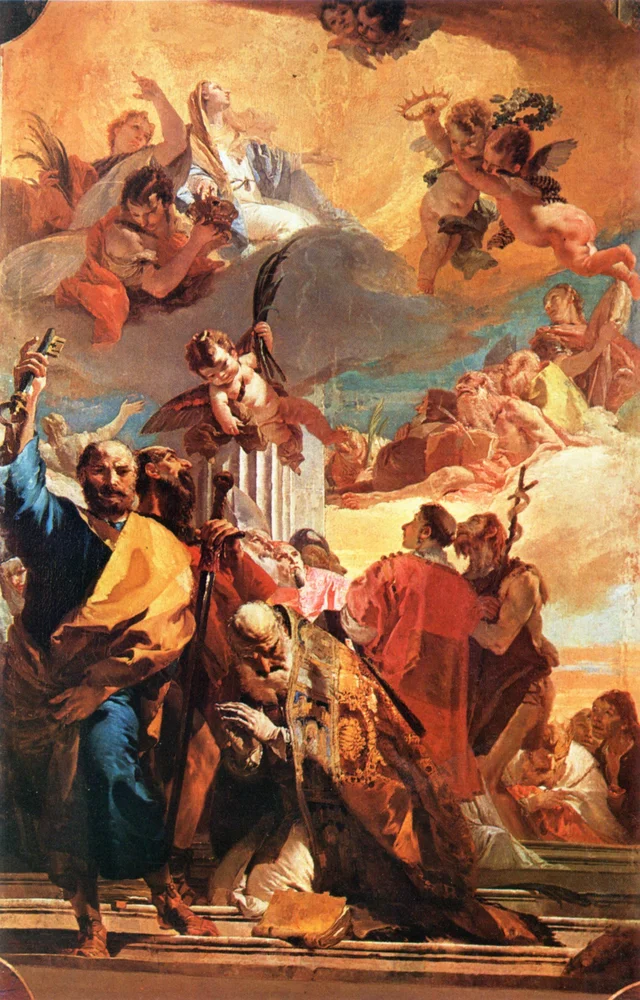 Madonna in Glory with the SaintsGiovanni Battista Tiepolo, 1734
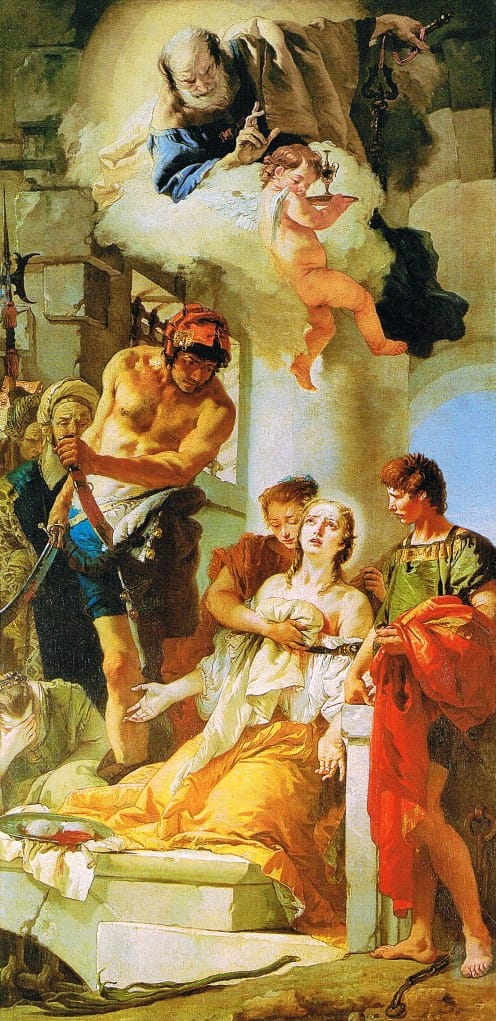 Martyrdom of Saint AgathaGiovanni Battista Tiepolo, 1736
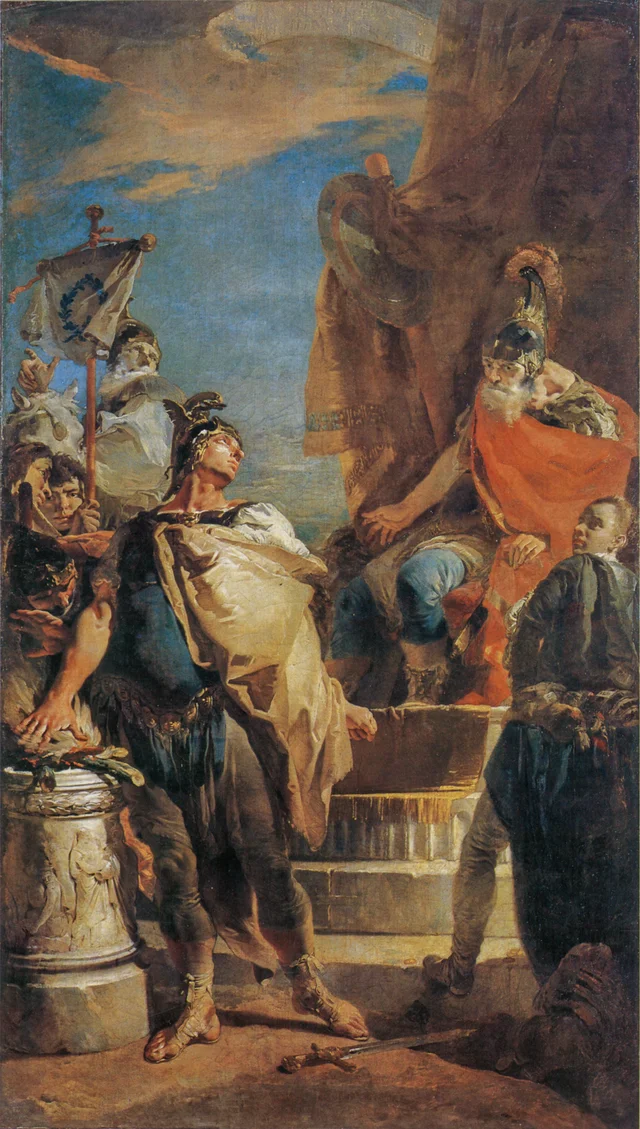 Mucius Scaevola before PorsennaGiovanni Battista Tiepolo, 1728
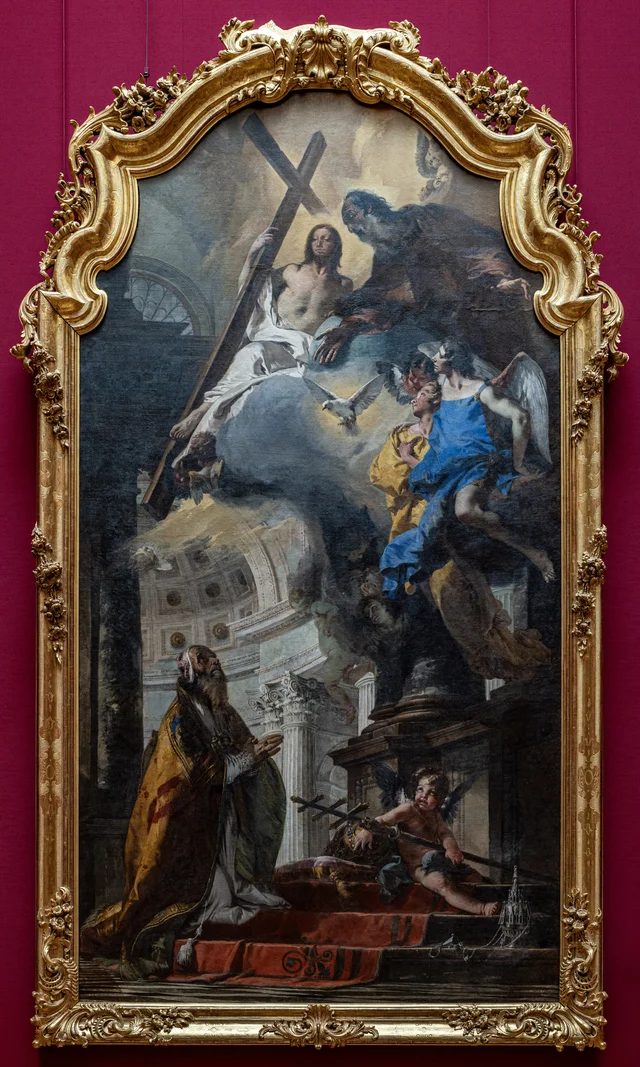 Pope St Clement Adoring the TrinityGiovanni Battista Tiepolo, 1737
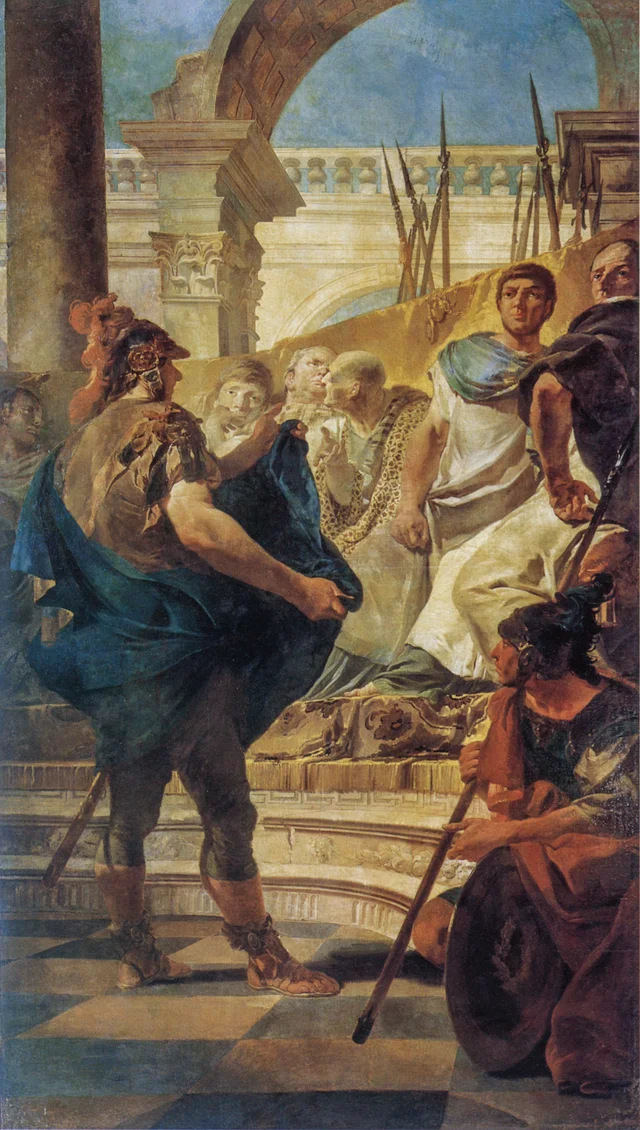 Quintus Fabius Maximus Before the Senate of CarthageGiovanni Battista Tiepolo, 1728
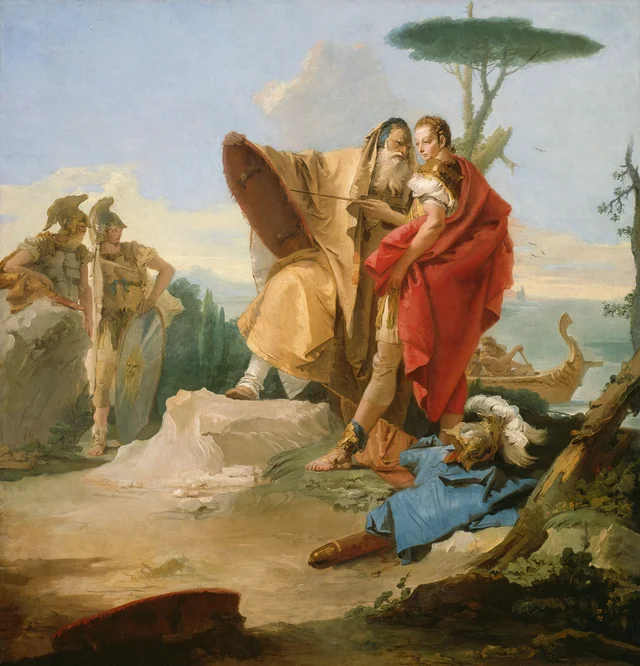 Rinaldo and the Magus of AscalonGiovanni Battista Tiepolo, 1743
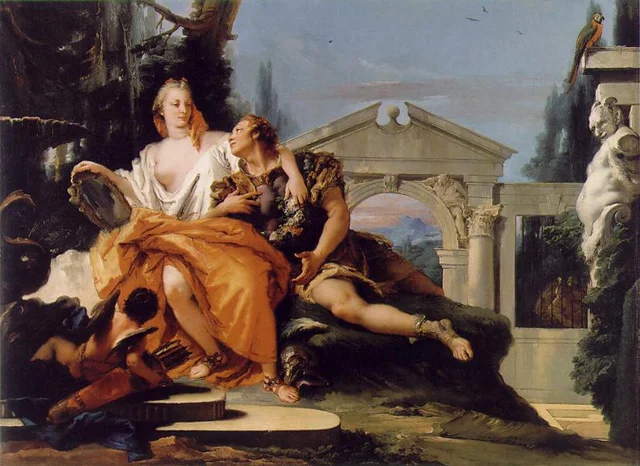 Rinaldo under Armida’s SpellGiovanni Battista Tiepolo, 1753
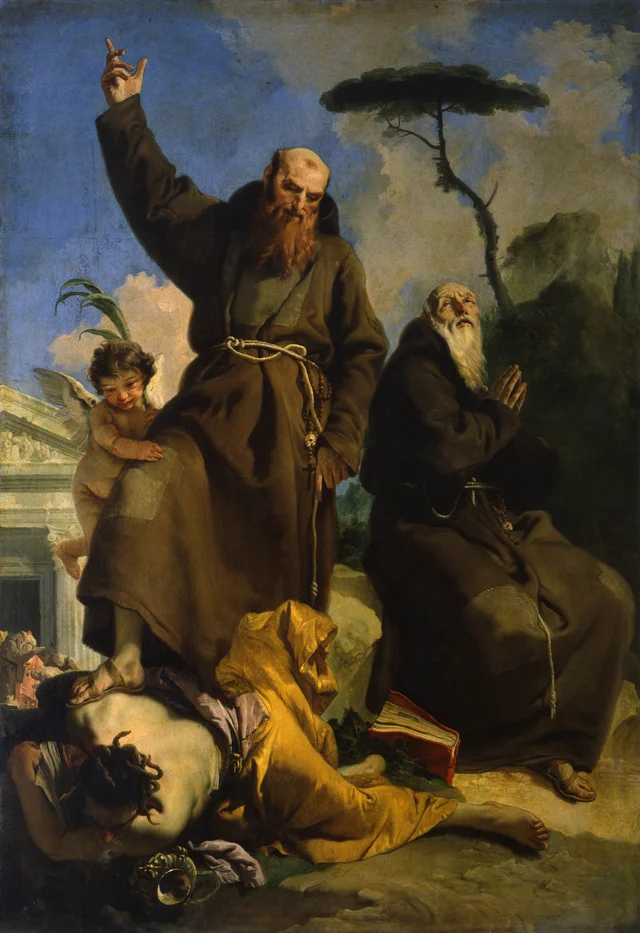 Saint Fidelis of Sigmarigen and Saint Joseph of LeonessaGiovanni Battista Tiepolo, 1752
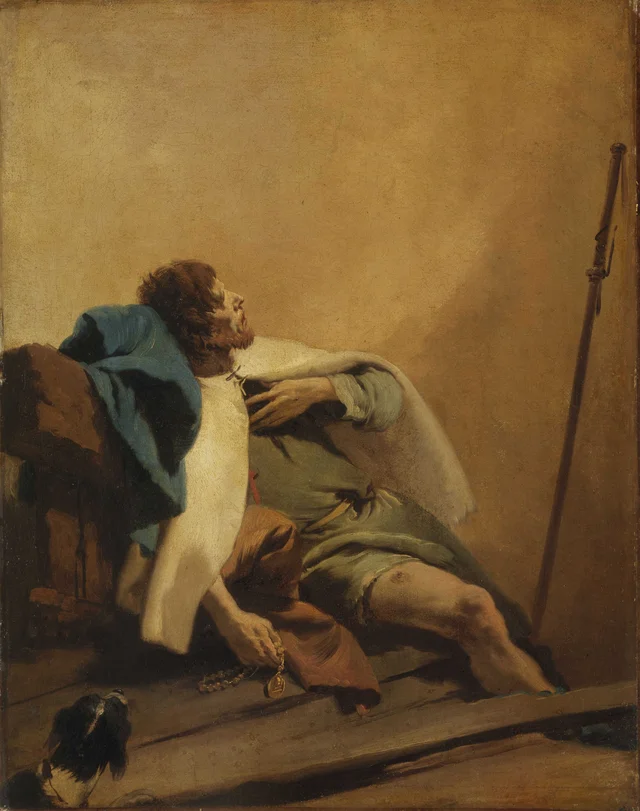 Saint RochGiovanni Battista Tiepolo, 1733
 Scourge of the SerpentsGiovanni Battista Tiepolo, 1732
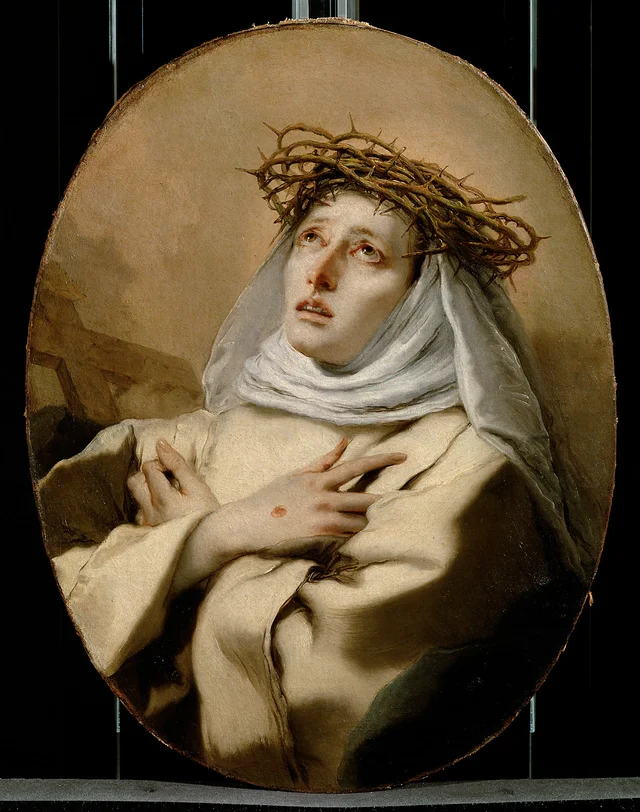 St Catherine of SienaGiovanni Battista Tiepolo, 1746
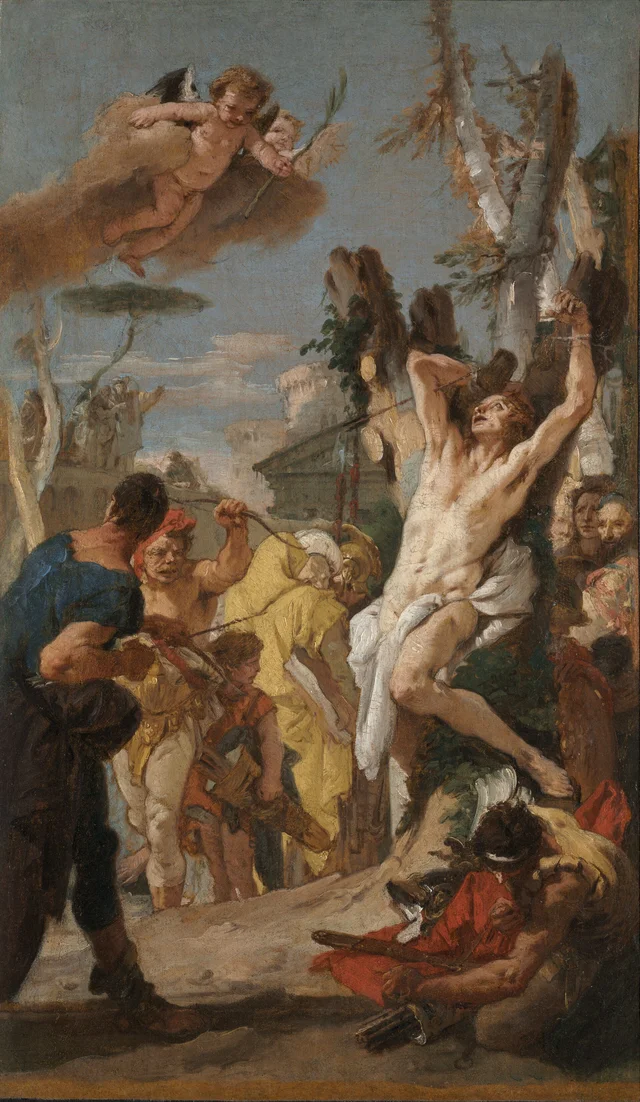 Study for "The Martyrdom of Saint Sebastian" (for the Augustinian monastery at Diessen, Germany)Giovanni Battista Tiepolo, 1739