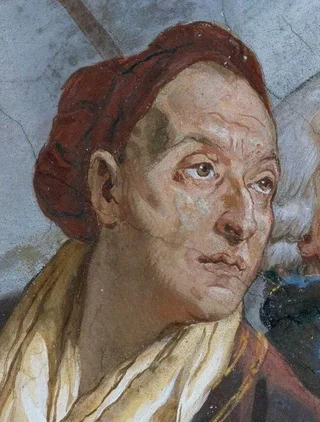
Giovanni Battista Tiepolo
1696–1770 · Republic of Venice · Rococo
The story
In December 1750 Giovanni Battista Tiepolo arrived in Würzburg, a city in Bavaria in southern Germany, with his two sons, invited by the local prince-bishop Carl Philipp von Greiffenclau to fresco the ceiling of his new palace's dining hall. The prince-bishop was so pleased that he asked Tiepolo to take on a second job, the ceiling above the palace's grand staircase.
What Tiepolo painted there, finished in 1753, is still the largest fresco in the world, covering more than 600 square meters of unsupported vaulted ceiling with allegorical figures representing Europe, Africa, Asia and the Americas, the four continents as Europeans then understood them, gathered around the sun god Apollo. It was the high point of a career spent painting airy, light-filled ceilings for churches and palaces across the Republic of Venice and beyond.
Near the end of his life, in 1762, King Charles III of Spain summoned Tiepolo to Madrid to fresco the new royal palace, and he stayed there the rest of his career, even as a younger, more austere Neoclassical taste was starting to displace the Rococo style he had spent decades perfecting. He died in Madrid in 1770, having never returned to Venice.
More articles

Works
76 works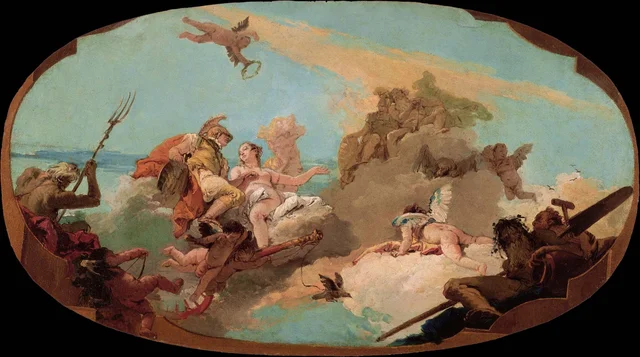 The Apotheosis of Admiral Vettor PisaniGiovanni Battista Tiepolo, 1743
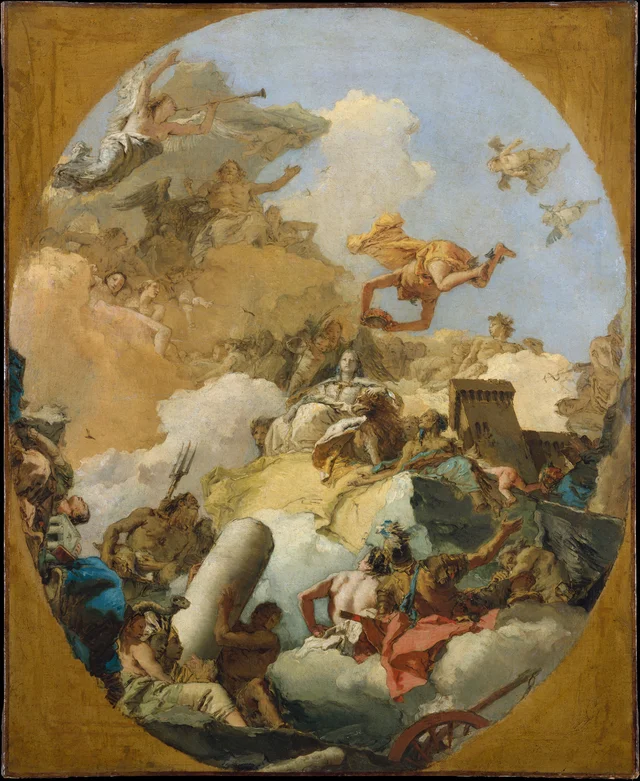 The Apotheosis of the Spanish MonarchyGiovanni Battista Tiepolo, 1764
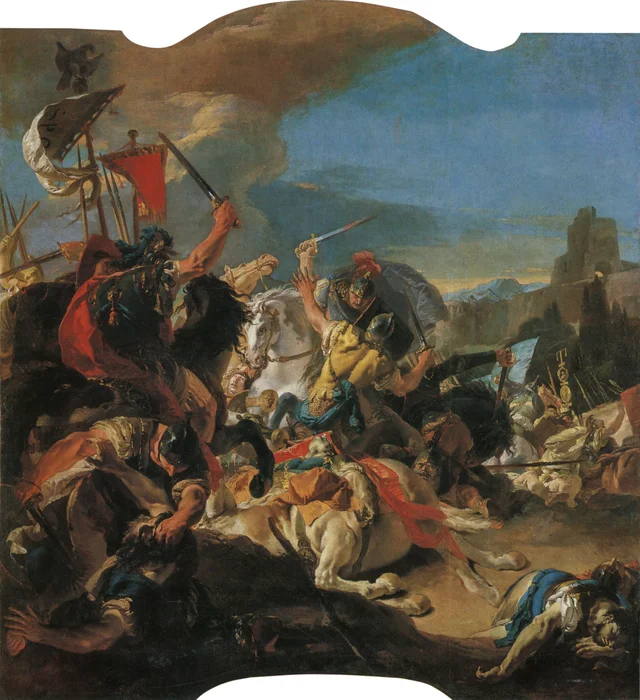 The Battle of VercellaeGiovanni Battista Tiepolo, 1725
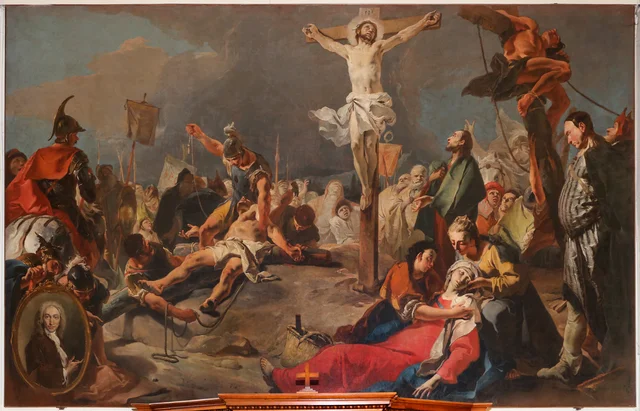 The Crucifixion of ChristGiovanni Battista Tiepolo, 1725
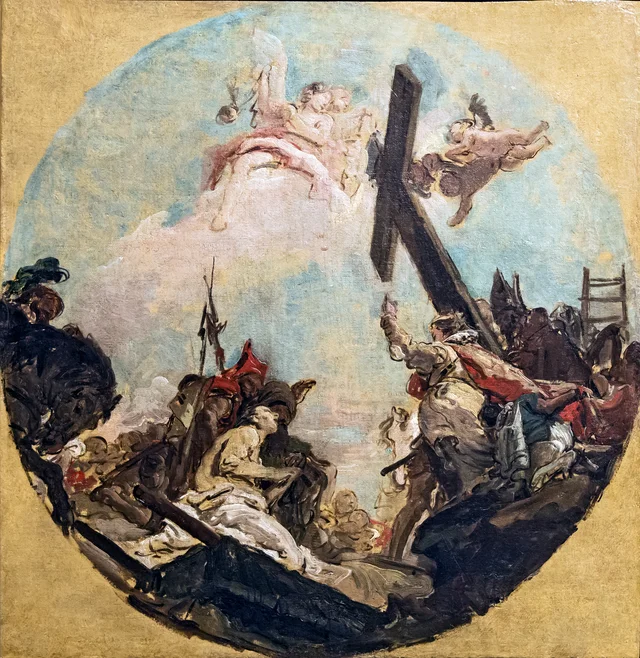 The Feast of the CrossGiovanni Battista Tiepolo, 1740
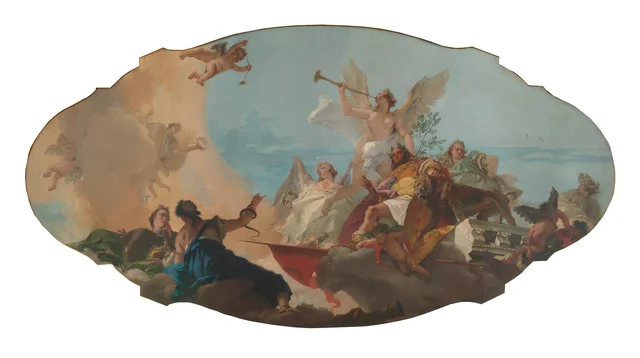 The Glorification of the Barbaro FamilyGiovanni Battista Tiepolo, 1750
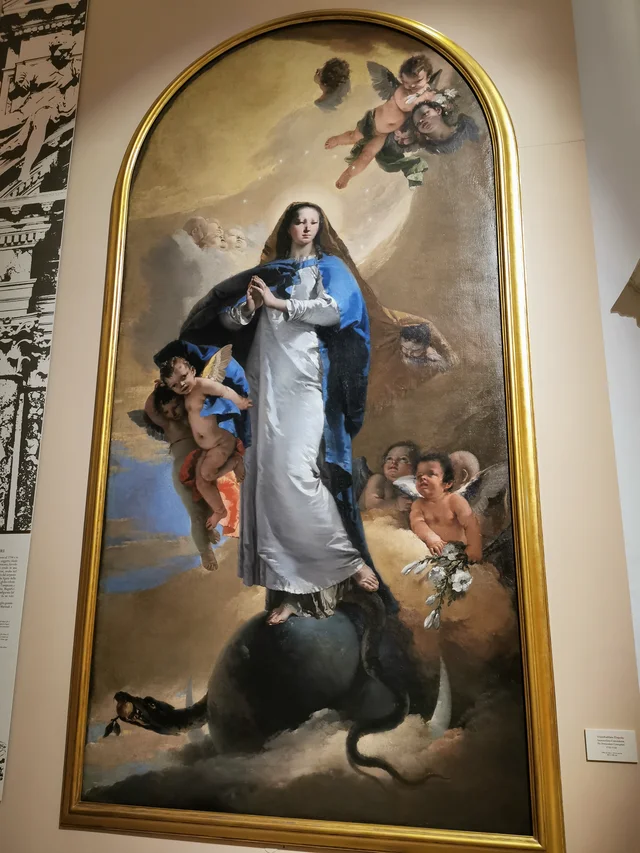 The Immaculate ConceptionGiovanni Battista Tiepolo, 1733
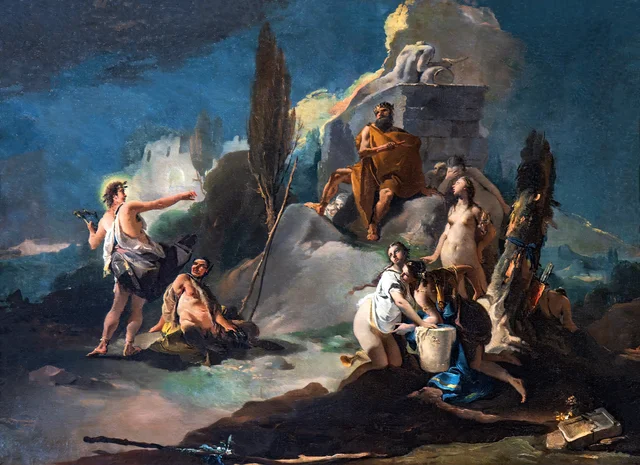 The Judgement of MidasGiovanni Battista Tiepolo, 1720
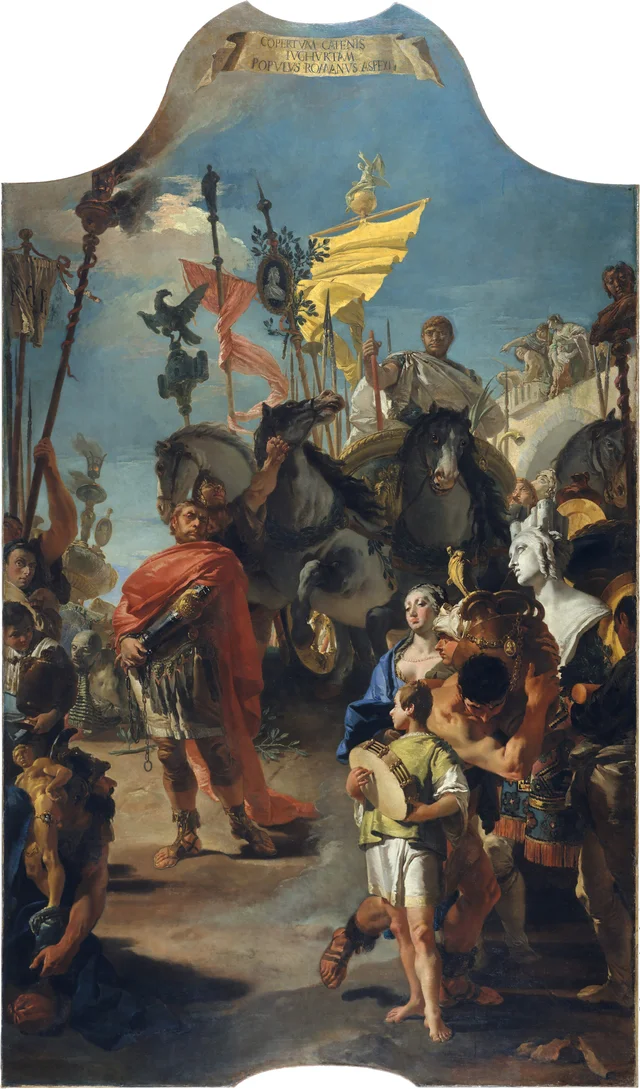 The Triumph of MariusGiovanni Battista Tiepolo, 1729
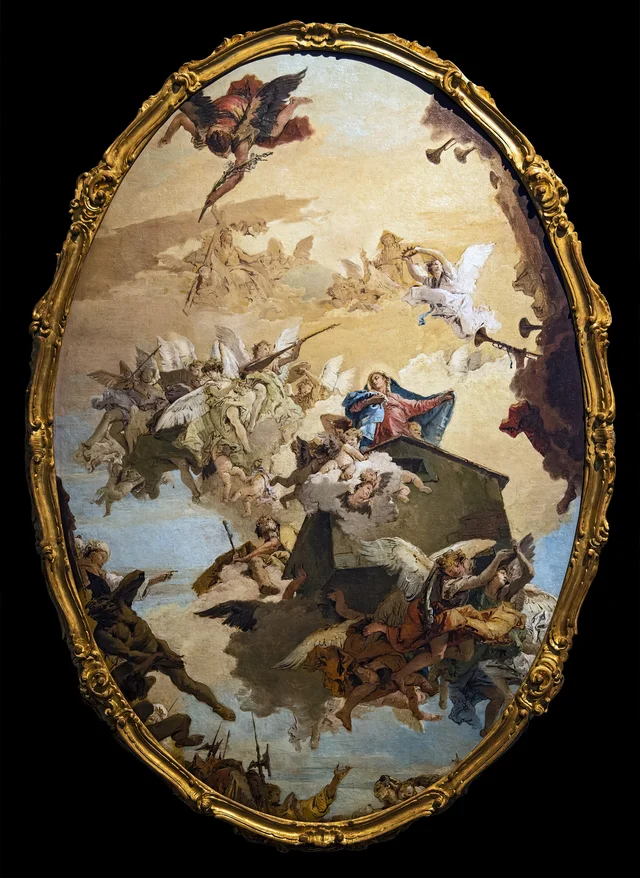 Transportation of the Holy House of LoretoGiovanni Battista Tiepolo, 1743
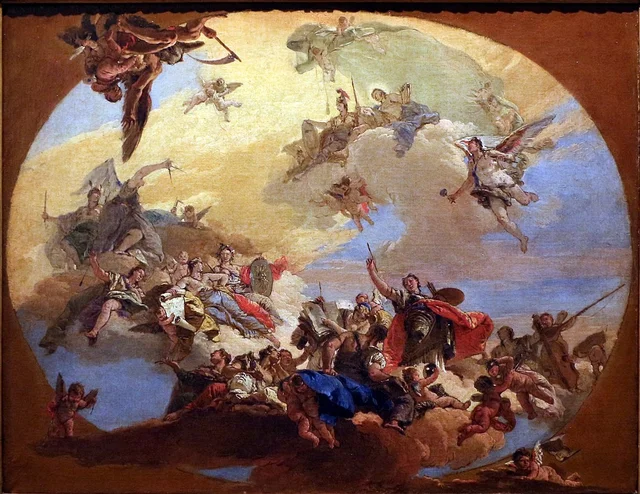 Triumph of the ArtsGiovanni Battista Tiepolo, 1729
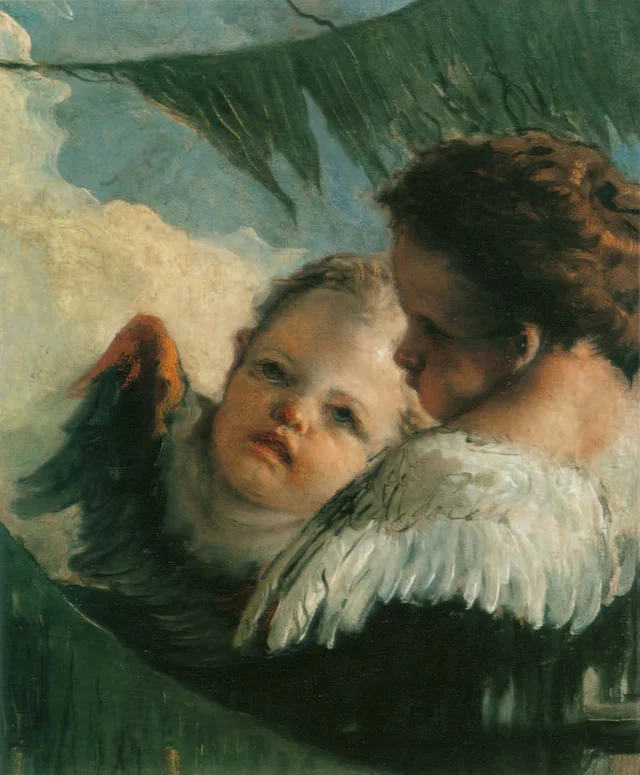 Two Heads of AngelsGiovanni Battista Tiepolo, 1768
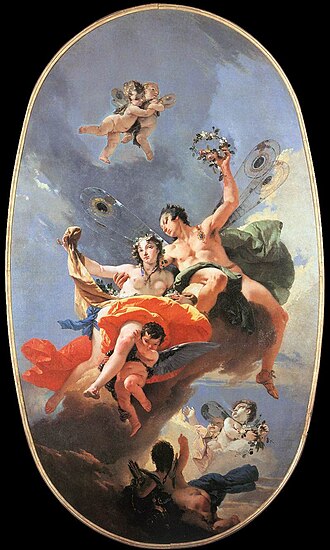 Zephyr and FloraGiovanni Battista Tiepolo, 1734
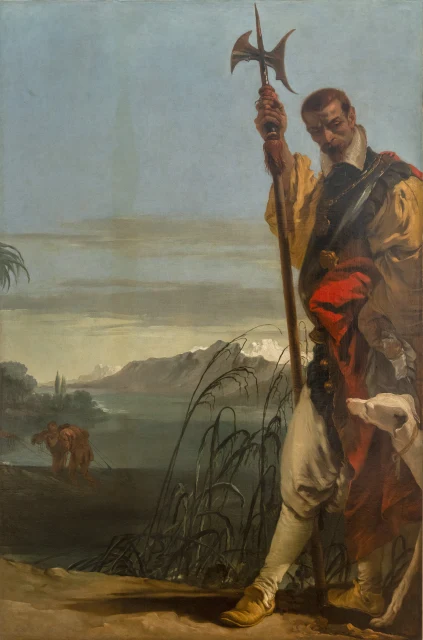 A Halberdier in a LandscapeGiovanni Battista Tiepolo, 1737
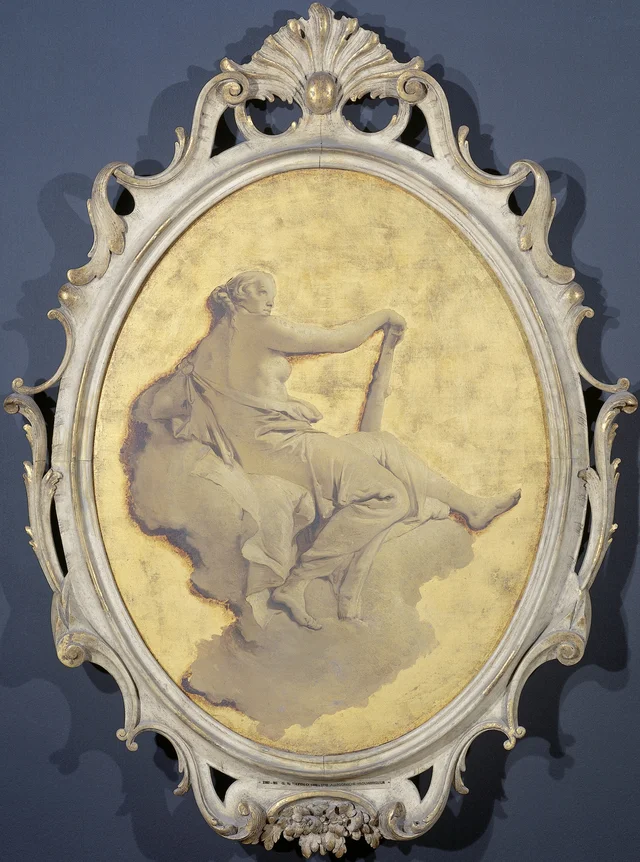 Allegorical Figure of a Woman with a Club (Fortitude?)Giovanni Battista Tiepolo, 1750
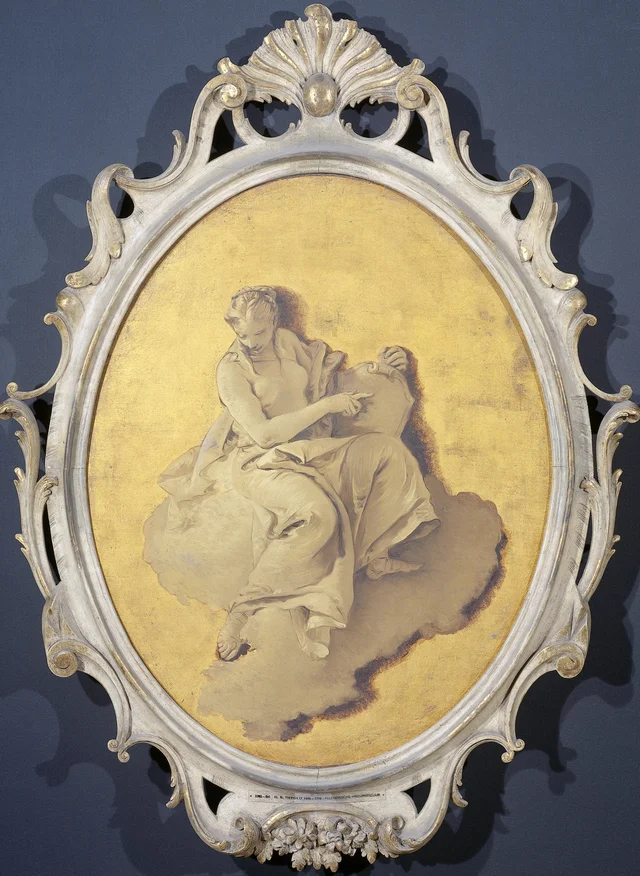 Allegorical Figure of a Woman with a Shield or a Mirror (Prudence?)Giovanni Battista Tiepolo, 1750
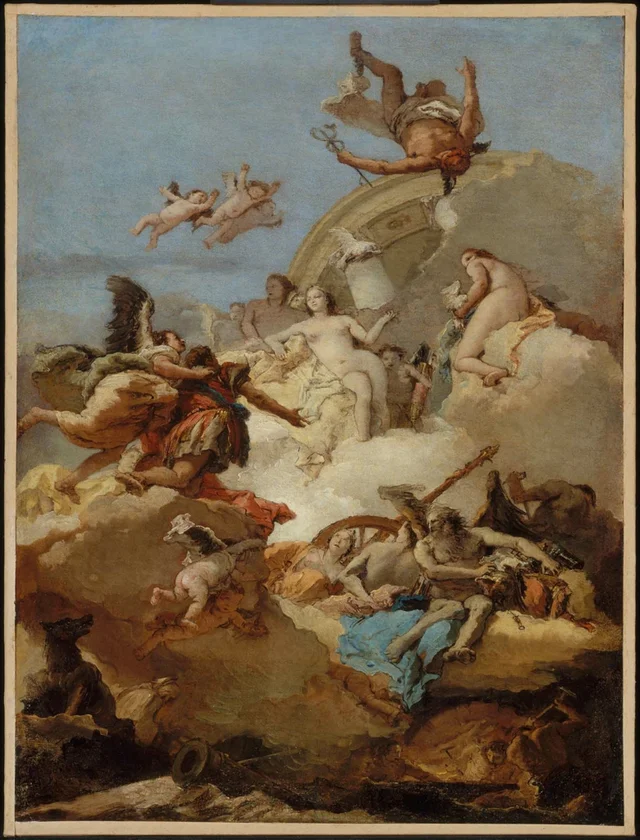 Apotheosis of AeneasGiovanni Battista Tiepolo, 1762
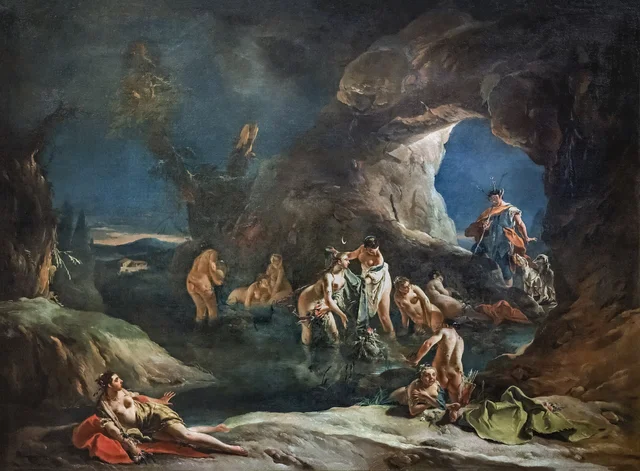 Diana and ActaeonGiovanni Battista Tiepolo, 1720
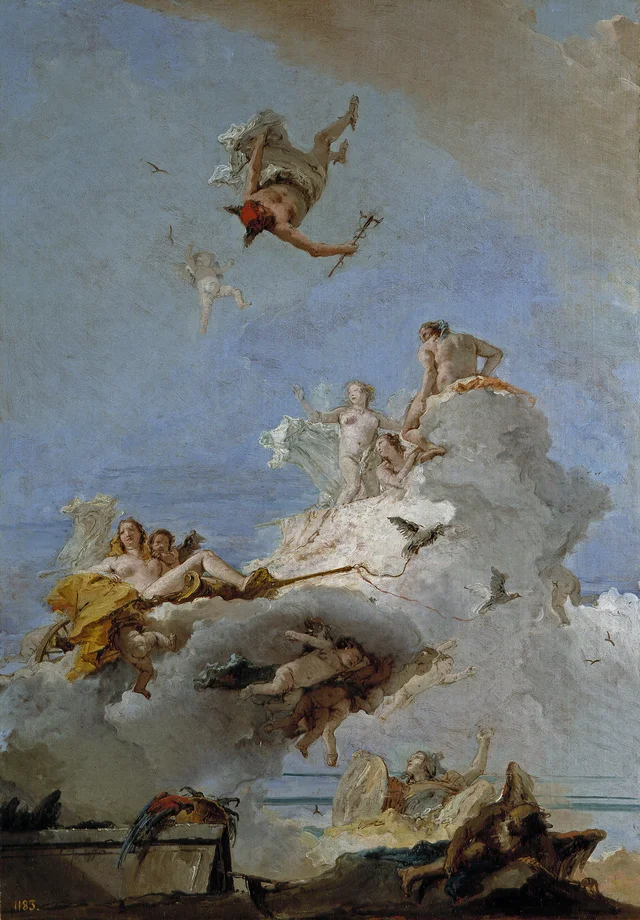 Olympus or The Triumph of VenusGiovanni Battista Tiepolo, 1761
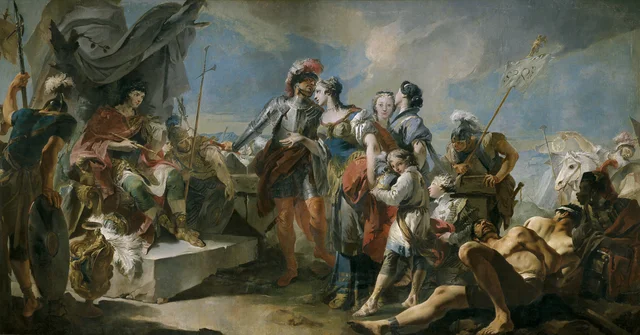 Queen Zenobia before the Emperor AurelianGiovanni Battista Tiepolo, 1750
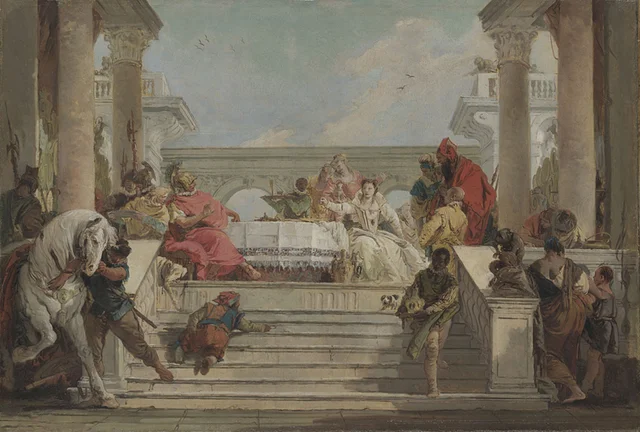 The Banquet of CleopatraGiovanni Battista Tiepolo, 1744
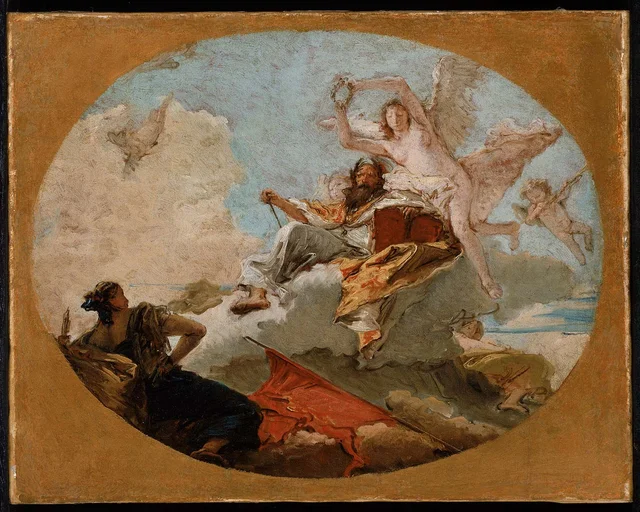 The Crowning of MeritGiovanni Battista Tiepolo
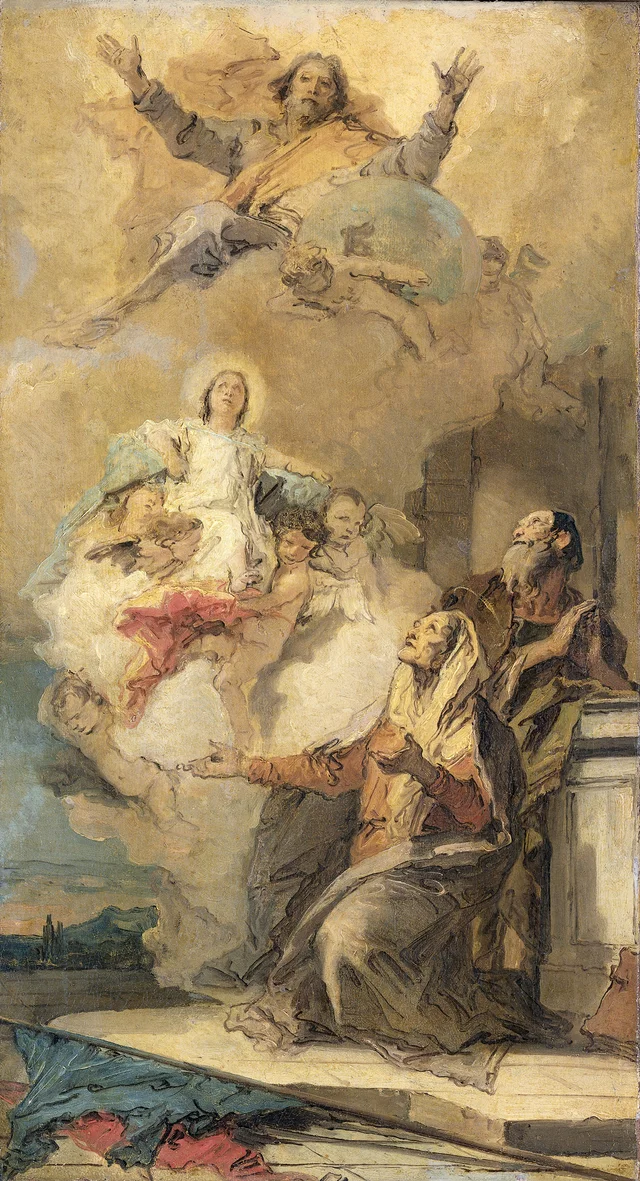 The Immaculate Conception (Joachim en Anna receiving the Virgin Mary from God the Father)Giovanni Battista Tiepolo, 1757
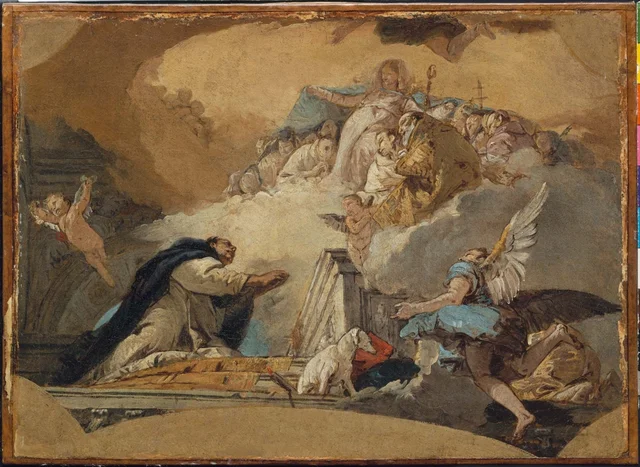 The Virgin Receiving the Prayers of Saint DominicGiovanni Battista Tiepolo, 1737
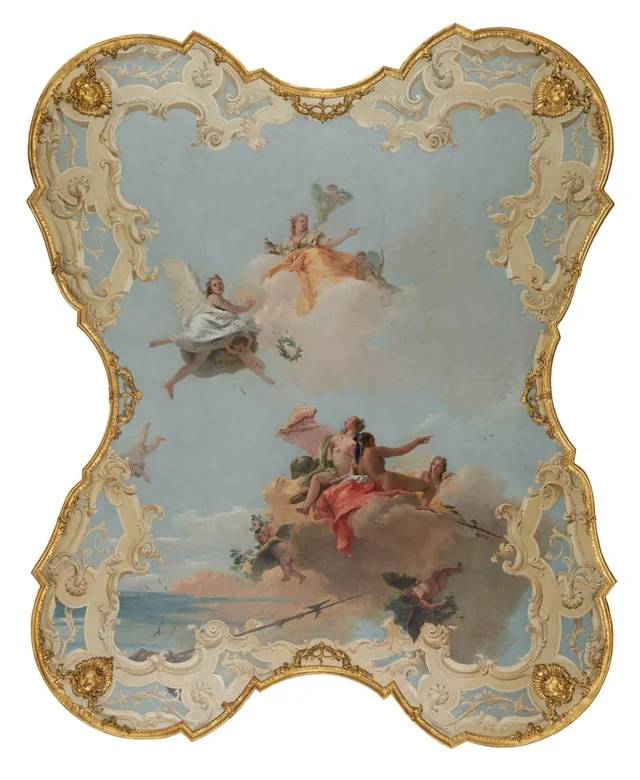 Virtue and Nobility Crowning LoveGiovanni Battista Tiepolo, 1760