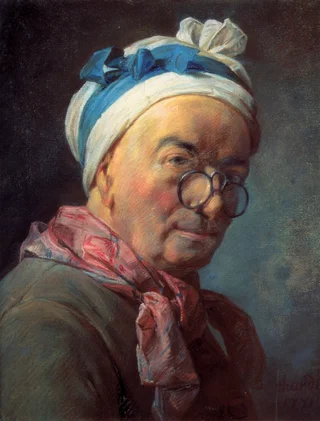
Jean-Baptiste-Siméon Chardin
1699–1779 · France · Rococo, Realism
The story
While the court painters of Louis XV filled Paris with pink cherubs and flirtation, Chardin turned to a copper pot, a few eggs, a dead fish. In an age that prized the light and erotic, he built a career on the plainest things in the kitchen, painted so solidly you feel their weight and dull shine.
He worked slowly and exhibited little, but even Diderot, the sharp-tongued philosopher who reviewed the Salons, marvelled at how Chardin made mere paint read as substance, the bloom on a peach or the felt of a hat. His genre scenes are just as still: a boy building a house of cards, a governess brushing a child's coat, a servant back from the market pausing with her loaves.
Late in life his eyes weakened and oil paint troubled him, so he switched to pastel and made a handful of unsparing self-portraits, an old man in a nightcap with spectacles pushed up on his forehead. He had lodgings in the Louvre, then a royal palace, and died there in 1779, having spent his last years drawing his own face in coloured chalk.
More articles
Works
39 works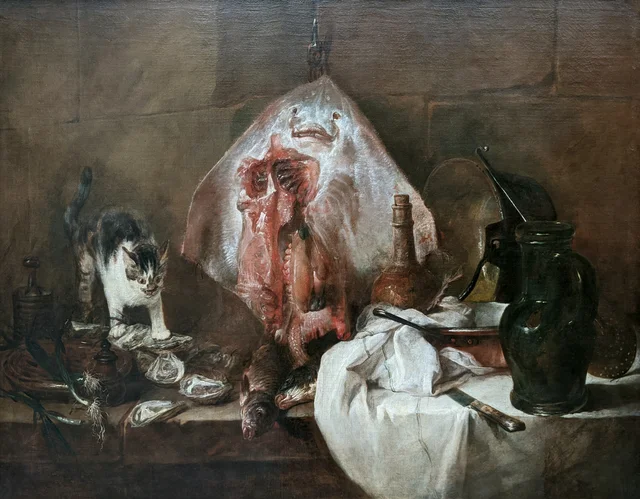 The RayJean-Baptiste-Siméon Chardin, 1727
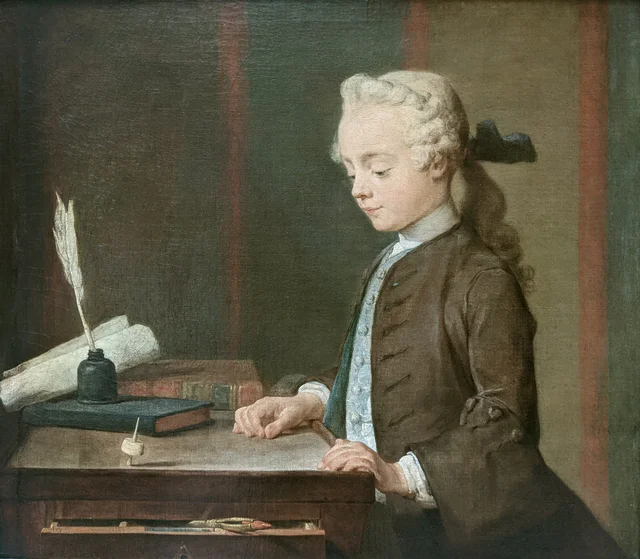 Boy with a Spinning-TopJean-Baptiste-Siméon Chardin, 1738
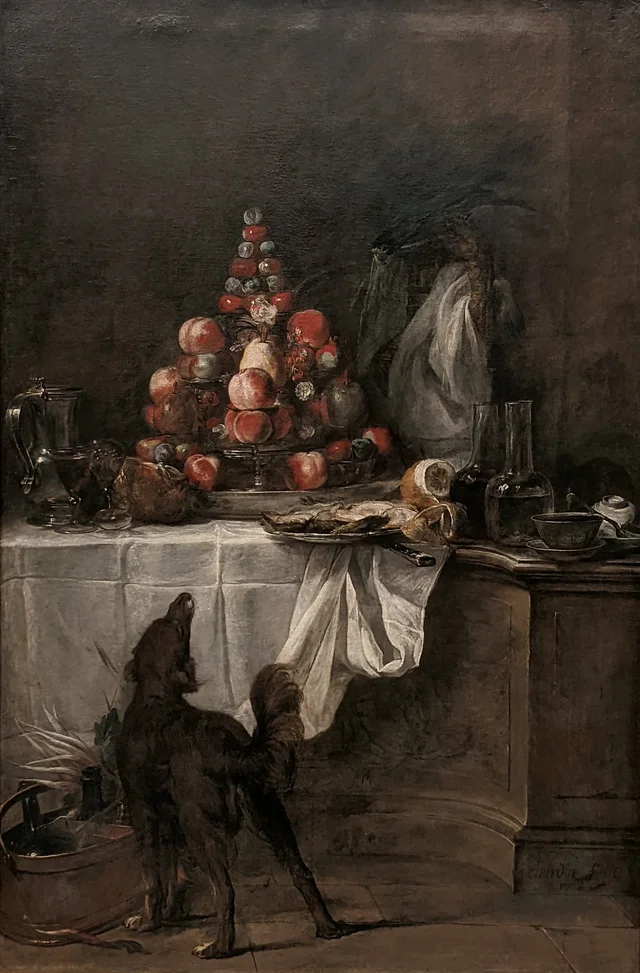 Le BuffetJean-Baptiste-Siméon Chardin, 1728
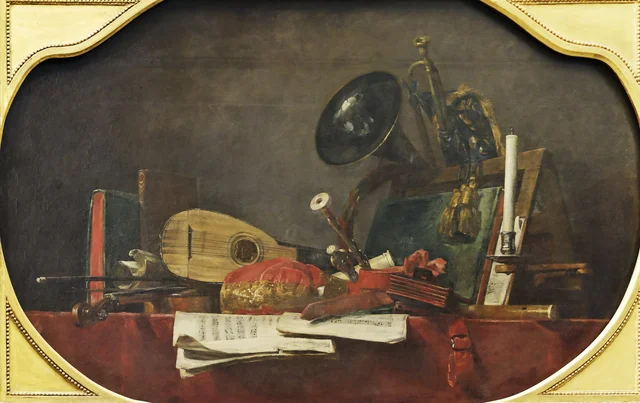 The Attributes of MusicJean-Baptiste-Siméon Chardin, 1765
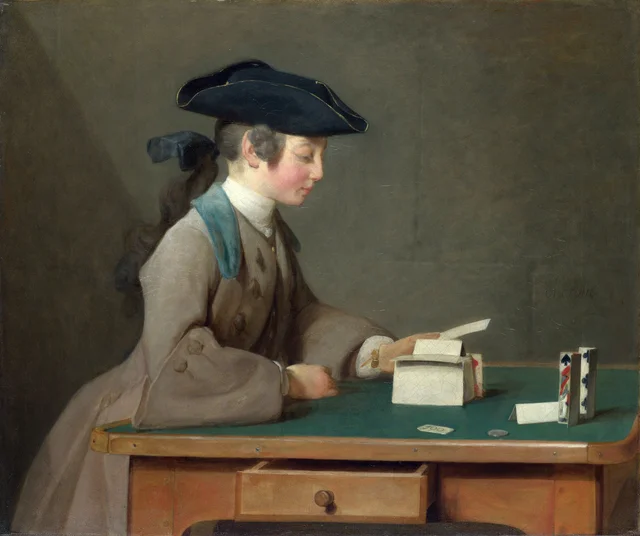 The House of CardsJean-Baptiste-Siméon Chardin, 1740
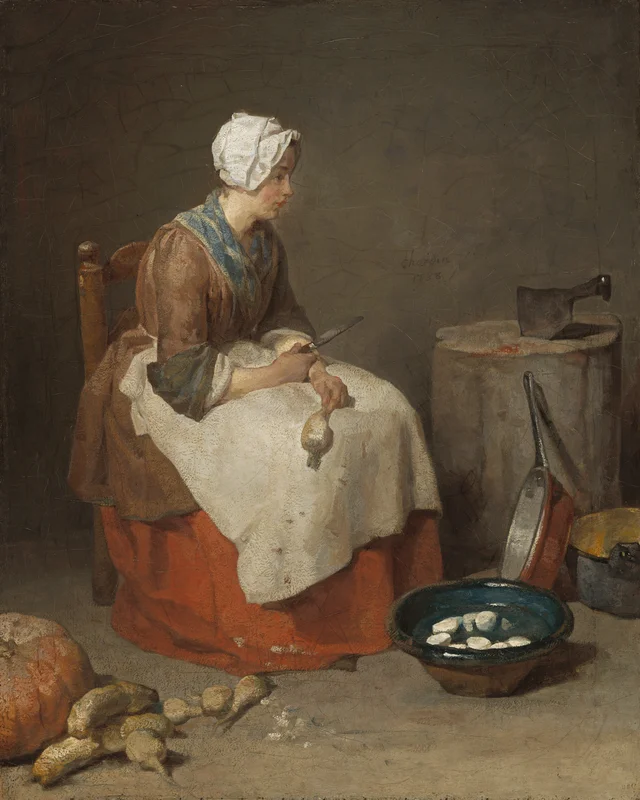 The Kitchen MaidJean-Baptiste-Siméon Chardin, 1738
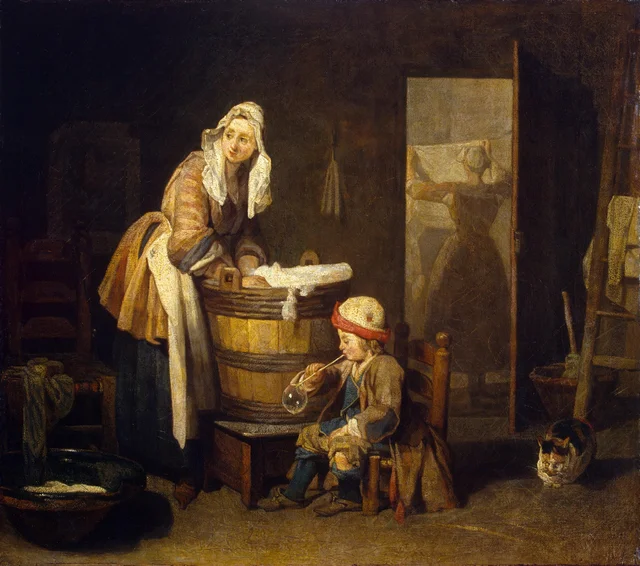 The LaundressJean-Baptiste-Siméon Chardin, 1730
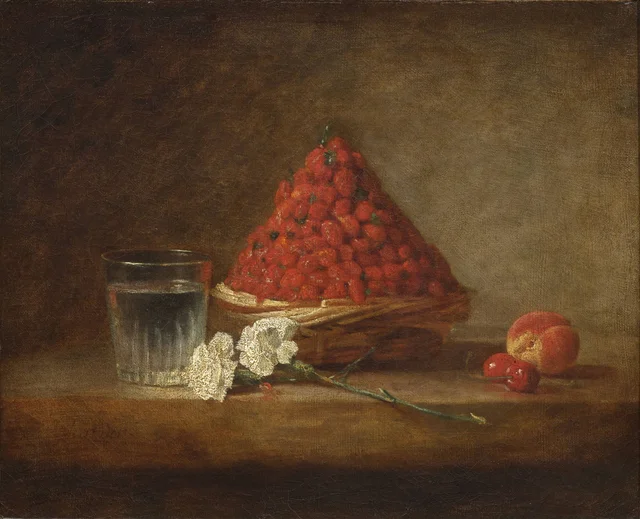 Le Panier de fraises des boisJean-Baptiste-Siméon Chardin, 1761
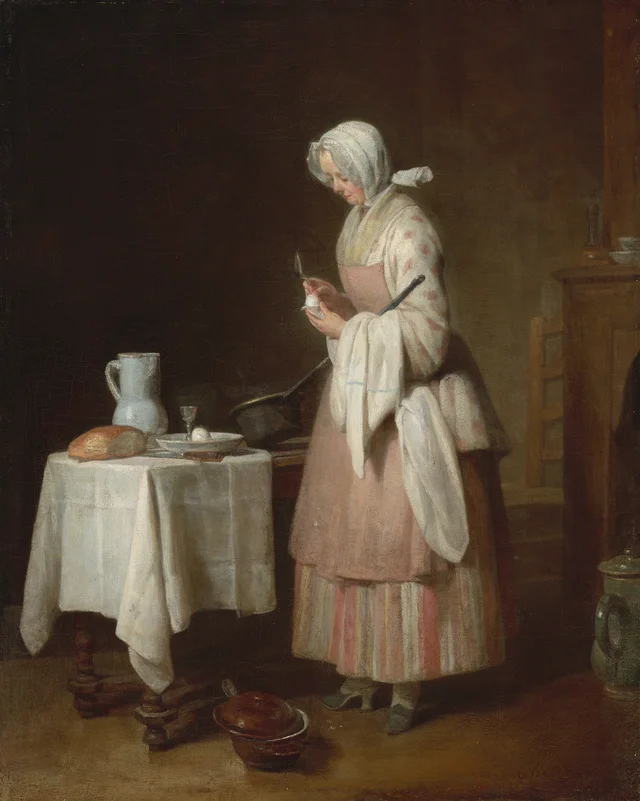 The Attentive NurseJean-Baptiste-Siméon Chardin, 1747
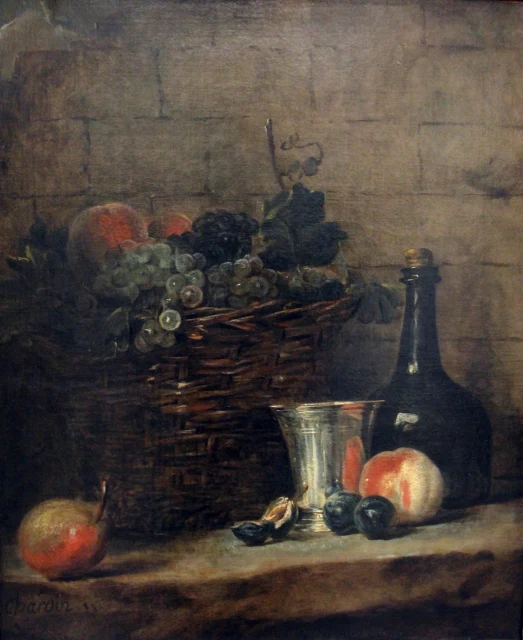 Basket of Grapes, Silver Goblet and BottleJean-Baptiste-Siméon Chardin, 1728
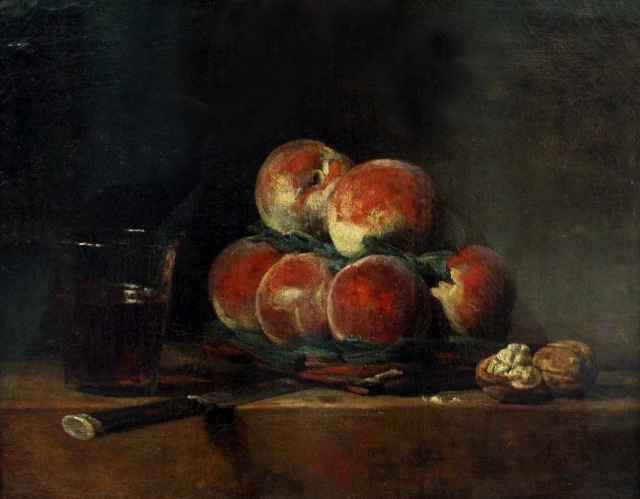 Basket of Peaches, with Walnuts, Knife and Glass of WineJean-Baptiste-Siméon Chardin, 1768
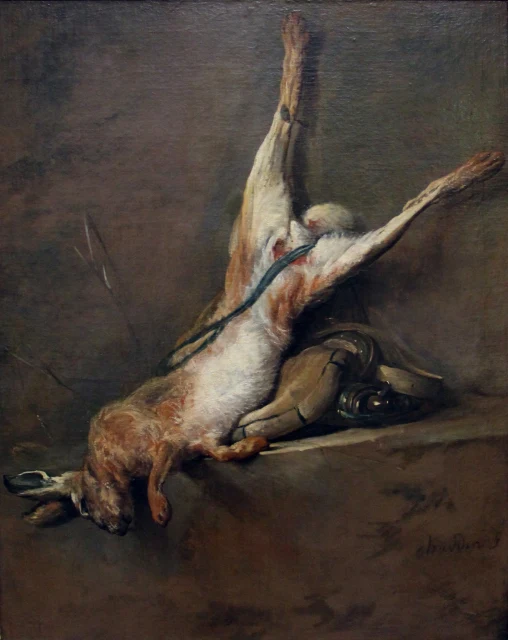 Dead Hare with Powder Flask and Game BagJean-Baptiste-Siméon Chardin, 1730
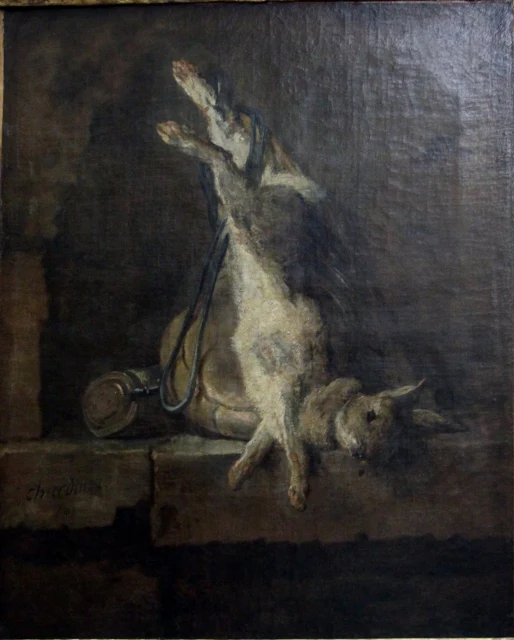 Dead Rabbit with Hunting GearJean-Baptiste-Siméon Chardin, 1729
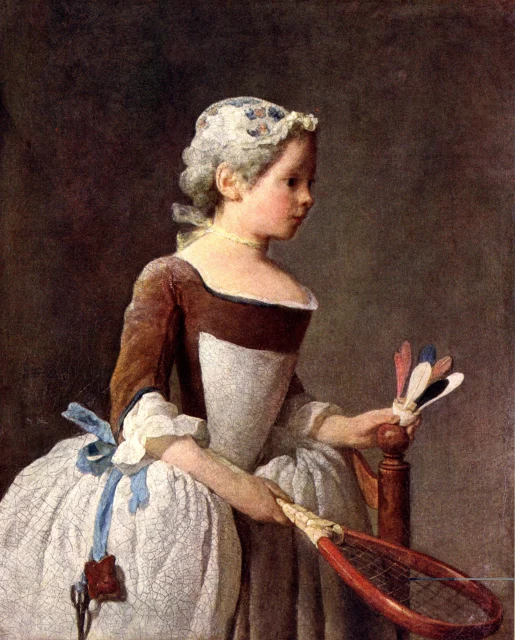 Girl with Racket and ShuttlecockJean-Baptiste-Siméon Chardin, 1737
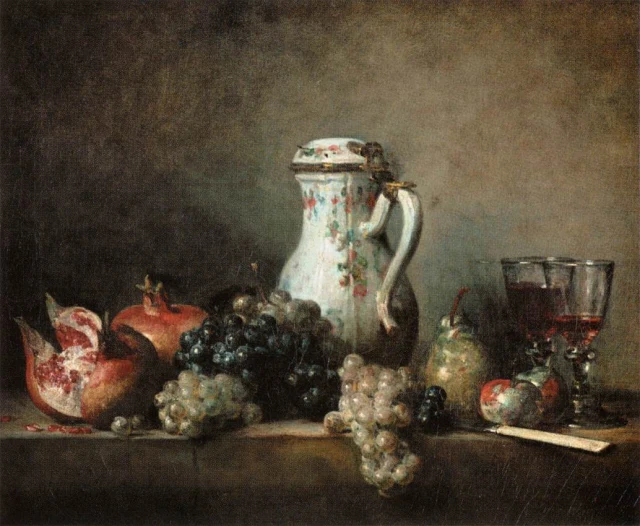 Grapes and PomegranatesJean-Baptiste-Siméon Chardin, 1763
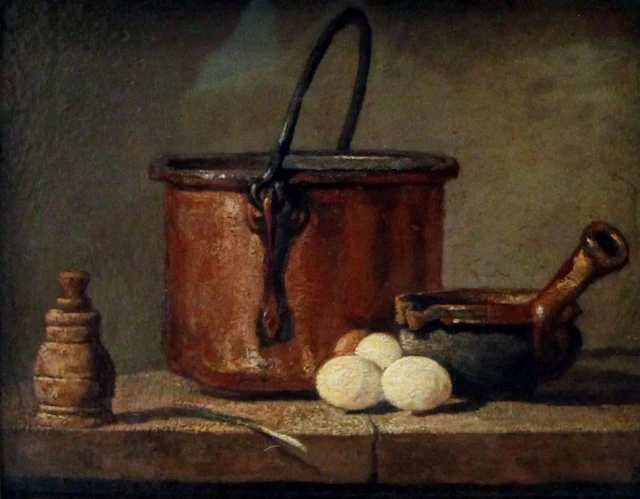 Kitchen Utensils with Cauldron, Frying Pan and EggsJean-Baptiste-Siméon Chardin, 1733
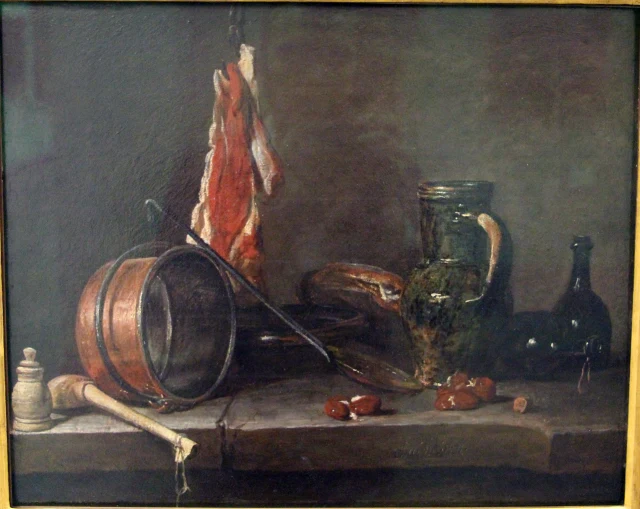 Meat-Day Fare with Kitchen UtensilsJean-Baptiste-Siméon Chardin, 1731
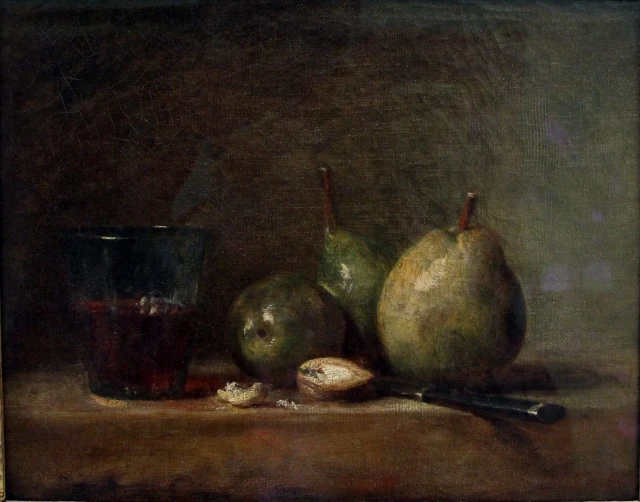 Pears, Walnuts and Glass of WineJean-Baptiste-Siméon Chardin, 1768
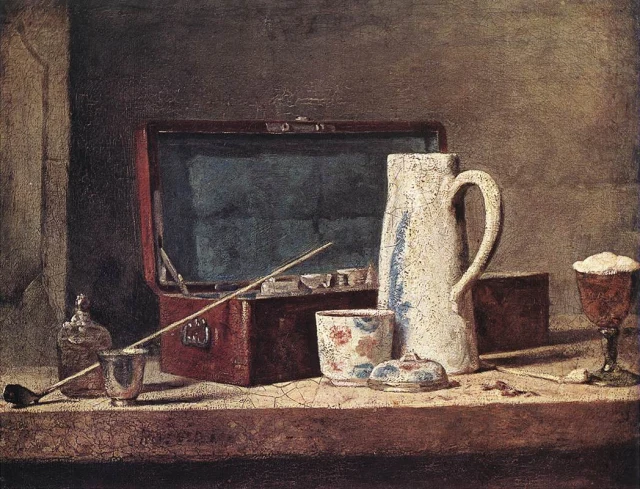 Pipes and Drinking PitcherJean-Baptiste-Siméon Chardin, 1762
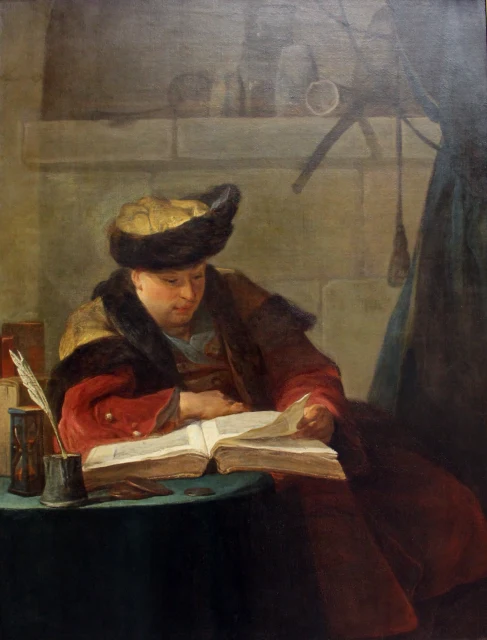 Portrait of the Painter Joseph Aved ('The Alchemist')Jean-Baptiste-Siméon Chardin, 1734
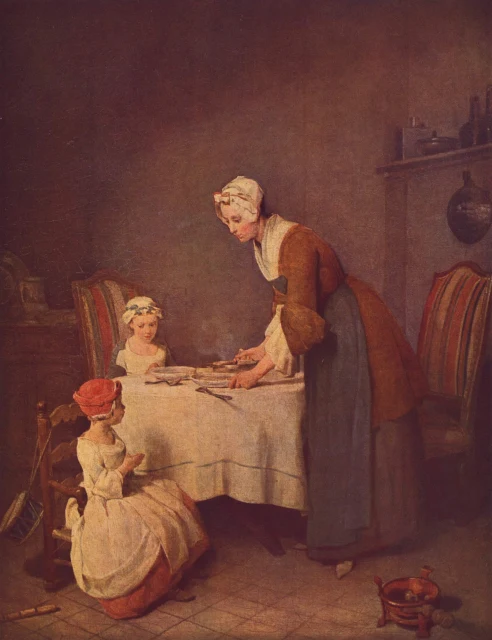 Saying GraceJean-Baptiste-Siméon Chardin, 1740
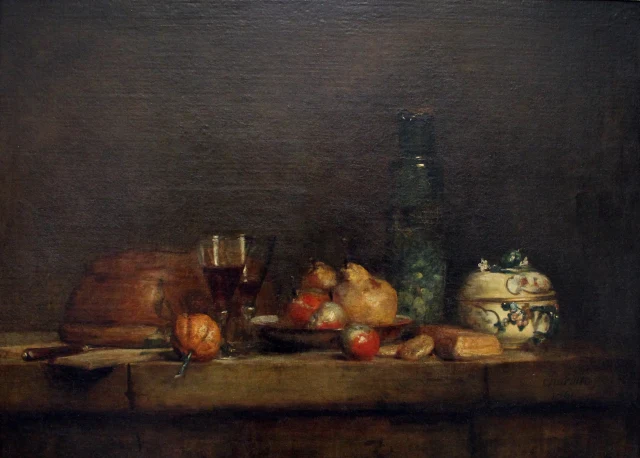 Still Life with a Jar of OlivesJean-Baptiste-Siméon Chardin, 1760
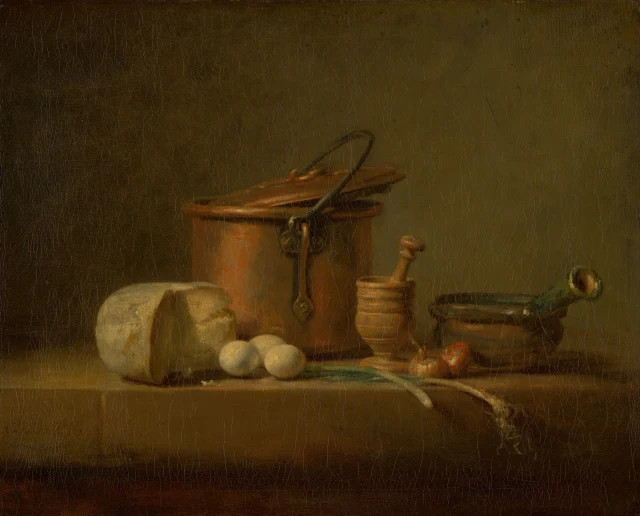 Still Life with Copper Pot, Cheese and EggsJean-Baptiste-Siméon Chardin, 1732
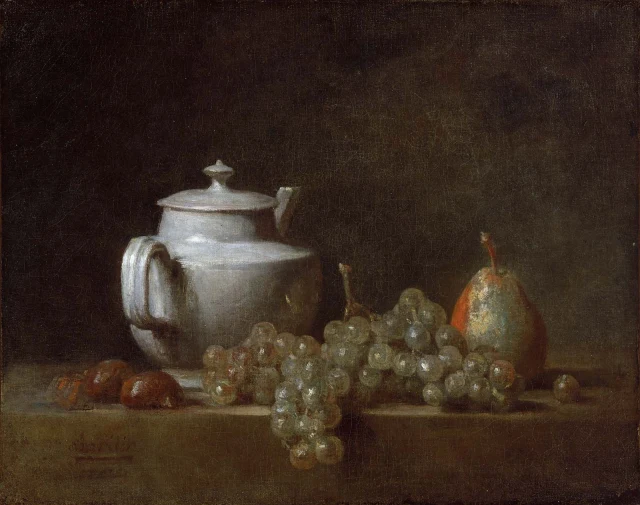 Still Life with Teapot, Grapes, Chestnuts, and a PearJean-Baptiste-Siméon Chardin, 1764
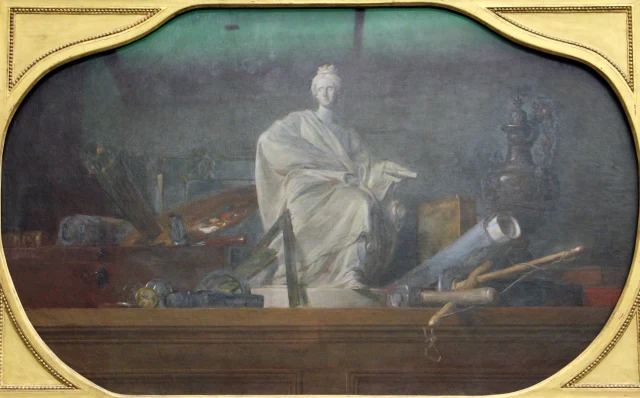 The Attributes of the ArtsJean-Baptiste-Siméon Chardin, 1765