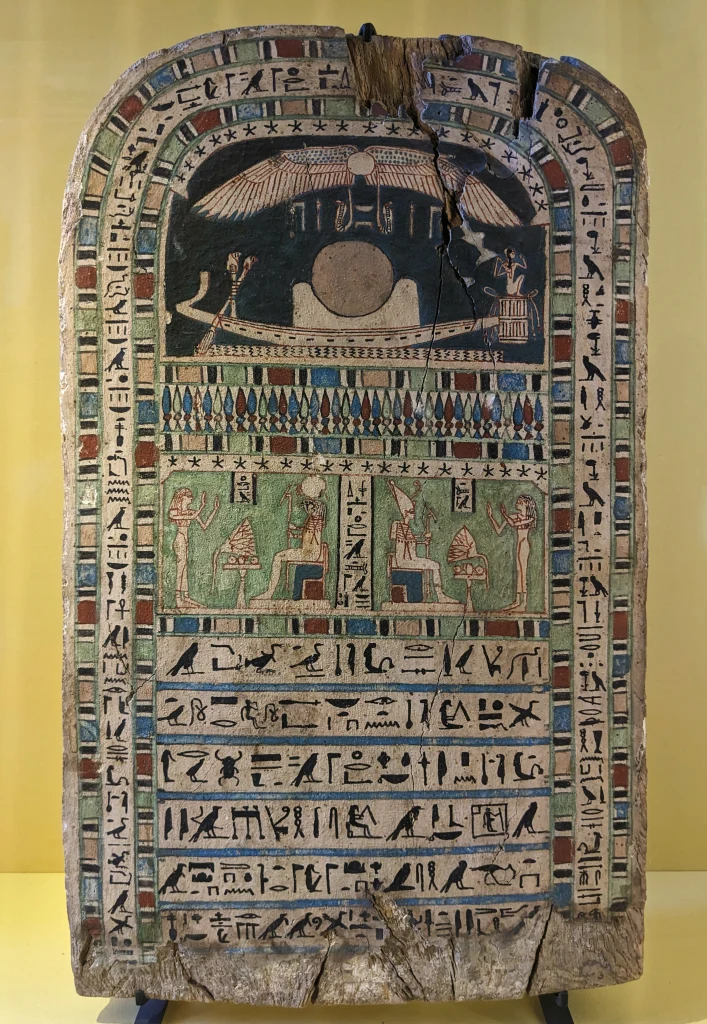
Stela of the Lady Udjarenes Worshipping the Sun
Details
The story
Look at the band just above the two scenes on this small wooden stela, a row of tall knotted shapes painted side by side. It is a kheker frieze. In the earliest Egyptian buildings bundles of reeds were tied at the top and lined up along the head of a wall, and long after walls were built of brick and stone the shape survived as ornament, on temples, in tombs and on objects like this.
Above the frieze the rounded top holds the sky, a band of stars, a winged sun disc with a cobra, and the sun riding in the boat of Ra on the sign for the horizon. Below it the lady Udjarenes appears twice, in mirror image, her hands raised. On the left she faces the falcon-headed Ra-Horakhty, on the right Atum in the double crown, each enthroned and wrapped in a shroud. The hieroglyphs give an offering formula and a hymn, and they name both her father and her mother, the mother with the title mistress of the house. A frame of alternating coloured blocks runs round the edge. The Louvre dates the stela by its style to the 26th Dynasty, between 664 and 525 BC, and it has been in the collection since at least 1857.
More works by Unknown Egyptian artist (Late Period or Ptolemaic)
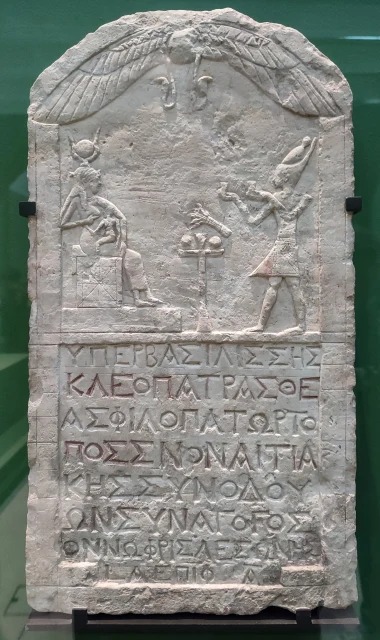 Arched Stela of Cleopatra VII Offering to Isis Nursing HarpocratesUnknown Egyptian artist (Late Period or Ptolemaic), -51
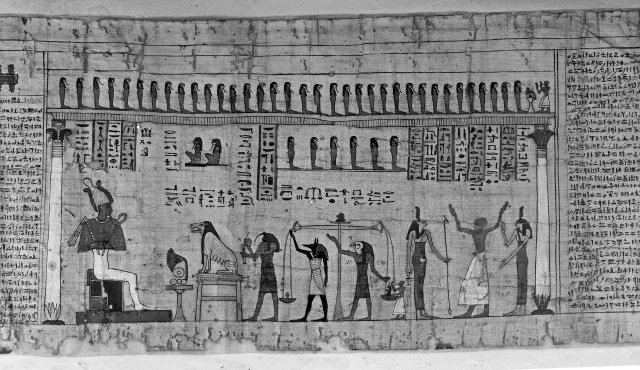 Book of the Dead of PetamunnebnesetawyUnknown Egyptian artist (Late Period or Ptolemaic)
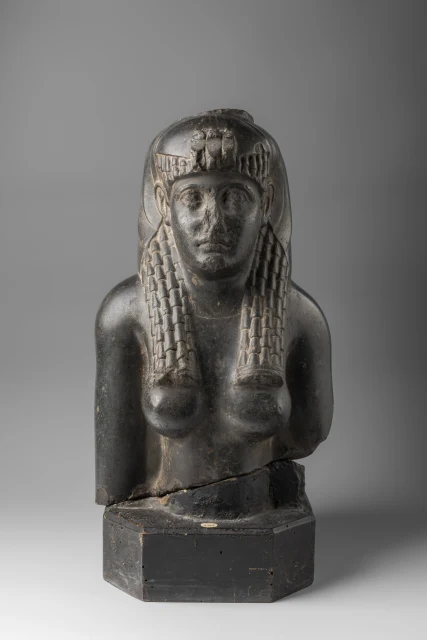 Bust of a Ptolemaic QueenUnknown Egyptian artist (Late Period or Ptolemaic), -125
 Cartonnage Plaque with Isis MourningUnknown Egyptian artist (Late Period or Ptolemaic)
 Cat CoffinUnknown Egyptian artist (Late Period or Ptolemaic), -498