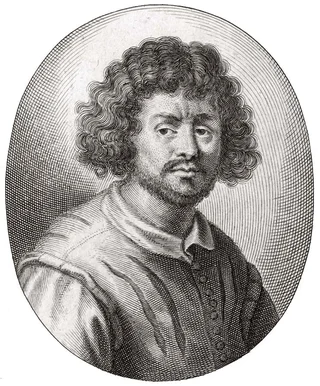
Claude Lorrain
1600–1682 · Duché de Lorraine · Classicisme
L'histoire
Dans la Rome du milieu du XVIIe siècle, un peintre du duché de Lorraine était devenu si recherché que d'autres contrefaisaient son œuvre pour en profiter. Claude Gellée, connu simplement sous le nom de Claude Lorrain, peignait des ports lumineux et des paysages pastoraux baignés d'un doux soleil levant ou couchant, et les cardinaux et aristocrates d'Europe les payaient cher.
Sa réponse aux faussaires fut un livre. À partir de 1635 environ, il tint le Liber Veritatis, le Livre de vérité, un album relié dans lequel il dessinait une copie soignée de presque chaque tableau achevé au moment où il quittait son atelier, notant souvent le nom de l'acheteur et la date. Il compta quelque 200 dessins, et permettait de distinguer un vrai Claude d'un faux.
Il était en réalité un peintre de la lumière plus que des lieux. Les figures mythologiques ou bibliques de ses scènes sont souvent petites, glissées dans un coin, tandis que l'œil remonte vers un soleil voilé à l'horizon. Cet effet fixa l'idée européenne du paysage idéal pour près de deux siècles, et le peintre anglais Turner, plus de cent ans plus tard, demanda dans son testament que deux de ses propres toiles soient accrochées à côté de celles de Claude à Londres.
Œuvres
34 œuvres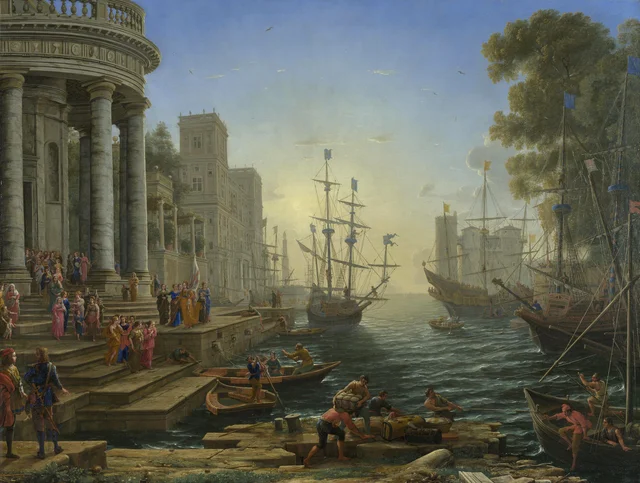 Port de mer avec l'embarquement de sainte UrsuleClaude Lorrain, 1641
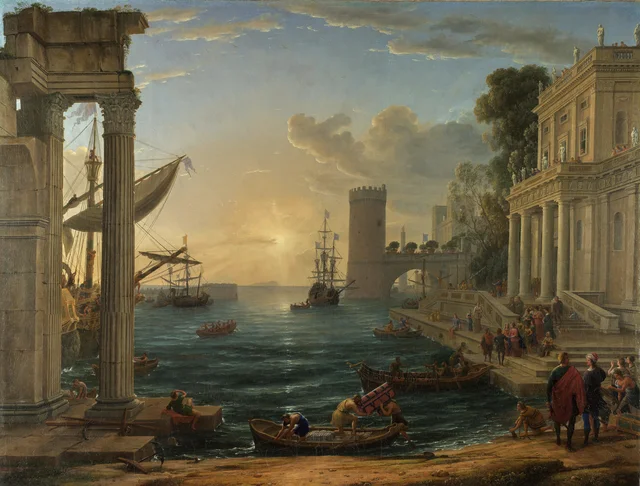 L'Embarquement de la reine de SabaClaude Lorrain, 1648
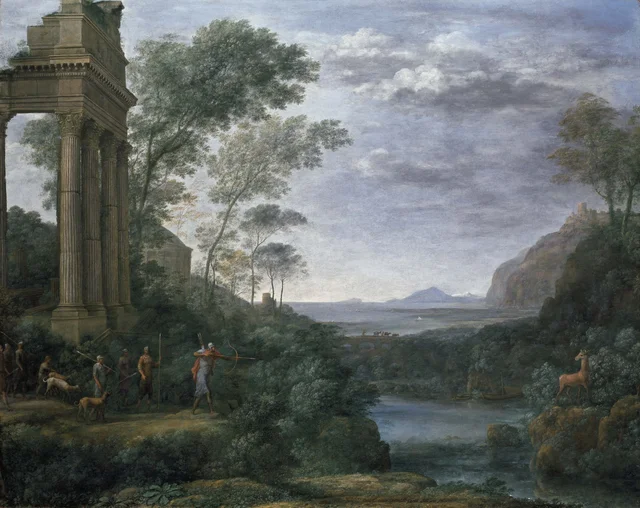 Ascagne tuant le cerf de SilviaClaude Lorrain, 1682
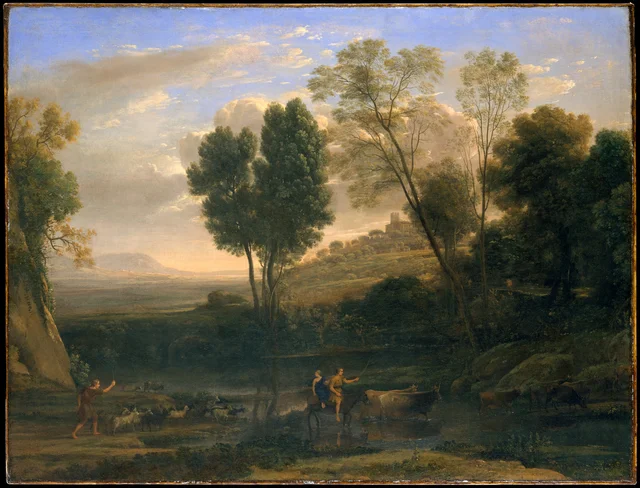 Lever de soleilClaude Lorrain, 1646
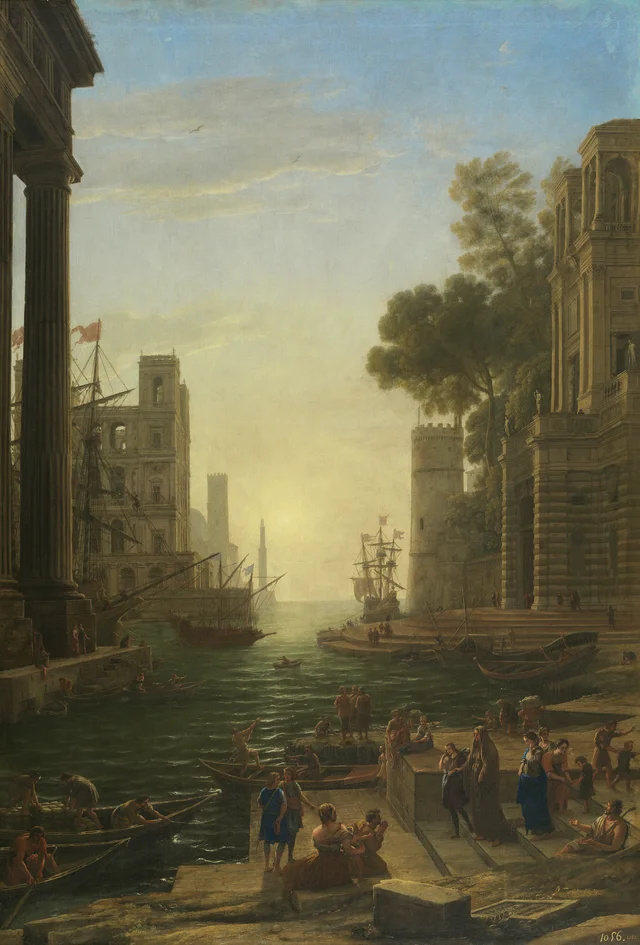 Paysage avec l'embarquement de sainte Paule romaine à OstieClaude Lorrain, 1639
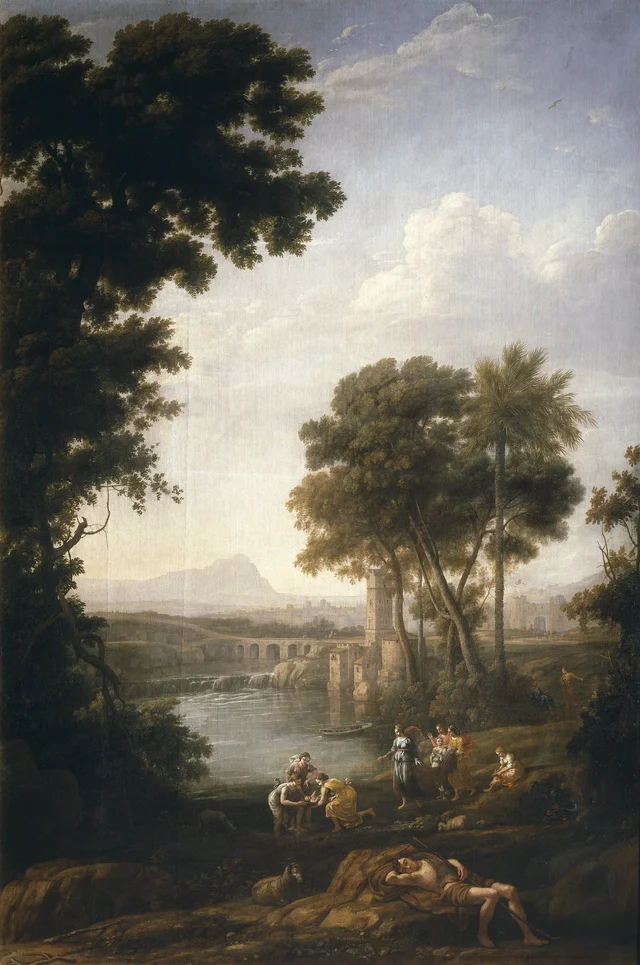 Paysage avec Moïse sauvé des eauxClaude Lorrain, 1639
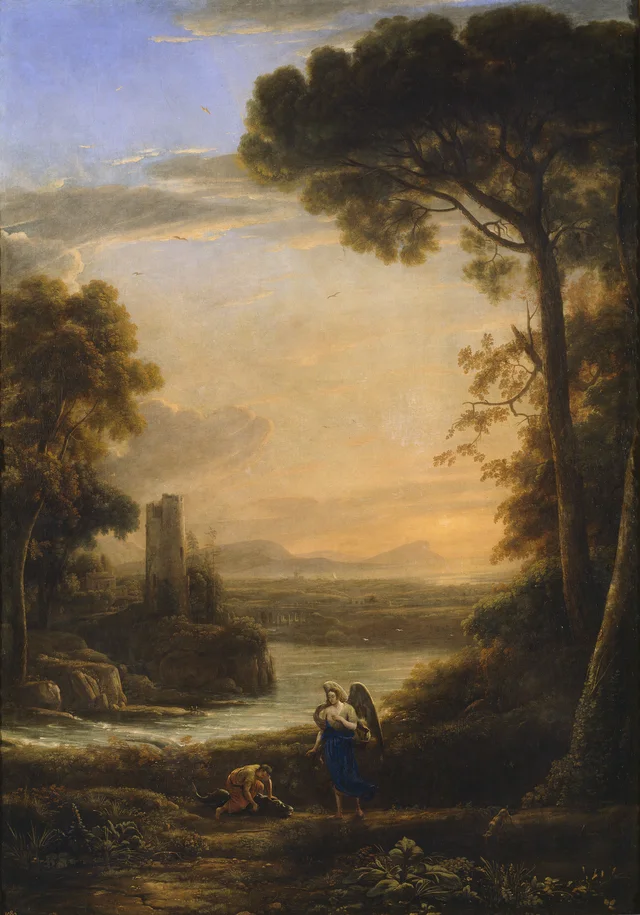 Paysage avec Tobie et l'angeClaude Lorrain, 1639
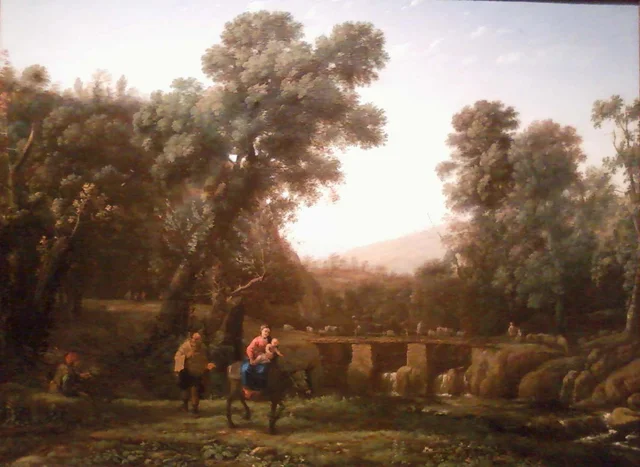 La Fuite en ÉgypteClaude Lorrain, 1635
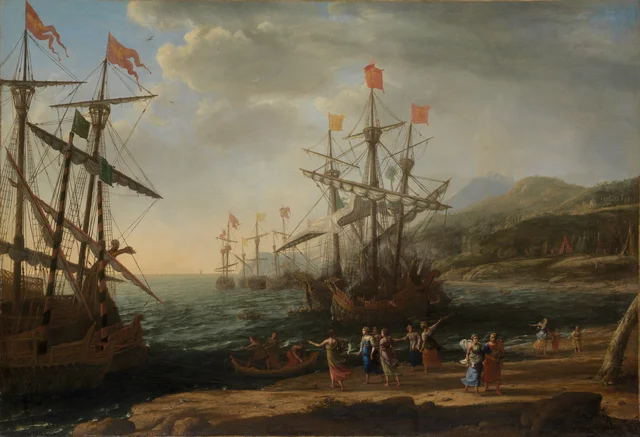 Les Troyennes incendiant leur flotteClaude Lorrain, 1643
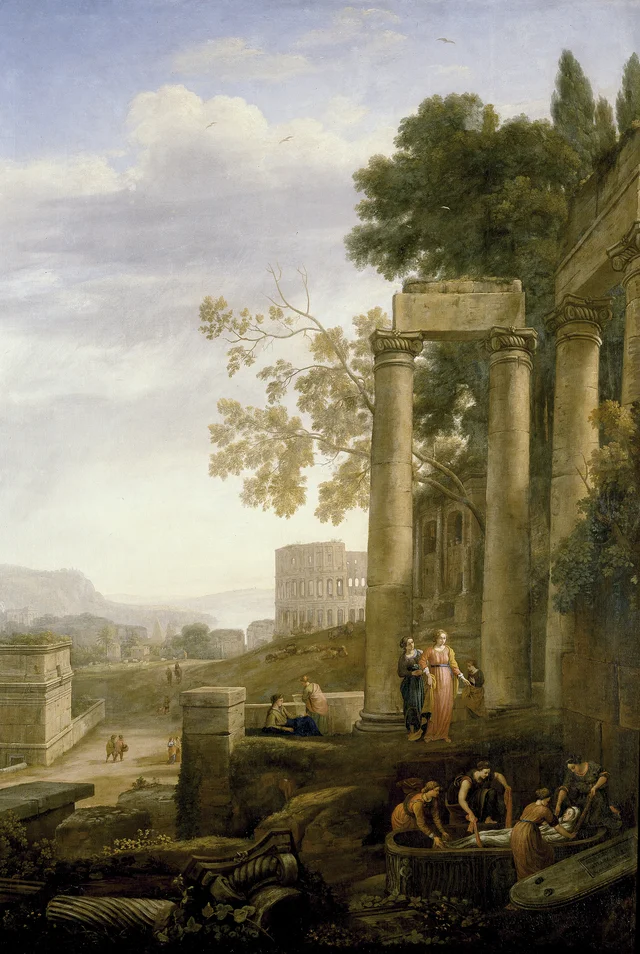 Paysage avec l'enterrement de sainte SérapieClaude Lorrain, 1639
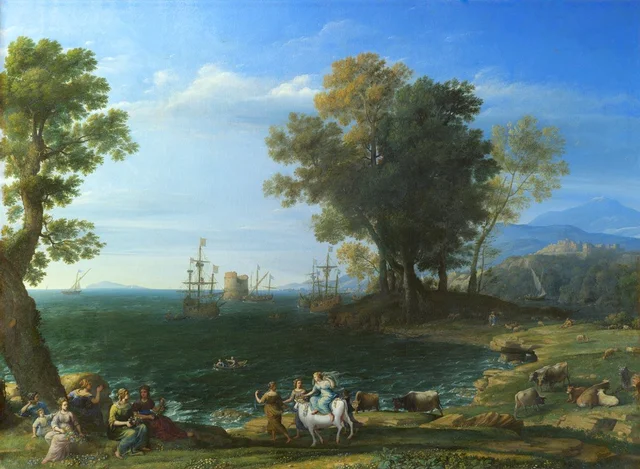 L'Enlèvement d'EuropeClaude Lorrain, 1655
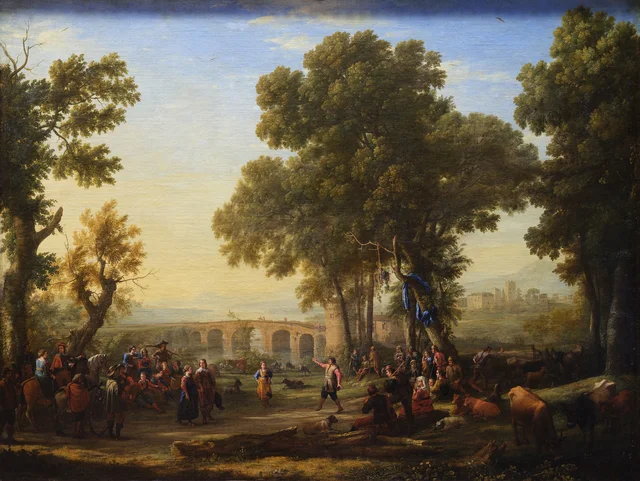 Fête villageoiseClaude Lorrain, 1639
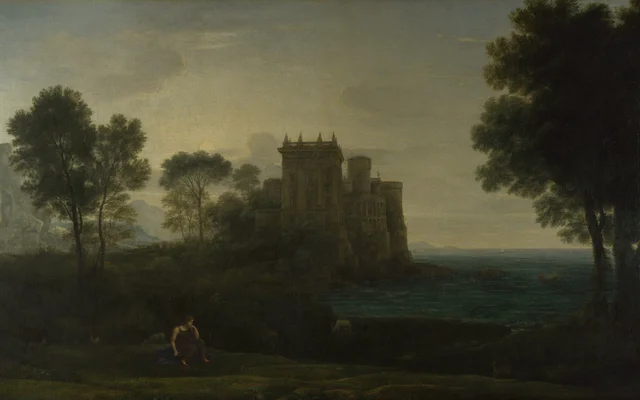 Paysage avec Psyché devant le palais de CupidonClaude Lorrain, 1664
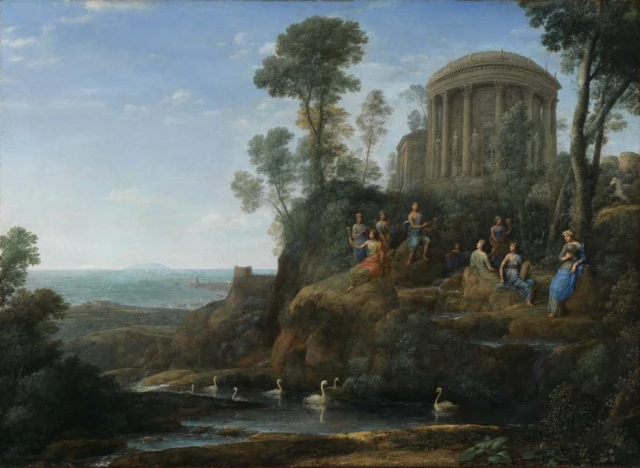 Apollon et les Muses sur le mont HéliconClaude Lorrain, 1680
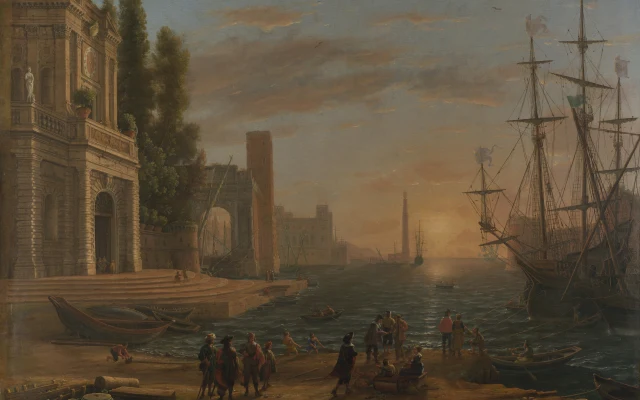 Un port de merClaude Lorrain, 1644
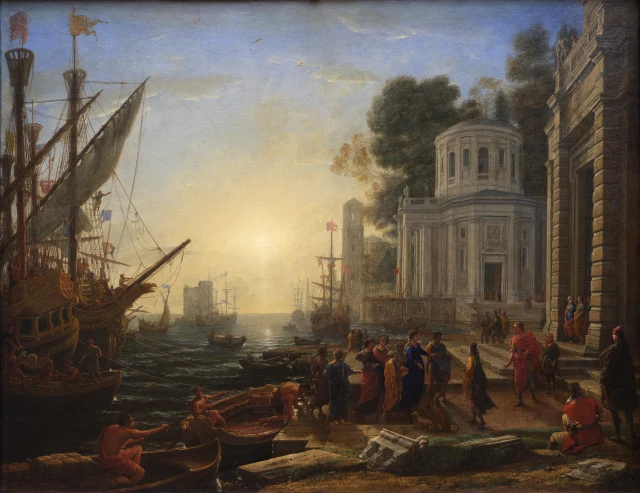 Le Débarquement de Cléopâtre à TarseClaude Lorrain, 1642
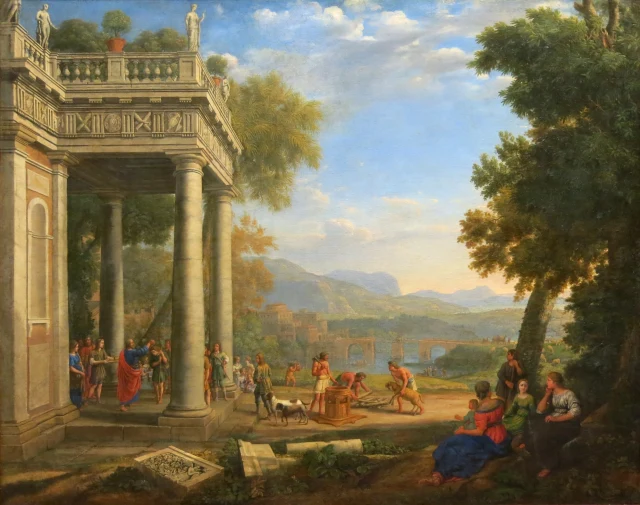 David sacré roi par SamuelClaude Lorrain, 1647
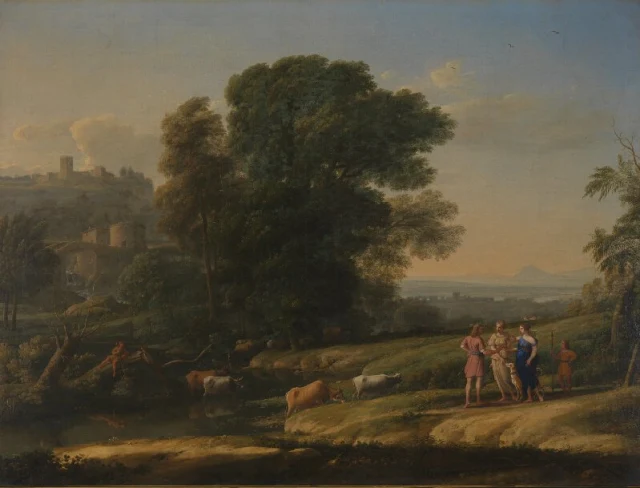 Paysage avec Céphale et Procris réunis par DianeClaude Lorrain, 1645
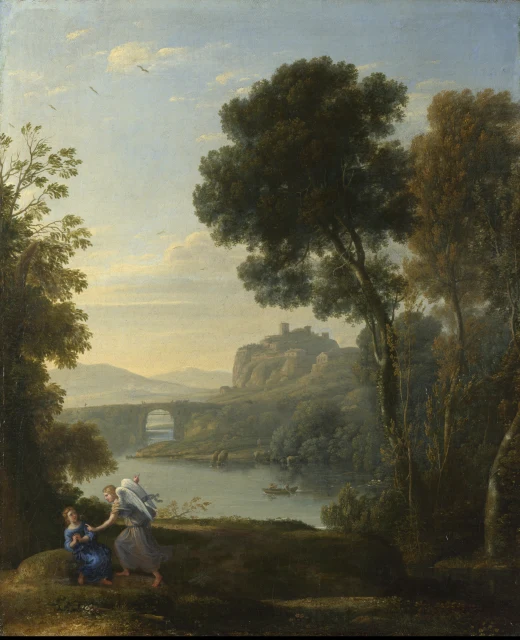 Paysage avec Agar et l'angeClaude Lorrain, 1646
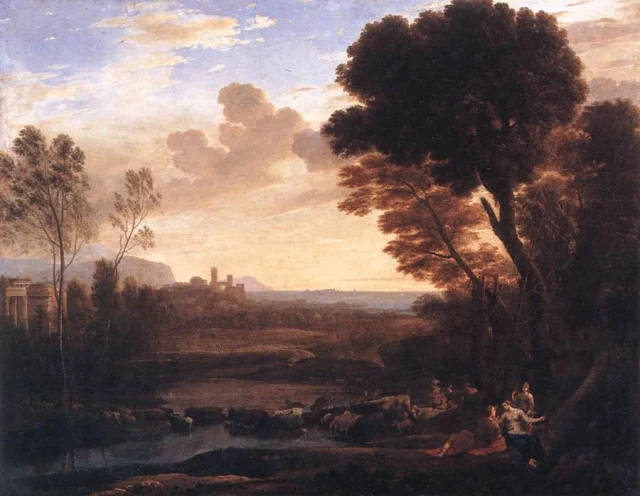 Paysage avec Pâris et Œnone, dit Le GuéClaude Lorrain, 1648
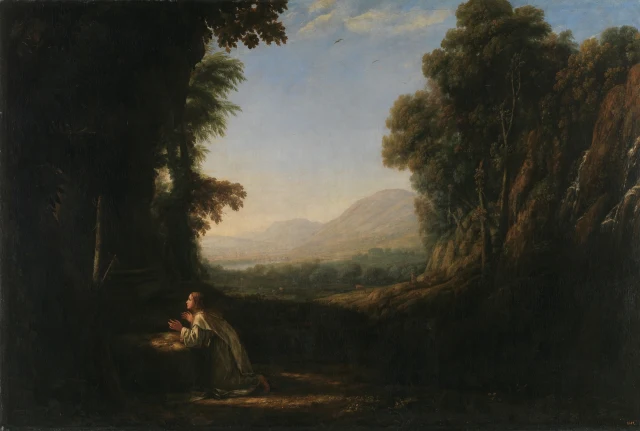 Paysage avec sainte Marie de CervellónClaude Lorrain, 1637
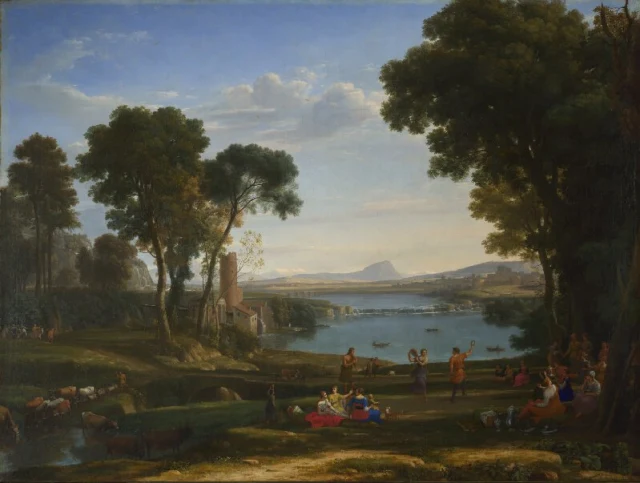 Paysage avec le mariage d'Isaac et Rébecca (« Le Moulin »)Claude Lorrain, 1648
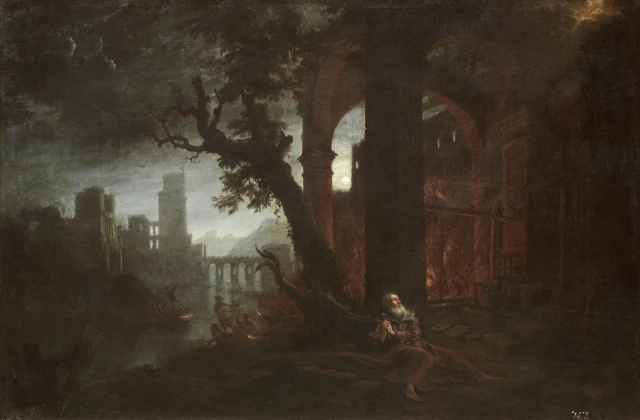 Paysage avec les Tentations de saint AntoineClaude Lorrain, 1638
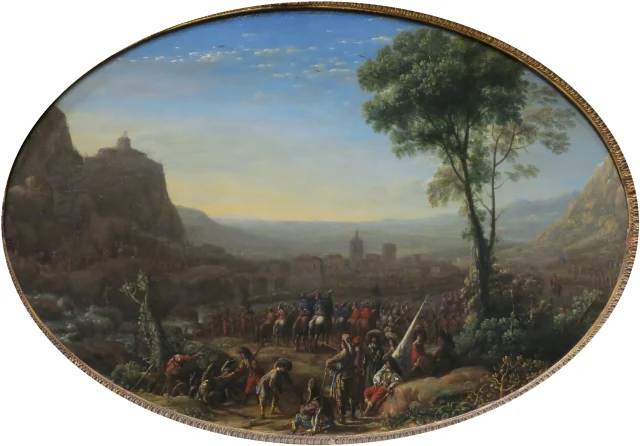 Le Pas de Suse forcé par Louis XIIIClaude Lorrain, 1632