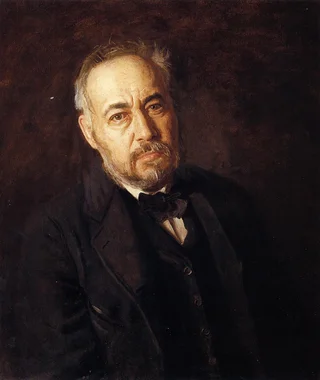
Thomas Eakins
1844–1916 · États-Unis · Réalisme
L'histoire
Thomas Eakins voulait que l'art américain regarde le corps avec honnêteté, et cela lui coûta cher. En 1875, à Philadelphie, il peignit La Clinique Gross, un chirurgien réputé, le docteur Samuel Gross, debout, les mains ensanglantées au-dessus d'un patient dans un amphithéâtre d'opération, donnant un cours tout en opérant. Le jury de l'Exposition du centenaire de 1876 le jugea trop atroce pour les salles d'art et l'accrocha plutôt dans une présentation d'hôpital militaire.
Eakins avait étudié à Paris et dans les salles de dissection d'une école de médecine, et il enseignait comme il peignait, exigeant que ses élèves de la Pennsylvania Academy of the Fine Arts travaillent d'après le modèle entièrement nu, femmes comprises. En 1886, lors d'un cours d'anatomie, il retira le pagne d'un modèle masculin pour montrer un groupe musculaire à une classe où se trouvaient des femmes. L'académie le renvoya. Vingt-huit étudiants sortirent avec lui et fondèrent leur propre ligue artistique.
Il passa le reste de sa carrière un peu à l'écart, peignant des portraits sans complaisance de médecins, de savants et de musiciens de Philadelphie qui souvent n'aimaient pas la crudité de son regard, et expérimentant la nouvelle photographie du mouvement aux côtés d'Eadweard Muybridge. La reconnaissance ne vint guère qu'à la toute fin et après sa mort en 1916. La Clinique Gross resta à Philadelphie, où en 2007 une campagne publique la sauva d'une vente pour 68 millions de dollars.
Œuvres
15 œuvres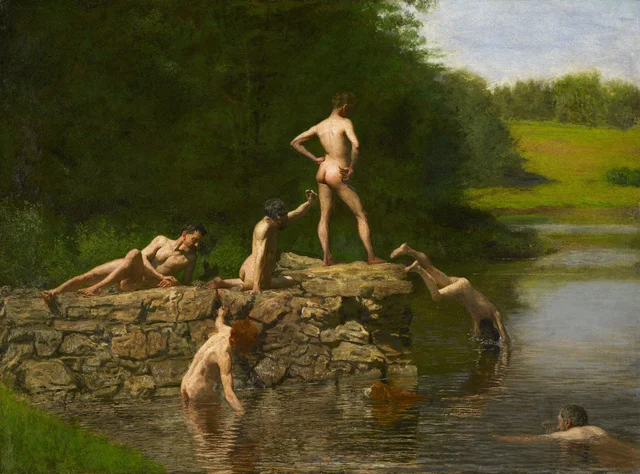 La BaignadeThomas Eakins, 1885
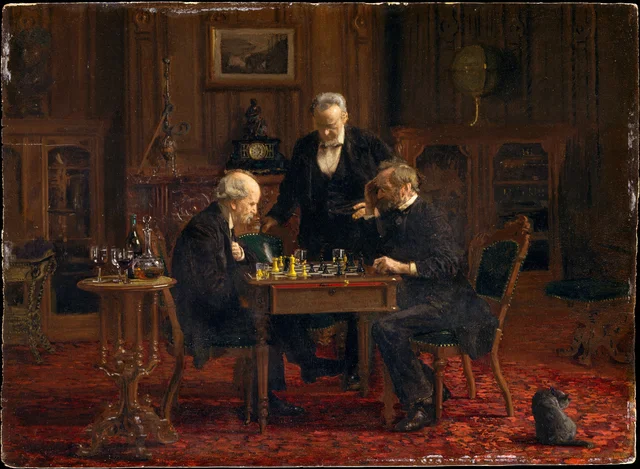 Les Joueurs d'échecsThomas Eakins, 1876
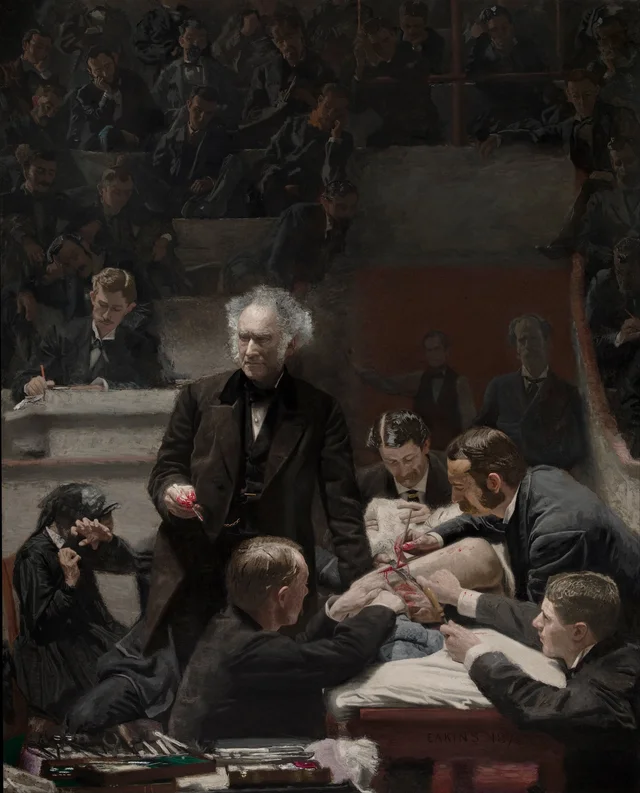 La Clinique GrossThomas Eakins, 1875
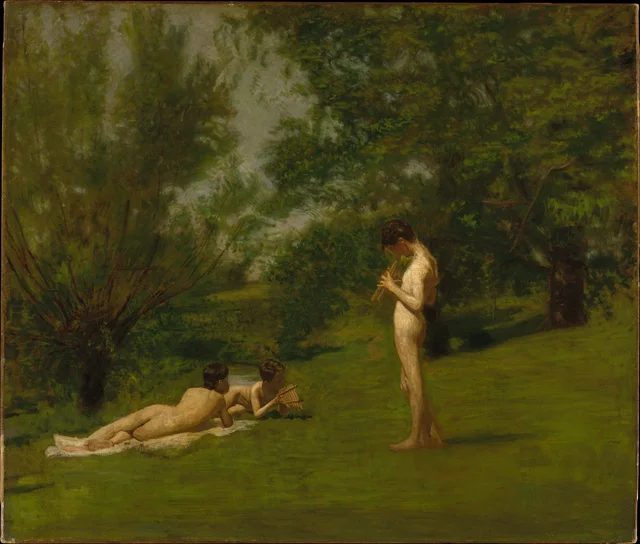 ArcadieThomas Eakins, 1883
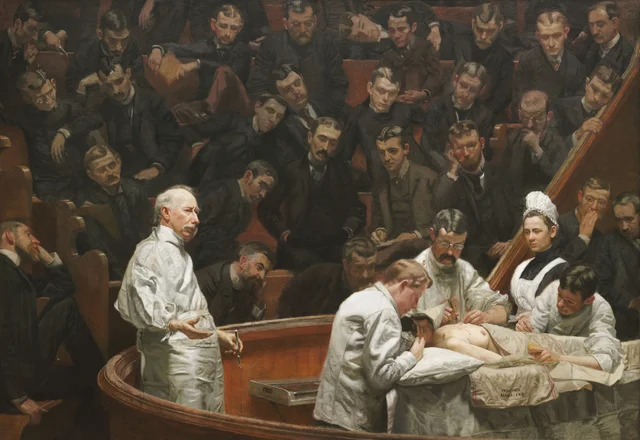 La Clinique AgnewThomas Eakins, 1889
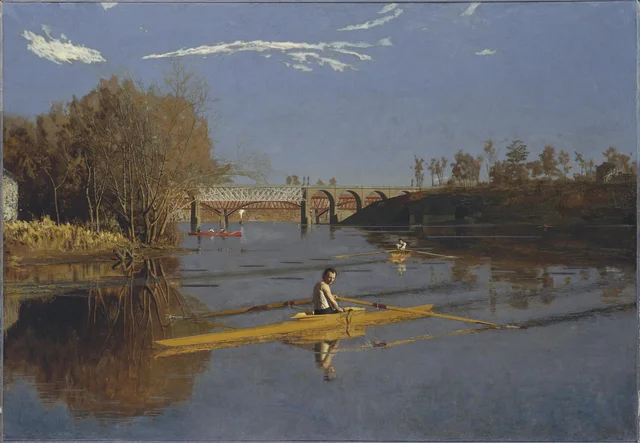 Max Schmitt dans un skiffThomas Eakins, 1871
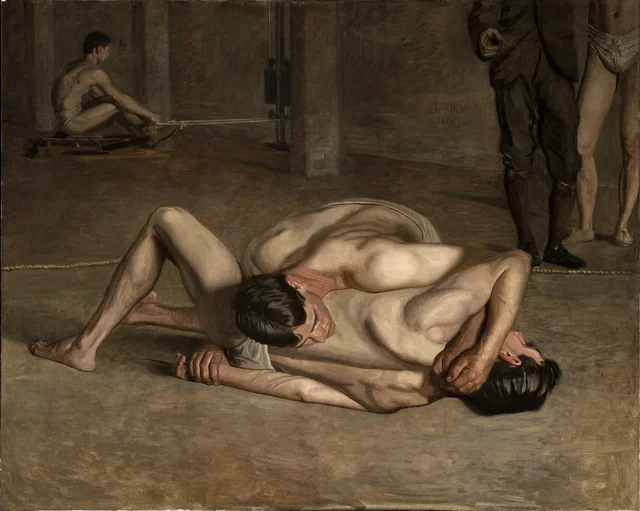 Les LutteursThomas Eakins, 1899
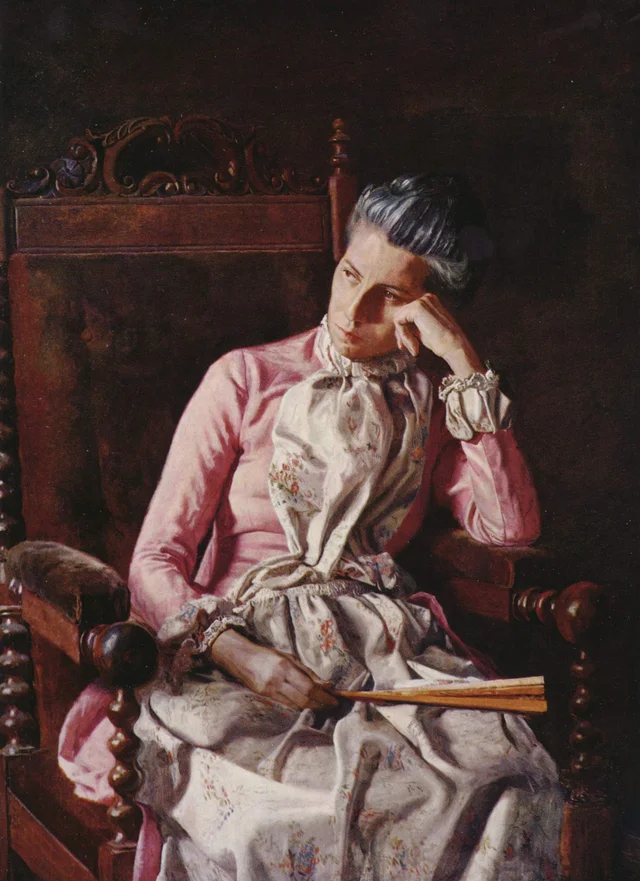 Miss Amelia Van BurenThomas Eakins, 1891
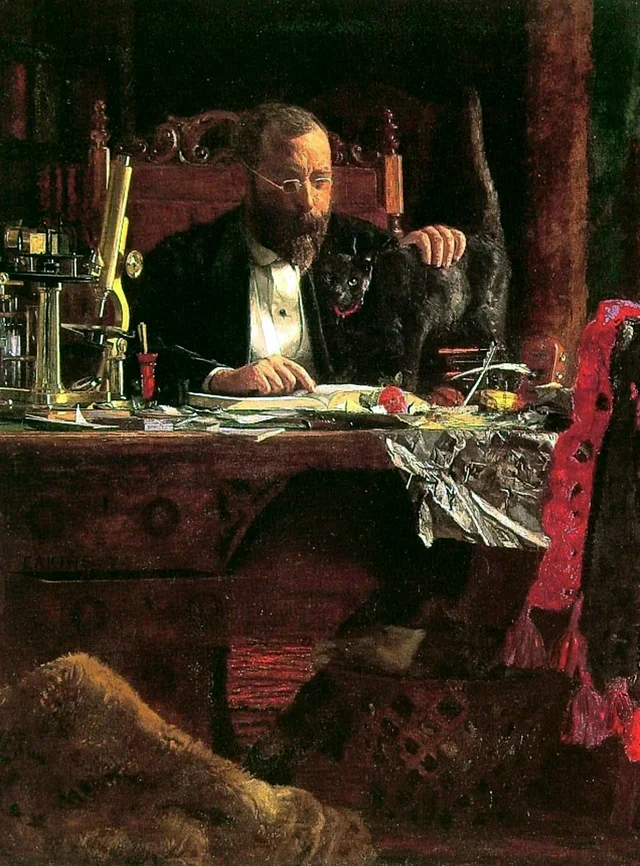 Portrait du professeur Benjamin H. RandThomas Eakins, 1874
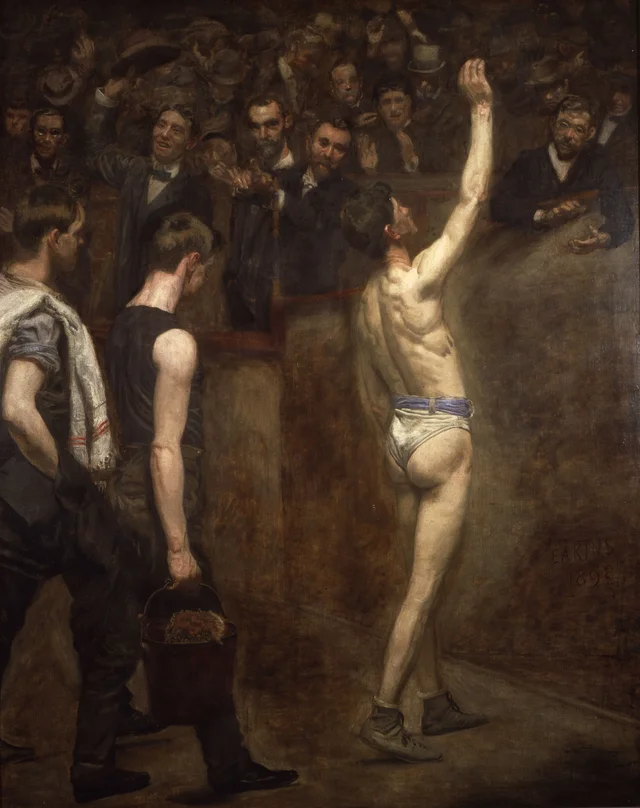 SalutatThomas Eakins, 1898
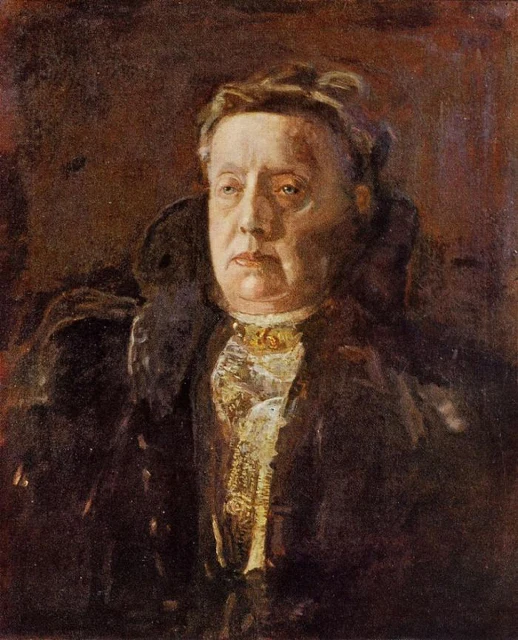 Madame Gilbert L. ParkerThomas Eakins, 1910
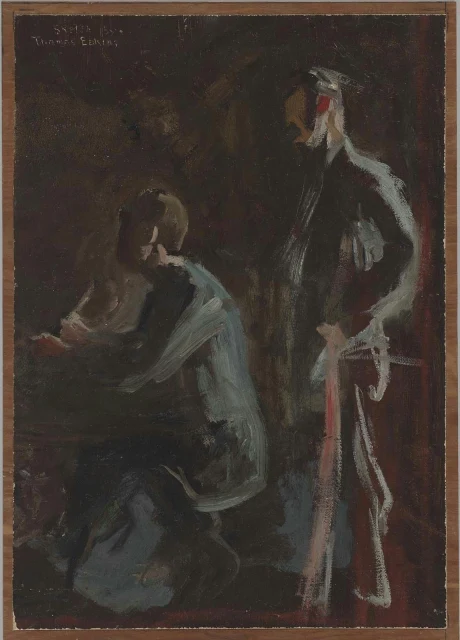 Esquisse pour la reddition du général Lee au général Grant à AppomattoxThomas Eakins, 1877
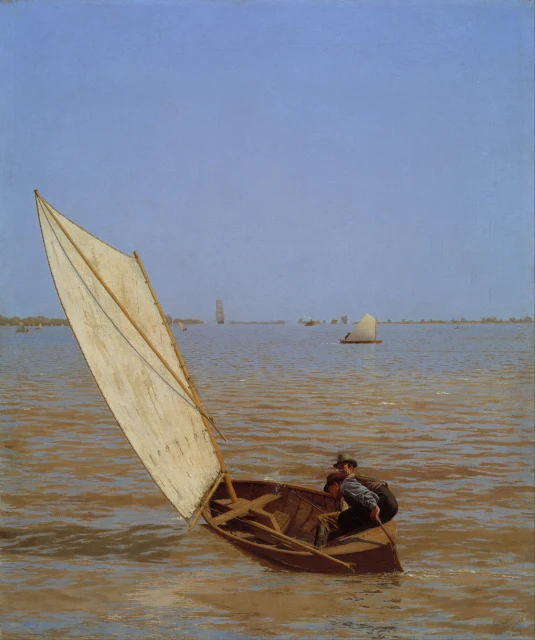 Départ pour la chasse au râleThomas Eakins, 1874
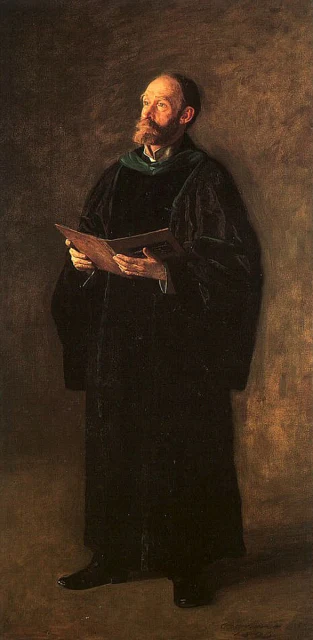 L'Appel du doyenThomas Eakins, 1899
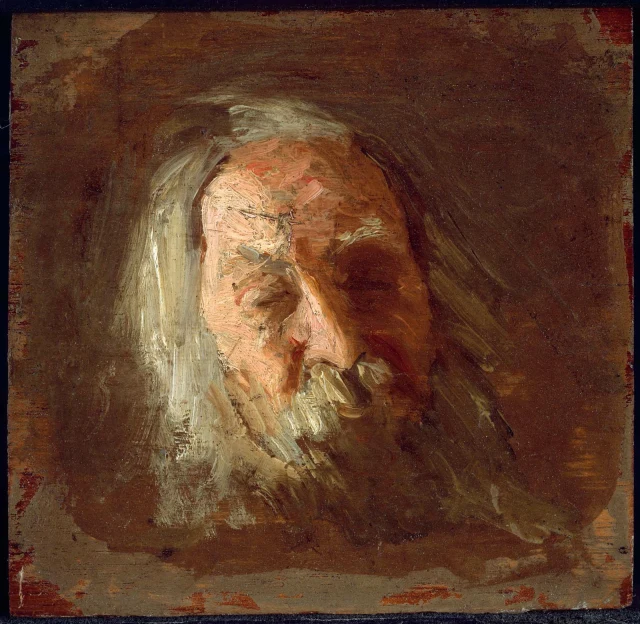 Walt WhitmanThomas Eakins, 1887