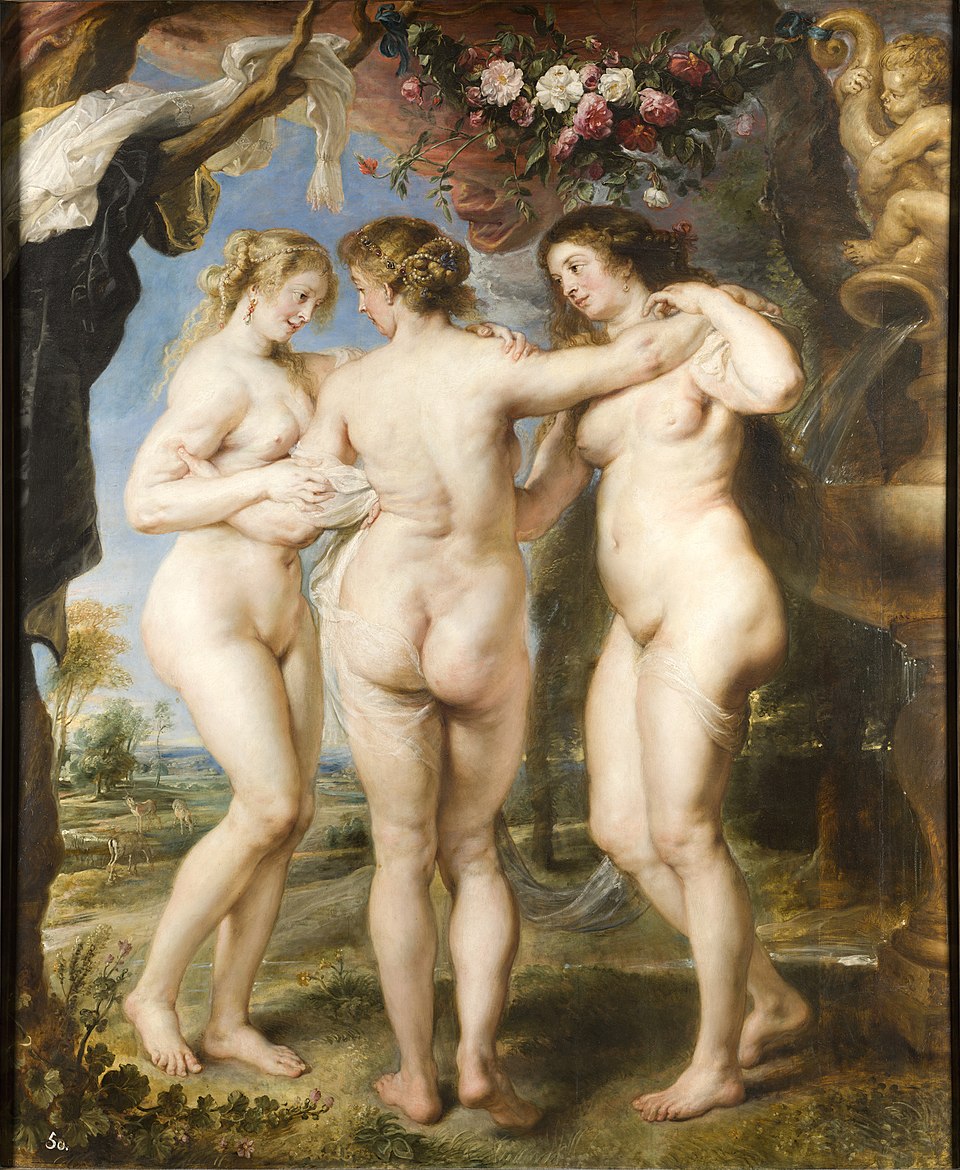
Peter Paul Rubens, The Three Graces, 1630. Wikimedia Commons. · PD
Les Trois Grâces
Détails
L'histoire
Rubens peint ces trois femmes nues, enlacées dans une ronde, à la fin de sa vie, vers 1635. Ce n'est pas une commande: il garde le tableau chez lui jusqu'à sa mort. Le modèle du visage de gauche est sans doute Hélène Fourment, sa seconde épouse, qu'il avait épousée à 53 ans alors qu'elle en avait 16. On retrouve sa blondeur et ses formes pleines dans beaucoup de ses dernières œuvres. Les Trois Grâces, dans la mythologie, incarnent la beauté et la générosité; Rubens les peint comme des femmes bien réelles, la peau frémissante sous la lumière. Après sa mort, le roi d'Espagne Philippe IV racheta la toile pour sa collection, où elle est restée.