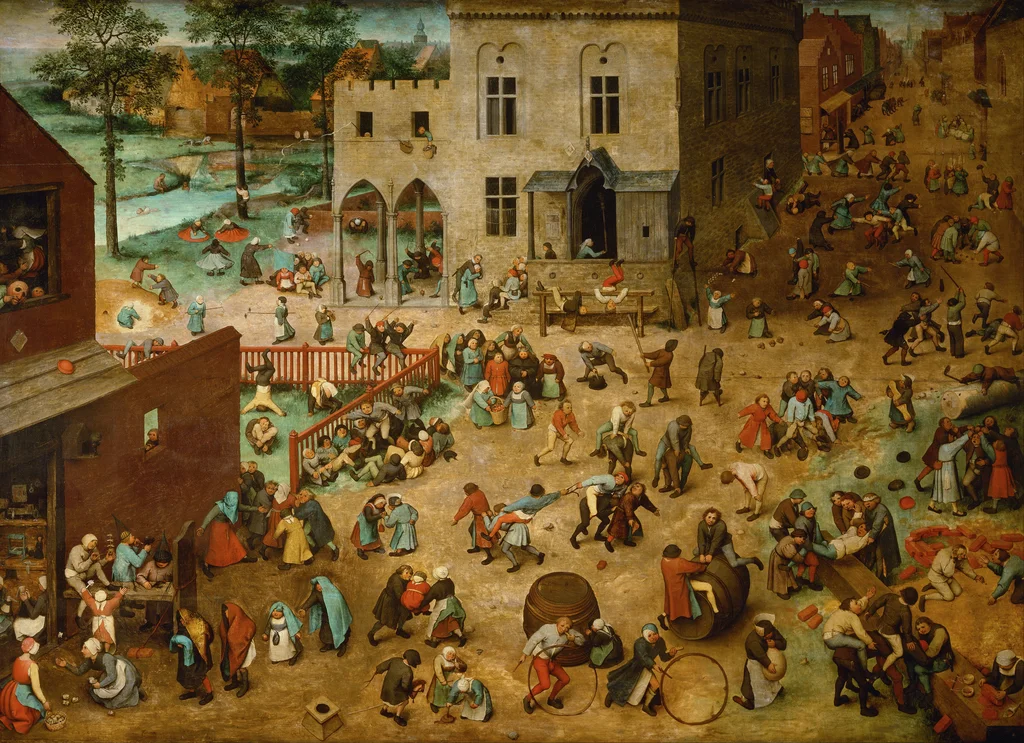
Pieter Brueghel the Elder, Children's Games, 1560. Wikimedia Commons. · PD
Jogos de Crianças
Ficha técnica
A história
À primeira vista é uma praça cheia de crianças brincando, mas quanto mais se olha, mais brincadeiras aparecem. Bruegel encheu esta tela de 1560 com mais de 200 crianças espalhadas por uma cidade inteira, praticando dezenas de jogos diferentes. Há quem role um aro, ande de pernas de pau, brinque de cavalinho, faça bolhas de sabão, rode um pião ou fique de cabeça para baixo apoiado num muro. Muitas dessas brincadeiras ainda existem, outras se perderam, e a pintura acabou virando uma espécie de catálogo dos jogos populares do século 16. As crianças têm feições sérias, quase adultas, e se dedicam às brincadeiras com a concentração de gente grande. Alguns estudiosos veem aí uma reflexão sobre como toda a agitação humana pode parecer, vista de longe, tão séria e tão fútil quanto uma tarde de folguedos. Tudo indica que Bruegel planejava uma série sobre as idades da vida, e só esta parte foi pintada.