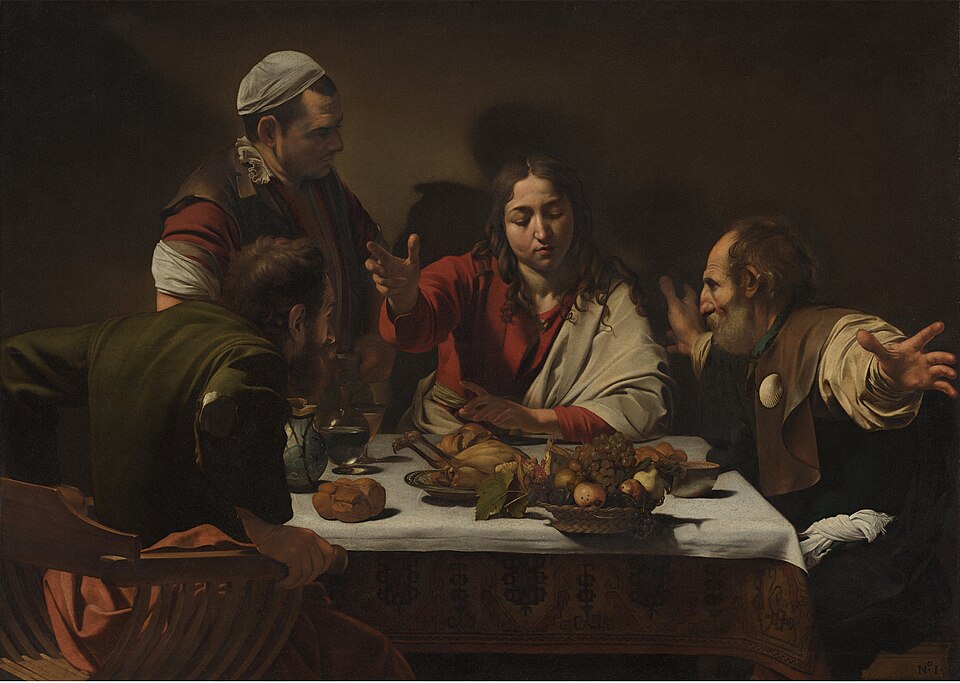
Caravaggio, Supper at Emmaus, 1601. Wikimedia Commons. · PD
Ceia em Emaús
Ficha técnica
A história
Caravaggio pintou esta ceia por volta de 1601, em Roma, para o nobre Ciriaco Mattei, em cuja casa ele morou por um tempo. A cena vem do Evangelho. Dois discípulos jantam com um desconhecido encontrado na estrada para Emaús e, no instante em que ele parte o pão, reconhecem que é Cristo ressuscitado. Caravaggio congela exatamente esse segundo. Um discípulo se agarra aos braços da cadeira prestes a se levantar, o outro abre os braços para os lados, e a mão parece furar o espaço em direção a quem olha. O Cristo aparece jovem e sem barba, o que na época incomodou, por romper com a imagem habitual. Sobre a toalha, um cesto de frutas se equilibra na beira da mesa, prestes a cair, e algumas frutas estão fora de estação ou já apodrecendo, detalhe que Caravaggio observava do natural. A luz forte vem da esquerda e recorta tudo contra um fundo escuro e vazio, sem paisagem nem céu, o método que ele tornaria célebre.