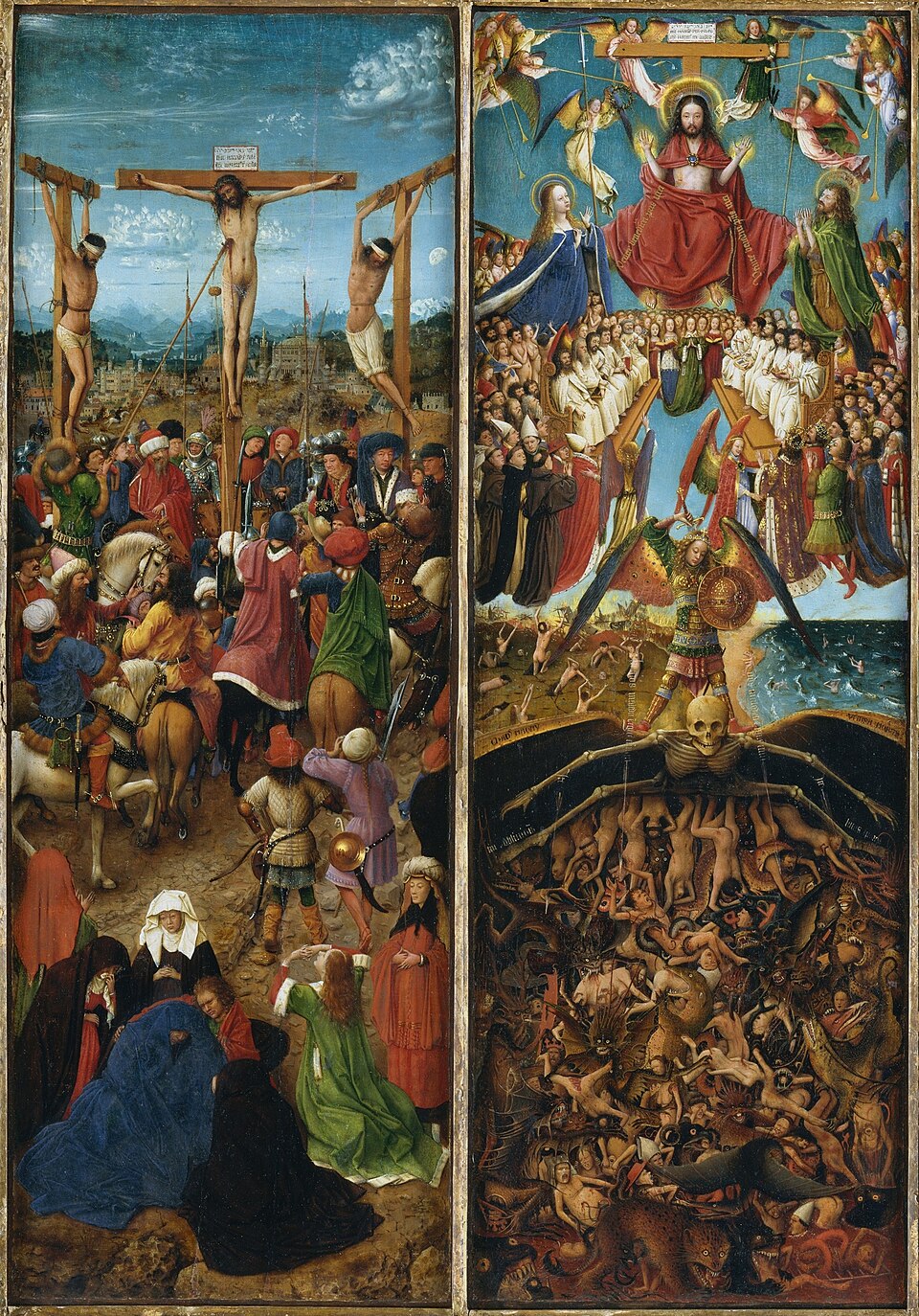
Jan van Eyck, Crucifixion and Last Judgement diptych, 1440. Wikimedia Commons. · PD
Diptychon mit Kreuzigung und Jüngstem Gericht
Details
Die Geschichte
Jan van Eyck war der Meister, der die Ölmalerei zu einer nie gesehenen Genauigkeit trieb, und diese beiden schmalen Tafeln zeigen, wie weit er ging. Links stirbt Christus am Kreuz über einer Menge, in der jedes Gesicht anders reagiert. Rechts teilt der Tod als riesiges Skelett mit ausgebreiteten Flügeln die Welt in zwei Hälften: oben das ruhige Himmelreich mit Reihen von Seligen, unten ein Gewühl nackter Verdammter, die von Fratzen und Ungeheuern zerrissen werden. Auf die Rahmen malte van Eyck Bibelverse, als wären sie in Stein gehauen. Man muss ganz nahe herantreten, um die winzigen Figuren in der Hölle überhaupt einzeln zu erkennen.