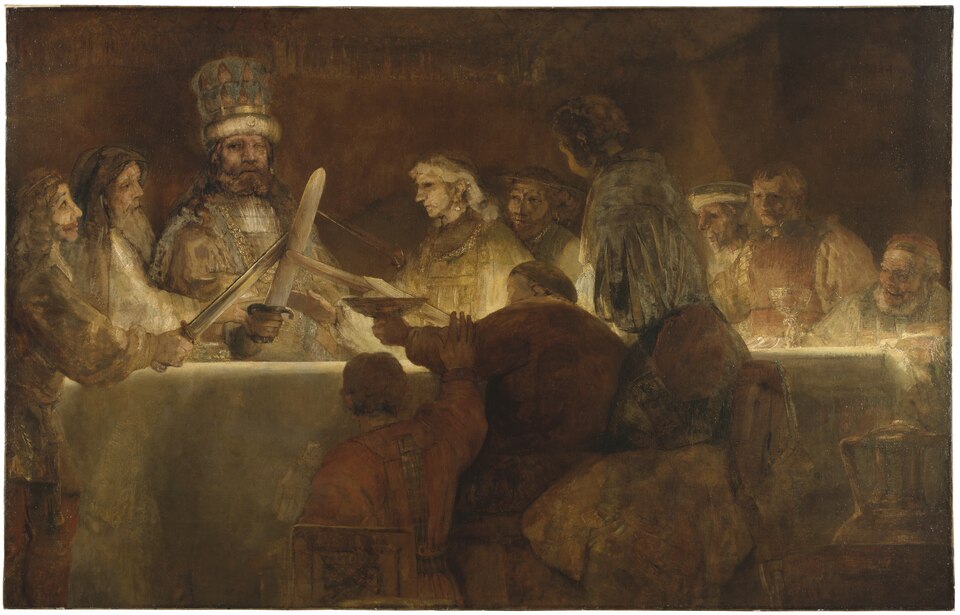
Rembrandt, The Conspiracy of Claudius Civilis, 1661. Wikimedia Commons. · PD
Die Verschwörung des Claudius Civilis
Details
Die Geschichte
Es ist der Rest eines gescheiterten Großauftrags. Um 1661 sollte Rembrandt für das neue Amsterdamer Rathaus die nächtliche Verschwörung des Claudius Civilis malen, jenes einäugigen Anführers der Bataver, die sich einst gegen die römische Herrschaft erhoben. Für die jungen Niederlande, die sich gerade von Spanien befreit hatten, war das ein Gründungsmythos. Rembrandt zeigte die Männer roh und geheimnisvoll im Fackelschein, wie sie die Schwerter zum Eid kreuzen. Doch das riesige Bild wurde nach kurzer Zeit wieder abgehängt und an ihn zurückgegeben. Rembrandt zerschnitt es, vermutlich um wenigstens den mittleren Teil verkaufen zu können, und nur dieses Fragment blieb erhalten.