José Luis Filpo Cabana · CC-BY-SA-4.0
Die Unbefleckte Empfängnis
Details
Die Geschichte
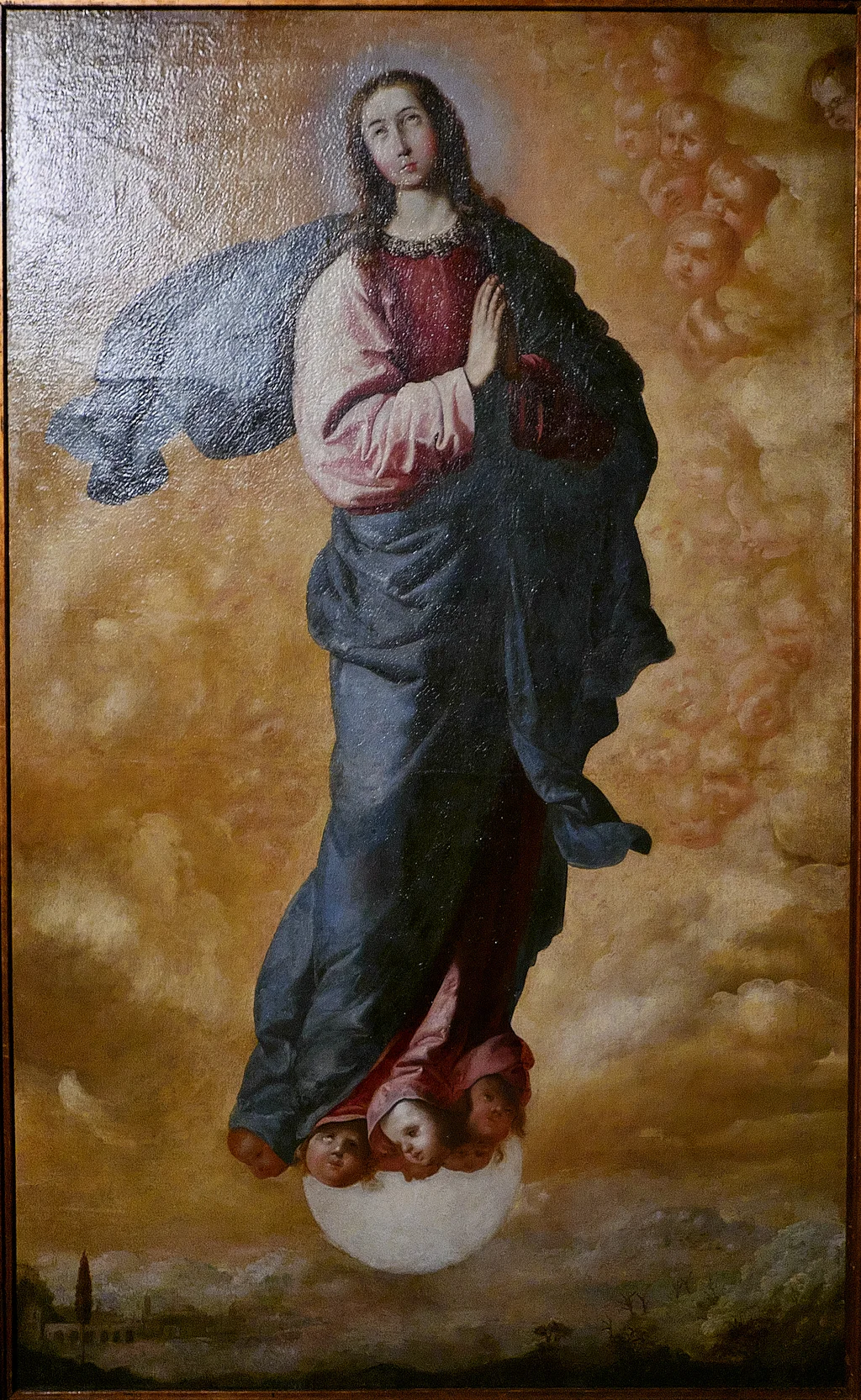
In 17th-century Seville, painting the Virgin was close to a civic passion. The city was campaigning hard for Rome to declare that Mary had been conceived free of sin, and the demand for images of that idea seemed endless. There was even a rulebook for it. Francisco Pacheco, the local painter and censor for the Inquisition, set down how she should look: a young woman in white and blue, hands together, standing on a crescent moon in a burst of light. Zurbarán painted this around 1645 and keeps to that scheme, though he stretches her silhouette taller than before and lifts her on a rising mass of golden cloud. Beneath her feet he places a thin crescent moon and four small cherub heads, while she turns her face up toward the light.