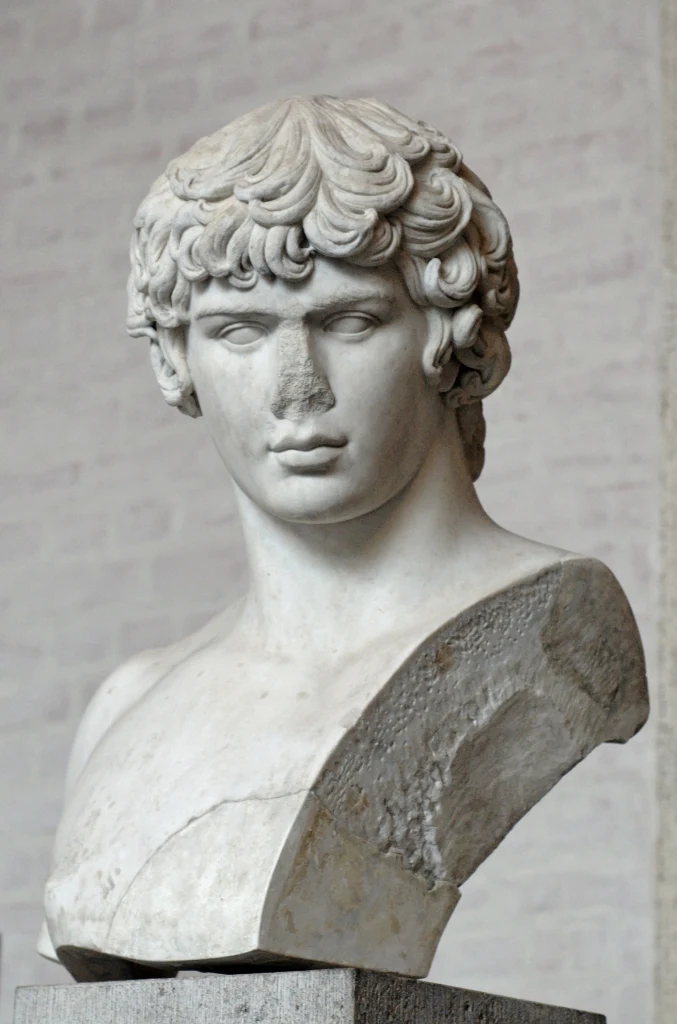
Bust of Antinous
Details
The story
In the autumn of AD 130 the emperor Hadrian was travelling up the Nile when his young companion Antinous, a youth from Bithynia in Asia Minor, drowned in the river. How it happened was argued over even then. Hadrian wrote that Antinous had fallen in. The historian Cassius Dio, writing about a century later, did not believe it and claimed that the youth had been sacrificed.
Hadrian's grief took public form. Near the place he founded a city named after Antinous, Antinoopolis, had him honoured as a god, and, in Dio's words, set up statues of him, or rather sacred images, practically all over the world. Antinous became one of the most often portrayed people of the ancient world.
The museum dates this bust to around 130, about the time of his death, and assigns it to what scholars call his main portrait type, the one known from the largest number of copies.




