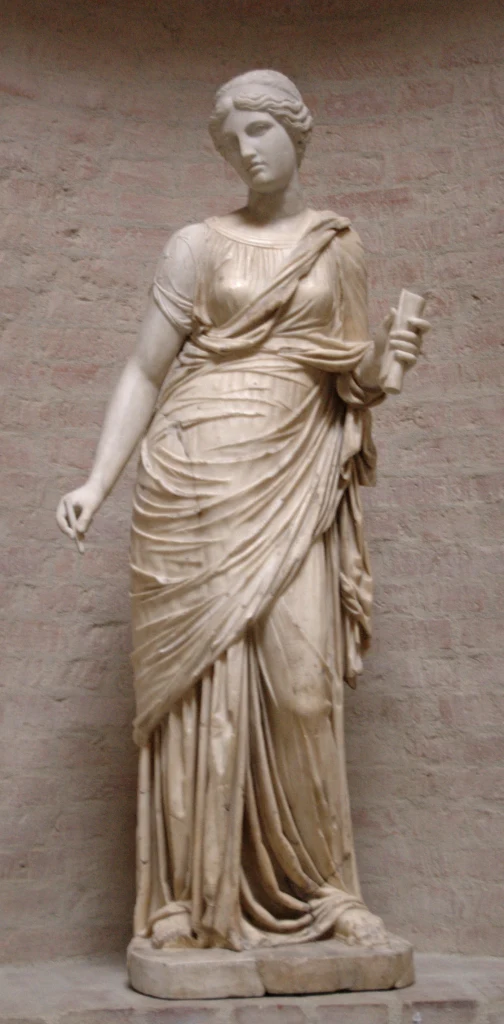
Statue of a Muse
Details
The story
In 1812 Rome was part of Napoleon's empire, and the Danish sculptor Bertel Thorvaldsen, who had lived in the city for years, was working at speed. In about three months he created a frieze 35 metres long for the Quirinal Palace, showing Alexander the Great entering Babylon, to greet the emperor on a visit to Rome that never took place. In that same year Thorvaldsen also completed this ancient marble.
Completing ancient statues was normal practice then. Buyers wanted whole figures, and sculptors in Rome supplied the parts that were missing. This one had been bought in Rome in 1810.
Which Muse she is, nobody can say for sure. The nine sisters were told apart by what they held, and she holds a scroll in her left hand. A scroll can belong to more than one of them, Clio, the Muse of history, and Calliope, the Muse of epic poetry, among them, and she has been called by both names. The museum describes her as a Roman copy, 1.66 metres tall, of a figure from a Greek group of Muses made around 130 BC.




