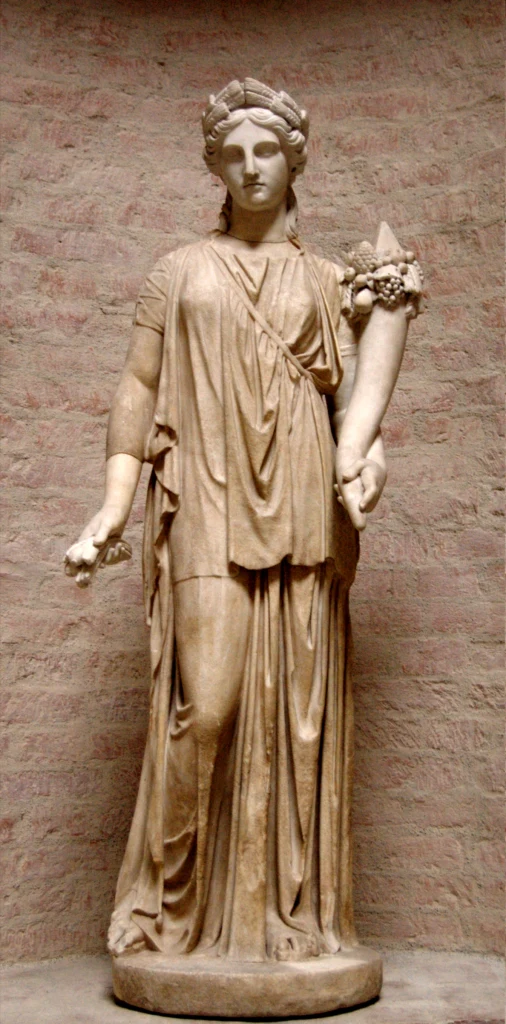
Statue of Artemis (Dresden type)
Details
The story
Around 360 BC, according to some scholars, the Athenian sculptor Praxiteles made a statue of Artemis, the huntress, probably in bronze, for the city of Megara, west of Athens. The original is lost, but Roman workshops copied it so often that some 28 copies and variants are known. The type is named after the copy in Dresden, the only one that keeps the original position of the right arm. There the young goddess wears a long dress without a belt, holds a bow in her lowered left hand and reaches up with her right towards her quiver.
This Munich copy was carved in the imperial period and reached Crown Prince Ludwig of Bavaria from Rome in 1812, without its head. The Danish sculptor Bertel Thorvaldsen completed it, and he made the figure into Demeter, the goddess of grain and the harvest.
The statue is shown with his completion. So the head and the attributes she carries belong to Thorvaldsen's Demeter, and the ancient body beneath them is the Artemis. It stands 1.56 metres high.




