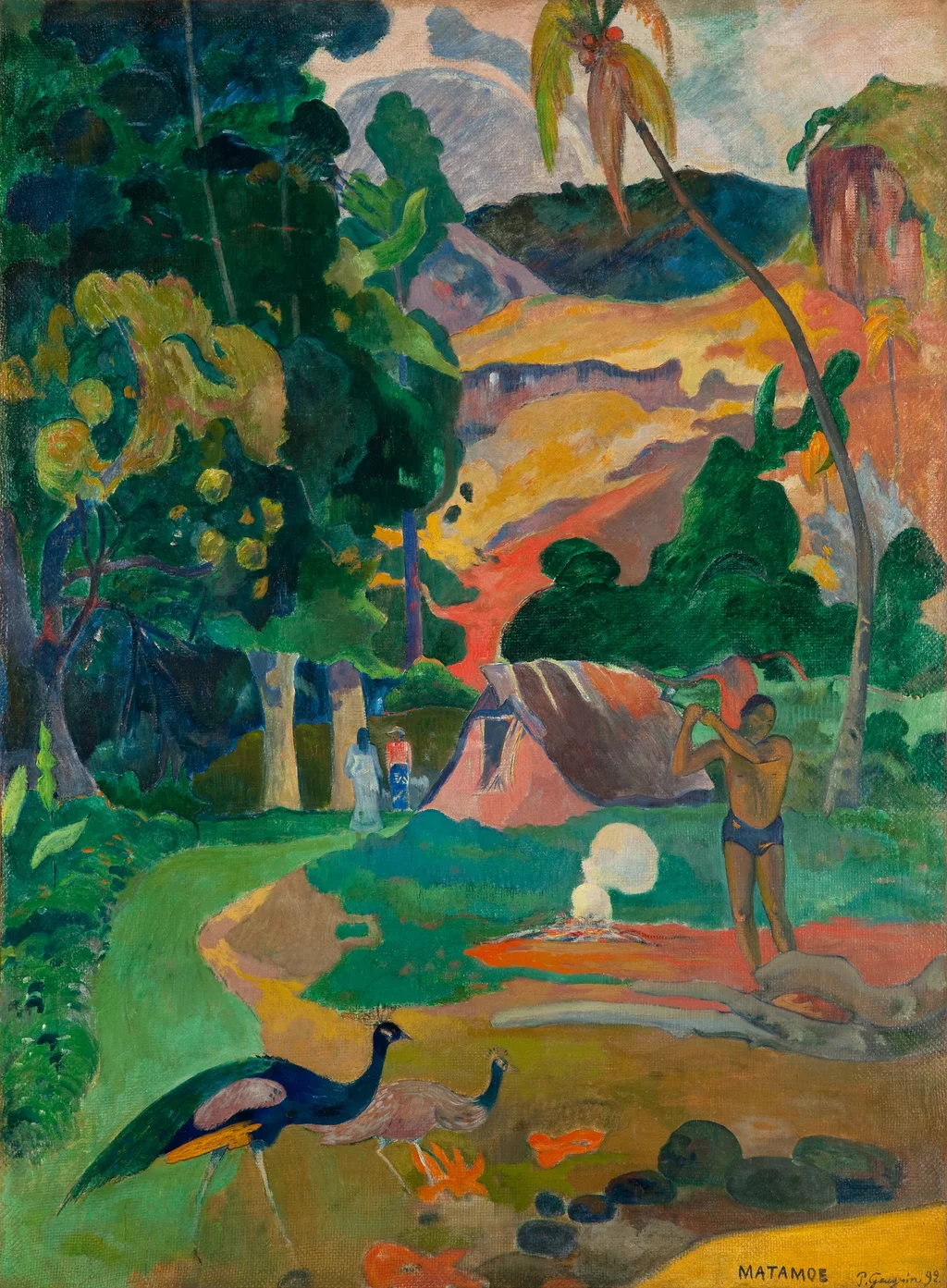
Paul Gauguin, Matamoe (Death), Landscape with Peacocks, 1892. Wikimedia Commons. · PD
Matamoe (la Mort), paysage aux paons
Détails
L'histoire
Vers 1892, Gauguin avait quitté la ville coloniale de Papeete pour Mataiea, un village de la côte sud de Tahiti, en quête d'un Tahiti qu'il sentait déjà gâté par l'Europe. Peu après son arrivée, il raconta avoir vu un jeune homme lever une hache au-dessus de sa tête pour abattre un cocotier malade, et cette figure occupe le centre du tableau, en plein geste au-dessus d'un tronc tombé. Derrière, une case, un petit feu et deux paons traversent la clairière, bien que le paon ne soit pas de l'île et relève plutôt du paradis rêvé par Gauguin que de ce qu'il a vraiment vu. Il inscrivit sur la toile le mot tahitien Matamoe, débattu depuis lors: les uns y lisent la mort, d'autres le sommeil ou le temps jadis. Gauguin, lui, le traduisait par mort.