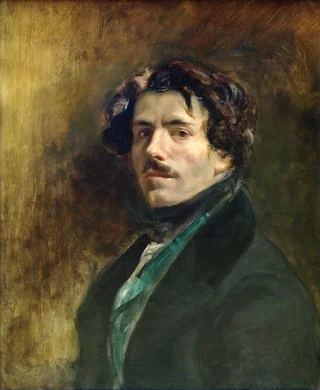
Eugène Delacroix
1798–1863 · Francia · Romanticismo
La storia
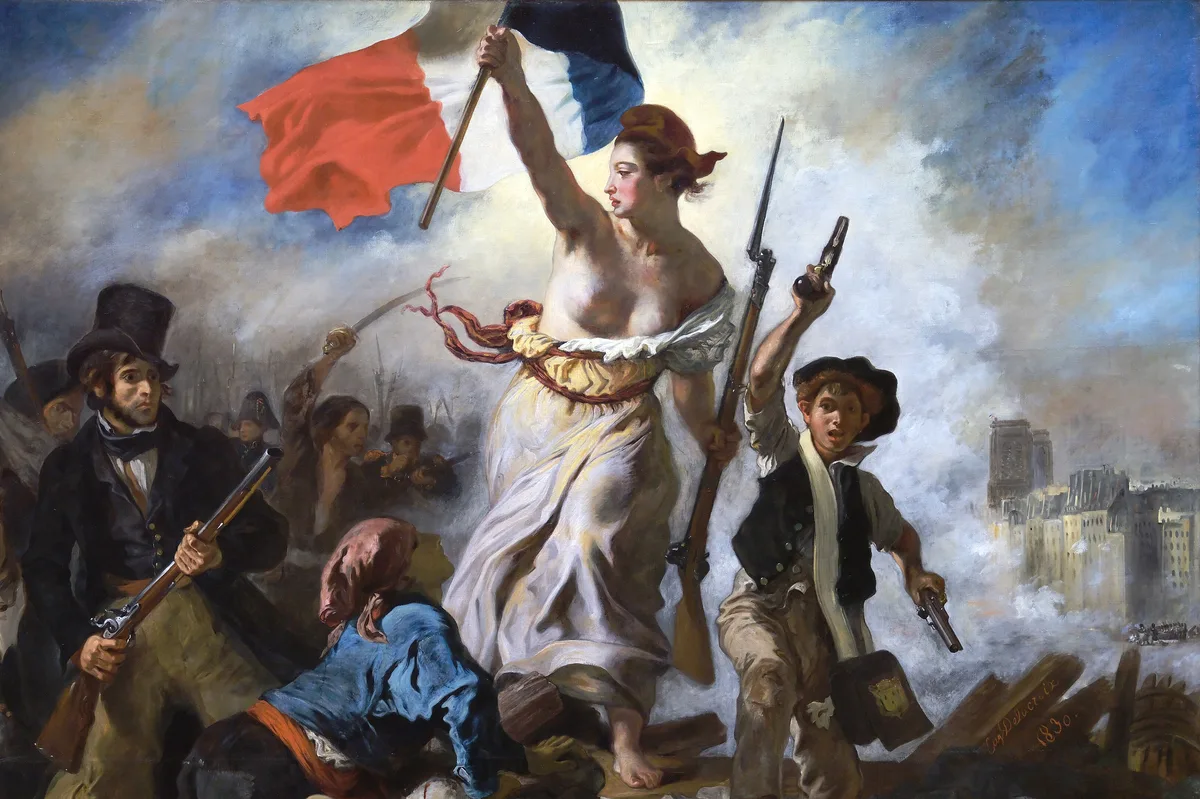
Alla fine di luglio del 1830 il popolo di Parigi trascorse tre giorni sulle barricate e scacciò il re Carlo X. Eugène Delacroix, 32 anni, assistette dai margini e sentì di non aver fatto la sua parte, così la fece con un pennello. Quell'inverno dipinse una donna a seno scoperto che avanza sui morti con la bandiera tricolore in una mano e un moschetto nell'altra, alla guida di una folla di operai e ragazzi di strada tra il fumo degli spari. La Libertà che guida il popolo trasformò una settimana di scontri reali in strada nell'immagine a cui la Francia ancora ricorre ogni volta che si ribella.
Delacroix guidava l'altra metà della pittura francese rispetto a Ingres, quella che confidava nel colore, nel movimento e nel sentimento più che nel disegno pulito. Due anni dopo la Libertà ebbe l'esperienza che gli accese la tavolozza. Nel 1832 viaggiò in Marocco al seguito di una missione diplomatica francese, e la luce, le vesti, i cavalli e le corti del Nord Africa lo colpirono come una rivelazione. Riempì taccuini di acquerelli rapidi e attinse a quel viaggio di sei mesi per i trent'anni successivi, da cui nacquero più di 70 dipinti.
Fu romantico anche nelle amicizie, vicino al compositore Frédéric Chopin, che ritrasse al pianoforte, e alla scrittrice George Sand. Per gran parte della vita tenne un diario ancora oggi letto come uno degli scritti più acuti che un pittore abbia mai dedicato alla pittura. Verso la fine ricoprì di murali una cappella della chiesa di Saint-Sulpice a Parigi, uno dei quali raffigura un angelo che lotta con Giacobbe tra alberi che aveva studiato in un bosco fuori città; li terminò nel 1861 e morì due anni dopo.
Altri articoli
Opere
139 opere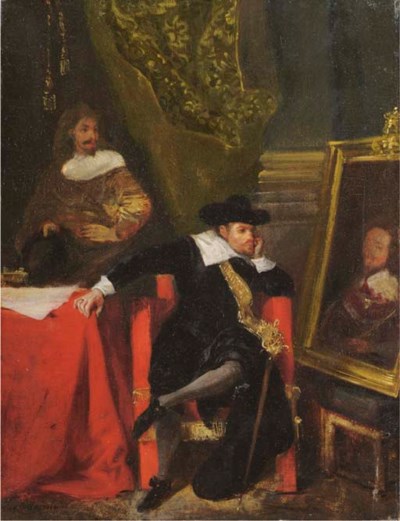 Cromwell nel castello di WindsorEugène Delacroix, 1828
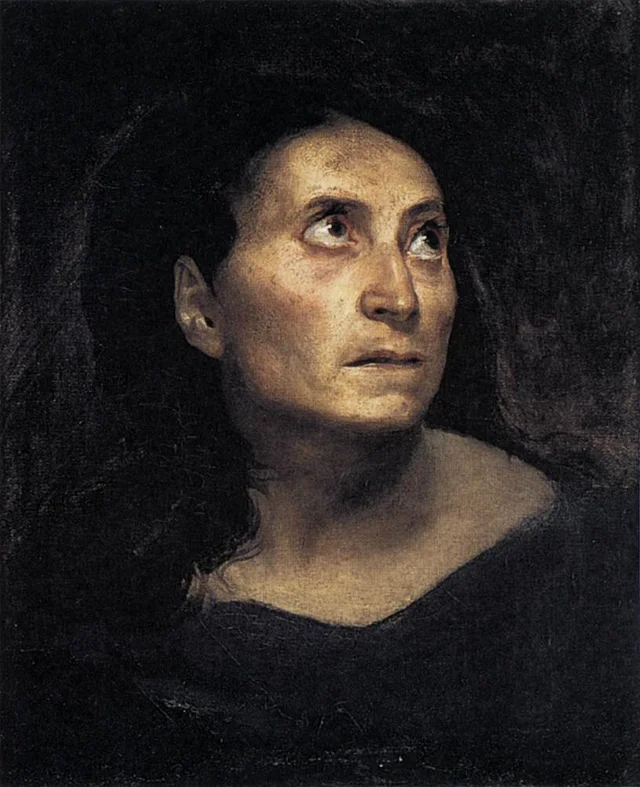 Testa di donnaEugène Delacroix, 1822
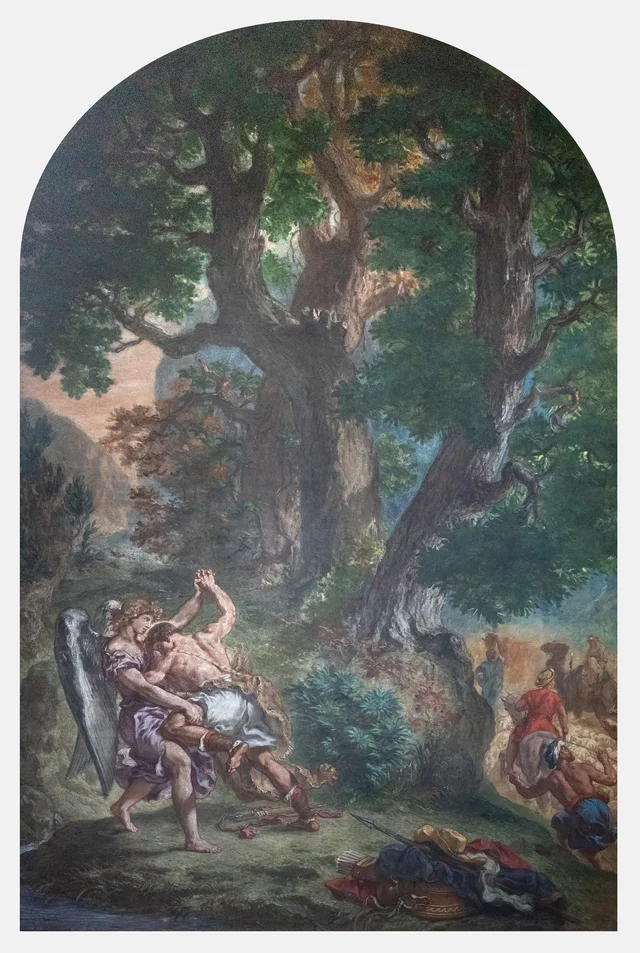 La lotta di Giacobbe con l'angeloEugène Delacroix, 1860
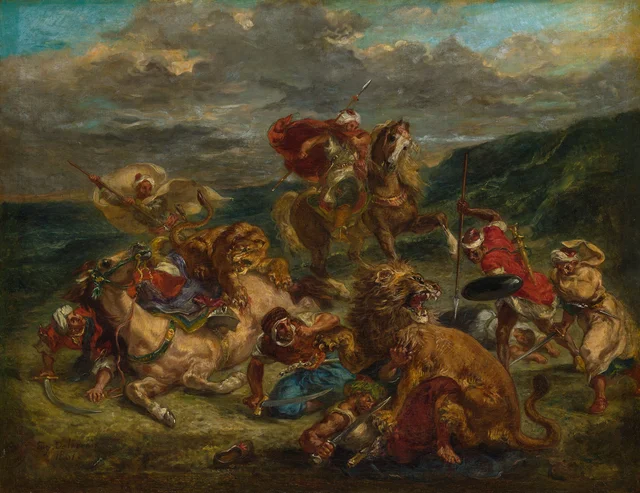 La caccia al leone in MaroccoEugène Delacroix, 1861
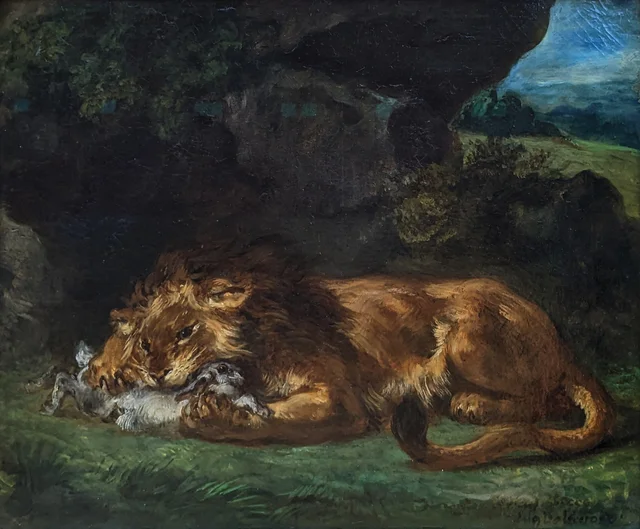 Leone che divora un coniglioEugène Delacroix, 1853
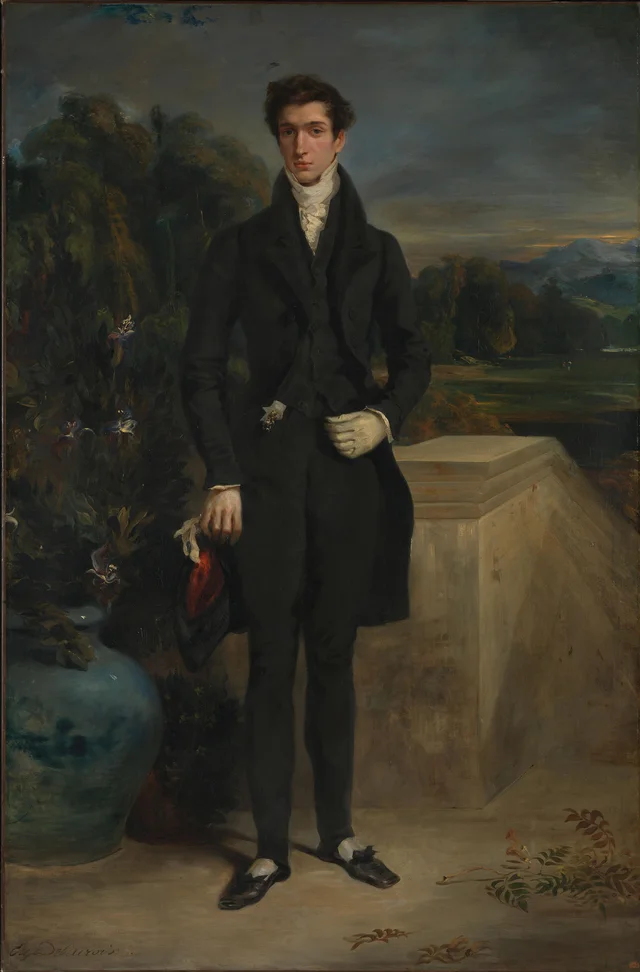 Ritratto di Louis-Auguste SchwiterEugène Delacroix, 1827
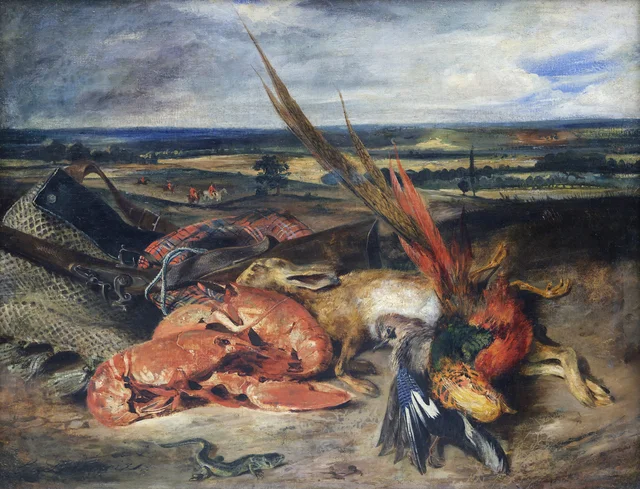 Natura morta con astice e trofei di caccia e pescaEugène Delacroix, 1827
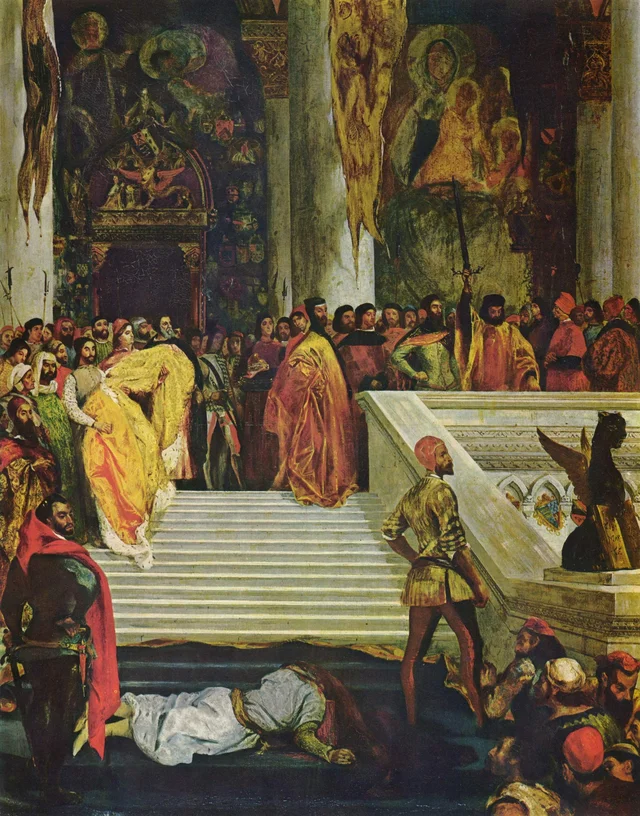 L'esecuzione del doge Marino FalieroEugène Delacroix, 1826
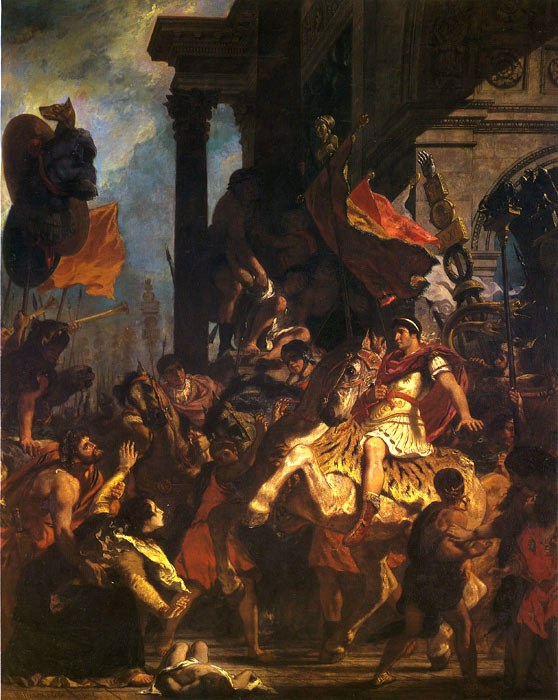 La giustizia di TraianoEugène Delacroix, 1840
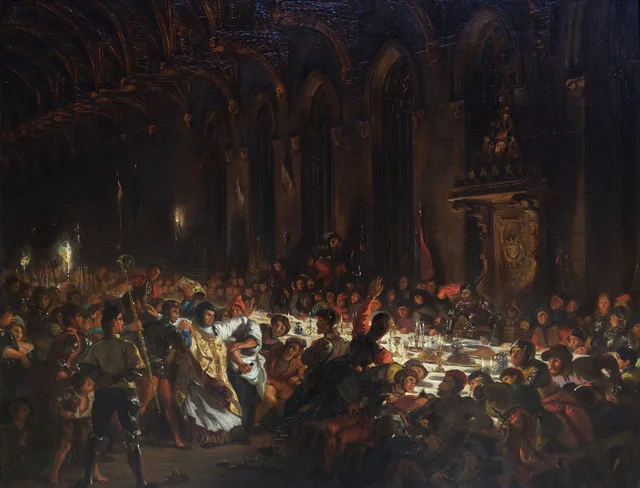 L'assassinio del vescovo di LiegiEugène Delacroix, 1828
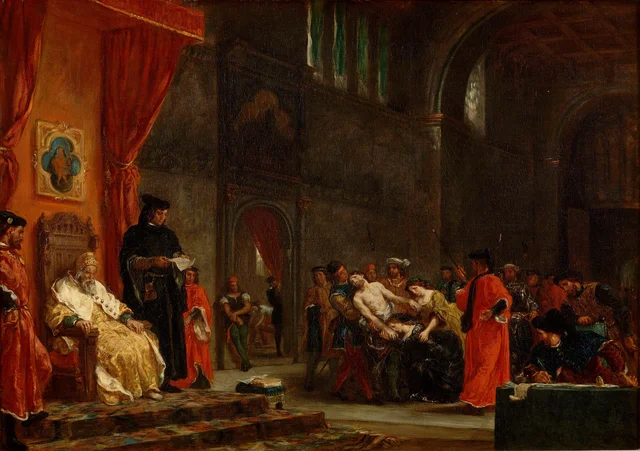 I due FoscariEugène Delacroix, 1855
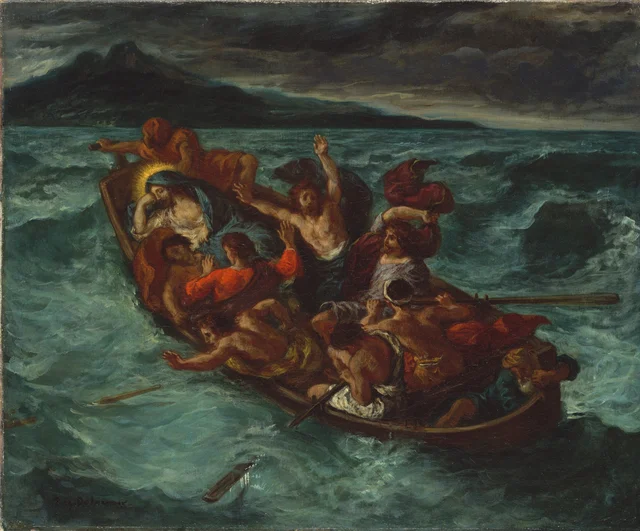 Cristo addormentato durante la tempestaEugène Delacroix, 1853
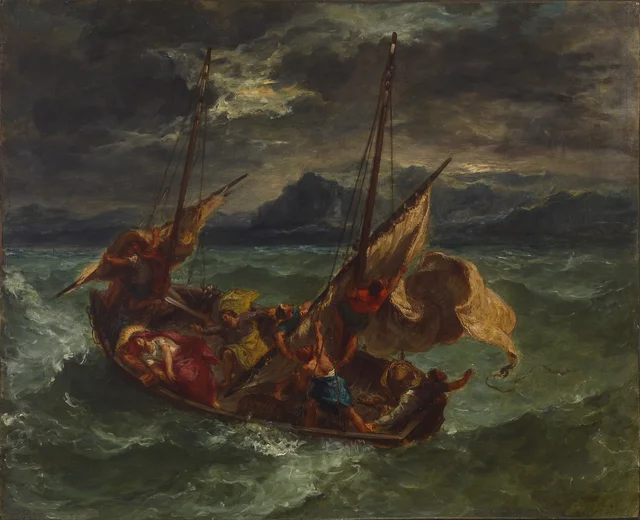 Cristo sul mare di GalileaEugène Delacroix, 1854
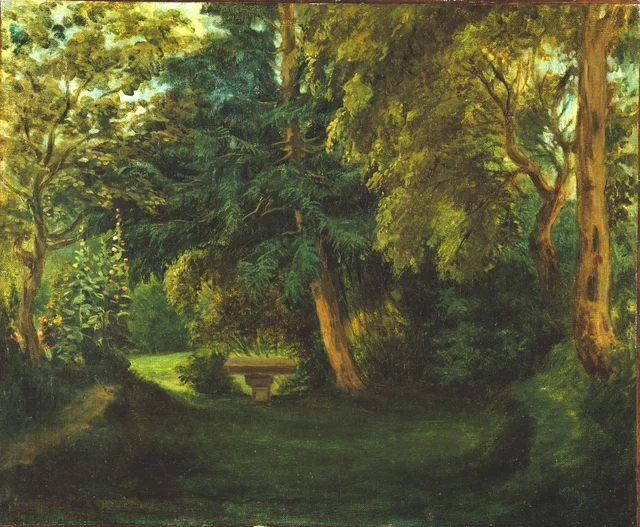 Il giardino di George Sand a NohantEugène Delacroix, 1842
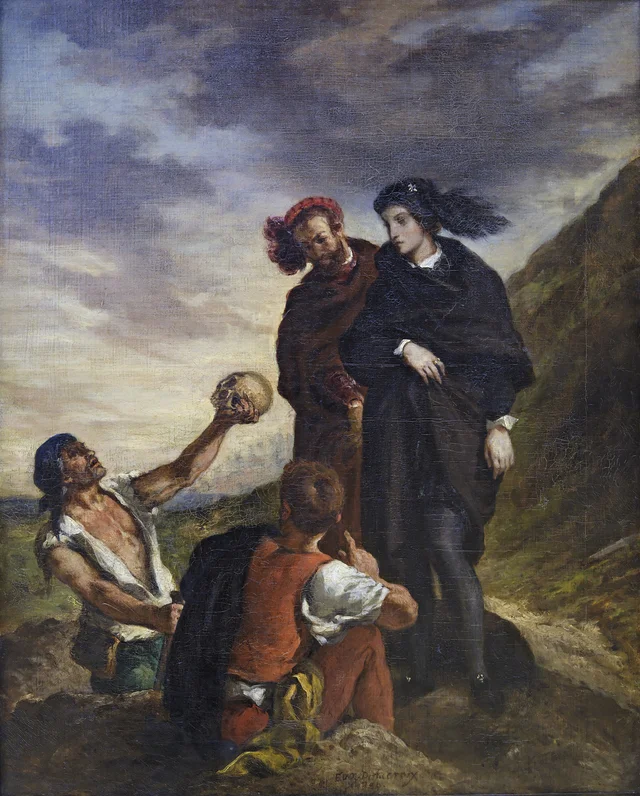 Amleto e Orazio al cimiteroEugène Delacroix, 1839
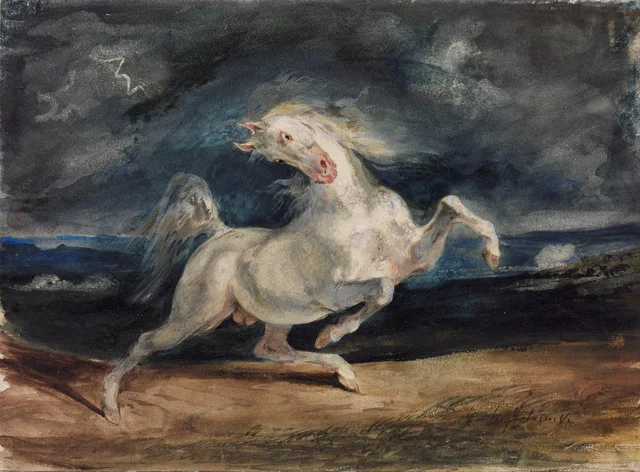 Cavallo spaventato dal fulmineEugène Delacroix, 1824
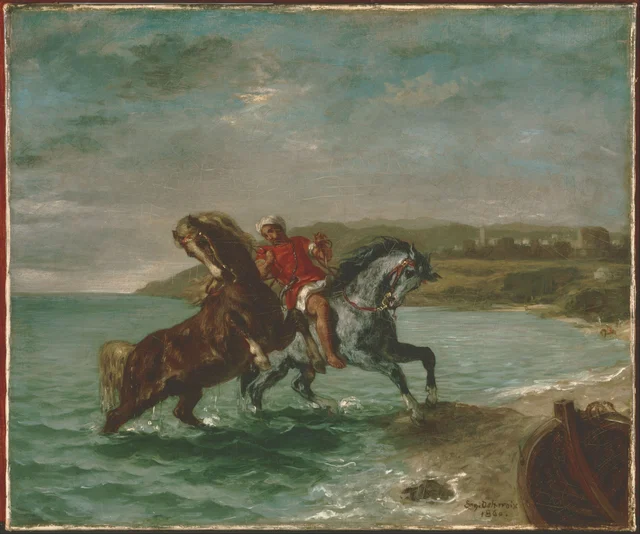 Cavalli che escono dal mareEugène Delacroix, 1860
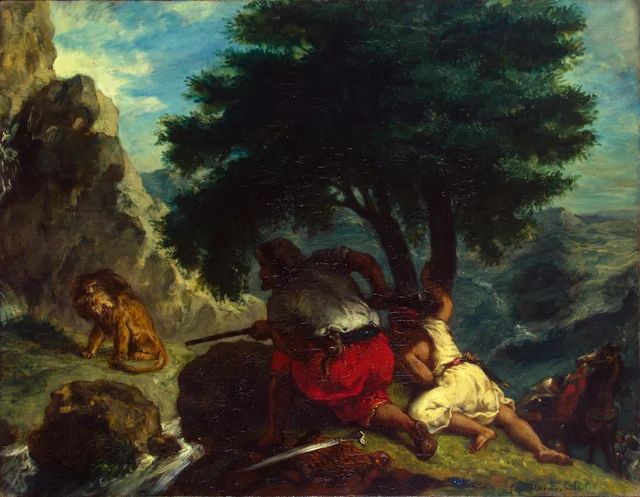 Caccia al leone in MaroccoEugène Delacroix, 1854
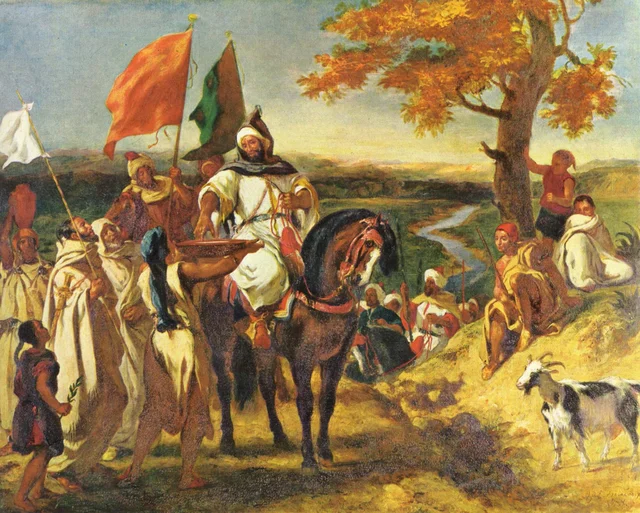 Il caid marocchino in visita alla sua tribùEugène Delacroix, 1837
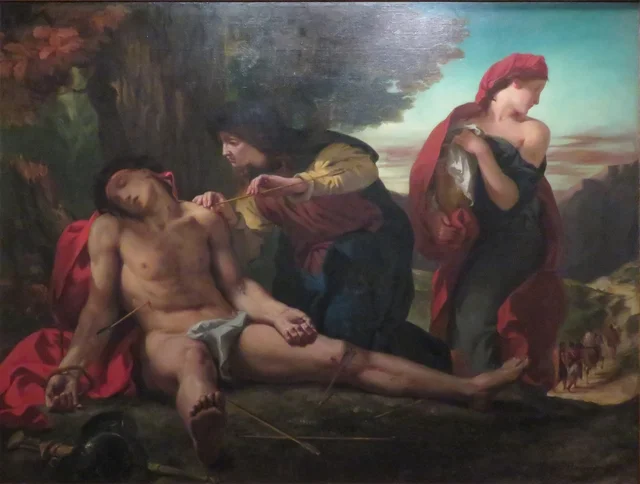 San Sebastiano soccorso dalle Sante DonneEugène Delacroix, 1836
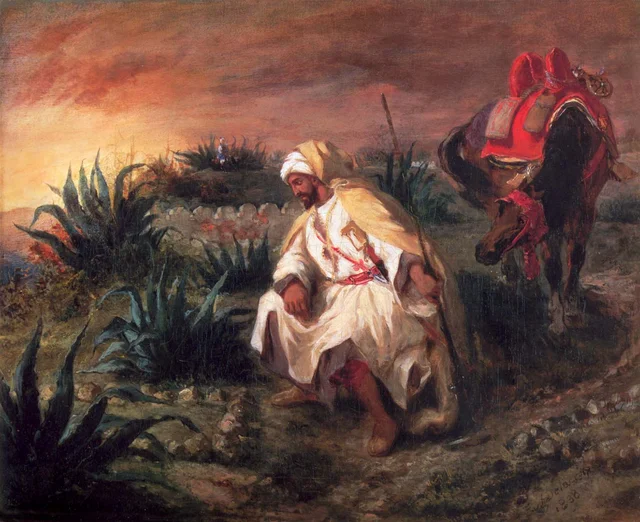 Gli arabi presso la tombaEugène Delacroix, 1838
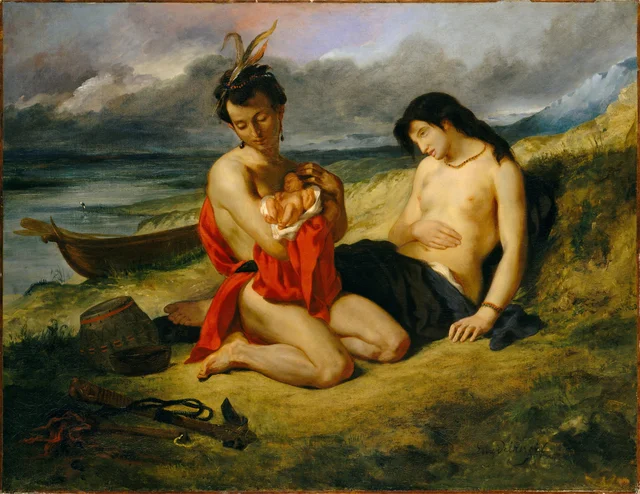 I NatchezEugène Delacroix, 1835
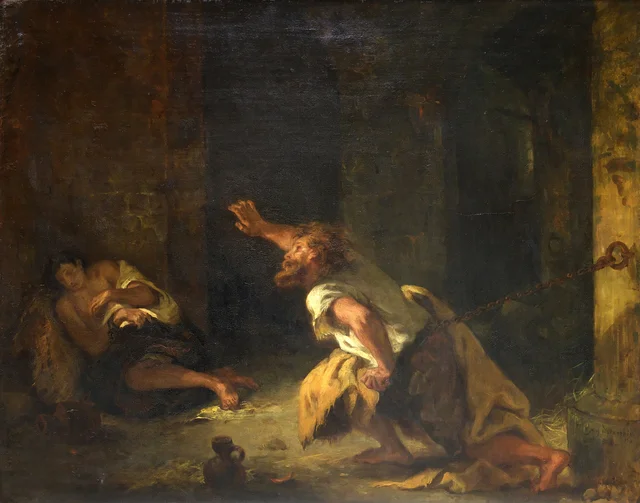 Il prigioniero di ChillonEugène Delacroix, 1834
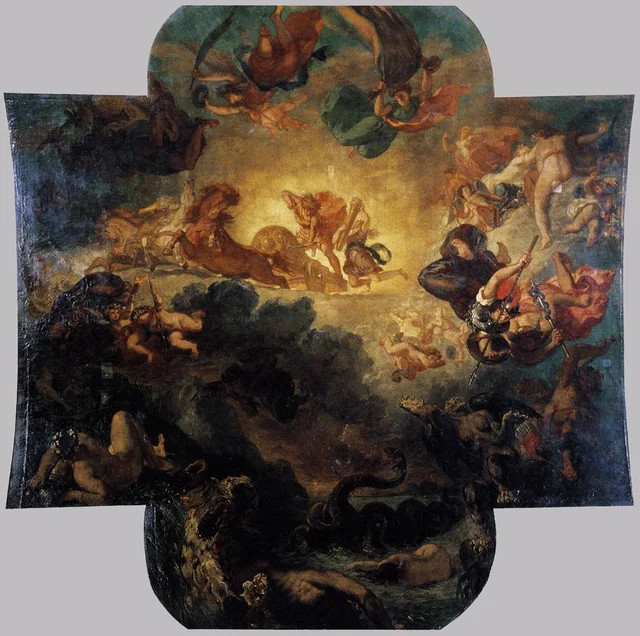 Apollo vince PitoneEugène Delacroix, 1850
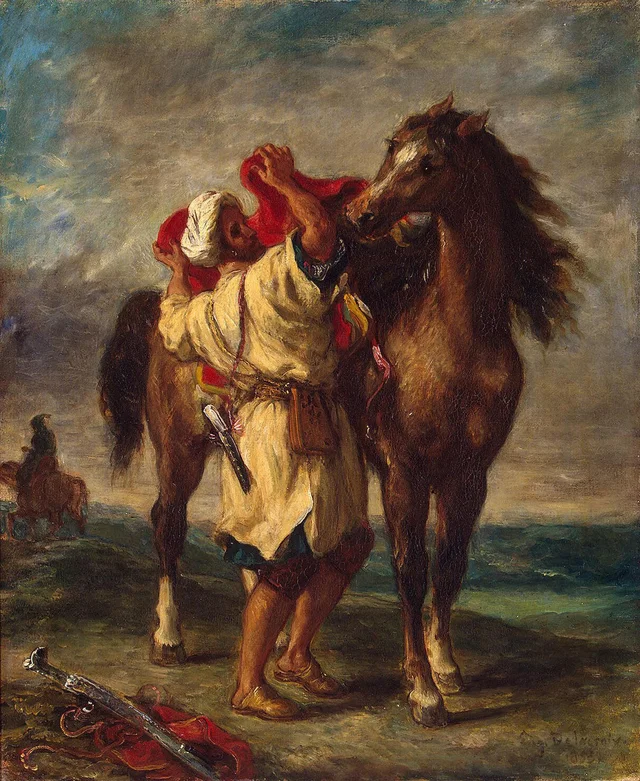 Arabo che sella il suo cavalloEugène Delacroix, 1855