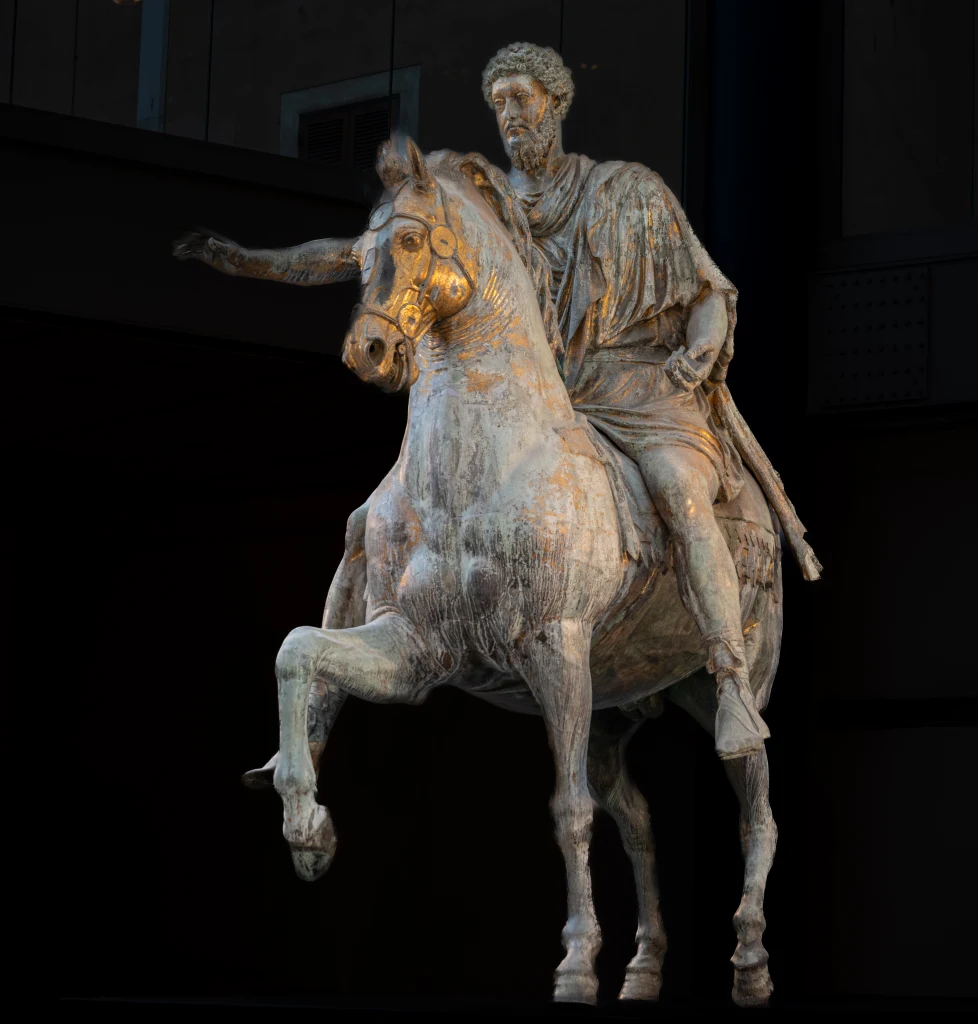
Equestrian Statue of Marcus Aurelius
Details
The story
No ancient writer mentions this statue. The museum dates it to the reign of Marcus Aurelius, between 161 and 180 AD, and thinks it was probably raised in 176, the year he celebrated a triumph over the Germanic peoples of the Danube, or in 180, after his death. Late Roman lists of the city's monuments name some 22 great bronze equestrian statues, and this is the only one to survive.
He rides without weapons or armour, his right hand stretched out over the horse's head. By the 10th century the statue stood at the Lateran, the popes' palace, and the Middle Ages gave it a story of their own. The Marvels of Rome, a 12th-century guide for visitors, tells of an eastern king besieging the city and a young squire who rode out on a horse without a saddle, seized the king and saved Rome. The statue, it says, was made in his honour, and medieval accounts describe a small bound captive crouching under the horse's raised foreleg.
Horse and rider were once covered in gold, and traces of the gilding are still visible. Romans used to say that on the day the statue turned all gold again, the world would end.




