Primera parte. La colección del rey ejecutado
El 30 de enero de 1649, Carlos I de Inglaterra caminó hacia su propia ejecución atravesando su propio salón de banquetes. Sobre su cabeza había un techo que él mismo había encargado a Rubens veinte años antes. El cadalso estaba fuera, junto a una ventana del primer piso. Todo duró alrededor de media hora.
Seis meses después, el Parlamento votó vender sus cuadros. La colección rondaba las mil quinientas obras, la mejor que nadie había reunido en el norte de Europa en una sola vida. Se dividió en lotes y se repartió entre los acreedores del rey en lugar de dinero.
El embajador español en Londres era Alonso de Cárdenas. Felipe IV le dio dos instrucciones: comprar todo lo que valiera la pena y no revelar jamás, bajo ninguna circunstancia, para quién compraba. Madrid acudía en secreto a la liquidación de los bienes de un rey muerto.
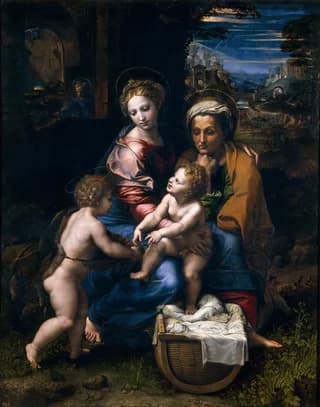
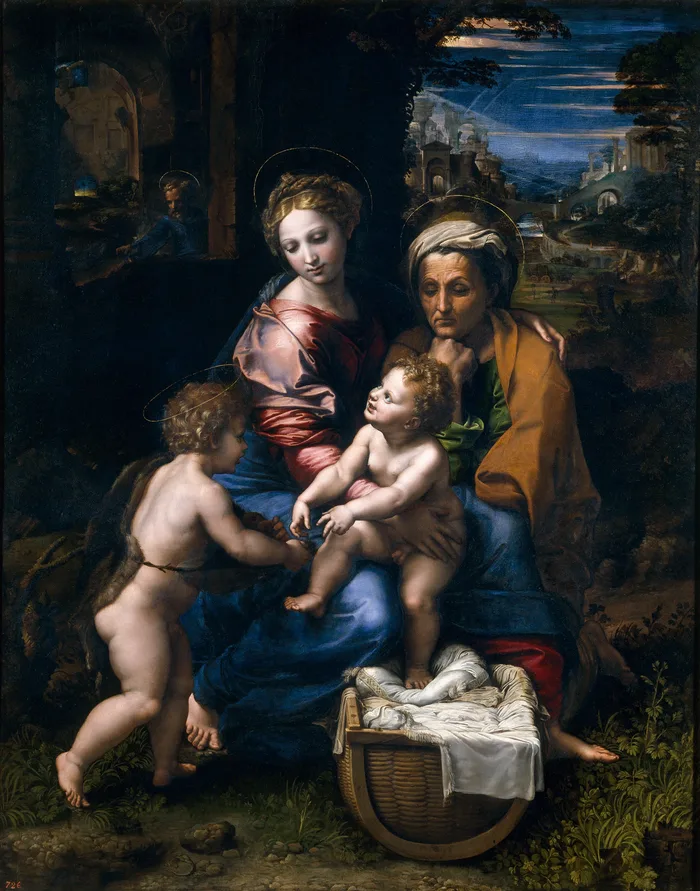
Así salió de Inglaterra La Sagrada Familia de Rafael.
Nada en el cuadro anuncia lo que iba a ocurrirle. La Virgen sostiene al Niño contra sus rodillas. El pequeño san Juan le ofrece fruta. Santa Ana se inclina sobre los dos. Manos, cuerpos y miradas bajas se cierran alrededor de los niños y dejan fuera todo lo demás.
Rafael pintó la escena ciento treinta años antes de Whitehall, para la devoción privada. Tras la ejecución pasó a uno de los acreedores del rey; Cárdenas se la compró con dinero del valido, don Luis de Haro, que se la regaló a Felipe IV.
Lo que sigue es una historia que en el Prado gusta contar y que nadie puede confirmar. Al ver el Rafael, el rey habría dicho: «Esta es la perla de mis cuadros». No hay manera de comprobar la frase. El apodo se quedó de todos modos, y la corte empezó a llamar al cuadro La Perla. Todavía se le llama así.
El derrumbe de una corte enriqueció a otra. Felipe IV consiguió un Rafael porque en Londres habían decapitado a un rey y su colección había dejado de ser el conjunto de nadie.
Las grandes colecciones crecieron casi siempre así. Los cuadros pasaban por matrimonios, herencias, regalos diplomáticos, compras y catástrofes nacionales. Una pintura podía sobrevivir a su dueño, a su palacio y a su país.
Otro cuadro llegó a Felipe IV tras una destrucción más silenciosa. Alguien desmontó la habitación para la que se había pintado.
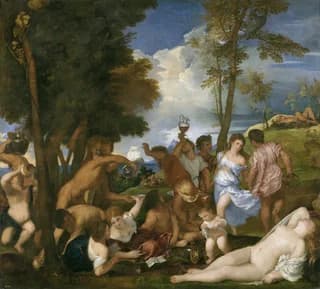
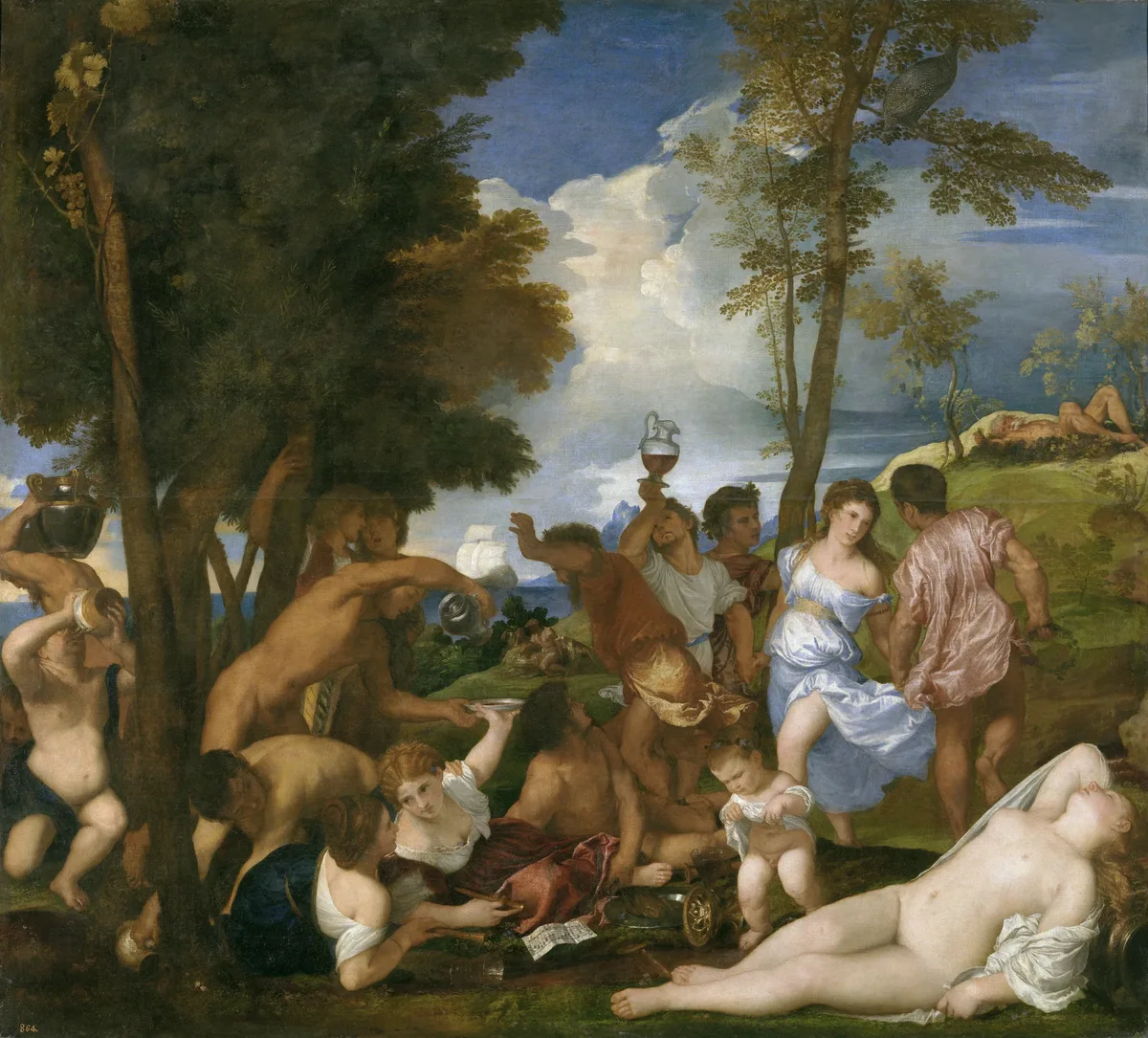
Tiziano pintó La bacanal de los andrios para el camerino de alabastro de Alfonso I d'Este, en Ferrara. El lienzo está lleno de gente, de vino y de movimiento. Beben, bailan, duermen, se inclinan unos sobre otros. En primer término duerme una mujer desnuda con un brazo echado hacia atrás sobre la cabeza. En el ángulo inferior derecho, un niño se ha levantado la camisa y orina sobre la hierba.
Y abajo del todo, junto a los pies de los que celebran, hay una hoja de música, y las notas pueden leerse. Es un canon de Adrian Willaert sobre un texto francés: quien bebe y no vuelve a beber no sabe lo que es beber. Tiziano metió una canción de taberna dentro del cuadro, y todavía se puede cantar.
El camerino de Alfonso d'Este no era una sala de obras maestras. Era un cuarto privado y estrecho donde varias pinturas mitológicas trabajaban juntas, y sus temas, colores y ritmos continuaban de un muro al siguiente. El invitado entraba y se encontraba dentro de un conjunto, no delante de un cuadro.
En 1598 Ferrara pasó a los Estados Pontificios y el cardenal Pietro Aldobrandini se llevó a Roma las pinturas del camerino. Cuarenta años más tarde, La bacanal llegó a Madrid.
El lienzo sobrevivió. La habitación no.
Con los documentos y las pinturas hermanas que se conservan, los estudiosos pueden reconstruir qué colgaba dónde. Nadie puede devolver el primer público, las costumbres de aquella corte ni lo que sintió quien cruzó aquella puerta por primera vez.
Los dos cuadros entraron en la colección real de la que saldría el Prado dos siglos después. Uno llegó de una monarquía caída, el otro de una habitación desmontada. Felipe IV amuebló sus propios palacios de otra manera: encargó pinturas para ellos, y allí los cuadros hicieron algo más que decorar.
Segunda parte. Cuando los cuadros gobernaban un palacio
En la década de 1630, el palacio del Buen Retiro de Madrid ganó una sala llamada Salón de Reinos. Los cuadros de batallas celebraban victorias. Los retratos ecuestres presentaban a la familia real como jefes militares. Hércules aparecía en varios lienzos y ataba la dinastía a una fuerza antigua.
El visitante no necesitaba estudiar la sala cuadro por cuadro. La victoria le salía al encuentro en un muro, la autoridad real en otro, y la promesa de un futuro dinástico se desplegaba por encima de todos. Las pinturas actuaban en grupo mucho antes de que ninguna fuera famosa por su cuenta.
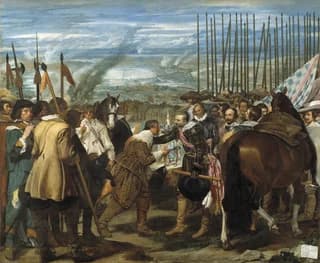
La rendición de Breda de Velázquez formaba parte del programa. En el centro, el comandante neerlandés Justino de Nassau ofrece la llave de la ciudad al general español Ambrosio Spínola. Spínola le sujeta el brazo y le impide arrodillarse.
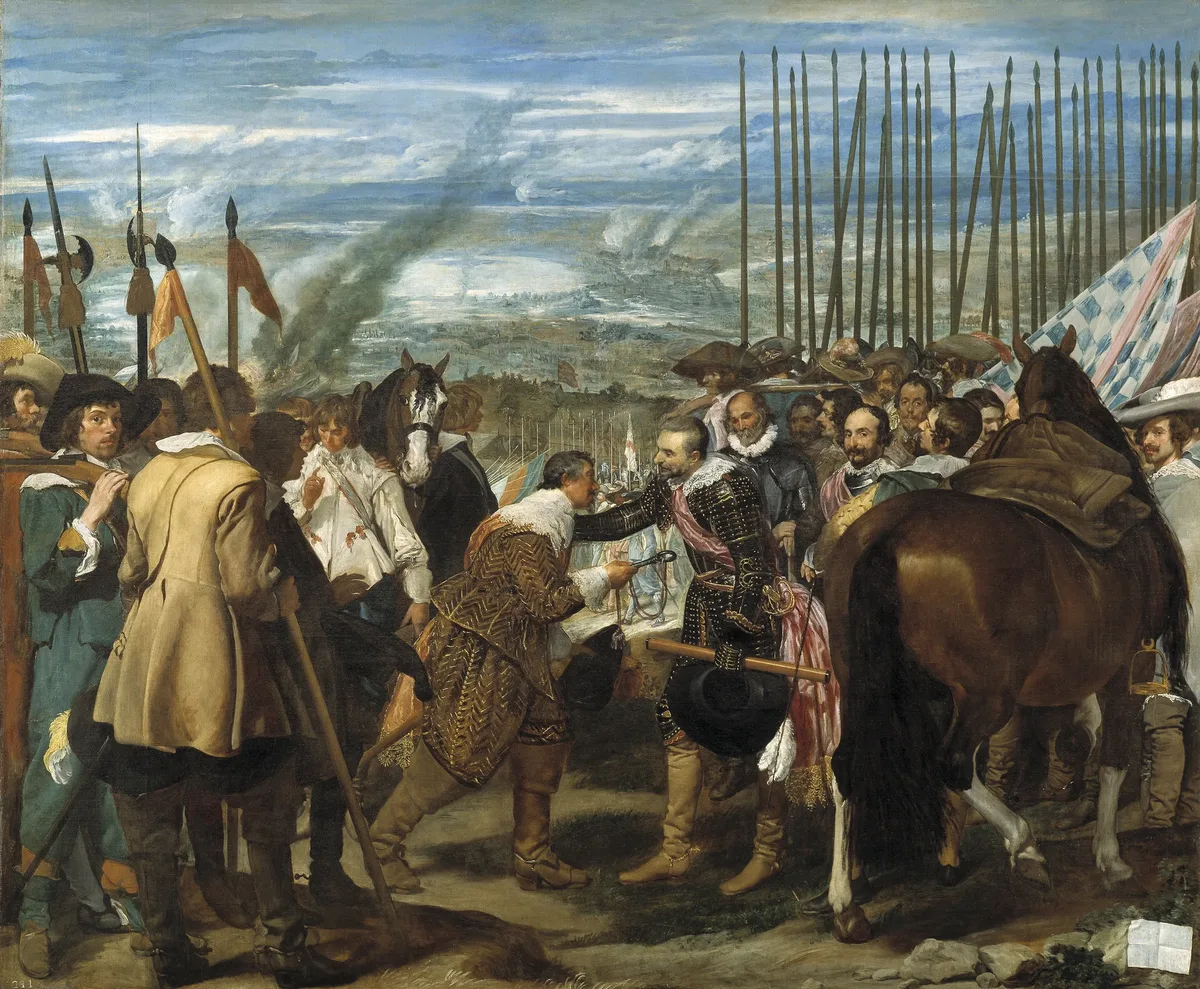
Detrás de las tropas españolas se levanta una empalizada de lanzas verticales, regular, densa, que se sale por el borde superior. Los vencidos, a la izquierda, no tienen nada parecido: agrupación suelta, cabezas inclinadas, ningún patrón. Los españoles del cuadro no son más fuertes que los neerlandeses, están mejor organizados, y Velázquez lo dice con una hilera de astas de madera. Por eso el cuadro se conoce simplemente como Las Lanzas.
Velázquez no estuvo en Breda. El gesto que pintó casi con toda seguridad no ocurrió nunca.
Otros lienzos de la sala complicaban el triunfo. En la pintura de Juan Bautista Maíno sobre la recuperación de Bahía, los heridos y los que sufren ocupan el primer término junto al éxito militar. El imperio se celebraba en Madrid y se peleaba al otro lado de un océano, y la corte miraba esa guerra como quien mira un espectáculo.
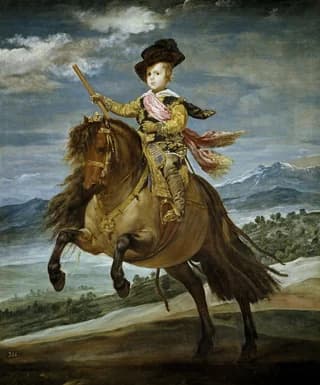
La sala hablaba también del futuro. En El príncipe Baltasar Carlos a caballo, un niño domina un caballo encabritado mientras bajo él se abre un paisaje ancho, y parece dispuesto a mandar años antes de poder reinar.
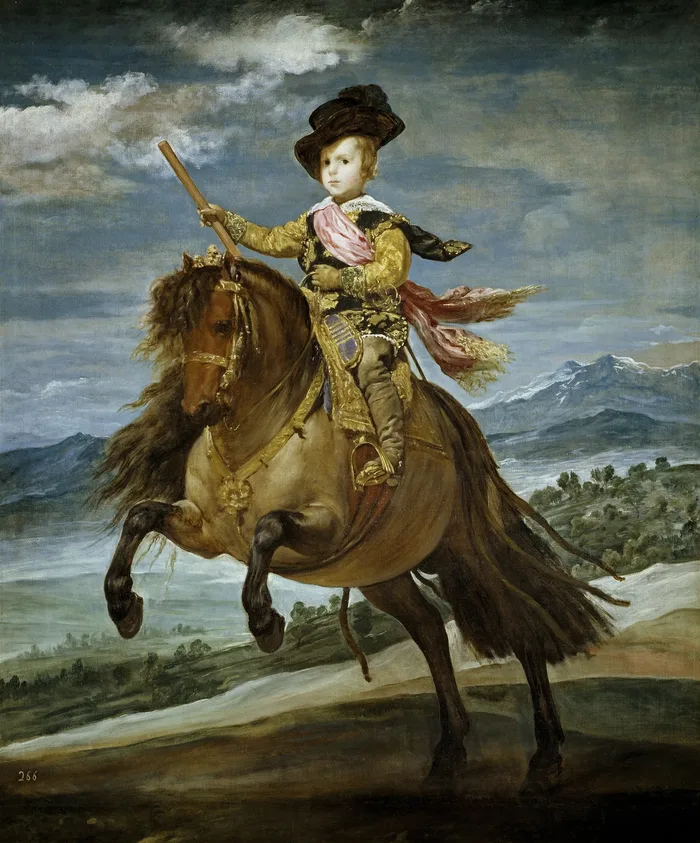
Baltasar Carlos murió en 1646, a los dieciséis años. Nunca llegó al trono, y el retrato siguió mostrando un futuro que no ocurrió.
El Salón de Reinos no sobrevivió a su promotor como teatro político. Los cuadros bajaron de los muros y se repartieron por sitios distintos, y las conexiones entre ellos se rompieron. De cerca, La rendición de Breda se lee mejor: se ven los gestos, se ven las dos formaciones. Lo que ya no hay alrededor del espectador son las otras victorias, los héroes y los retratos reales que daban a la sala su argumento.
El museo tiene los cuadros. La sala hay que reconstruirla en la cabeza.
Velázquez conocía ese mundo por dentro. Era pintor del rey y funcionario de palacio a la vez, en una casa donde el rango y el oficio decidían todo. Un día pintó la máquina entera, con él dentro.
Tercera parte. Velázquez dentro de la corte
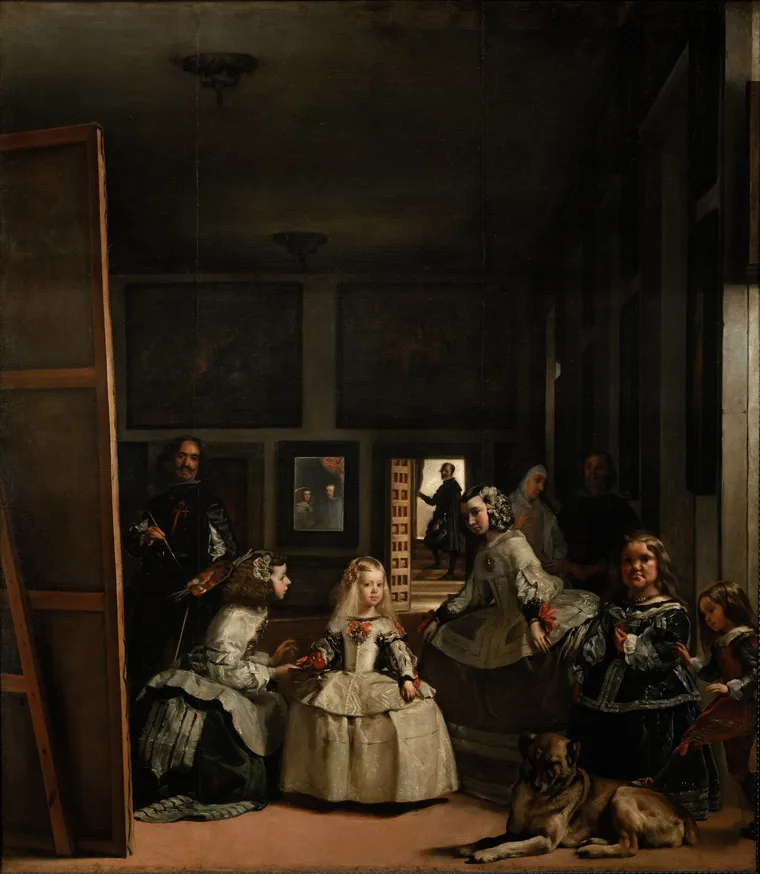
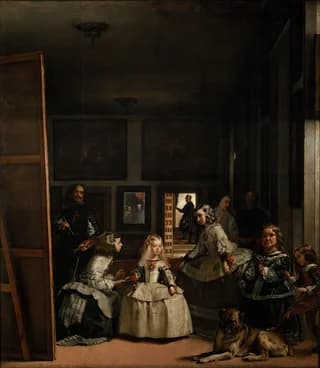
En el centro de Las Meninas hay una niña con un vestido claro. Es la infanta Margarita. Dos meninas se inclinan hacia ella. Delante están una enana, otro servidor de la casa y un perro grande y adormilado. Al fondo, en una puerta abierta, el aposentador se ha detenido en el escalón. A la izquierda, Velázquez está de pie ante un lienzo alto y mira más allá del cuadro, hacia nosotros.
En la pared del fondo cuelga un espejo, y en él se reflejan Felipe IV y la reina Mariana. Puede que estén donde parecemos estar nosotros. Puede que el espejo refleje el lienzo que Velázquez está pintando. El cuadro se niega a decirlo.
En el pecho de Velázquez está la cruz roja de la Orden de Santiago, la señal de nobleza que persiguió durante años y que no obtuvo hasta 1659, tres años después de terminar este cuadro. La cruz se añadió sobre el lienzo ya acabado, después de su muerte. La leyenda dice que fue el propio Felipe IV quien tomó el pincel. No hay ninguna prueba y es casi con seguridad falso, y la historia es demasiado buena como para haber muerto.
Ahora la mejilla izquierda de la infanta.
En la Nochebuena de 1734 se incendió el Alcázar de Madrid. Ardió cuatro días, el palacio quedó destruido y con él se perdieron centenares de cuadros de la colección real. Las Meninas salieron de allí. Hubo que recortar los bordes chamuscados del lienzo, el calor había levantado la pintura en algunos puntos, y el pintor de corte Juan García de Miranda volvió a pintar la mejilla de la infanta. Llevamos casi trescientos años mirándola sin darnos cuenta.
El cuadro sobrevivió a la corte además de al palacio. El mundo en el que esta escena se leía de una ojeada terminó con los Austrias, y la gente de la habitación pasó de ser compañeros de oficio a ser figuras históricas cuyos cargos hay que explicar.
La infanta atrae la mirada, pero el rey y la reina solo aparecen como reflejo. Velázquez está justo delante de nosotros con el lienzo vuelto, de modo que nunca sabremos qué hay en él. La puerta del fondo lleva más adentro del palacio, y el hombre del escalón puede estar entrando o saliendo.
De esos huecos ha salido una pequeña biblioteca. Las Meninas se han leído como una tesis sobre la pintura, sobre la posición del artista, sobre la presencia del rey, sobre el acto mismo de ver. Ninguna lectura ha cerrado la cuestión.
Cuando el cuadro llegó a un museo público, se pusieron delante de él personas a las que nunca habrían dejado pasar de la puerta de palacio. La habitación más cerrada de España se convirtió en un sitio donde puede entrar cualquiera.
Velázquez pintó una corte que aún parecía permanente. Goya heredó otra.
Cuarta parte. Goya ve deshacerse la corte
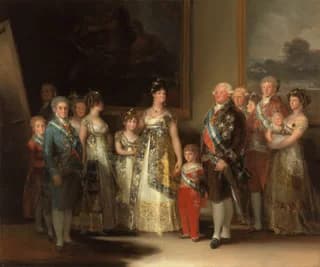
En 1800 Goya pintó La familia de Carlos IV. Trece personas en seda, condecoraciones y diamantes se colocan delante de él. La reina María Luisa está casi en el centro, Carlos IV a su lado. Goya está en la sombra, al fondo, ante un lienzo grande, exactamente donde se había puesto Velázquez siglo y medio antes.
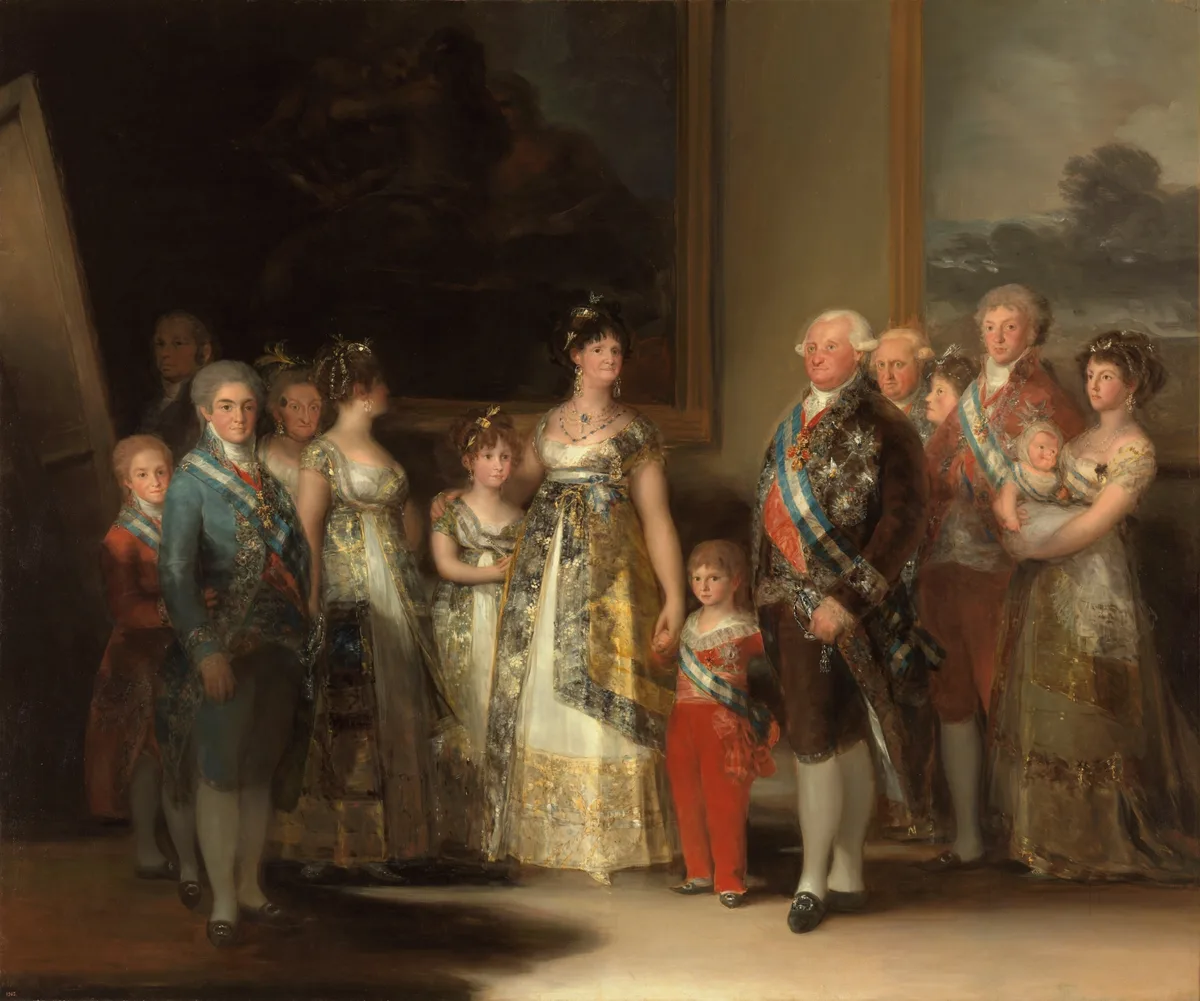
Suele decirse que el cuadro es una burla. Cincuenta años después, Théophile Gautier escribió que el rey y la reina parecían el panadero de la esquina y su mujer después de que les tocara la lotería, y la frase se repite desde entonces. La tentación se entiende: Goya no favorece a nadie. Pero no existe ninguna prueba de que buscara una caricatura, el encargo era oficial y el rey quedó satisfecho. Lo que Goya pintó fue tela pesada, caras congestionadas, cuerpos macizos y las distancias incómodas que hay entre parientes.
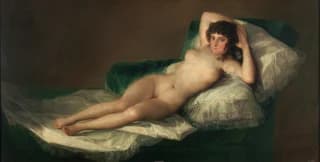
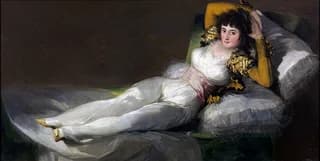
Por los mismos años pintó a una mujer tendida sobre unos almohadones, sin ropa, mirando de frente a quien la mira.
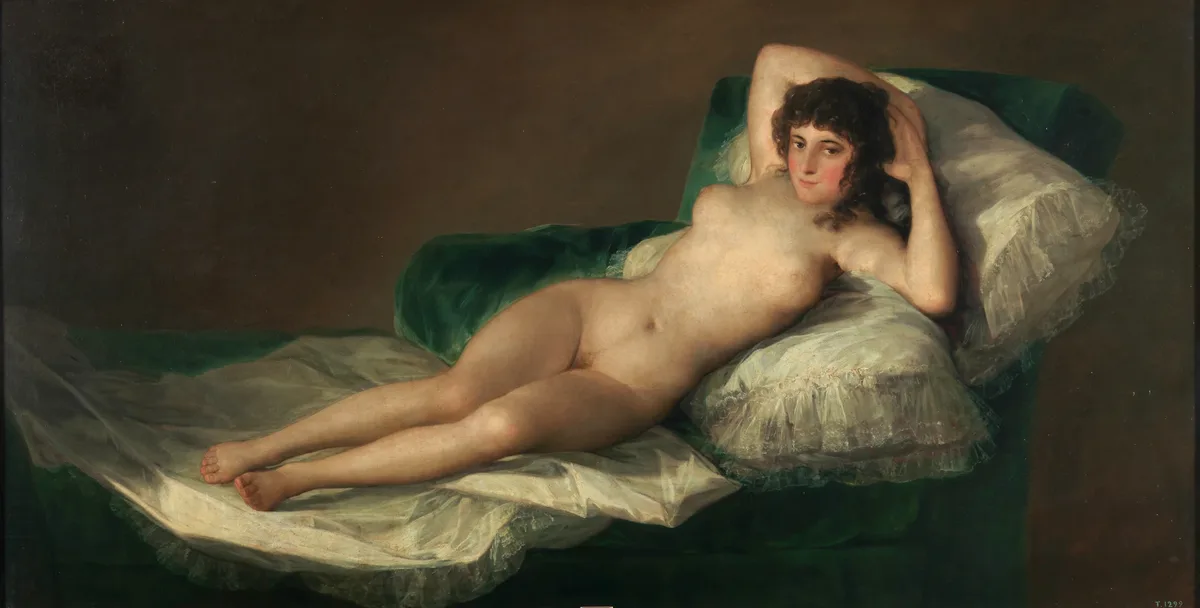
La maja desnuda colgaba en el gabinete privado de Manuel Godoy, el hombre más poderoso de España, junto a su gemela vestida. Nadie sabe quién es ella. El rumor nombró casi de inmediato a la duquesa de Alba; no hay base seria para creerlo, la historia tiene doscientos años y nos sobrevivirá.
Godoy cayó en 1808 y sus bienes fueron incautados para la Corona. En 1813 la Inquisición confiscó las dos majas. En mayo de 1815 llamaron a Goya ante el tribunal y le exigieron explicar quién había encargado los cuadros obscenos, quiénes eran aquellas mujeres y qué había querido decir con ellos. Las pinturas se devolvieron en 1836 y pasaron otros sesenta y cinco años en una sala cerrada de la Academia de San Fernando. La maja desnuda entró en el Prado en 1901, ochenta y dos años después de que el museo abriera.
Para entonces hacía casi setenta años que la Inquisición no existía.
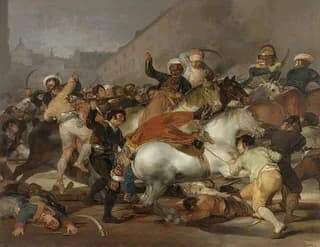
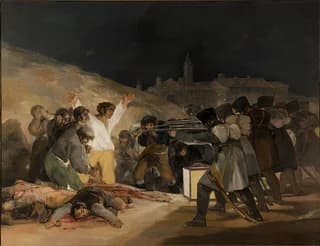
Volvamos a 1808. Entre la incautación y el tribunal, las tropas francesas entraron en Madrid. El 2 de mayo la ciudad se levantó. Aquella noche empezaron los fusilamientos.
Goya pintó los dos días solo en 1814, después de que volviera Fernando VII. El encargo era oficial y conmemorativo. Lo que salió de allí no fue una ceremonia.
En El dos de mayo de 1808, cuerpos y armas chocan en todas direcciones, los amotinados arrancan a los jinetes de sus caballos, las caras se descomponen. La multitud no tiene centro y la mirada no encuentra dónde agarrarse.
El tres de mayo de 1808 en Madrid tiene un farol. Está en el suelo y alumbra a los condenados y a nadie más. Un hombre con camisa blanca ha levantado los brazos. Frente a él se alinea una fila de soldados: espaldas, piernas, fusiles, todos los cañones al mismo ángulo. Ni una cara.
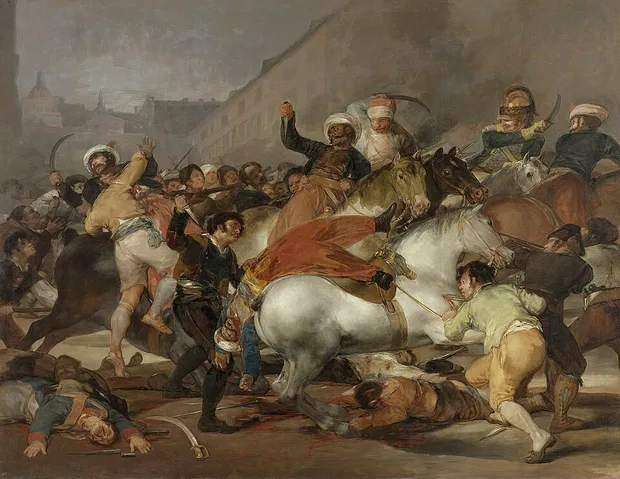
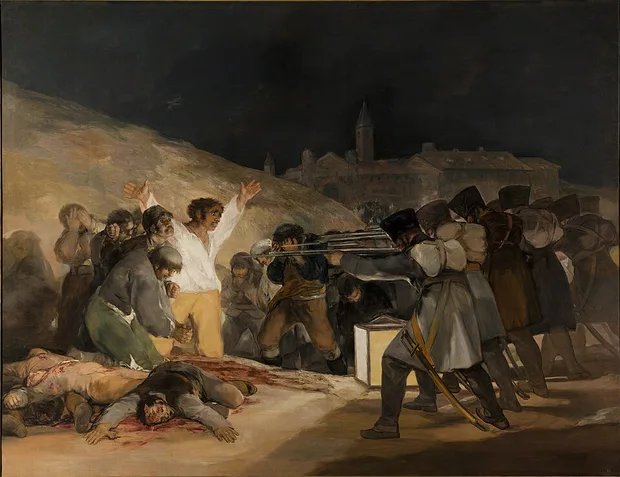
Goya no vio ninguna de las dos cosas. Las recordamos como él las pintó.
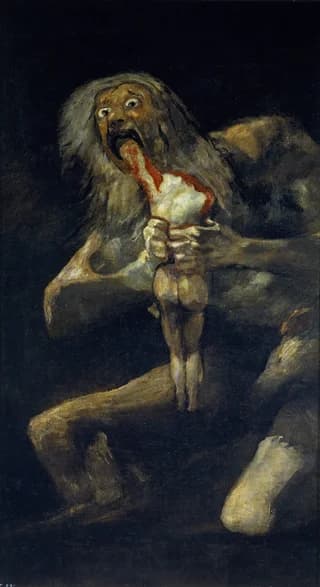
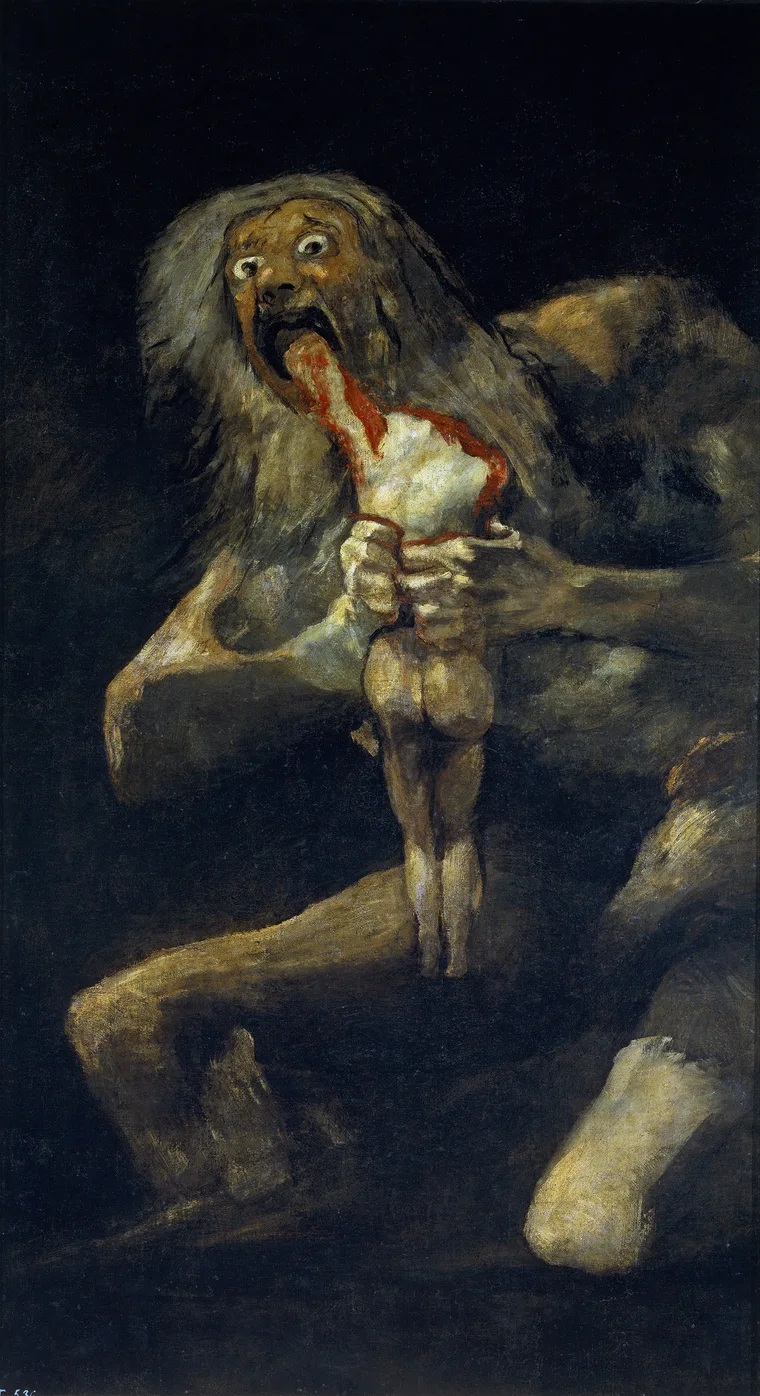
Su obra más terrible no era para nadie. En 1819 compró una casa a las afueras de Madrid llamada la Quinta del Sordo, por un propietario anterior. Goya llevaba quince años sordo.
Pintó dos de sus habitaciones directamente sobre el yeso, para sí mismo. No se sabe qué tenía en la cabeza, y los títulos que usamos se pusieron mucho después.
En el cuadro que hoy llamamos Saturno devorando a un hijo, un gigante agarra con las dos manos un cuerpo mutilado y lo muerde. Los ojos se le salen de la oscuridad. Los dedos se hunden en la carne con fuerza suficiente para verla ceder.
Medio siglo más tarde compró la casa un banquero francés, el barón Émile d'Erlanger. Contrató al restaurador Salvador Martínez Cubells, que arrancó las pinturas de los muros y las pasó a lienzo, una operación difícil y arriesgada. Después d'Erlanger llevó su botín a la Exposición Universal de París de 1878 y lo puso en venta.
No lo compró nadie. Ni una sola tabla.
En 1881 el barón donó las pinturas al Estado español porque no había logrado venderlas. Así llegaron al Prado algunas de las imágenes más conocidas del arte europeo: como género invendible.
Y llegaron cambiadas. Lo que cuelga en el museo no es el yeso sobre el que trabajó Goya. Es la capa de pintura levantada de ese yeso y fijada a un soporte nuevo.
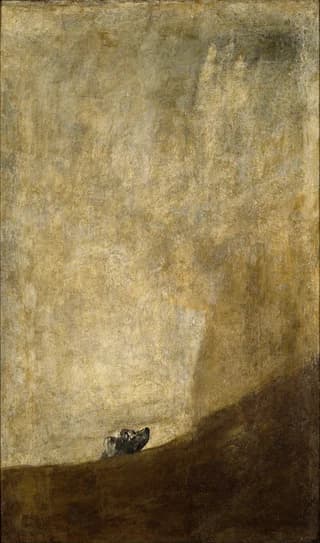
El perro viene de la misma casa. Sobre una franja empinada de tierra o de sombra asoma una cabecita de perro, y encima tres cuartas partes del lienzo están vacías. El título español dice que está medio hundido, y casi todo el mundo da por hecho que se ahoga. El cuadro no lo demuestra. El perro puede estar enterrado, atrapado, escondido, o simplemente mirando hacia algo que nosotros no vemos.
Tenía algo que mirar. En los muros de alrededor había otras pinturas, y Goya decidió qué iba junto a qué. Ese orden se ha perdido, y el perro se ha quedado solo.
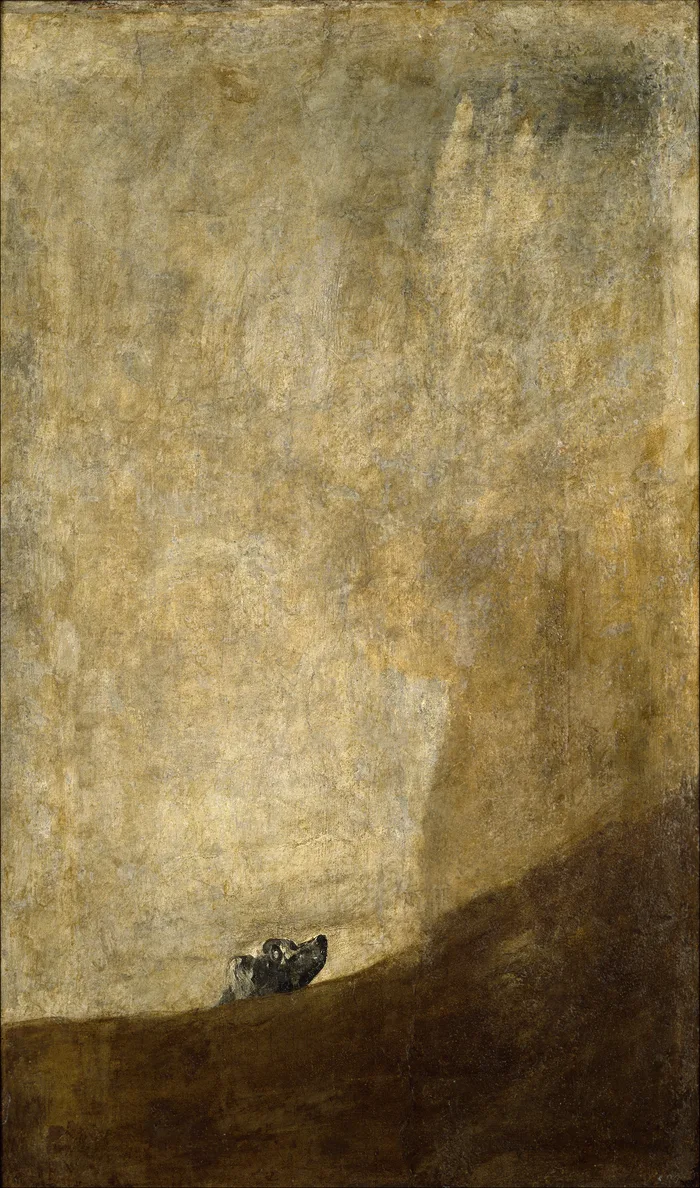
La casa de la que lo recortaron se derribó hace mucho. El edificio al que lo llevaron había empezado su vida bastante antes de Goya, y no como museo.
Quinta parte. El edificio que se convirtió en museo
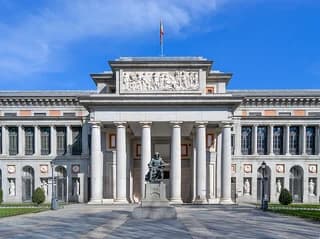
Una maqueta de arquitectura de 1786 muestra un edificio largo y severo, con los extremos salientes y la entrada en el centro. No se sabe quién la hizo. El diseño es de Juan de Villanueva, y Carlos III lo encargó para un Gabinete de Historia Natural: minerales, ejemplares, herbarios.
El edificio se levantó para la ciencia y estuvo a punto de terminarse. Entonces, en 1808, entró en Madrid el ejército francés, las salas sin acabar se convirtieron en cuartel y los sótanos en depósito de armas. El Gabinete de Historia Natural no abrió nunca.
Después de la guerra, Fernando VII decidió instalar allí un museo real de pinturas. Su esposa, María Isabel de Braganza, se ocupó de la adaptación y de la colocación de los cuadros.
El museo abrió en noviembre de 1819. El primer catálogo recogía 311 pinturas, cuando la colección real pasaba de mil quinientas.
La exposición era una elección. Alguien decidió qué cuadros representarían la colección, cómo se agruparían y qué vería el público primero. Más de mil obras se quedaron al otro lado de la puerta.
Lo que ganó el visitante fue tenerlo todo en un sitio. Pinturas que llevaban siglos repartidas por residencias reales podían compararse por fin: Rafael frente a otros italianos, el Velázquez temprano frente al Velázquez de corte frente al Velázquez último, en una tarde. Cuadros hechos para rezar, para una ceremonia o para el cuarto privado de alguien entraron en una historia pública del arte.
Sus historias anteriores no desaparecieron. Simplemente pasaron a ordenarse por autor, escuela y periodo, categorías en las que ninguno de los comitentes originales había pensado jamás.
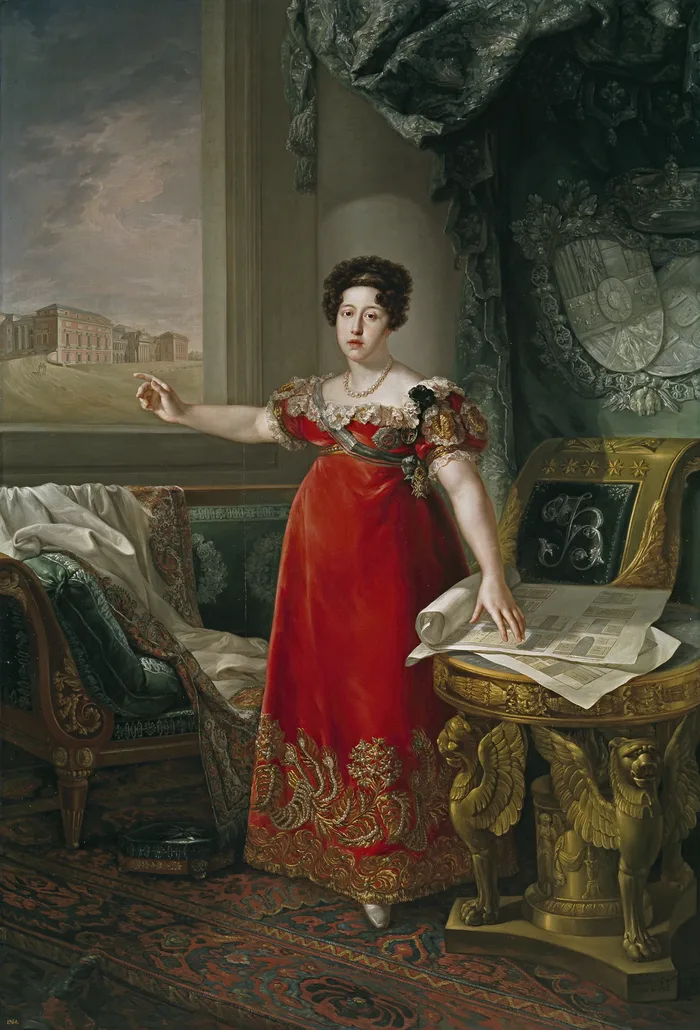
Diez años después de la apertura, Bernardo López Piquer pintó a María Isabel como fundadora del museo. Está sentada junto a unos planos y señala hacia el edificio. Llevaba once años muerta.
El retrato dio a la fundación una cara cómoda. En realidad la autoridad era de Fernando VII. El edificio era de Villanueva, y no se había pensado para cuadros. La colección había tardado trescientos años en formarse. María Isabel hizo mucho, y el Prado no lo creó una sola persona.
El museo creció y empezó a recibir cosas que los reyes nunca habían tenido. El Estado cerraba conventos y disolvía comunidades religiosas; los edificios cambiaban de uso y los retablos se desmontaban. Las piezas viajaron a Madrid.
Sexta parte. Cómo el Prado inventó la pintura española
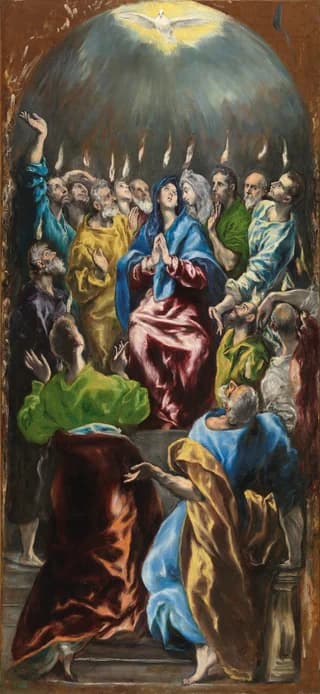
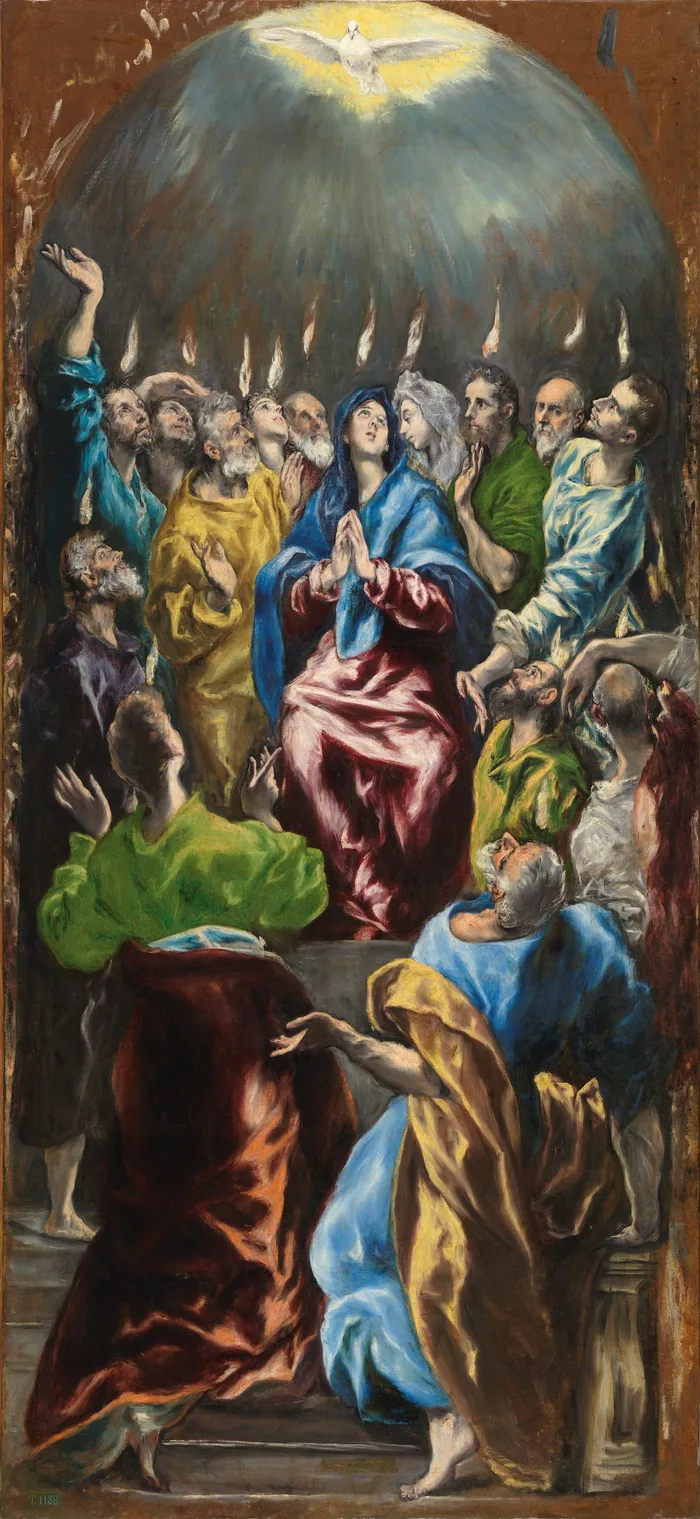
Pentecostés del Greco no se pintó para estar sola.
La Virgen se sienta casi en el centro mientras apóstoles y otras figuras miran hacia arriba, y sobre ellos bajan pequeñas lenguas de fuego. Las manos se levantan hacia la luz. Los cuerpos alargados llevan la mirada hacia el borde superior del lienzo.
El cuadro formaba parte de un retablo del Colegio de Doña María de Aragón, en Madrid. A su alrededor había otros lienzos del mismo encargo, la estructura del retablo fijaba su altura y su orden, y durante el oficio los fieles lo veían todo a la vez, desde abajo, a la luz de las velas.
En el siglo XIX, las obras de los conventos cerrados se reunieron en el Museo de la Trinidad. Cuando la Trinidad se incorporó al Prado en 1872, cinco lienzos del encargo del Greco pasaron con ella.
En un museo se pueden conservar y estudiar. El retablo está desmontado, el oficio ha terminado, las imágenes vecinas cuelgan en otro orden, y aquello para lo que se pintó todo funciona en el vacío.
Y entonces pasó algo raro.
En vida, al Greco se le tuvo por un maestro provinciano y difícil, y un siglo después de su muerte estaba casi olvidado. En el Prado sus cuadros se juntaron por primera vez en cantidad: no uno en una iglesia y otro en una capilla, sino una docena en un mismo muro. Se le vio entero. Cuando Europa empezó a redescubrirlo hacia 1900, se venía aquí a hacerlo.
Con la escuela española entera pasó lo mismo. Al colgar los cuadros por autor y por siglo, el Prado hizo posible recorrer la historia de la pintura española en un día: una historia que antes no existía en la cabeza de nadie, porque no había dónde verla. La mayoría de las obras entraron en ella después de perder un altar, un convento, un palacio o un cuarto privado.
El Prado no solo conservó la pintura española. En buena medida la inventó: como secuencia, como escuela, como algo por delante de lo cual se puede pasar.
Esa operación tuvo un precio, y un retrato lo enseña mejor que ningún otro. El lienzo está intacto, no le ocurrió nada, y aun así el hombre que hay en él acabó siendo otro.
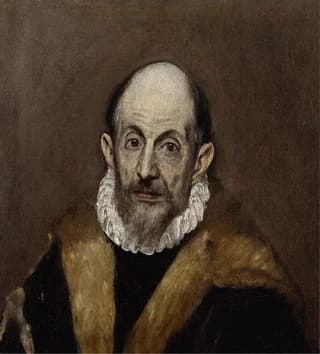
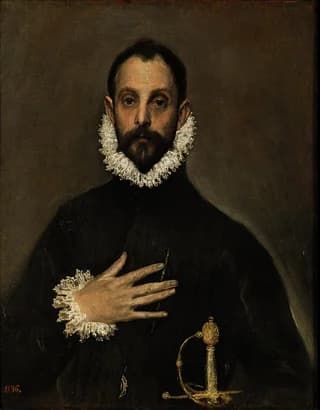
En El caballero de la mano en el pecho, una cara pálida se levanta sobre la ropa negra. A un lado asoma la empuñadura de una espada. La mano derecha está apoyada en el pecho, con los dedos en una posición extraña, el corazón y el anular juntos. Nadie sabe cómo se llamaba.
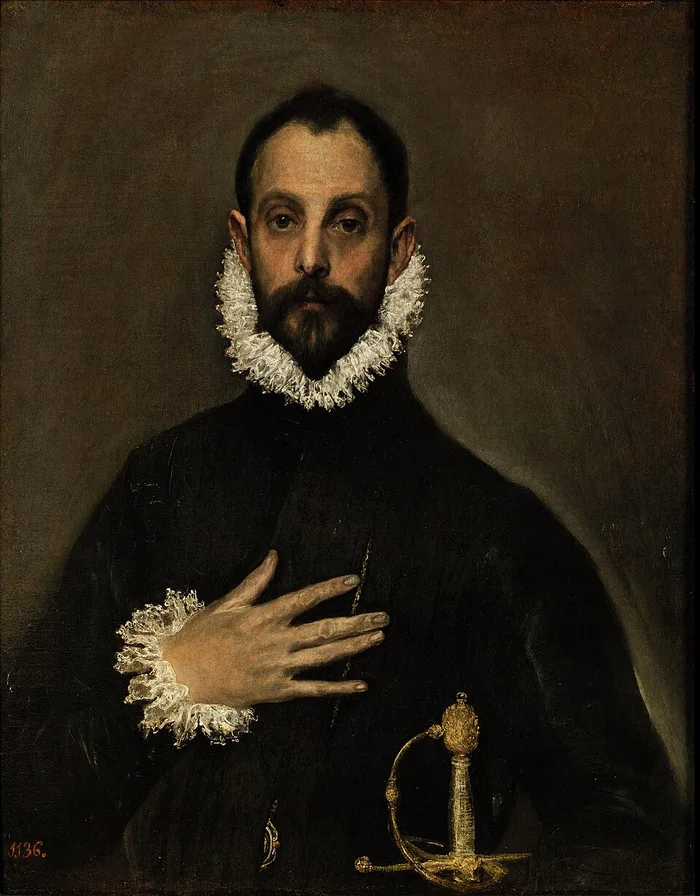
En el siglo XIX se empezó a ver en él la honra española, la severidad española, la espiritualidad española. Pasó a las portadas y a las aulas como rostro de una nación. Todo eso describe a quienes lo miraban, y nada describe a quien está pintado.
En una sala, el fragmento de un retablo parece tan acabado como un retrato hecho para un despacho particular. La colocación iguala a todos, y en un minuto uno ha dejado de preguntarse de dónde vino cada cosa.
Para el siglo XX todo parecía asentado para siempre. Entonces empezaron a caer proyectiles sobre Madrid.
Séptima parte. Cuando los cuadros se quedaron sin museo
El 5 de noviembre de 1936, la dirección del Prado recibió la orden de evacuar la colección.
Era la Guerra Civil y la ciudad estaba siendo bombardeada. El personal del museo y los trabajadores de la Junta del Tesoro Artístico descolgaron las obras, anotaron su estado, construyeron cajas y las cargaron en camiones. Al final fueron veintidós expediciones, setenta y un camiones y mil ochocientas sesenta y ocho cajas.
En el puente sobre el Ebro, en Tortosa, la caravana se detuvo. La caja que llevaba Las Meninas no pasaba bajo el arco. El oficial al mando propuso lo evidente: sacar el lienzo del bastidor y enrollarlo.
El restaurador Manuel Arpe y Retamino le contestó que eso lo haría por encima de su cadáver. Arpe sabía que la pintura de trescientos años se desprende cuando el lienzo se dobla. Ganó la discusión, y la caravana dio un rodeo hasta otro paso.
Después vinieron Valencia, luego Barcelona, luego el norte de Cataluña, y en febrero de 1939 las cajas llegaron a Ginebra. Dentro viajaban cuadros que ya habían sobrevivido a una ejecución en Londres, a una habitación desmontada en Ferrara, al incendio del Alcázar, a un tribunal de la Inquisición y al derribo de la casa de Goya. Ahora tenían que sobrevivir al museo que debía protegerlos.
Volvieron en septiembre de 1939. En Europa empezaba justo esas semanas otra guerra, y las cajas se colaron entre las dos.
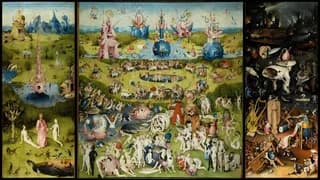
La sucesión entera de casas prestadas se ve mejor que en ningún otro sitio en El jardín de las delicias.
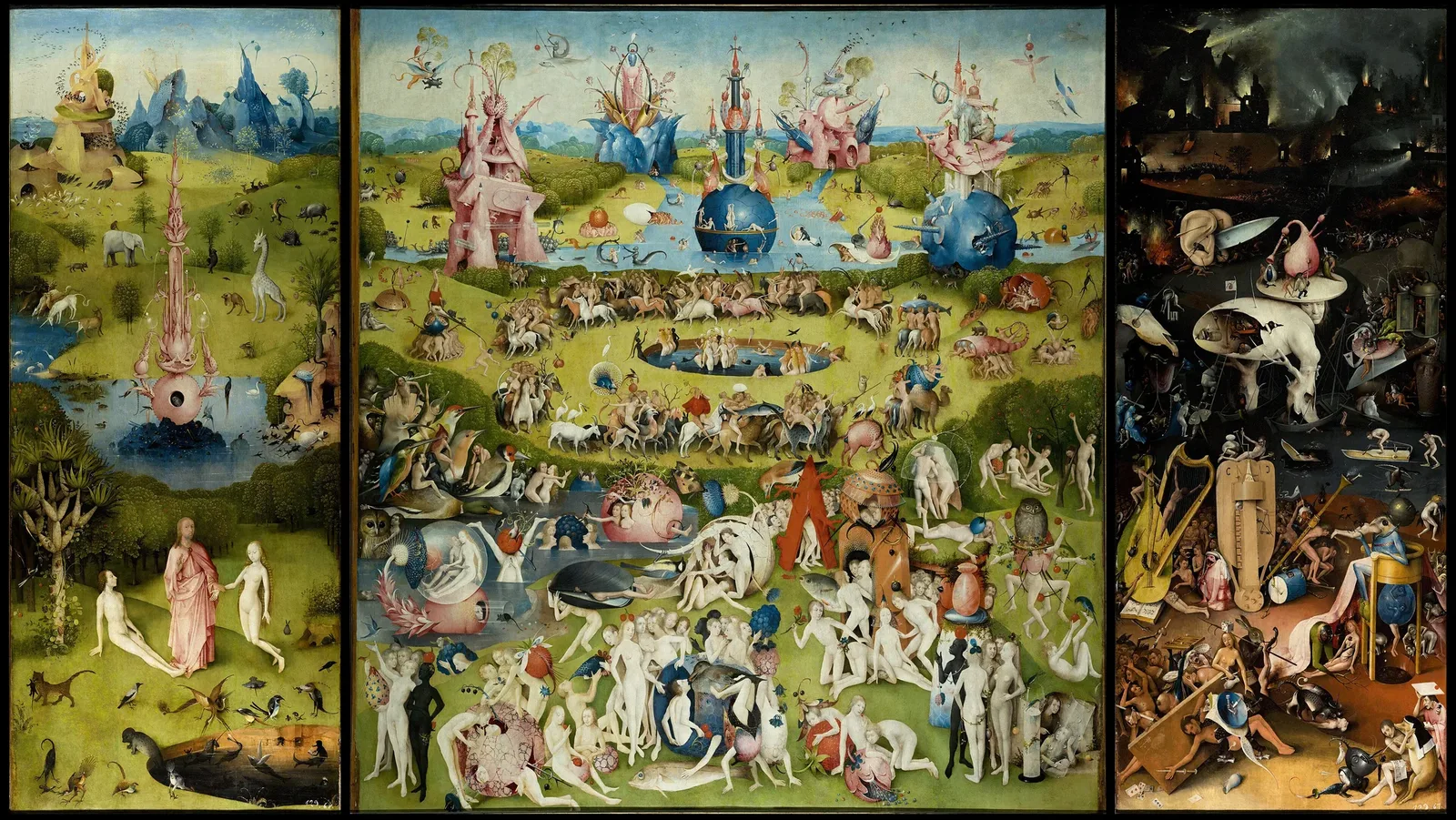
Hacia 1517 el tríptico estaba en el palacio de la casa de Nassau, en Bruselas, donde lo vio y lo describió el viajero italiano Antonio de Beatis. En 1568 se confiscaron los bienes de Guillermo de Orange. En 1591 Felipe II compró la obra y la mandó a El Escorial, donde la tuvo cerca. Las tablas llegaron al Prado en 1933 y siguen aquí, aunque pertenecen a otro organismo, Patrimonio Nacional.
Su recorrido está mejor documentado que su intención. Quién lo encargó se discute. Qué significa entero no lo sabe nadie.
Cierre las tablas: por fuera hay un mundo pálido y plano dentro de una esfera transparente. Ábralas: a la izquierda un paraíso extraño, en el centro una multitud de cuerpos, frutas, pájaros y construcciones frágiles, y a la derecha oscuridad, instrumentos musicales del tamaño de un hombre y una maquinaria de castigo muy laboriosa.
Las mismas formas vuelven de tabla en tabla invertidas. Lo que en el centro se disfruta, a la derecha sirve de instrumento. Cuanto más se mira, menos sobrevive de cualquier lectura ordenada.
A sus contemporáneos les olió a herejía. En 1605, fray José de Sigüenza, bibliotecario de El Escorial, escribió la frase que sigue siendo lo mejor que se ha dicho de él: los demás pintan al hombre por de fuera, y este ha tenido el atrevimiento de pintarlo por de dentro.
El tríptico ha pasado por un palacio, una confiscación, un monasterio y un museo. Ninguno consiguió explicarlo.
Cada uno de estos cuadros conservó una marca de lo que le pasó. El Rafael, un apodo que le puso un rey español. Las Meninas, los bordes recortados y una mejilla repintada por otra mano setenta y cuatro años después de morir Velázquez. Saturno, lienzo donde antes tenía muro. La maja desnuda, casi un siglo tras una puerta cerrada. El perro, un vacío donde estaba el resto de la habitación. Las cartelas de las salas no cuentan nada de esto.
Pero ahora usted ya sabe dónde mirar.