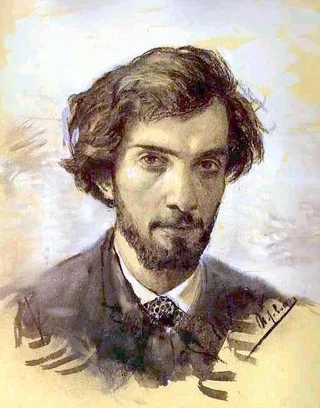
Isaac Levitan
1860–1900 · Empire russe · Réalisme
L'histoire
En 1892, le peintre Isaac Levitan reçut l'ordre de quitter Moscou. Il était déjà célèbre, son œuvre collectionnée par Pavel Tretiakov, le premier mécène de la ville, mais il était juif, et un décret expulsant les juifs de Moscou ne faisait aucune exception pour un artiste renommé. Il partit pour la campagne et écrivit à un ami qu'il se sentait comme le Juif errant de la vieille légende.
Cet ami était l'écrivain Anton Tchekhov, qui le connaissait depuis leurs années d'études. Ils furent proches pendant des années, jusqu'à ce que Tchekhov publie une nouvelle, La Cigale, sur la liaison d'une femme avec un peintre, et que Levitan y reconnaisse sa propre vie et rompe tout contact. Il leur fallut trois ans pour se réconcilier.
Levitan est le grand peintre du paysage d'atmosphère russe, où un coude de rivière désert ou un ciel bas et gris peut porter tout un état d'âme. L'une de ses toiles les plus connues montre la Vladimirka, la large route de terre le long de laquelle on menait les bagnards vers la Sibérie, peinte comme une piste vide et nue sous un ciel lourd. Il mourut en 1900, pas encore quarantenaire, laissant des dizaines d'études inachevées dans son atelier.
Œuvres
13 œuvres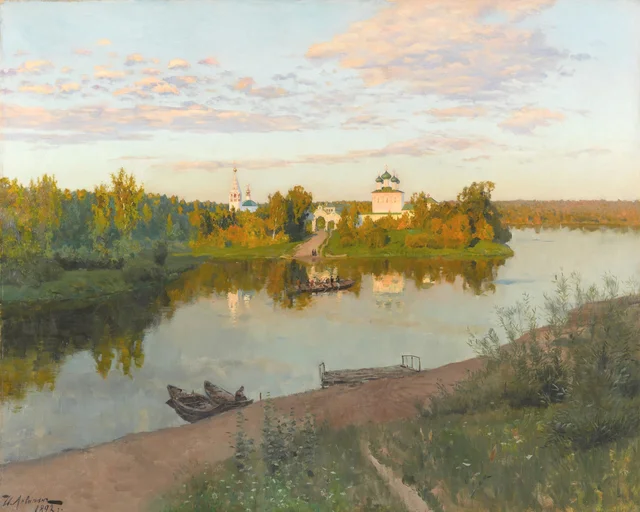 Les Cloches du soirIsaac Levitan, 1892
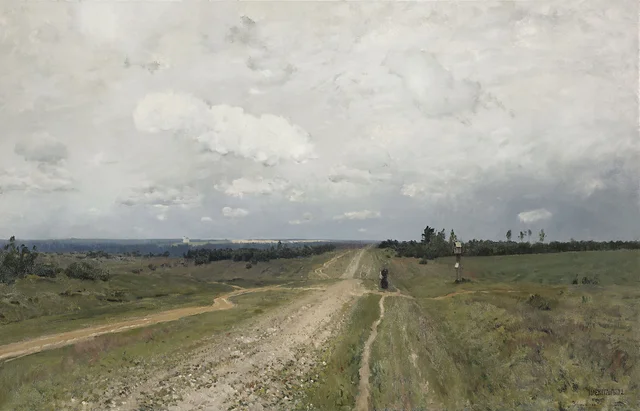 La Route de VladimirIsaac Levitan, 1892
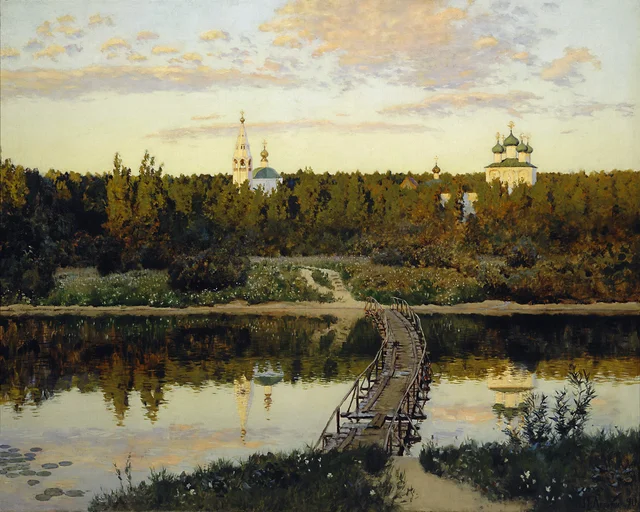 Un paisible monastèreIsaac Levitan, 1890
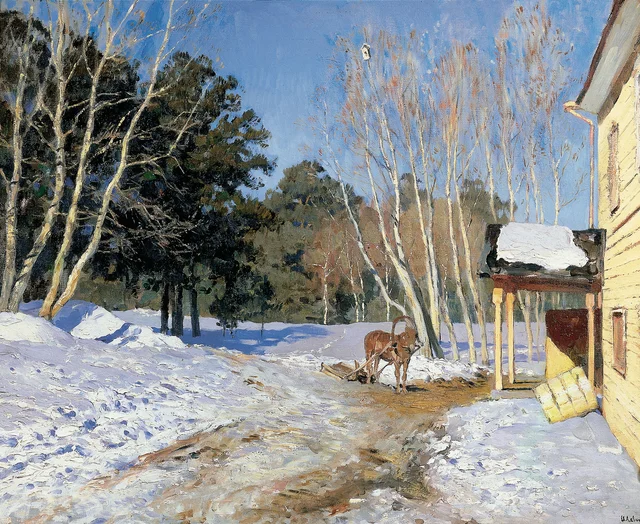 MarsIsaac Levitan, 1895
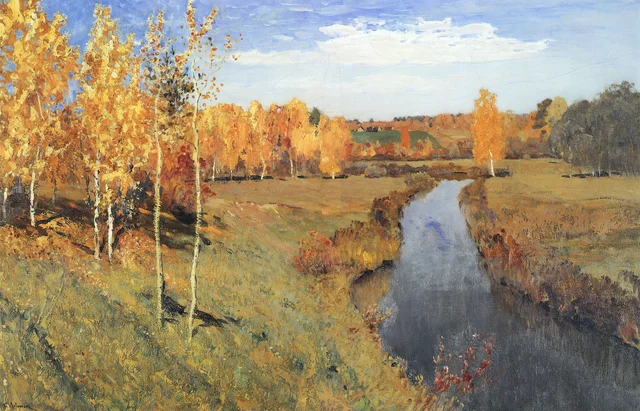 L'Automne doréIsaac Levitan, 1895
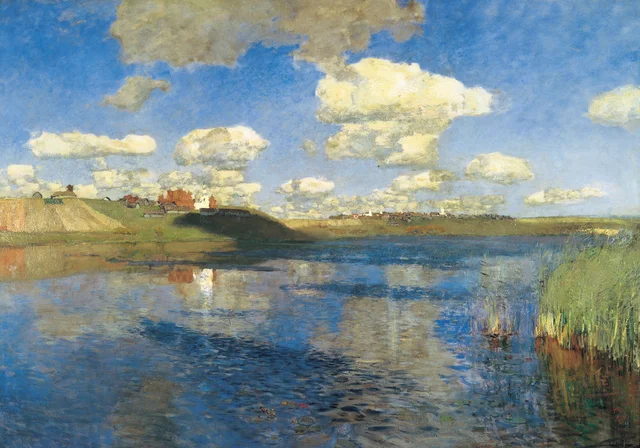 Le Lac. RussieIsaac Levitan, 1899
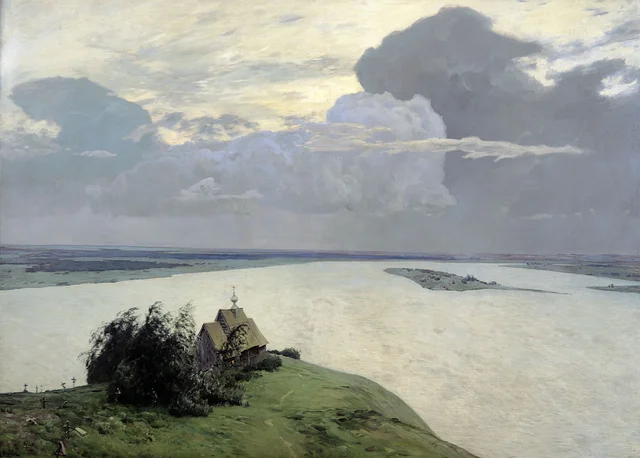 Au-dessus du repos éternelIsaac Levitan, 1894
 Vent frais. La VolgaIsaac Levitan, 1895
 Sokolniki. AutomneIsaac Levitan, 1879
 Le Printemps. Les Grandes EauxIsaac Levitan, 1897
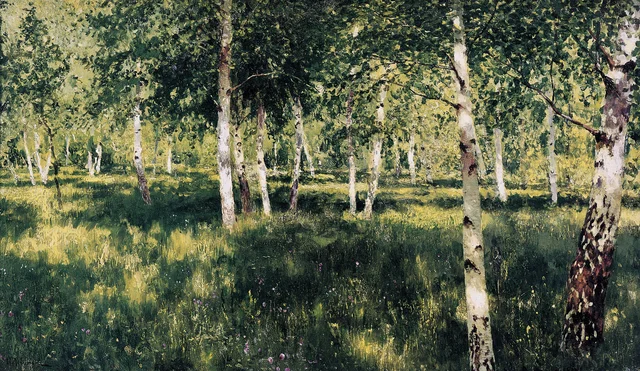 Bosquet de bouleauxIsaac Levitan, 1889
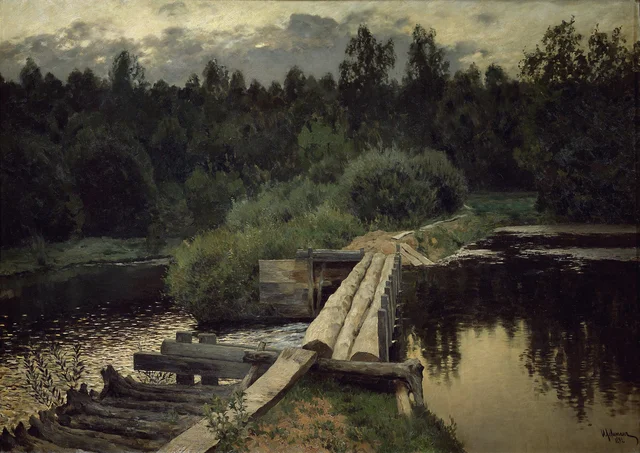 Au bord du gouffre d'eauIsaac Levitan, 1892
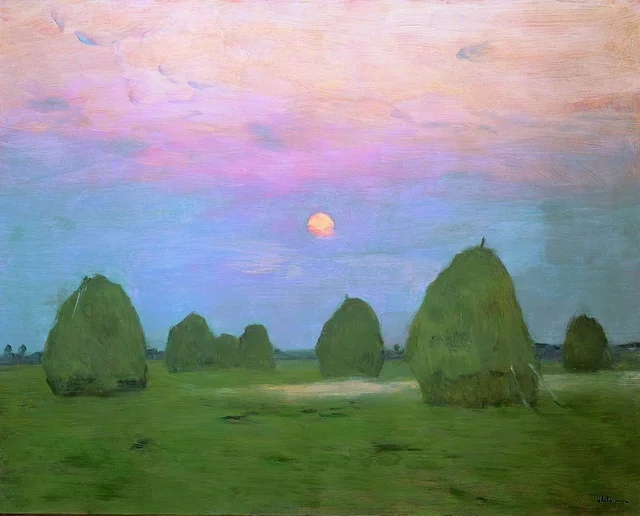 Crépuscule. Meules de foinIsaac Levitan, 1899