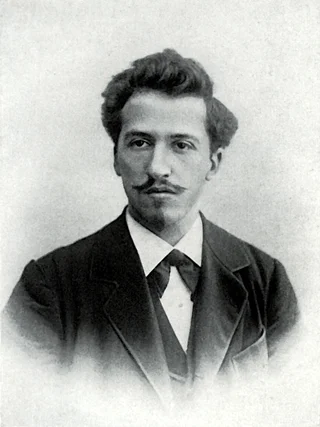
Piet Mondrian
1872–1944 · Königreich der Niederlande · De Stijl, Postimpressionismus
Die Geschichte
1912 verließ Mondrian Holland in Richtung Paris, damals die Hauptstadt der neuen Kunst, und geriet unmittelbar in den Kubismus. Picasso und Braque zerlegten Gegenstände in flache Ebenen, und Mondrian übernahm ihr Raster gerader Linien, trieb es aber weiter, als beide je gehen wollten. Er flachte seine Bäume und Kirchenfassaden immer weiter ab, bis das Motiv völlig verschwand und nur noch Horizontale, Vertikale und Farbflächen übrig blieben.
Anfang der 1920er Jahre hatte er seine Palette auf drei Farben reduziert, Rot, Gelb und Blau, dazu Schwarz, Weiß und Grau, und auf zwei Richtungen, senkrecht und waagerecht. Er nannte das Neoplastizismus und baute mit der niederländischen Gruppe De Stijl eine ganze Philosophie darum herum, überzeugt, dass diese nackten Elemente eine universelle Harmonie tragen könnten, die Bilder wirklicher Dinge nicht leisten konnten. Zwanzig Jahre lang malte er kaum etwas anderes, feilte am Gewicht einer schwarzen Linie oder der Größe eines roten Quadrats auf weißem Grund.
Dann trieb ihn der Krieg fort. Er verbrachte zwei Jahre in London und schiffte sich 1940, als die Bombardierung näherrückte, im Alter von 67 Jahren nach New York ein. Die Stadt löste seine Strenge auf: Er verfiel dem Boogie-Woogie-Jazz und dem Ampelrhythmus Manhattans und ersetzte sein schweres schwarzes Raster durch laufende Ketten kleiner farbiger Quadrate. An diesem Spätstil, einem Bild mit dem Titel Victory Boogie Woogie, arbeitete er noch, als er Anfang 1944 an einer Lungenentzündung starb.
Weitere Artikel
Werke
112 Werke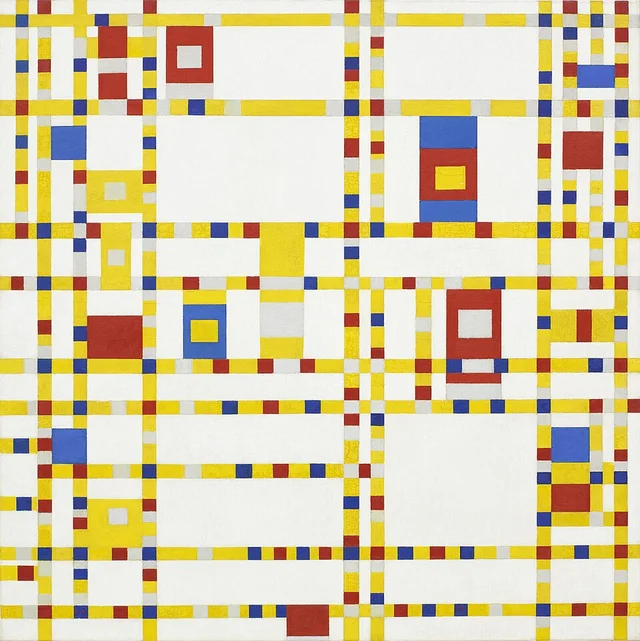 Broadway Boogie-WoogiePiet Mondrian, 1942
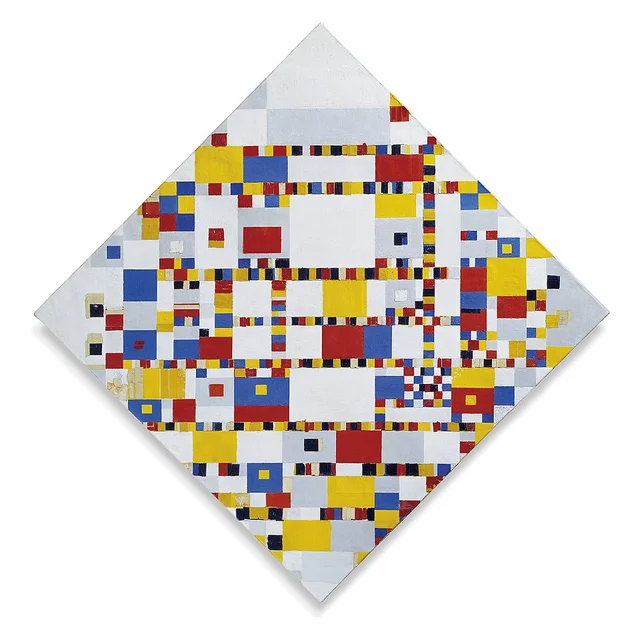 Victory Boogie WoogiePiet Mondrian, 1942
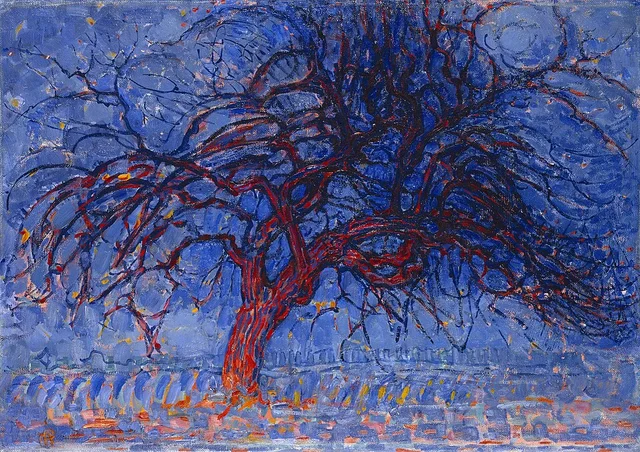 Der rote BaumPiet Mondrian, 1909
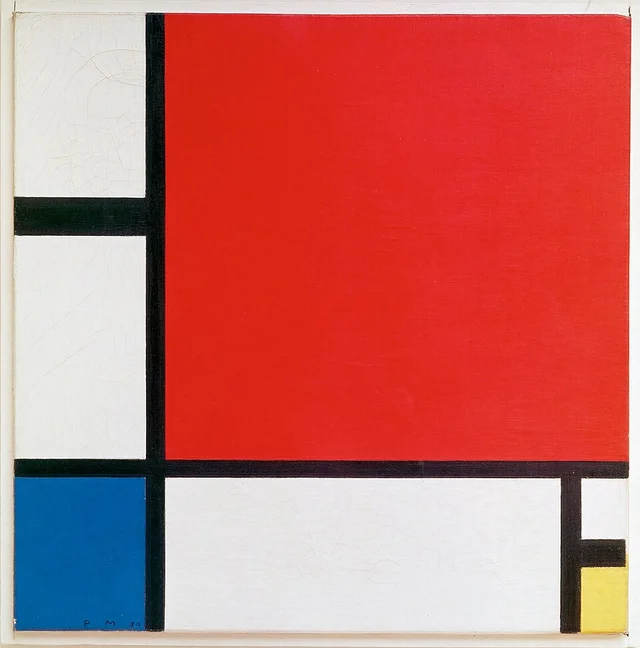 Komposition II in Rot, Blau und GelbPiet Mondrian, 1930
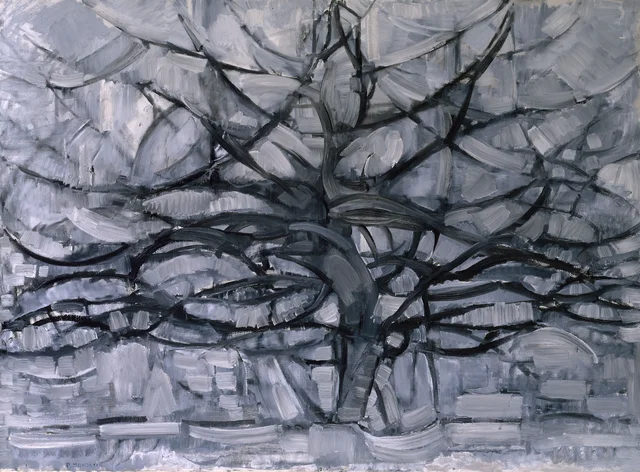 Der graue BaumPiet Mondrian, 1911
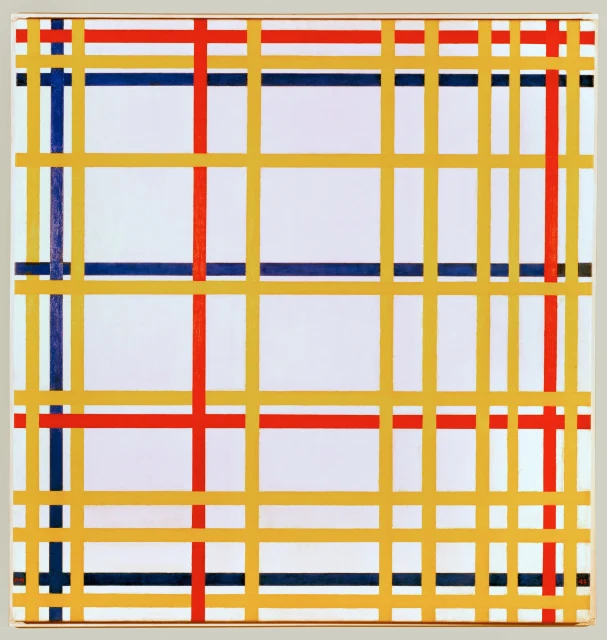 New York CityPiet Mondrian, 1942
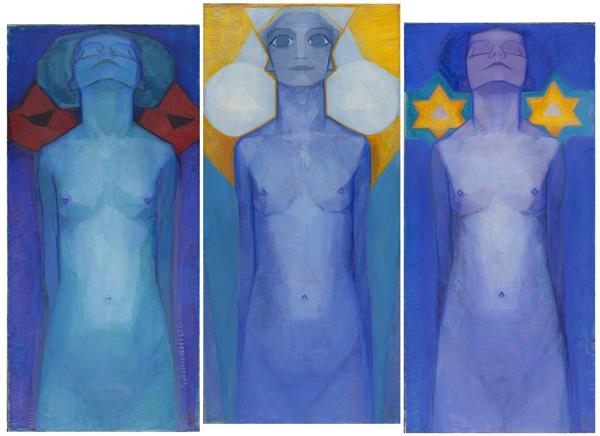 EvolutionPiet Mondrian, 1911
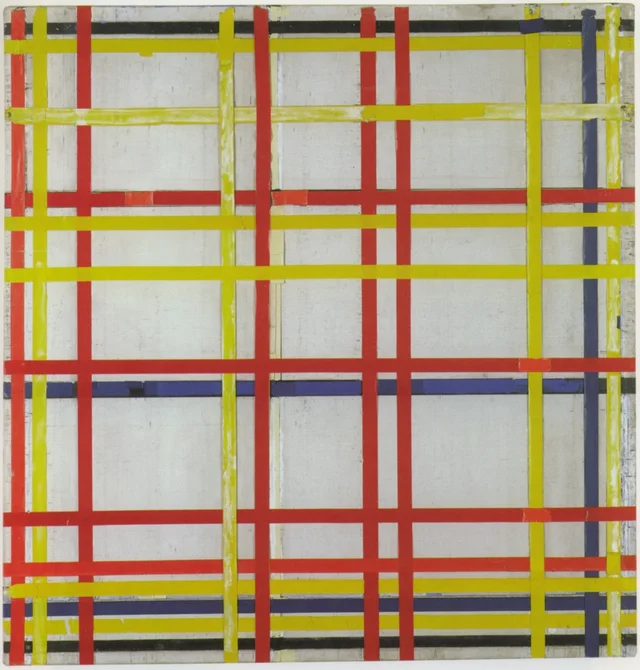 New York City IPiet Mondrian, 1941
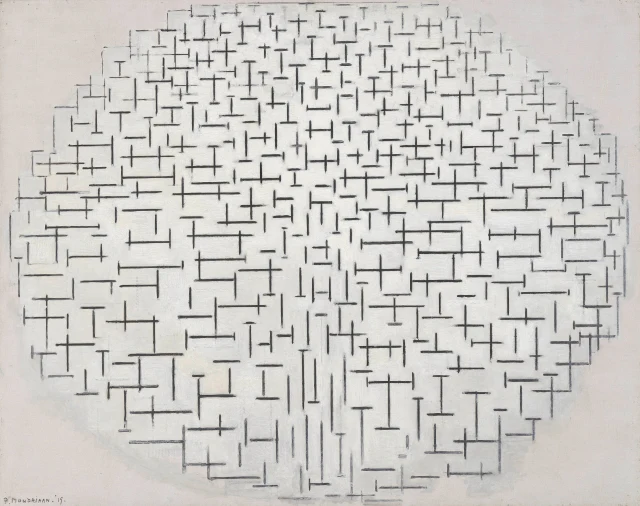 Komposition 10 in Schwarz und WeißPiet Mondrian, 1915
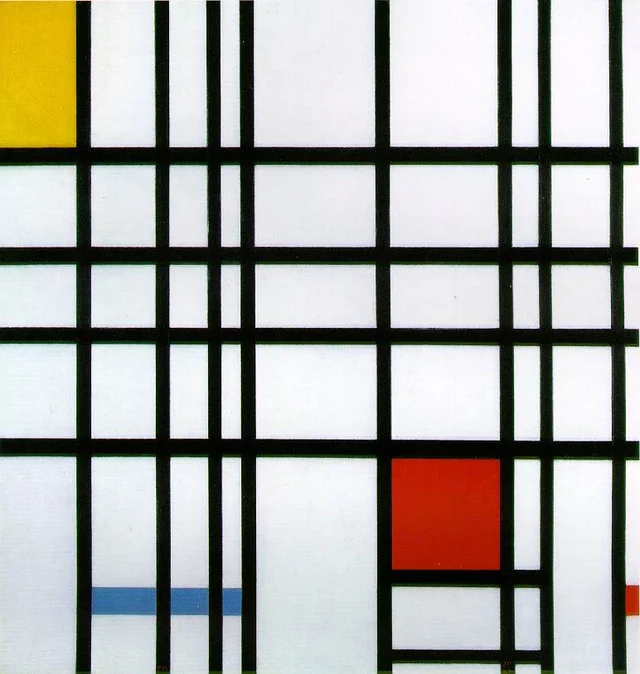 Komposition mit Rot, Gelb und BlauPiet Mondrian, 1937
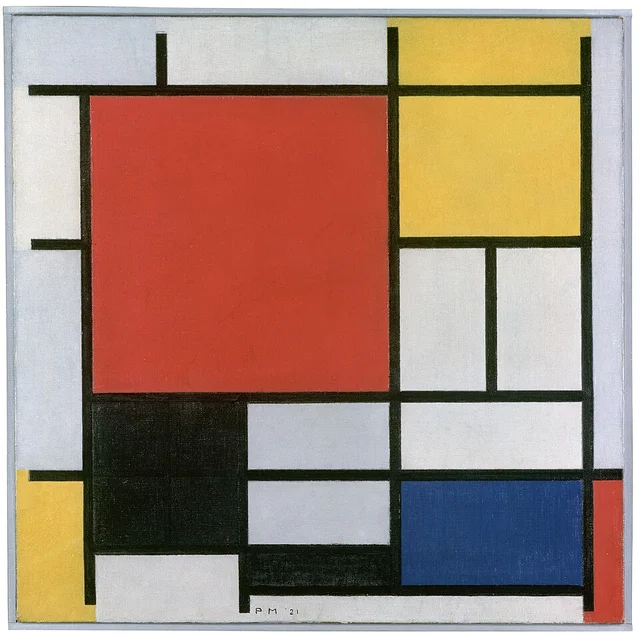 Komposition mit großer roter Fläche, Gelb, Schwarz, Grau und BlauPiet Mondrian, 1921
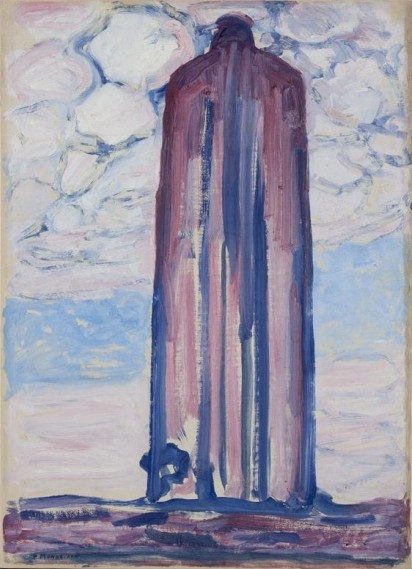 Leuchtturm in WestkapellePiet Mondrian, 1908
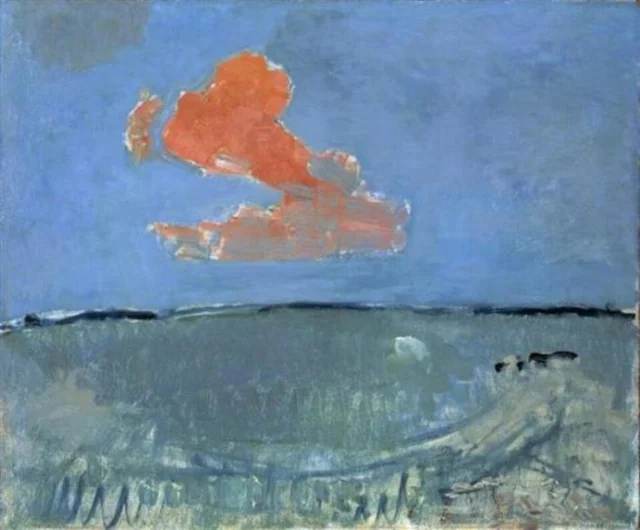 Die rote WolkePiet Mondrian, 1907
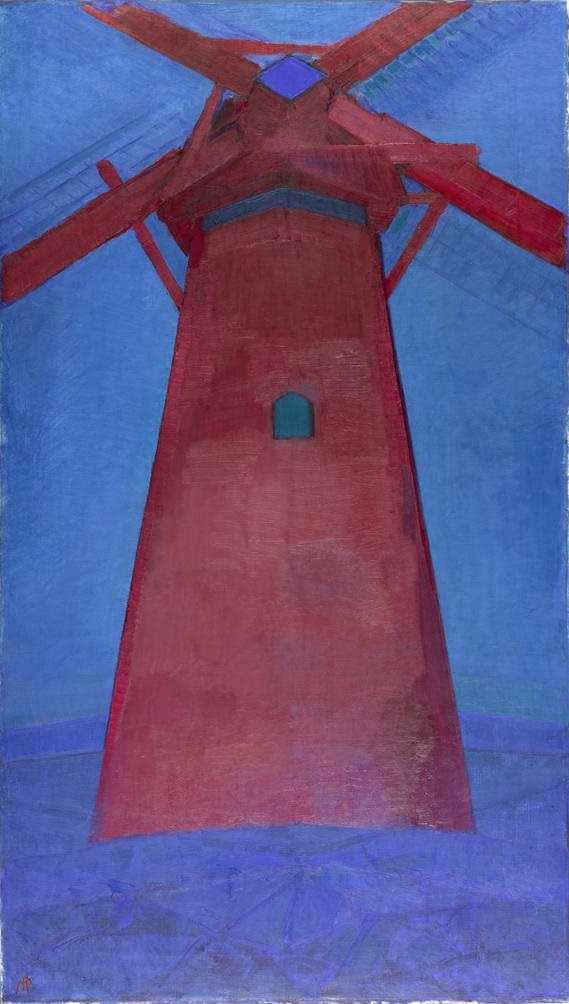 Die rote MühlePiet Mondrian, 1910
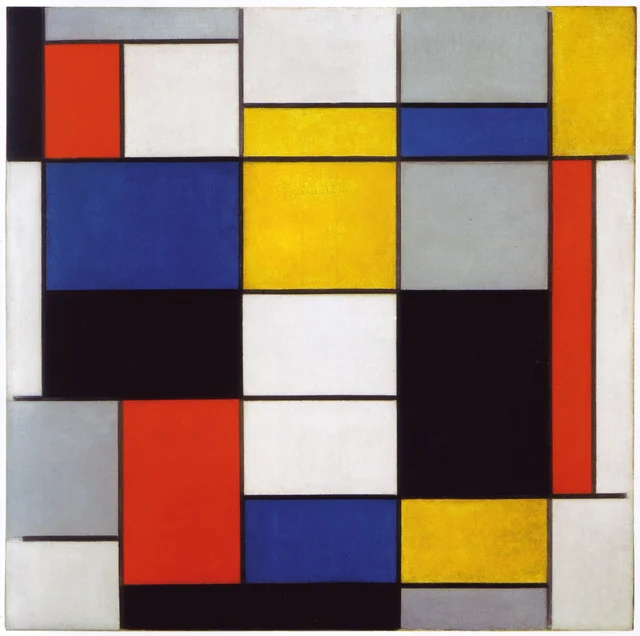 Komposition A: Komposition mit Schwarz, Rot, Grau, Gelb und BlauPiet Mondrian, 1920
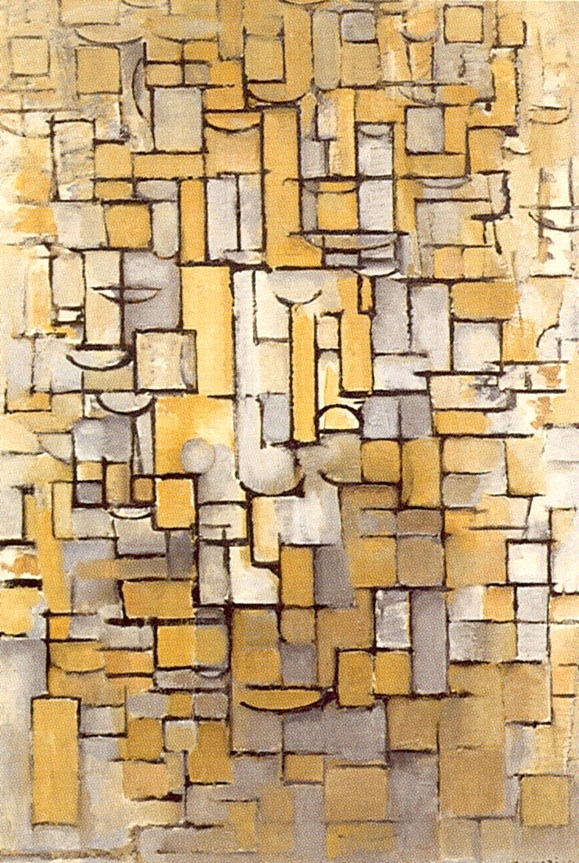 Komposition XIVPiet Mondrian, 1913
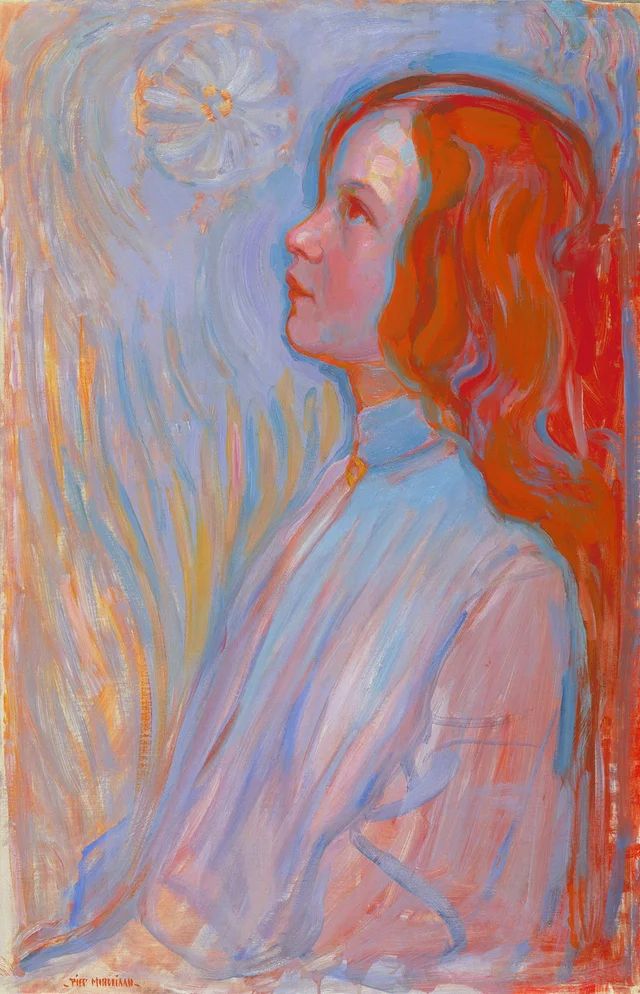 AndachtPiet Mondrian, 1908
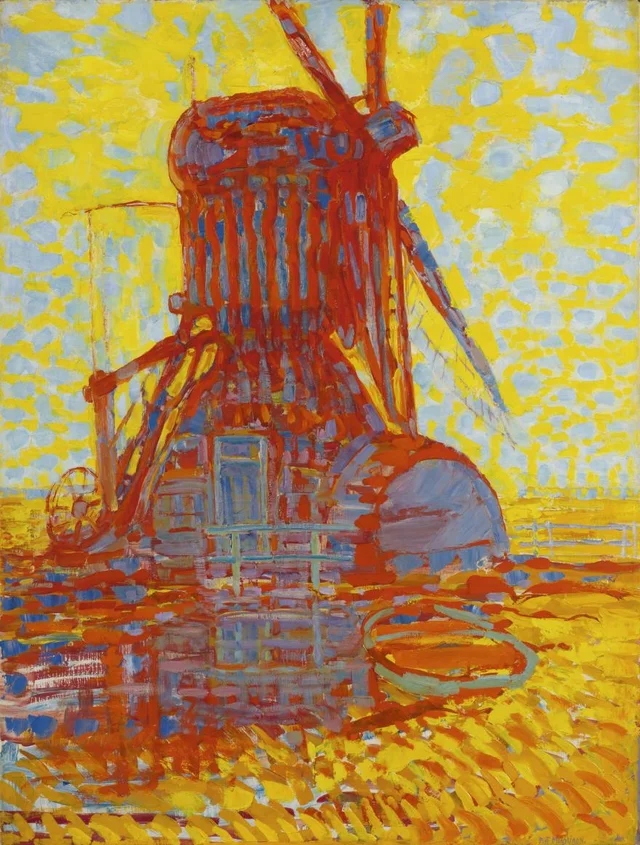 Mühle im SonnenlichtPiet Mondrian, 1908
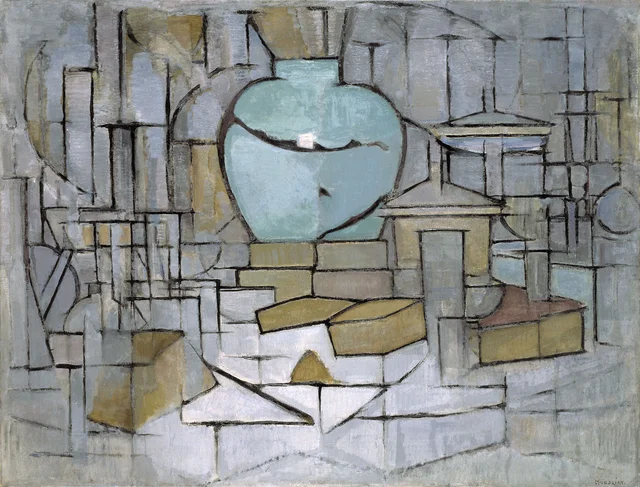 Stillleben mit Ingwertopf 2Piet Mondrian, 1912
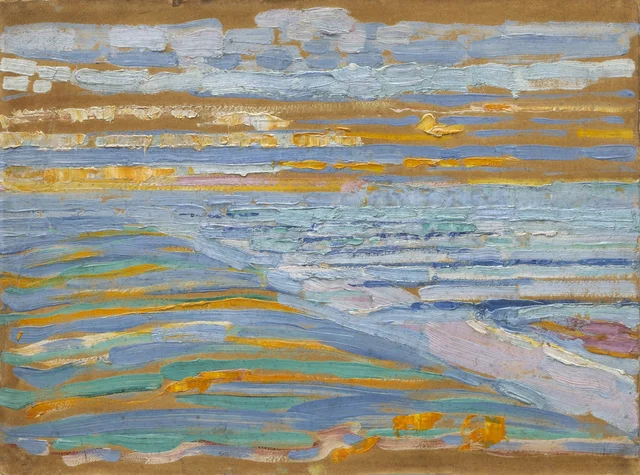 Blick von den Dünen mit Strand und Molen, DomburgPiet Mondrian, 1909
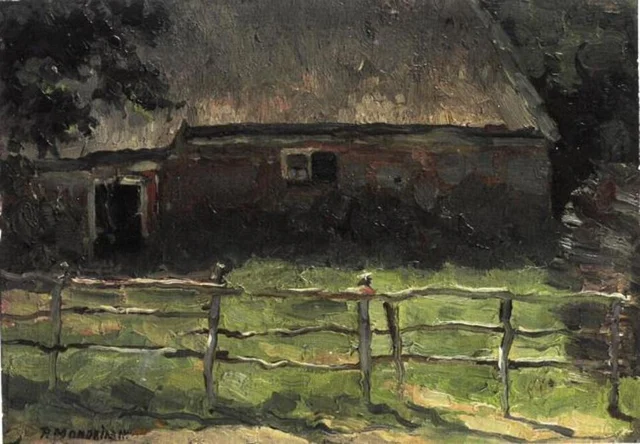 Bauernhof hinter einem ZaunPiet Mondrian, 1904
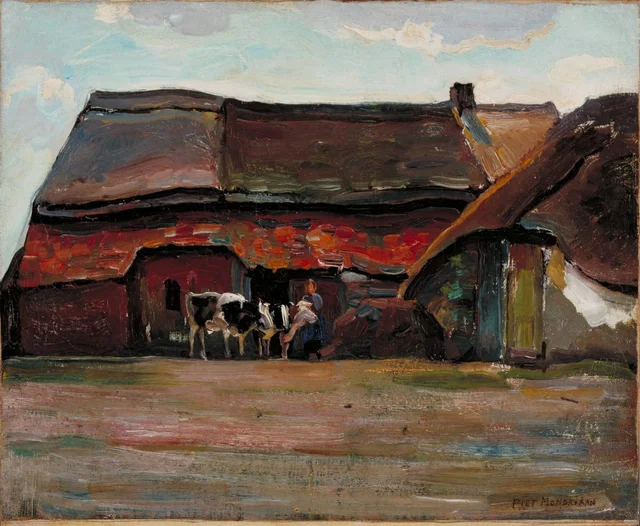 Brabanter BauernhofPiet Mondrian, 1904
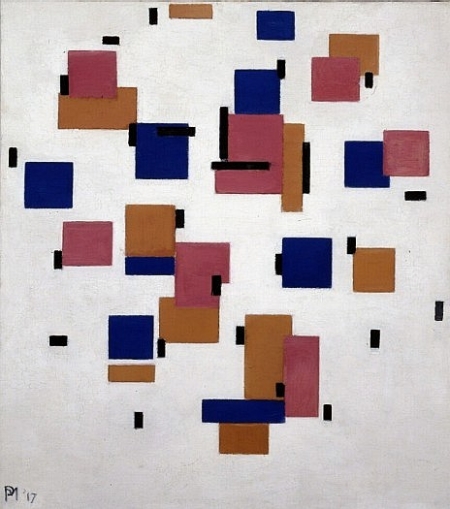 Komposition in Farbe BPiet Mondrian, 1917
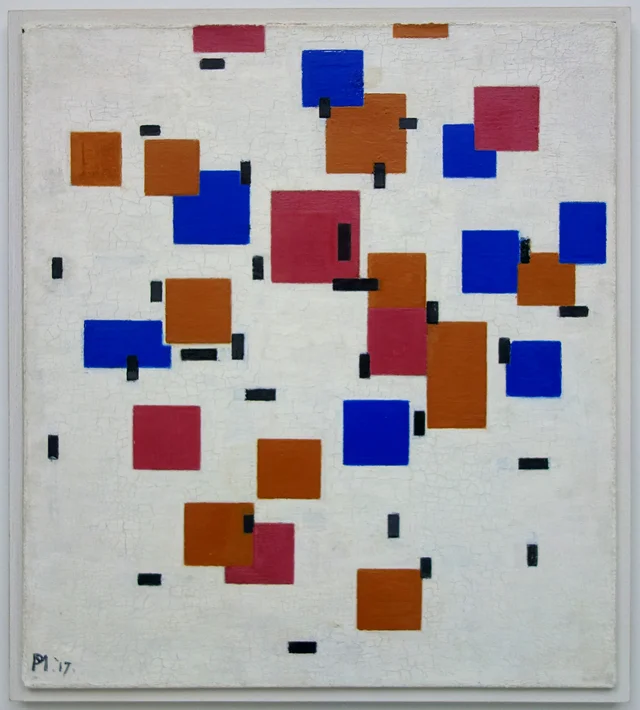 Komposition in Farbe APiet Mondrian, 1917
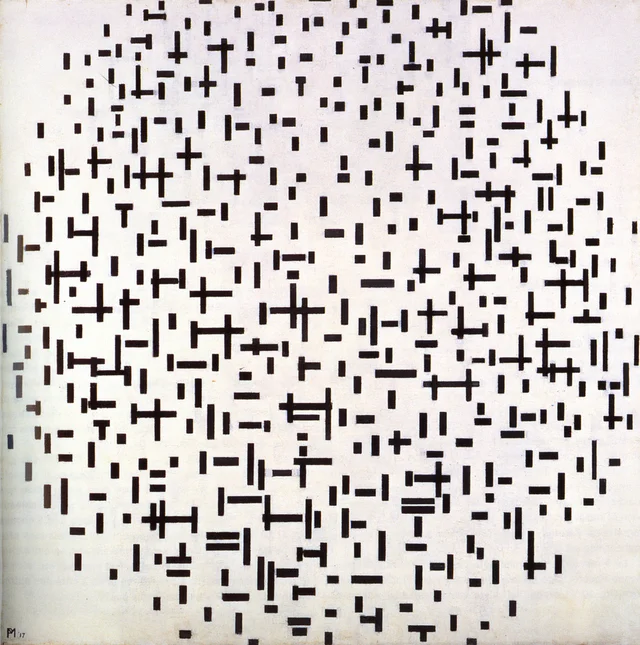 Komposition in Linien, zweiter ZustandPiet Mondrian, 1916