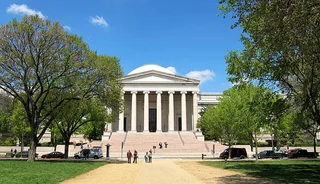
In December 1936 Andrew Mellon, a Pittsburgh banker who had been US Secretary of the Treasury from 1921 to 1932, wrote to President Franklin Roosevelt offering to give the nation his collection of paintings and sculpture, to put up a building for it in Washington and to leave money for the salaries of its staff. His condition was that the building should be called the National Art Gallery and should not bear his name, and for everything that would be shown in it he laid down rules meant to safeguard “the high standard of quality”. Congress accepted the gift on 24 March 1937, Mellon's 82nd birthday.
According to Dumbarton Oaks, Harvard University's research centre in Washington, Mellon kept his name off the gallery because he wanted to draw other donors to it. After him, other private owners gave, bequeathed and sold pictures to the gallery on their own terms, from the founder of a chain of dime stores to a London charity school.
We begin with a portrait of a woman that Mellon bought in 1926 and end with a picture from the Widener gift that the gallery stopped regarding as a Vermeer in 2022.
A Treasury Secretary buys old masters, some of them from the Hermitage (1926–1931)
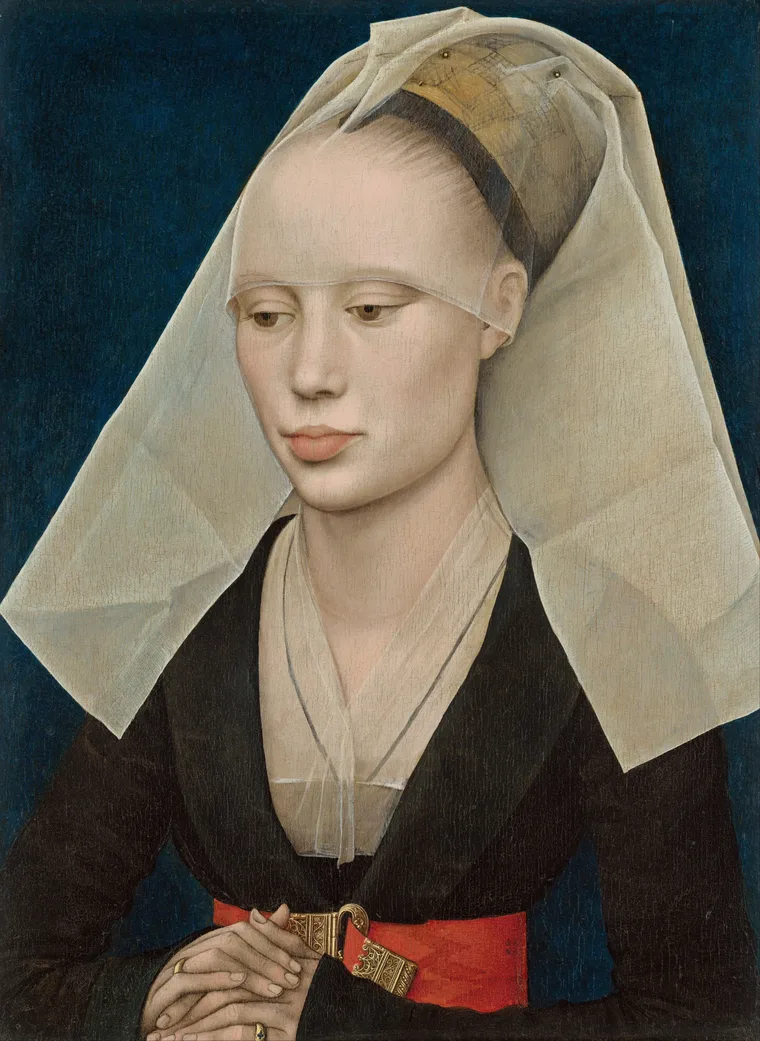
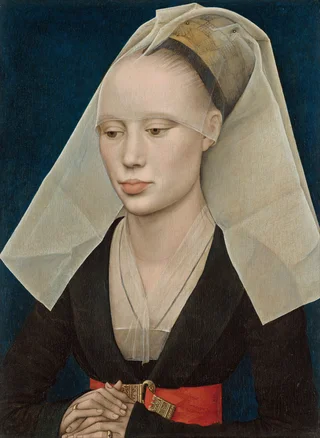
1. Portrait of a Lady — Rogier van der Weyden, c. 1460
The edge of this young woman's sheer starched veil runs straight across her forehead, just above the eyebrows, and her skin and brows show through the fine fabric. The veil is pinned to a low golden cap set far back on her head, and it spreads out on either side in two stiff, angular wings that reach down to her shoulders. Her eyes are lowered and look down, past us, and her fingers are interlaced at the very edge of the panel, so that the frame cuts off the lower ones. The background is dark blue, the dress black, and the only bright colour in the portrait is the red belt under her breast with its openwork gold buckle.
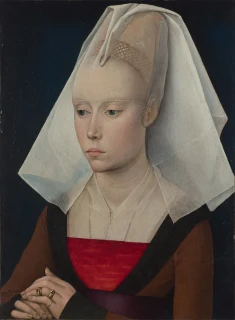
Rogier died in 1464, and this is one of his last portraits. The lady's name has not survived. The National Gallery in London has a version of the same composition painted in Rogier's workshop, and the London museum itself writes that the Washington panel is “securely attributed” to the master and “of markedly higher quality”.
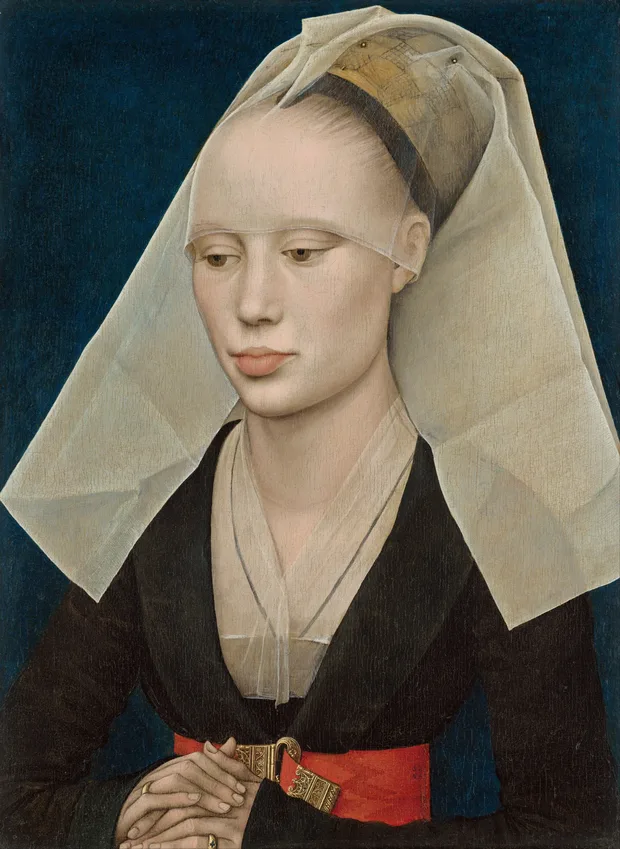
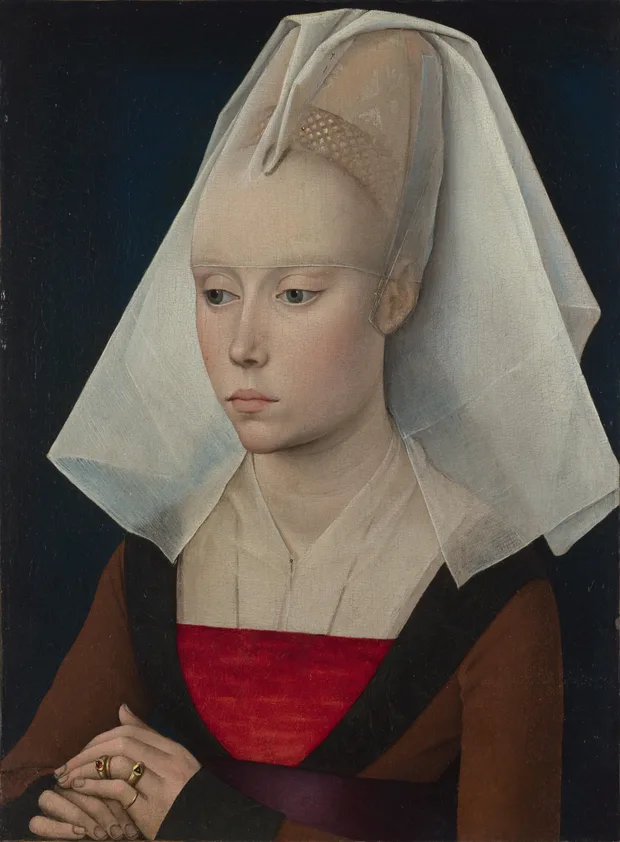
The portrait probably hung in the Gothic House at Wörlitz, which belonged to the princes, and later dukes, of Anhalt-Dessau (the “probably” is in the gallery's own provenance). The last owner the gallery names, Duke Friedrich II of Anhalt, died on 21 April 1918, and the gallery does not say who sold the picture after his death. In 1925 the Anhalt dukes' picture went to a dealer in The Hague, the Bachstitz Gallery, and from there to Joseph Duveen's London and New York firm.
Mellon bought it from Duveen in December 1926. According to the gallery, he had begun collecting in the late 1910s, following the example of his friend the collector Henry Clay Frick, and he bought from two dealers he had known since his Pittsburgh days, Duveen and Charles Carstairs of the New York firm Knoedler. He bought mostly Dutch and English painting, and an early Netherlandish portrait stands apart among his purchases. The idea of a national gallery came to him around 1928, from 1931 he was signing his pictures over to his charitable trust in Pittsburgh, and the trust received this portrait on 30 March 1932.
Mellon died in August 1937, soon after digging had begun for the gallery's foundations, and less than a day later the building's architect, John Russell Pope, died too.
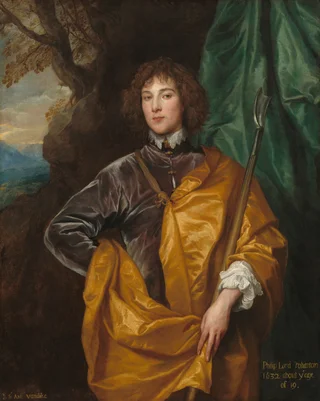
2. Philip, Lord Wharton — Anthony van Dyck, 1632
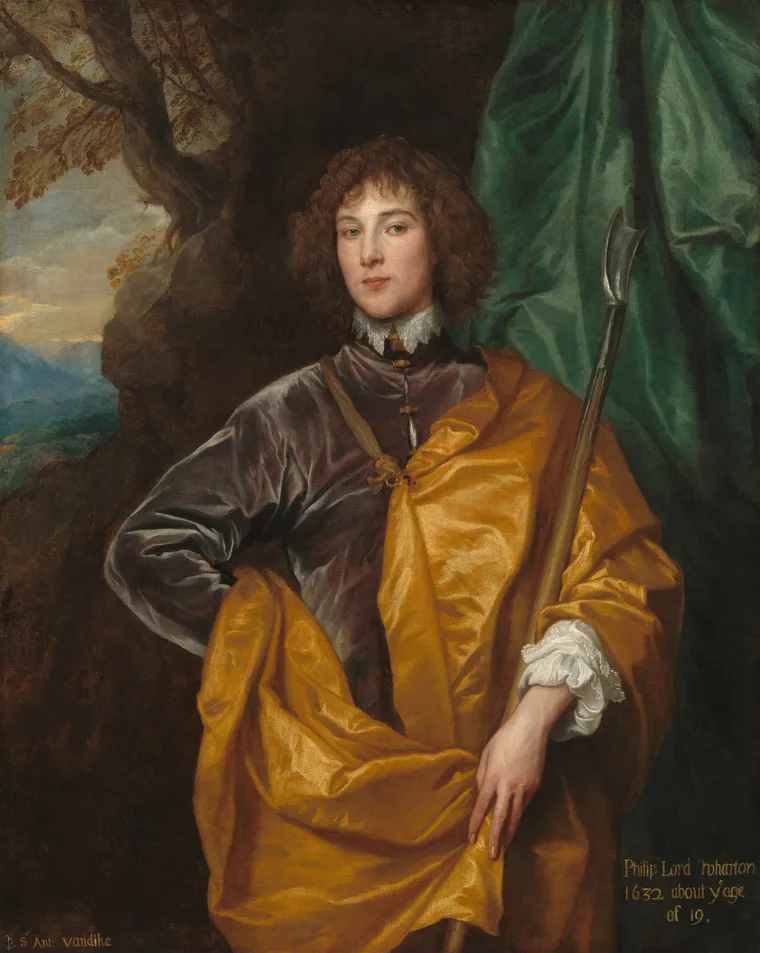
Philip, the fourth Baron Wharton, is 19 in this portrait, and so it is written on the canvas itself. At lower right, in gold letters, stands “Philip Lord Wharton 1632 about ye age of 19”, and in the lower left corner, in smaller letters, “P. Sr Ant: Vandike”, which gives the painter his title of Sir. Van Dyck had come to London in the spring of 1632 as court painter to Charles I and was knighted on 5 July that year. According to the gallery, Wharton was the first Englishman apart from the king to commission a portrait from him after the move.
The young lord stands with his right hand on his hip, the elbow pushed out to the very edge of the canvas. He wears a greyish-lilac silk doublet with a white lace collar, and a huge golden-yellow satin cloak covers the whole lower half of the picture. Against his left forearm leans a long shepherd's crook with a curved iron spade at the end, the kind of spade shepherds used to throw clods of earth at straying sheep, and on the right an emerald-green silk curtain hangs the full height of the canvas. The gallery calls the portrait Arcadian, that is, pastoral, and Alexandre Benois, in his 1910 guide to the Hermitage picture gallery, wrote that it was “characteristic to see such a man in masquerade costume, as a little shepherd, in velvet and silk”. Wharton was the son of a zealous Puritan, and ten years after this portrait, in the Civil War, he took Parliament's side against Charles I and commanded a regiment at the Battle of Edgehill.
The portrait stayed with the Wharton family until 1725, when Sir Robert Walpole, the British prime minister, bought it for Houghton Hall, his estate in Norfolk. In 1779 Walpole's grandson George, 3rd Earl of Orford, sold the Houghton pictures to Catherine II through the Russian envoy in London, Count Aleksei Musin-Pushkin. Mellon bought the portrait from the Hermitage, in March 1930 by the gallery's date, and it was one of his first Hermitage purchases (the historian Robert Williams places it in July–November 1930). How those sales worked is told in the next entry, on van Eyck.
From the same Houghton collection, the Hermitage kept the double portrait of Wharton's daughters, Philadelphia and Elizabeth, which van Dyck painted in the late 1630s.
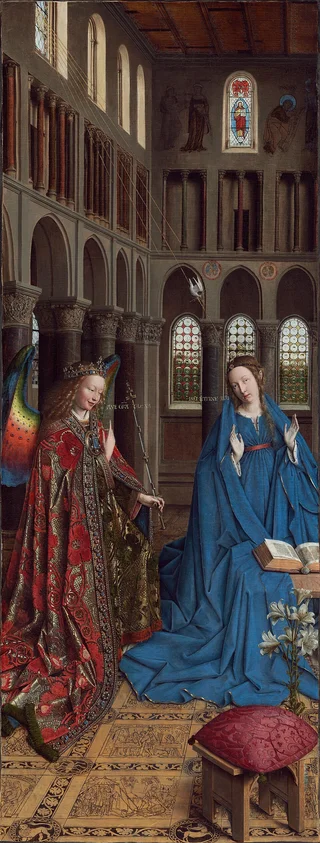
3. Annunciation — Jan van Eyck, c. 1434–1436
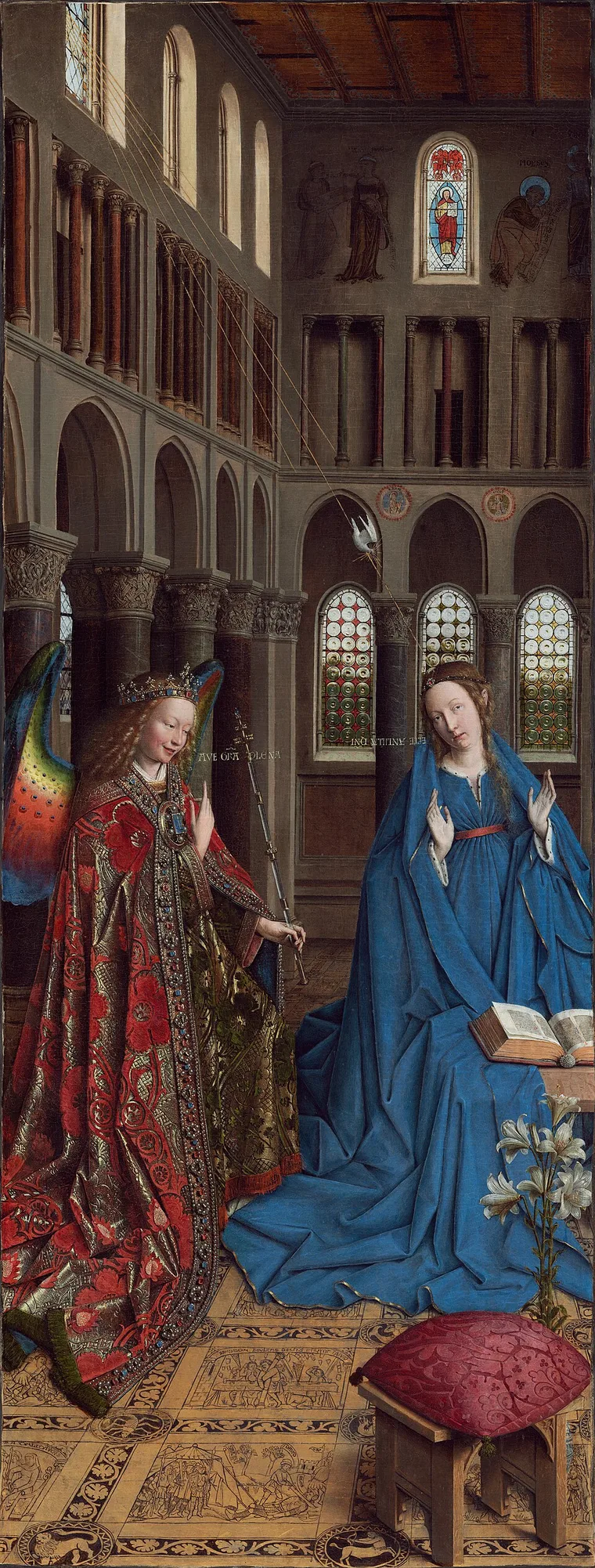
When the order came to hand over Jan van Eyck's Annunciation for sale, the Hermitage staff tried to hold it back, pointing out that the order named the painter as van Dyck and that the museum had no Annunciation by van Dyck. The picture was handed over all the same, and in June 1930 Andrew Mellon bought it.
The Soviet government sold pictures from the Hermitage abroad through the export agency Antikvariat to earn foreign currency for the industrial imports of the first five-year plan. Mellon bought through three firms at once, the Matthiesen Gallery in Berlin, Colnaghi in London and Knoedler in New York, and the pictures were handed over in Berlin because the United States did not then recognise the Soviet Union, as Charles Henschel of Knoedler later explained in court. From March 1930, counting from the date the gallery gives for the first of these purchases, to April 1931, Mellon bought 21 pictures this way and, by the count of the historian Robert Williams, paid about $6.65 million for them.
The deals were kept secret, the newspapers printed rumours of them from about 1932, and Mellon denied them. The purchases were confirmed only in February 1935, by his lawyer Frank Hogan at the hearings in Mellon's tax case in Pittsburgh, and there the Annunciation was valued at $503,010. The Board of Tax Appeals gave its decision on 7 December 1937, four months after Mellon's death. It found no fraud and recognised his trust as a legitimate organisation, but on three of the nine disputed transactions it ruled against Mellon, and his executors were charged about $600,000 in additional tax.
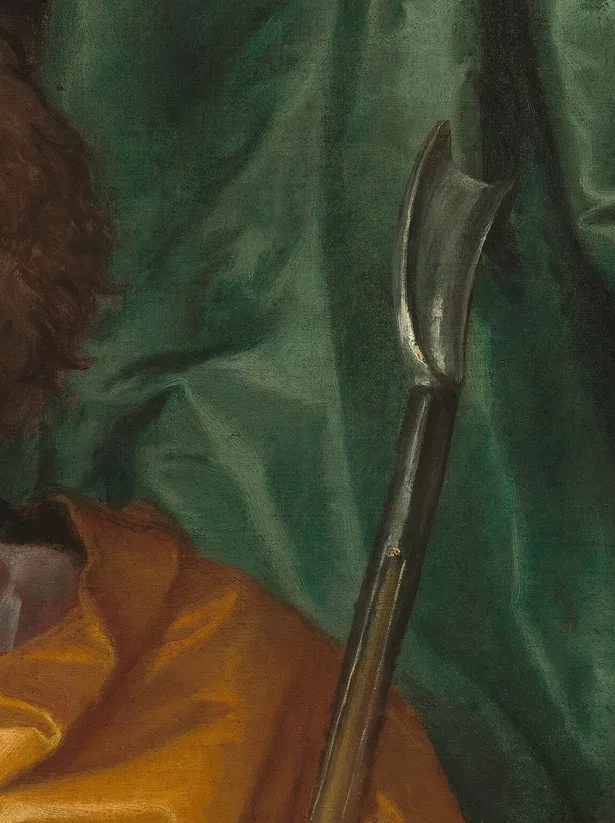
The picture is tall and narrow, the figures fill only its lower half, and above them rises a dim church with a flat wooden ceiling. The Archangel Gabriel's words, AVE GRA PLENA, “Hail, full of grace”, run in gold letters from his lips, and Mary's reply, ECCE ANCILLA DNI, “Behold the handmaid of the Lord”, is written upside down, to be read from above. Gabriel's wings are striped like a rainbow and marked with eyes like peacock feathers, Old Testament scenes are incised in the golden floor, and right under Mary's hem Samson brings the temple down on the feasters.
Before the Hermitage, the panel belonged to King William II of the Netherlands. In 1848 Nicholas I, the brother of the king's wife Anna Pavlovna, lent him a million guilders against his collection of paintings, in 1849 the king died in debt, his heirs sent the pictures to auction, and on 12 August 1850 in The Hague the painter Fyodor Bruni bought the Annunciation for Nicholas I. In the Hermitage, probably between 1864 and 1870, the painting was transferred from panel to canvas, which is why the gallery describes it as oil on canvas transferred from panel.
In March 1997 the Annunciation was taken back to the Hermitage for a few weeks, for an exhibition in the series Masterpieces from the World's Museums.
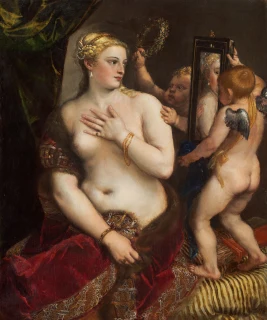
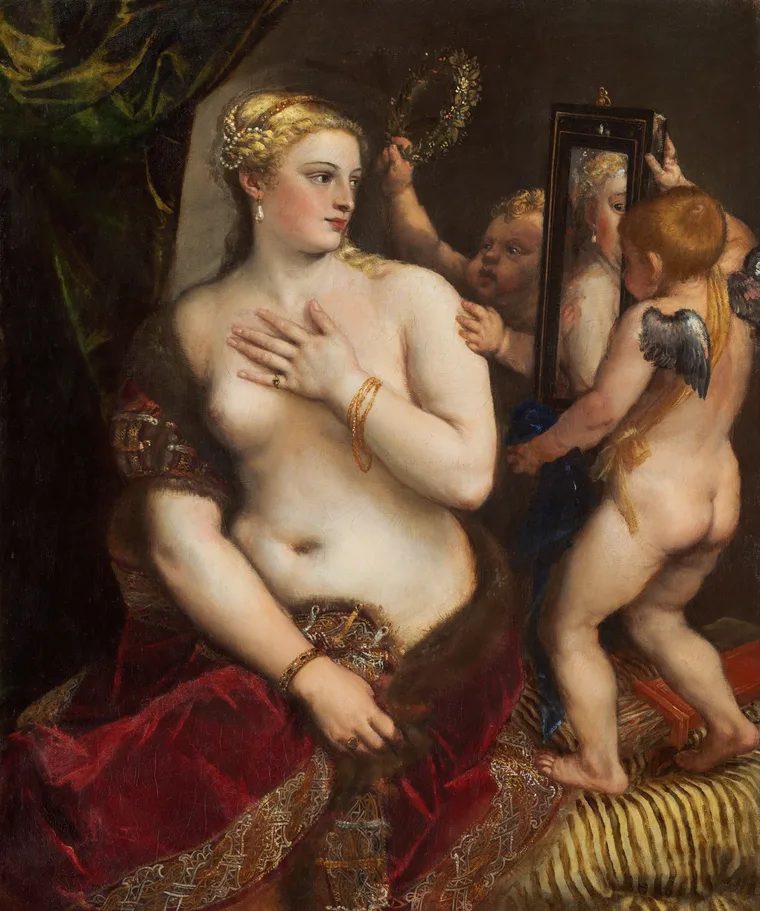
4. Venus with a Mirror — Titian, c. 1555
Titian kept this Venus in his house in Venice for more than 20 years, until his death in 1576. The gallery suggests that his pupils copied it to make replicas for clients, and at least 30 versions of the composition by Titian himself and his workshop are known.
Venus sits naked to the hips, her right hand laid on her breast, and with her left she holds across her lap the edge of a dark red velvet cloak lined with brown fur and trimmed with a wide gold border. One cupid stands with his back to us on a striped cushion and holds up a rectangular mirror in a black frame in front of her, and the other, squeezed in between the mirror and her shoulder, lifts a wreath of leaves and small flowers above her head. In the mirror only a strip of her face shows, a pearl earring and one eye, and that eye looks straight at the viewer. The gallery reads this as Venus using the mirror to study whoever is looking at her.
In 1581 Titian's son Pomponio sold the house to Cristoforo Barbarigo, and the pictures still in it in all likelihood passed to the new owner along with the house. The first certain mention of the Venus is in Barbarigo's will of 1600. It spent more than two and a half centuries with the Barbarigo family, in the Palazzo Barbarigo della Terrazza in Venice, until in 1850 the heirs of Giovanni di Alvise Barbarigo sold it to Nicholas I, and it stayed in the Hermitage until April 1931, when Mellon bought it.
X-rays published in the early 1970s showed that Titian painted the Venus over an abandoned double portrait of a man and a woman.
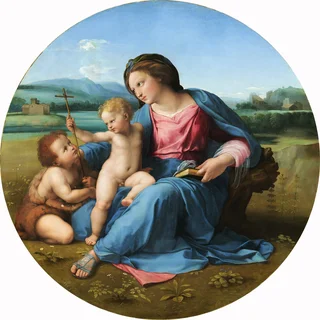
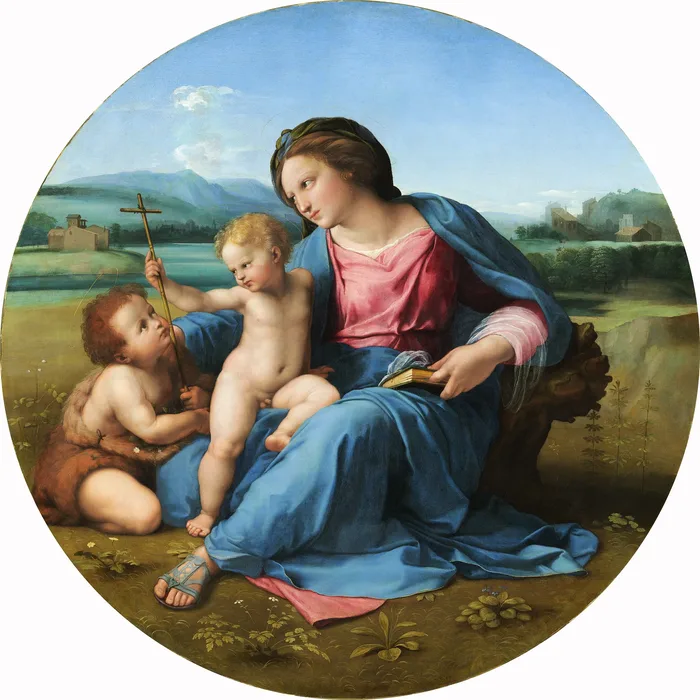
5. Alba Madonna — Raphael, c. 1510
Raphael drew the Virgin's pose for the Alba Madonna in red chalk from a young man in a shirt, with his legs bare. The sheet is in the Palais des Beaux-Arts in Lille, and on its other side the whole composition is sketched inside a circle.
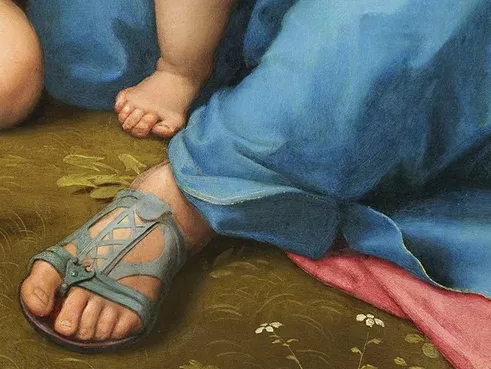
In the picture Mary sits on the grass itself, leaning back against an old tree stump, her body turned to the right and her head turned sharply to the left, towards a slender cross of sticks held by the Christ Child and the little John the Baptist, who kneels in a fur pelt, and her face is serious. She has stretched her right leg forward, and from under the blue cloak a bare foot shows in a grey-blue sandal, while in her left hand Mary holds a small closed book with a finger between the pages. Raphael painted the picture in Rome about 1510, two years after moving there from Florence.
The gallery allows that the picture may have been commissioned by the historian Paolo Giovio and may have passed from him to a church at Nocera near Naples, and both times it writes “possibly”. In 1686 it was bought by the viceroy of Naples, the Marqués del Carpio, through his daughter it passed to the dukes of Alba, who gave it its name, and the last of the family to own it was the Duchess of Alba at Sanlúcar near Seville. The duchess's heirs sold the Madonna to the Danish envoy in Spain, Count Bourke, who sold it in 1820 to the London banker William Coesvelt, and in 1836 Coesvelt sold it and it was bought for Nicholas I. In the Hermitage the painting was transferred from panel to canvas.
Mellon bought the Alba Madonna in April 1931 for $1,166,400. The price was kept secret, reports from Moscow spoke of one and a half million, and when the real sum came out at the tax hearings in 1935, the newspapers wrote that no one had ever paid more for a painting.
The Kress Foundation, built on a chain of dime stores (1938–1961)
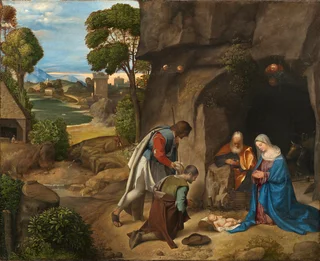
6. Adoration of the Shepherds (the Allendale Nativity) — Giorgione, c. 1505–1510
In December 1938 Giorgione's Adoration of the Shepherds was put in the window of the Kress store on Fifth Avenue in New York for shoppers to see before Christmas, and the Kress Foundation calls it “the most astonishing Christmas display in the history of Fifth Avenue”. Samuel Kress (1863–1955) founded S. H. Kress & Co., a chain of variety stores where goods cost five and ten cents, and his foundation gathered more than 3,000 European works. The foundation gave the largest share of them to the National Gallery between 1939 and 1961 and divided the rest among 18 museums in other cities, choosing them partly because a Kress store stood in the town. The foundation bought from dealers and gave its pictures in batches, so the year of a gift is often several years later than the purchase.
This picture passed through the collections of Cardinal Fesch in Rome and the collector Claudius Tarral, in 1847 Thomas Wentworth Beaumont bought it, and for almost 90 years it stayed in Yorkshire, at Bretton Hall, with his descendants, later the Viscounts Allendale, who gave it its second name. In August 1937 the Allendales sold it to Joseph Duveen. Duveen sold it as a Giorgione, while Bernard Berenson, the connoisseur of Italian painting who had worked for Duveen under contract for many years, held it to be an early Titian, and after this dispute their partnership came to an end. Berenson's biographer Rachel Cohen, citing Duveen's associate Edward Fowles, writes that Duveen paid $315,000 for the picture and that the Kress Foundation bought it from him in 1938 for $400,000. In 1939 the foundation gave it to the gallery, and the gallery catalogues it as Giorgione.
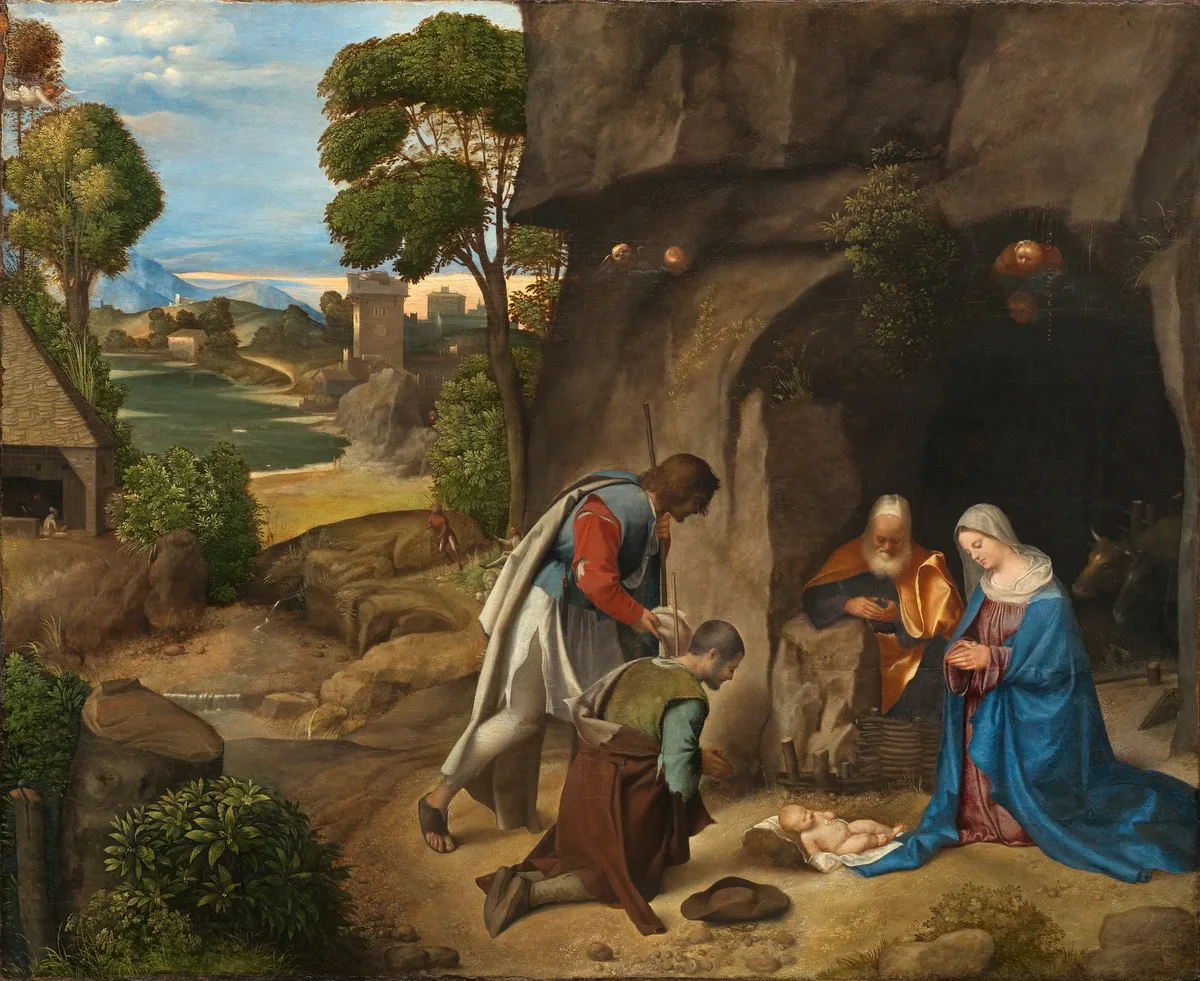
The picture is divided in two. On the right rises a brown rock with the dark mouth of a cave, and right at the entrance, in the lower right corner, the Holy Family is gathered close together: Mary in a blue cloak kneels, the Child lies on a white cloth spread over a bundle of straw, and Joseph in a glowing orange-gold cloak leans on a block of stone. On the left a bright landscape opens out with a river, a tower and blue mountains, and from that side two shepherds in ragged clothes bend towards the Child. In the very top left corner, in the foliage of a tree, a tiny angel sits on a cloud, painted so thinly that the leaves show through it.
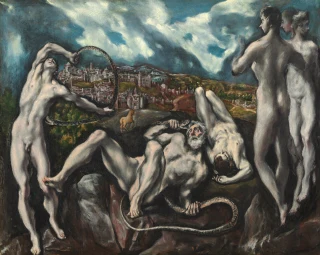
7. Laocoön — El Greco, c. 1610–1614
Prince Paul of Yugoslavia already owned the Laocoön in May 1934, before he became the country's regent later that year. From May 1934 to December 1935 the picture hung in the National Gallery in London, which he had lent it to. In 1941 his regency ended in a coup, Paul went into exile in South Africa, and from Johannesburg he arranged for the National Gallery in Washington to keep the picture for the duration of the war. In 1946 he consigned it for sale to Knoedler, in February the Kress Foundation bought it, and that same year the foundation gave it to the gallery, in whose building it was already being kept.
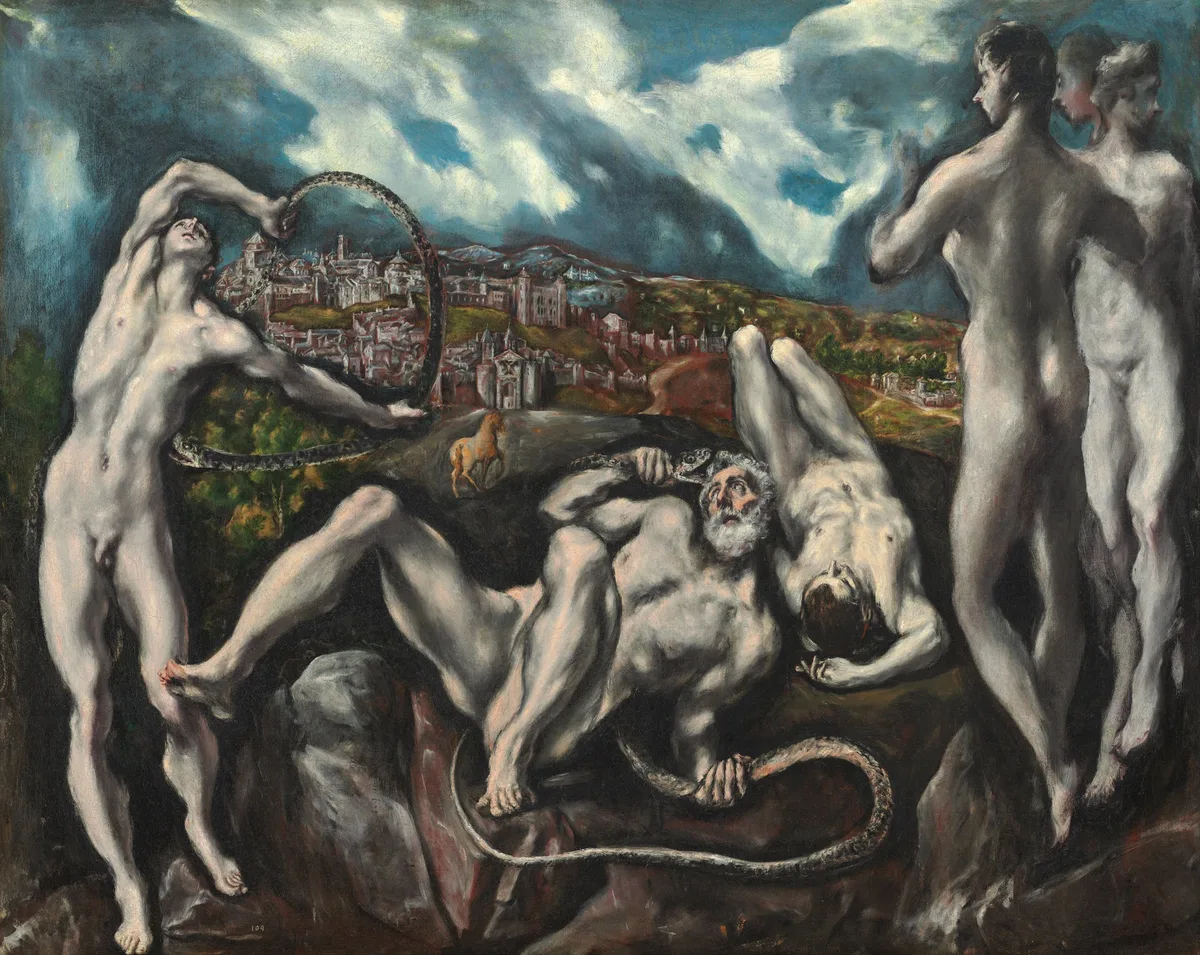
It is the only mythological subject among El Greco's paintings. The 1621 inventory of the property of his son Jorge Manuel lists three Laocoöns, and of these only this one survives. Later the picture belonged to the Infante Antonio de Orleans in Spain, by 1910 it was with the Paris dealer Durand-Ruel, in 1911 it was shown in Munich, and in 1914–1915 it was on loan for display in Berlin.
The priest Laocoön, who in Virgil's Aeneid warned the Trojans against the wooden horse and was killed by serpents together with his sons, lies on his back on dark rocks, holding a snake right up against his face. On the left stands one son, with a second snake twisting into a loop above his raised arm, and the other son lies beside his father, his bent legs up in the air. In place of Troy El Greco painted Toledo, where he worked: on a hill stand pink and grey walls with a gate, and in front of the gate stands a small reddish horse.
On the right two naked figures stand apart from the action, and scholars still argue about who they are. They have been seen as Apollo and Artemis, Paris and Helen, Adam and Eve, and the gallery cautiously suggests that they are gods watching their revenge. Between their heads a third head is fitted in, pale and in profile, and the greenish-blue sky runs over its chin and neck.
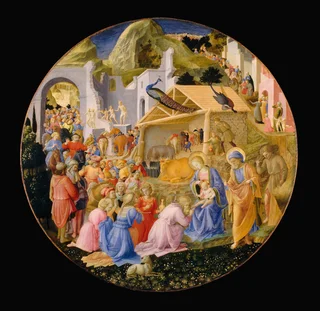
8. Adoration of the Magi (the Cook Tondo) — Fra Angelico and Fra Filippo Lippi, c. 1440–1460
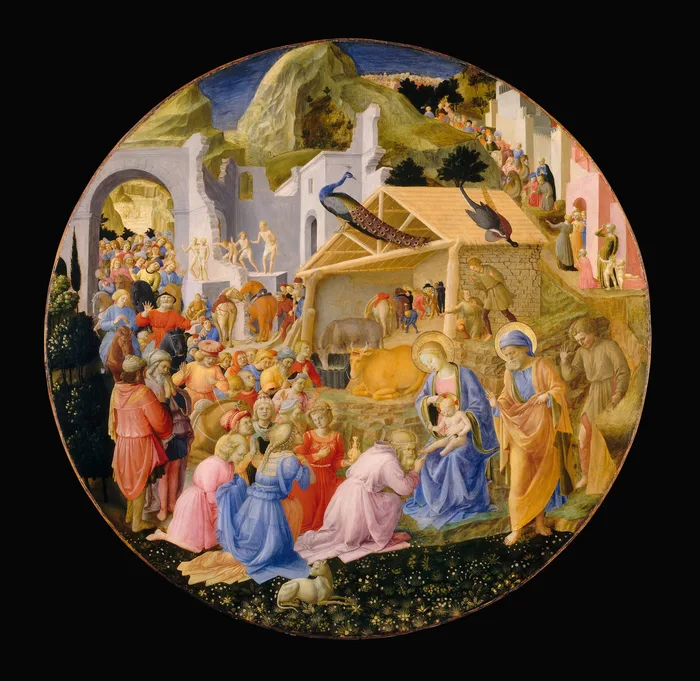
After the death of Lorenzo the Magnificent, the 1492 inventory of his property records, in a large room on the ground floor of the Medici palace in Florence, “a large tondo”, that is, a round picture, in a gilded frame, with the Virgin, the Child and the Magi coming with gifts, “by the hand of Fra Giovanni”, as Fra Angelico was known in his order, valued at 100 florins. This panel is generally taken to be that tondo. The gallery calls it the most valuable painting in the palace, and for comparison, six panels by Paolo Uccello in the same room, among them the three Battle of San Romano pictures, were valued at 300 florins all together.
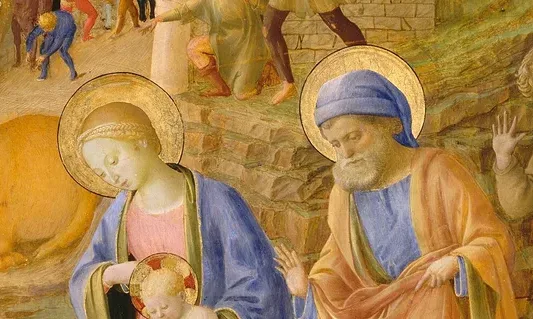
The tondo was begun by Fra Angelico, a Dominican friar, and after his death in 1455 finished by Fra Filippo Lippi, a Carmelite friar, and scholars still argue over which figure is whose. The gallery gives Angelico the head of Mary, and Lippi the finely dressed Magi and the broad-faced Joseph.
More than 100 people spiral down from the upper right, from a green hill past white crenellated walls and through a ruined arch on the left, to the Magi kneeling at the bottom, and the eldest of them, his crown taken off, holds the Child's foot. On the roof of the stable stands a large peacock with a blue neck, and further to the right a bird of prey drops like a stone onto a pheasant. The gallery believes that Lippi added these birds last, over the finished painting. On the broken walls to the right of the arch stand five naked youths, and below, in the grass, lies a white dog with cropped ears.
From the late 16th century, for about two centuries, the tondo belonged to the Florentine Guicciardini family. In 1810 it was sold as a Botticelli, in 1826 in London as a Fra Angelico, in 1849 it was attributed to Filippo Lippi, and in 1874, at the auction of Alexander Barker's collection, it was offered as the work of his son Filippino Lippi and went to Sir Francis Cook, whose name it has carried ever since. Cook's heirs kept it at Doughty House in Richmond, and in February 1947 the Kress Foundation bought it from them, by then as a Filippo Lippi, and gave it to the gallery in 1952. The gallery's label carries both names.
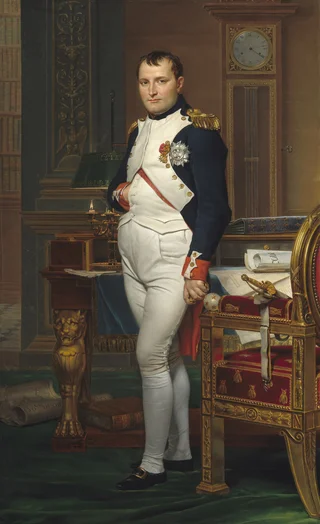
9. The Emperor Napoleon in His Study at the Tuileries — Jacques-Louis David, 1812
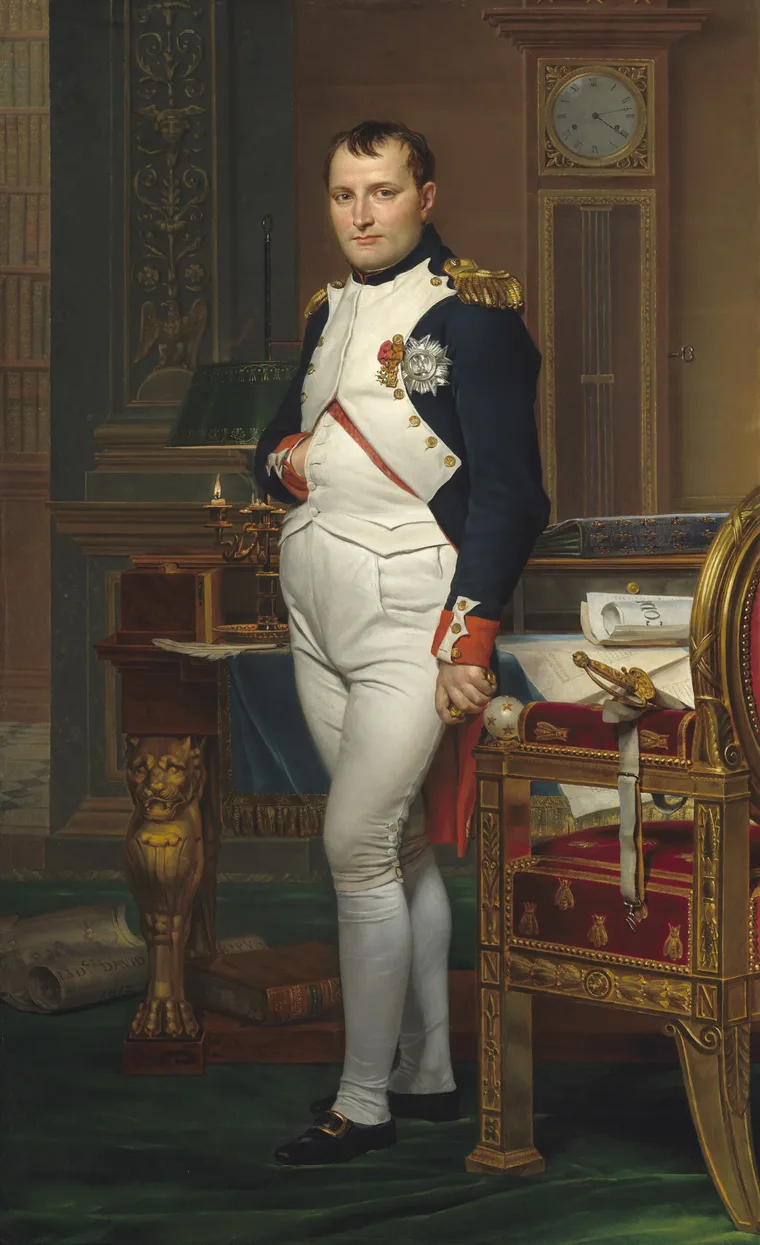
Alexander, Marquess of Douglas, a Scot and heir to the dukes of Hamilton, commissioned a portrait of Napoleon from David in a letter of 3 August 1811, while Britain was at war with France. David, Napoleon's First Painter since 1804, agreed a price of 1,000 guineas with him and entered the portrait in his register as “a picture for England”.
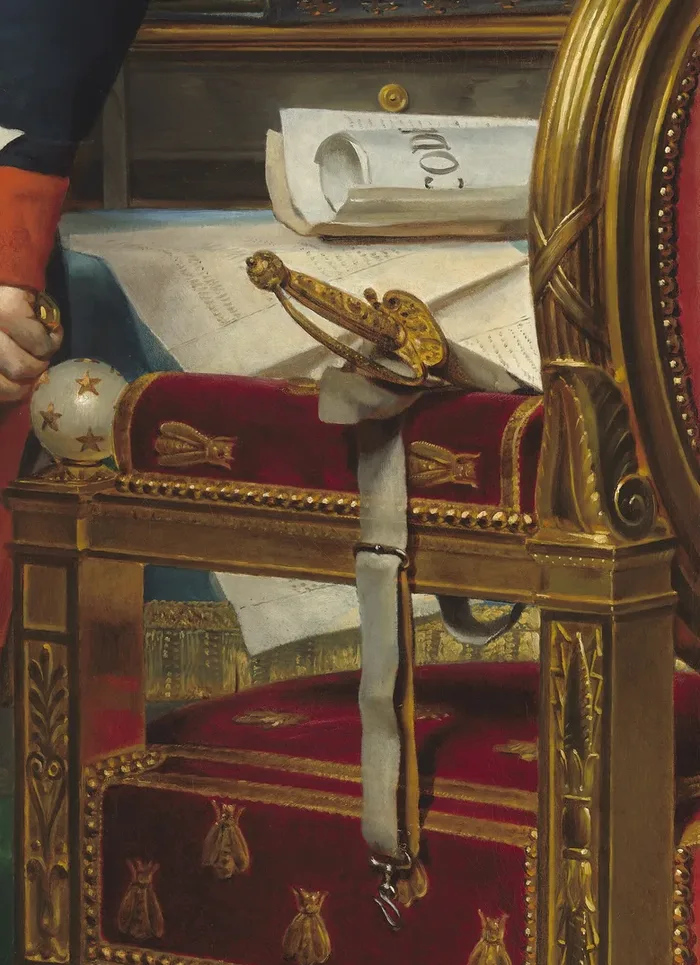
Napoleon stands full length by his writing desk, his right hand tucked into his white waistcoat. In a letter of 8 May 1812 David explained that he had shown the emperor at his most habitual occupation, work. Napoleon has spent the night in his study composing his code, the candles have burned down, the clock shows dawn, and he is about to take up his sword and ride out to review the troops. One candle in the lamp on the desk has gone out and is smoking, the other is still burning, the tall clock on the right shows 13 minutes past four by the gallery's reading, the letters COD can be seen on a rolled sheet on the desk, and a gold-hilted sword lies on an armchair covered in red velvet with gold bees. Scholars think that Napoleon most likely did not sit for the portrait.
The portrait hung in Hamilton Palace near Glasgow until 1882, when the palace collection was sold at Christie's, and it was bought by one F. Davis, probably for the Earl of Rosebery, the future prime minister and author of a book on Napoleon's last years. In 1951 the 6th Earl of Rosebery sold the picture to Wildenstein, in 1954 the Kress Foundation bought the portrait from the firm, and in 1961 it came to the gallery with the foundation's last large gift.
David finished the portrait at the end of March 1812, three months before Napoleon's army crossed into Russia.
A Philadelphia house moves to Washington (bought 1911–1922, given 1942)
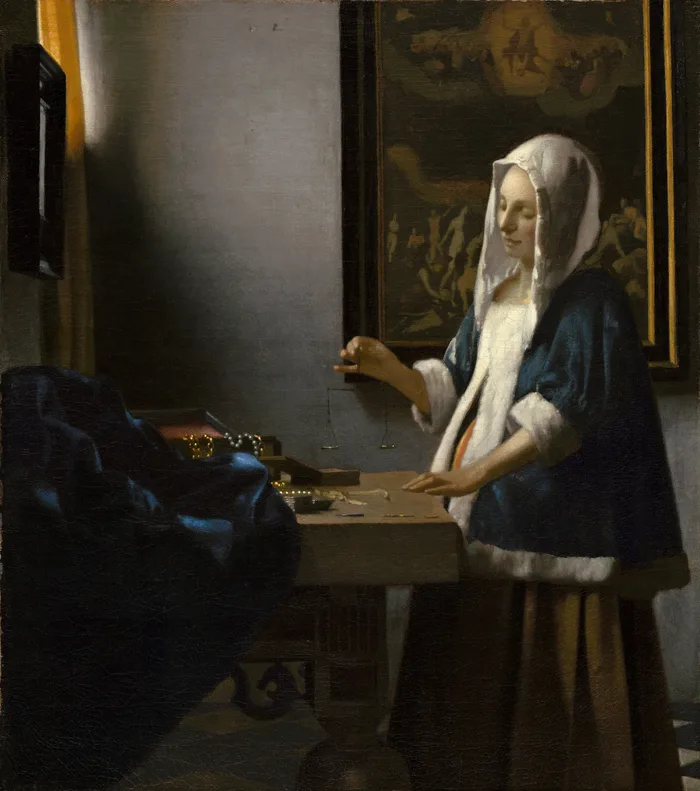
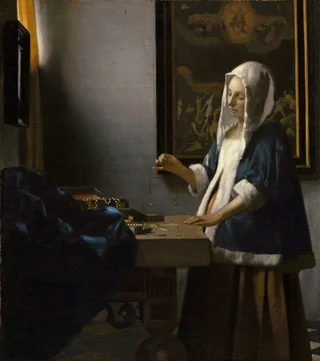
10. Woman Holding a Balance — Johannes Vermeer, c. 1664
The balance the woman holds between two fingers of her right hand hangs level, and both its brass pans are empty, with only a tiny highlight along the rim of each. At the gallery these highlights were examined under a microscope, and they proved to be painted differently from the gold chain and the pearls on the table, which means the pans hold neither gold nor pearls. Even so, at an auction in Amsterdam in 1696 the picture was sold as “a young lady weighing gold”, and in the 1913 catalogue of the Widener collection it was called Woman Weighing Gold.
The light falls from the upper left, from a window behind a yellow-orange curtain, and it lights only her, her white hood, her face, her hands and the pearls spilled from a box onto the table. Behind her hangs a dark painting of the Last Judgement, with Christ at the top in a pale radiance, both arms raised, and the woman's head comes directly beneath him.
Vermeer spent his whole life in Delft, from 1632 to 1675, and between 35 and 37 of his pictures survive. In 1910 the London firm Colnaghi bought this one, probably from the Comtesse de Ségur, née Périer, in October New York's Knoedler took a quarter share in it, and on 11 January 1911 the two firms sold it to Peter Widener. Twenty years later the same two firms were selling Mellon pictures from the Hermitage.
Peter A. B. Widener (1834–1915) made his fortune from Philadelphia's streetcar lines and collected European painting at Lynnewood Hall, his mansion in Elkins Park outside Philadelphia. His son Joseph (1871–1943) cut the collection down to about 100 pictures and in 1942 gave the National Gallery more than 2,000 objects, works on paper included, among them about 100 paintings. Pennsylvania demanded a five per cent inheritance tax for taking the pictures out of the state, and in the end Congress paid it, setting aside $195,000 for the purpose at Roosevelt's request.
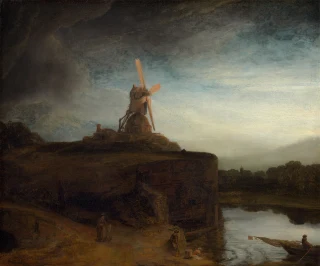
11. The Mill — Rembrandt, 1645–1648
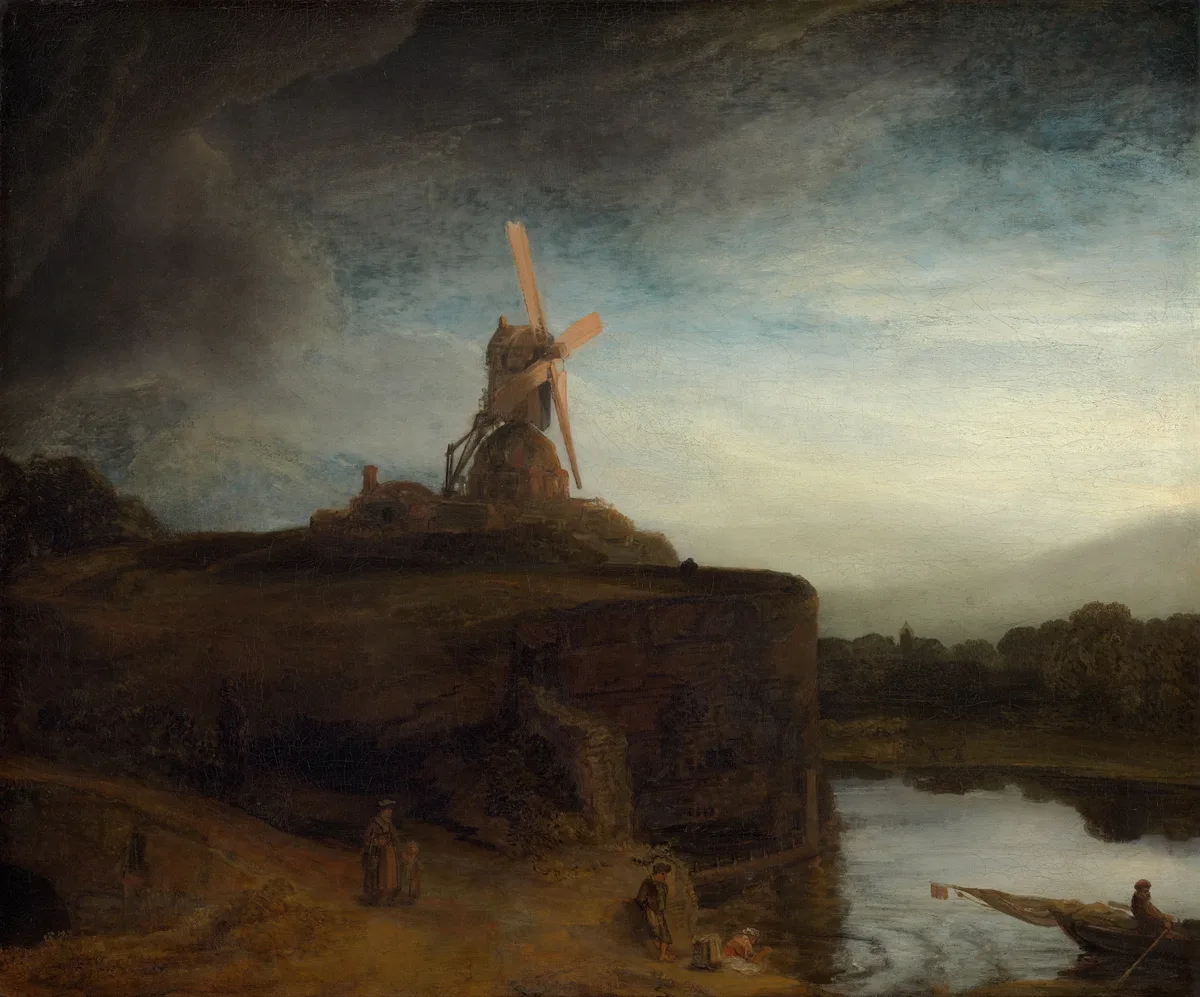
Before The Mill was taken to America it was shown for two days at the National Gallery in London, and the newspapers reported some 11,000 visitors a day. The picture had come to England in the 1790s, when the Dutch pictures from the collection of the dukes of Orléans were sold, and by 1824 it belonged to the Marquesses of Lansdowne, at their house at Bowood.
In 1911 the dealer Arthur Sulley, acting, as it later turned out, for Peter Widener, offered the Marquess of Lansdowne £100,000. On 9 March 1911 a Treasury spokesman explained in the House of Commons that the marquess had accepted the offer, leaving the nation the right to buy the picture first for the same sum and promising to put in £5,000 of his own, and that the trustees of the National Gallery had no such money and could not launch a public appeal. Despite a campaign to keep the picture in London, The Mill went to Widener in April 1911.
That same April Sulley sent it on to Berlin, to the restorer Hauser, who worked for Wilhelm von Bode, director of the Berlin museums. On 10 April Hauser telegraphed that taking off all the varnish would ruin the picture, and he proposed removing only the yellow stains on the sky and the water at the right. Rembrandt's authorship has been questioned more than once since that same year, 1911, and the gallery accepts it.
On the dark mass of a bastion stands a mill with pale salmon-pink sails, below it a woman is washing linen at the water's edge, and on the right a boat with its mast lowered is coming in to the bank. The sky above the water turned silvery grey in the cleaning of 1977–1979, when the gallery removed the darkened varnish, and until then it had been seen as golden yellow.
12. The Feast of the Gods — Giovanni Bellini and Titian, 1514–1529
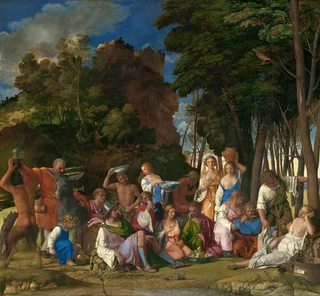
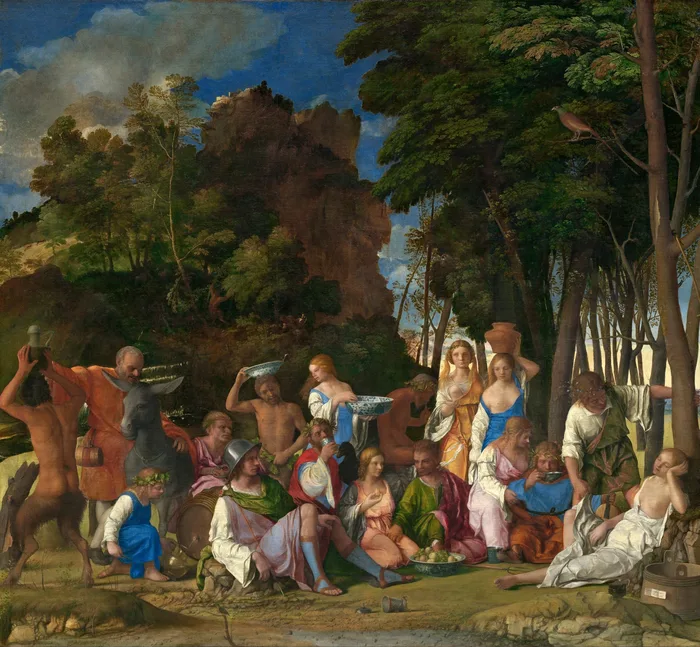
The two halves of the landscape in The Feast of the Gods are painted differently. On the right, behind the figures, stands an even row of slim straight trunks with pale sky between them, and on the left a steep brown cliff rises under a blue sky with storm clouds. Giovanni Bellini painted the picture in 1514, probably for Alfonso I d'Este, Duke of Ferrara, for the private study in his castle that was called the alabaster room, and it was the first of the bacchanals the duke commissioned for that room. Bellini was then about 80 and had been the leading painter of Venice for decades, and this is his last large work. He died in 1516.
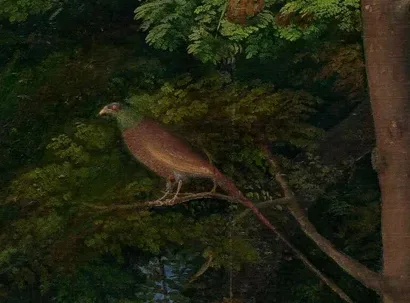
The gallery's technical studies, published in 1990 by the conservator David Bull and by Joyce Plesters of the National Gallery in London, distinguished three hands in the picture. The Ferrarese painter Dosso Dossi replaced Bellini's trees on the left with a hill with buildings and put a pheasant on a branch at the right. About 1529 Titian, Bellini's pupil (more on him under Venus with a Mirror), repainted that part of the landscape from scratch, with the cliff and the storm clouds, so that the picture would match his own bacchanals for the same room, and of Dosso's work he kept only the pheasant. The figures, the gallery concludes, remain as Bellini painted them.
The subject comes from Ovid's Fasti. At a feast of Bacchus, Priapus creeps up on the sleeping nymph Lotis, Silenus's donkey brays, the nymph wakes, and the gods laugh at Priapus. Bellini painted the moment just before the donkey brays. On the right Priapus, in a green jacket, bends over and lifts the hem of the sleeping nymph's white dress, and on the left the head of the donkey, with its long ears, sticks up above the company.
The pictures hung in the room until 1598. Alfonso II d'Este died without a legitimate heir, Ferrara passed to the Papal States, and Cardinal Pietro Aldobrandini took the room's pictures to Rome, where Ippolito Aldobrandini inherited them. Later The Feast of the Gods passed to the Roman brothers Camuccini, then to the Duke of Northumberland at Alnwick Castle, and in 1921–1922 it was bought for the collection of the late Peter Widener, with his son Joseph handling the purchase.
On a slip of paper pinned to the wooden tub at lower right the signature survives, “joannes bellinus venetus p MDXIIII”, “Giovanni Bellini of Venice painted it in 1514”.
In the same years: Americans who painted in London and Paris (1940–1963)
13. Symphony in White, No. 1: The White Girl — James McNeill Whistler, 1861–1863, 1872
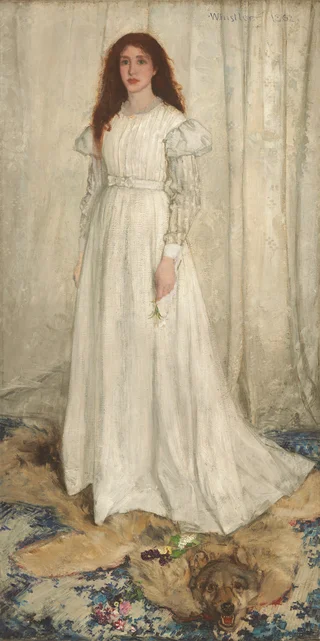
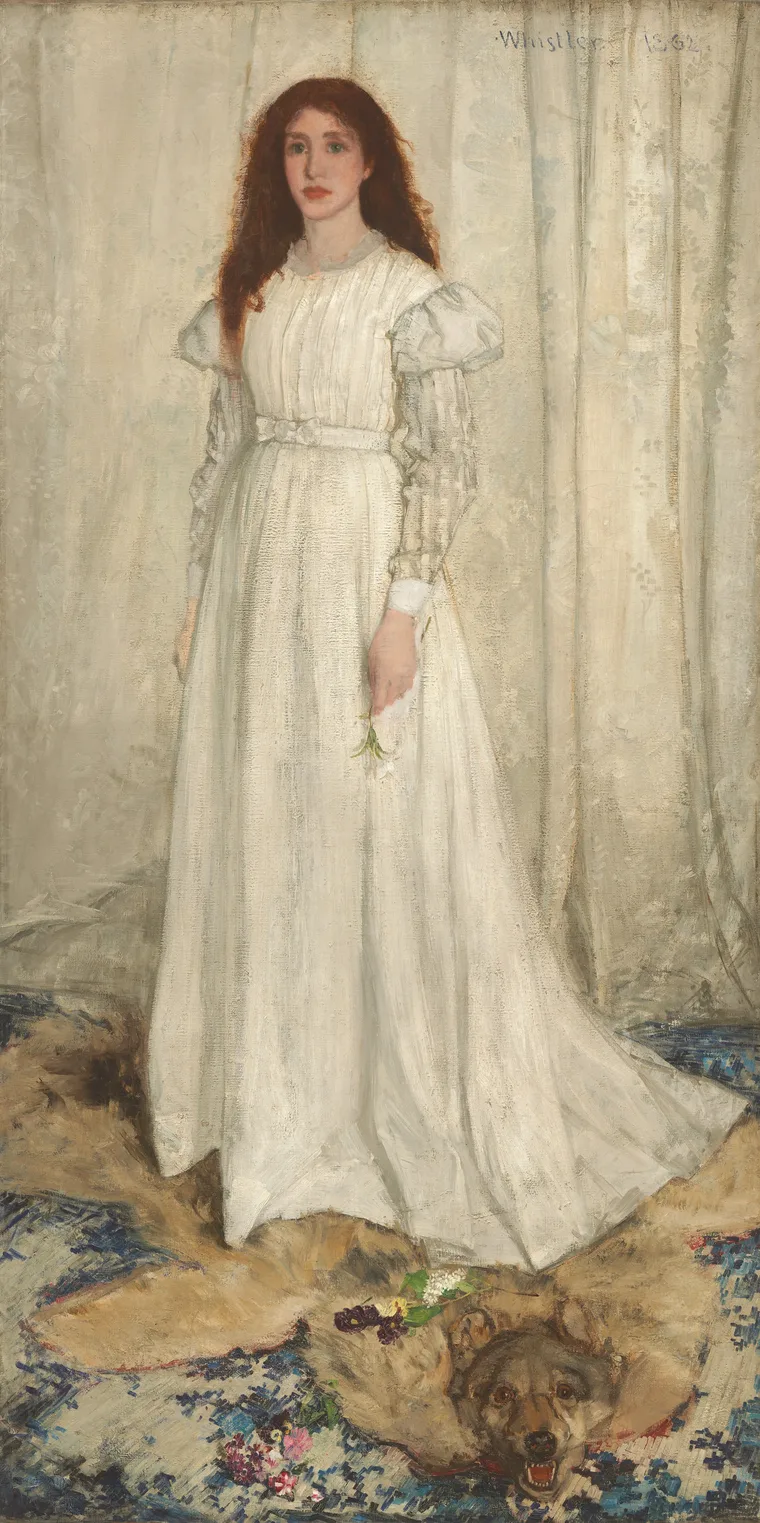
In 1862 the Royal Academy in London turned this picture down for its summer exhibition, and Whistler showed it at Matthew Morgan's private gallery, which billed it as The Woman in White, after Wilkie Collins's popular novel. Whistler wrote to the Athenaeum that his painting “simply represents a girl dressed in white standing in front of a white curtain”. In 1863 the Paris Salon jury rejected it, and it hung in the Salon des Refusés as The White Lady, in the same exhibition as Manet's Le Déjeuner sur l'herbe. On the opening day the painter Henri Fantin-Latour wrote to Whistler that he was now famous, that there was a crowd round the picture all the time and that Courbet was calling it an apparition.
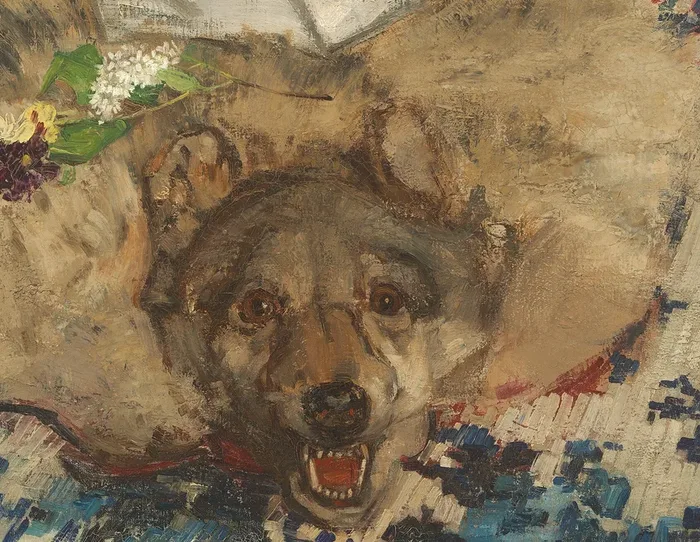
Whistler, an American, had studied painting in Paris and had lived in London since 1859, and he painted this picture in Paris in the winter of 1861–1862 and reworked it in 1872. A girl in a plain white dress stands full length in front of a white curtain, her loose dark auburn hair lying on her shoulders. In her lowered left hand she holds a drooping flower by the stem, under her feet lies a pale animal skin with the head still on, its teeth bared, and at upper right on the curtain “Whistler 1862” is written in dark blue paint. The model was Joanna Hiffernan, Whistler's partner and principal model in the 1860s.
In 1875 the picture was sent to Baltimore, to the artist's nephew, in 1896 Harris Whittemore of Connecticut bought it, and in 1943 the Whittemores' family company gave it to the gallery as the “Harris Whittemore Collection”. American 18th-century portraits had already come to the gallery from the Mellon trust in 1940 and 1942, and The White Girl was the first American masterpiece of the 19th century given to the gallery by someone outside the Mellon circle.
14. The Skater (Portrait of William Grant) — Gilbert Stuart, 1782
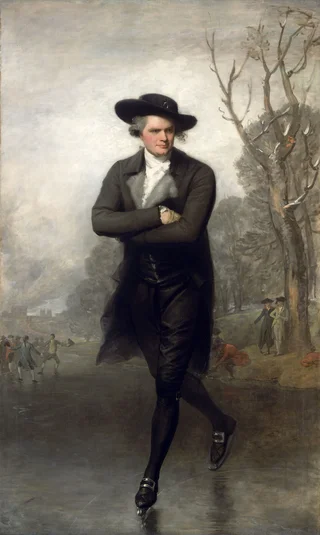
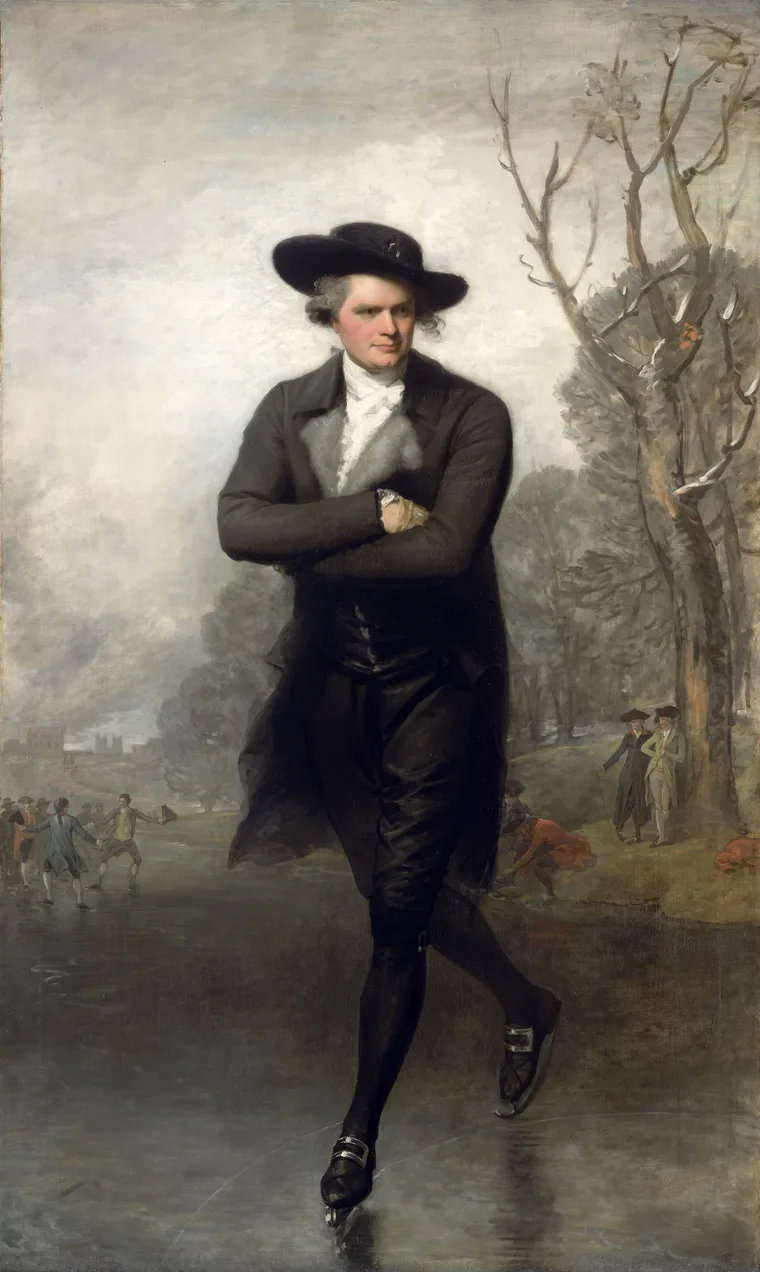
Jane Stuart, the painter's daughter, told this story in 1877 as she had heard it from her father, almost a century after the portrait was painted. A young Scot, William Grant of Congalton, came to Gilbert Stuart to sit for a full-length portrait and remarked that in such frost it would be better to go skating than to sit in front of a painter. They went skating, on the Serpentine in Hyde Park by the gallery's account, the ice began to crack, and Stuart told Grant to hold on to the tails of his coat and brought him safely to the bank. Back in the studio he painted Grant's head from life and suggested showing him on skates.
Stuart, a native of Rhode Island, had worked in London since 1777 in the studio of the painter Benjamin West. When the portrait was shown at the Royal Academy in 1782, he was, as he put it later, “suddenly lifted into fame by a single picture”.
Grant glides almost straight towards us, arms folded high on his chest, in a black coat with a grey fur collar and a wide-brimmed black hat, and the horizon runs at the level of his hips. The picture is almost entirely grey, from the sky and the bare trees to the dark ice with its fine skate tracks, and the only warm touches in it are Grant's pink face and the small red figures on the bank. On the right, under a tree, a man in red is bending down to fasten a skate.
The portrait stayed with Grant's descendants, and in 1950 the gallery bought it from one of them, Mrs John Stuart Bordewich of London. In almost 170 years with the family it had even been shown at a Royal Academy exhibition in 1878 as a work by Thomas Gainsborough.
15. Watson and the Shark — John Singleton Copley, 1778
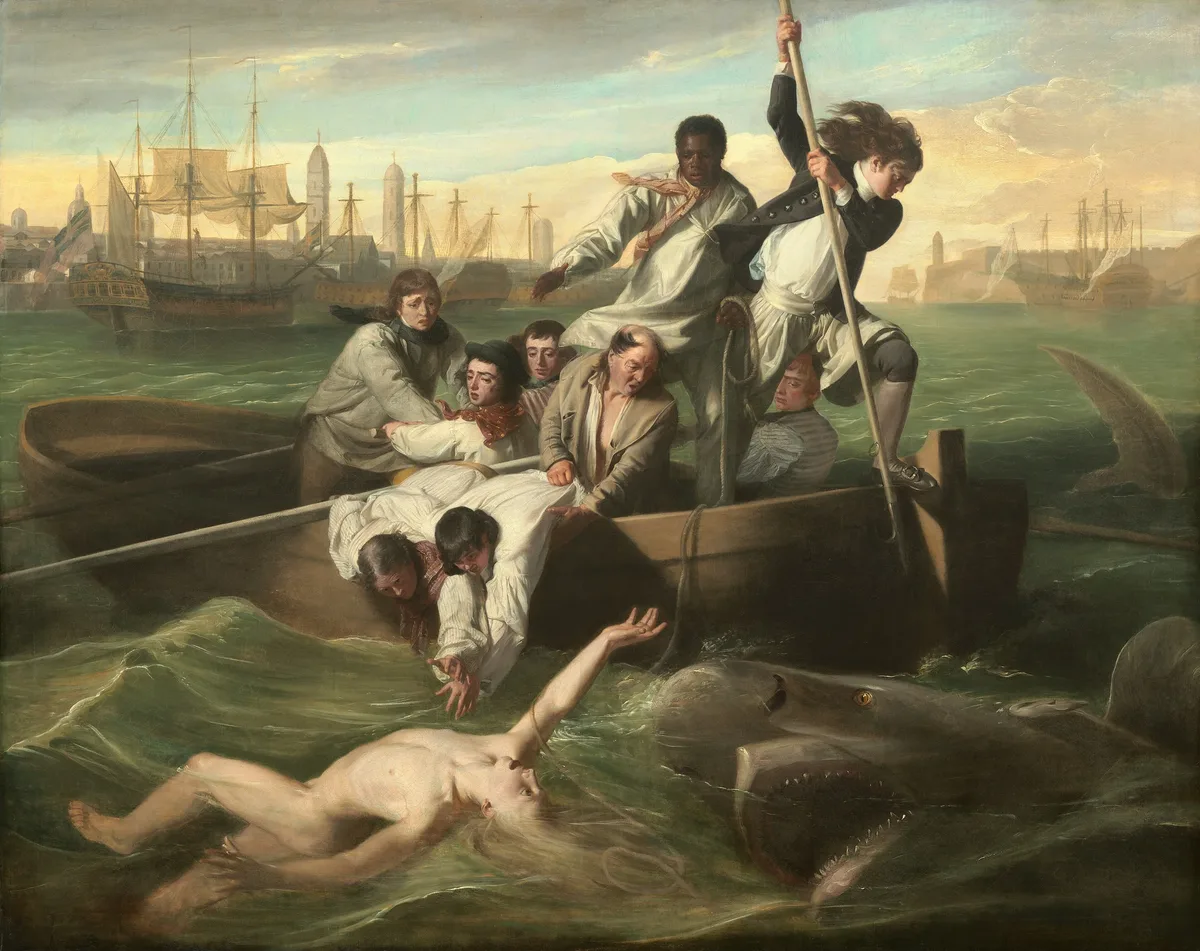
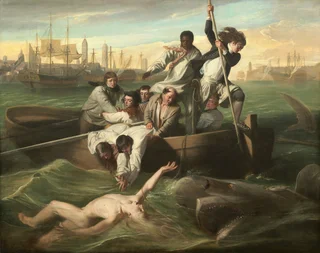
The pale naked boy floating on his back in front of the shark's open jaws is Brook Watson, who commissioned the picture. In 1749, at the age of 14, he was swimming in Havana harbour, and the shark went for him twice, first tearing the flesh from his calf, then biting off his right foot, and later his leg was amputated below the knee. He was rescued at the third attempt, and that is the moment Copley painted. Watson later went into trade, sat in Parliament and in 1796–1797 was Lord Mayor of London.
John Singleton Copley, the leading portrait painter in Boston, left America in 1774 and settled in London, and Watson and the Shark was his first large history painting there. In 1778 it was shown at the Royal Academy under a title that described a boy attacked by a shark and rescued by seamen in a boat, in an incident that really happened in the harbour of Havana, and Watson's name was not in it.
The nine men in the boat form a pyramid. Two young sailors lean out over the side, reaching for the boy's hand, in the stern a youth with flying hair has raised a long boathook over the shark, and at the apex stands a Black sailor in a white shirt holding a rope that loops round the boy's raised arm. The gallery has devoted a separate study to this sailor.
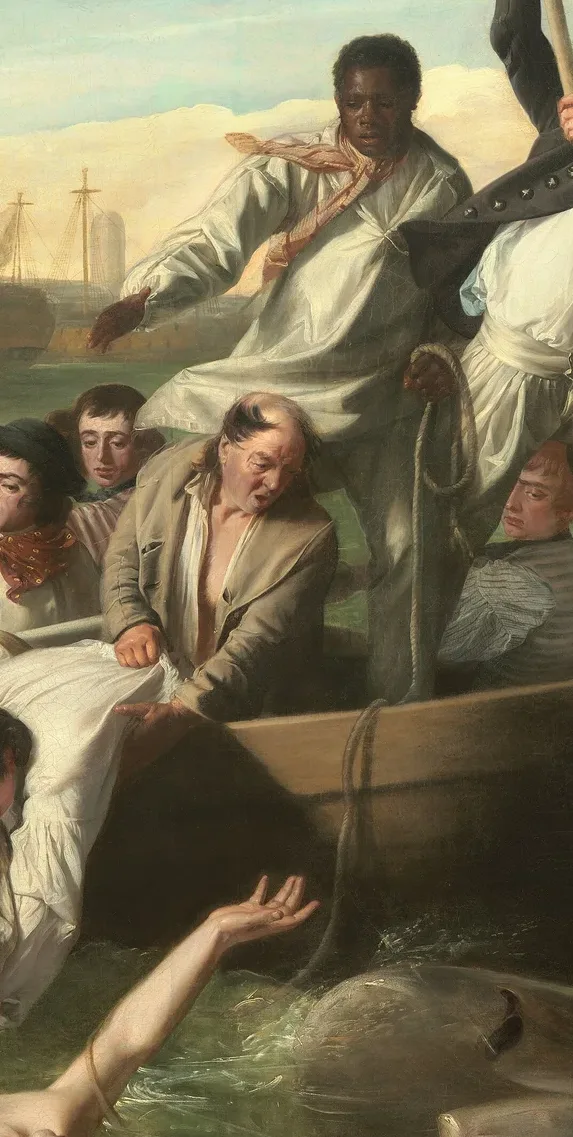
In his will, drawn up on 12 August 1803, Watson left the picture to Christ's Hospital, the London charity school, as “a most usefull Lesson to Youth”, to pass to the school after his widow's death. Watson died in 1807, and on 28 September 1819 the school resolved to accept the picture and hang it in its great hall. In 1963 the school sold it to the National Gallery.
A full-size replica that Copley painted for himself in the same year, 1778, is in the Museum of Fine Arts, Boston, and a smaller upright version of 1782 is in the Detroit Institute of Arts.
Heirs give, and the gallery buys and tests its gifts (1956–2022)
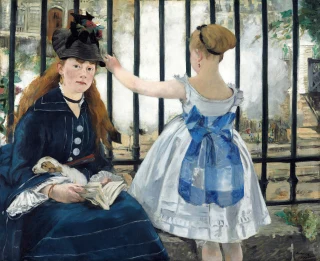
16. The Railway — Édouard Manet, 1873
In 1874 the French caricaturist Cham drew a cartoon of The Railway for the satirical paper Le Charivari, with a caption saying that these unfortunate people, seeing how they had been painted, wanted to run away, but the painter had put up a railing in advance and cut off their escape. The Salon jury accepted the picture that year.
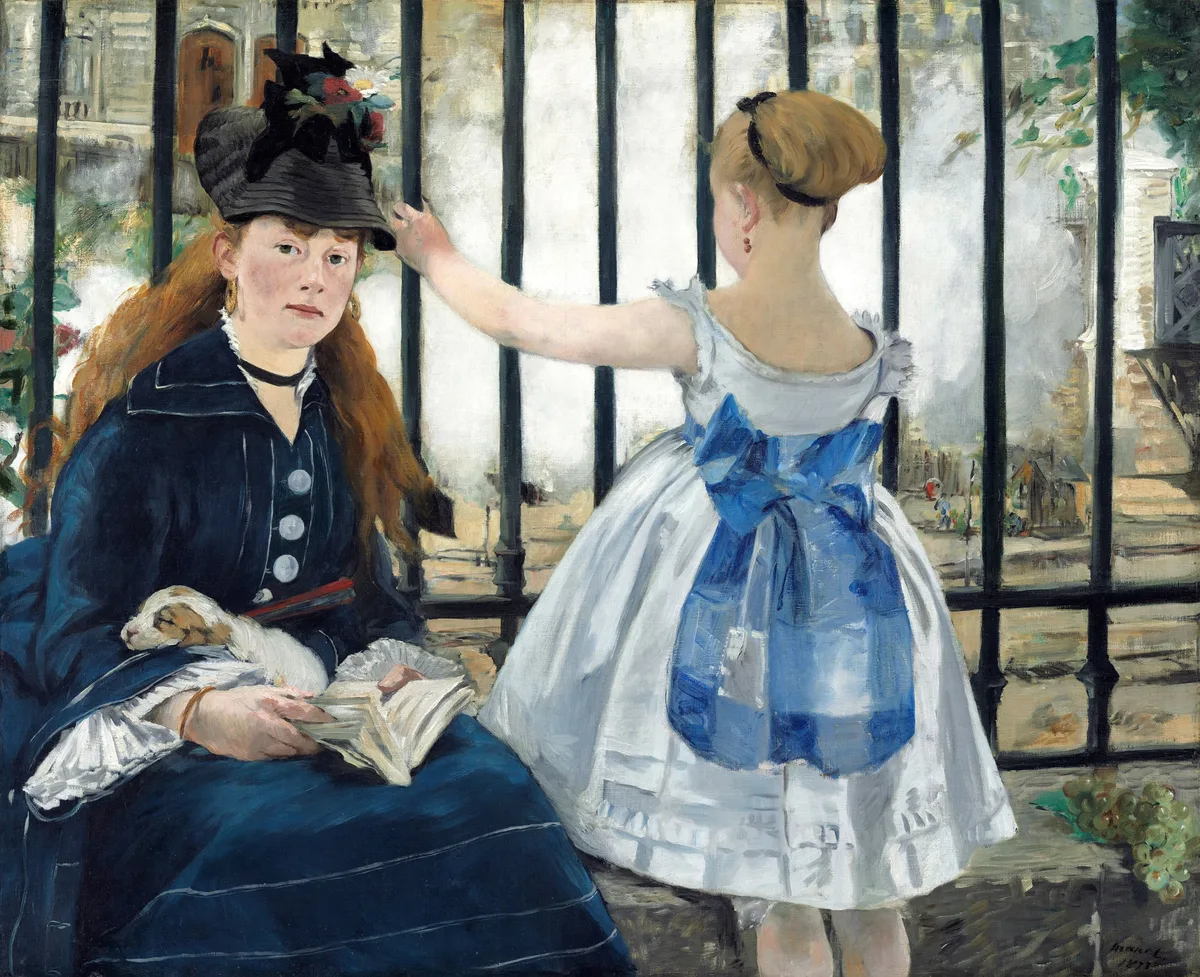
A young woman in a dark blue dress has looked up from an open book and gazes straight at us, a puppy sleeps in the crook of her arm, and beside her a girl in a white dress with a large pale blue bow stands with her back to us, holding the black bars of an iron railing. The railing runs across the whole picture, and behind it everything is filled with a white cloud of steam, through which a stone house with tall arched doors comes into view. As scholars have observed, Manet painted the picture in a garden above the tracks of the Gare Saint-Lazare, and the door of his own studio can be seen behind the steam. The woman was painted from Victorine Meurent, and this was the last picture for which she posed for Manet.
The opera baritone Jean-Baptiste Faure, who bought more from Manet than anyone else, bought the picture from him, around 1881 it passed to the dealer Durand-Ruel, and in 1898 it was bought by the New York collectors Henry and Louisine Havemeyer. In 1929 Louisine bequeathed most of the collection to the Metropolitan Museum, while The Railway went to her son Horace, and in 1956 he bequeathed the picture to the National Gallery “in memory of his mother, Louisine W. Havemeyer”.
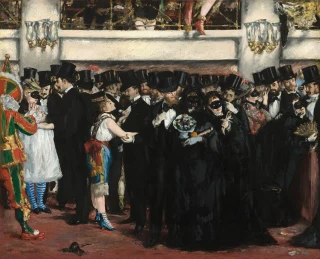
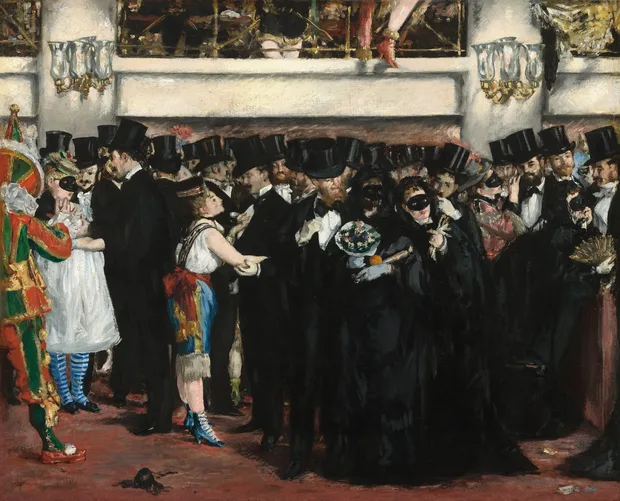
Of the works Manet sent to the Salon of 1874, the jury rejected Masked Ball at the Opera. That picture is in Washington too. Henry Havemeyer bought it in 1894, and in 1982 Horace's widow gave it to the gallery.
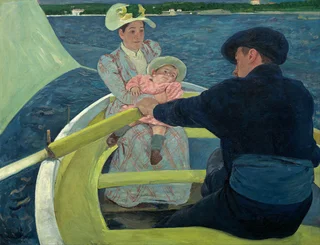
17. The Boating Party — Mary Cassatt, 1893–1894
Chester Dale's will forbids the gallery to lend works from his collection. Dale, a New York bond dealer on Wall Street, collected French painting with his first wife, Maud, a painter and critic, was president of the National Gallery from 1955, and died in December 1962, leaving the gallery about 240 paintings. He is reported to have explained his condition this way: he did not want an American who had come a long way to see a picture he had long wished to see to find a blank wall in its place, with a label saying it was out on loan.
Mary Cassatt, born in Pennsylvania, lived in France from 1866 and advised Louisine Havemeyer on which pictures to buy. She painted The Boating Party at Antibes in the winter of 1893–1894 and kept it at least until 1918, after which the picture went to Durand-Ruel, and on 1 October 1929 Dale bought it at the firm's New York branch.
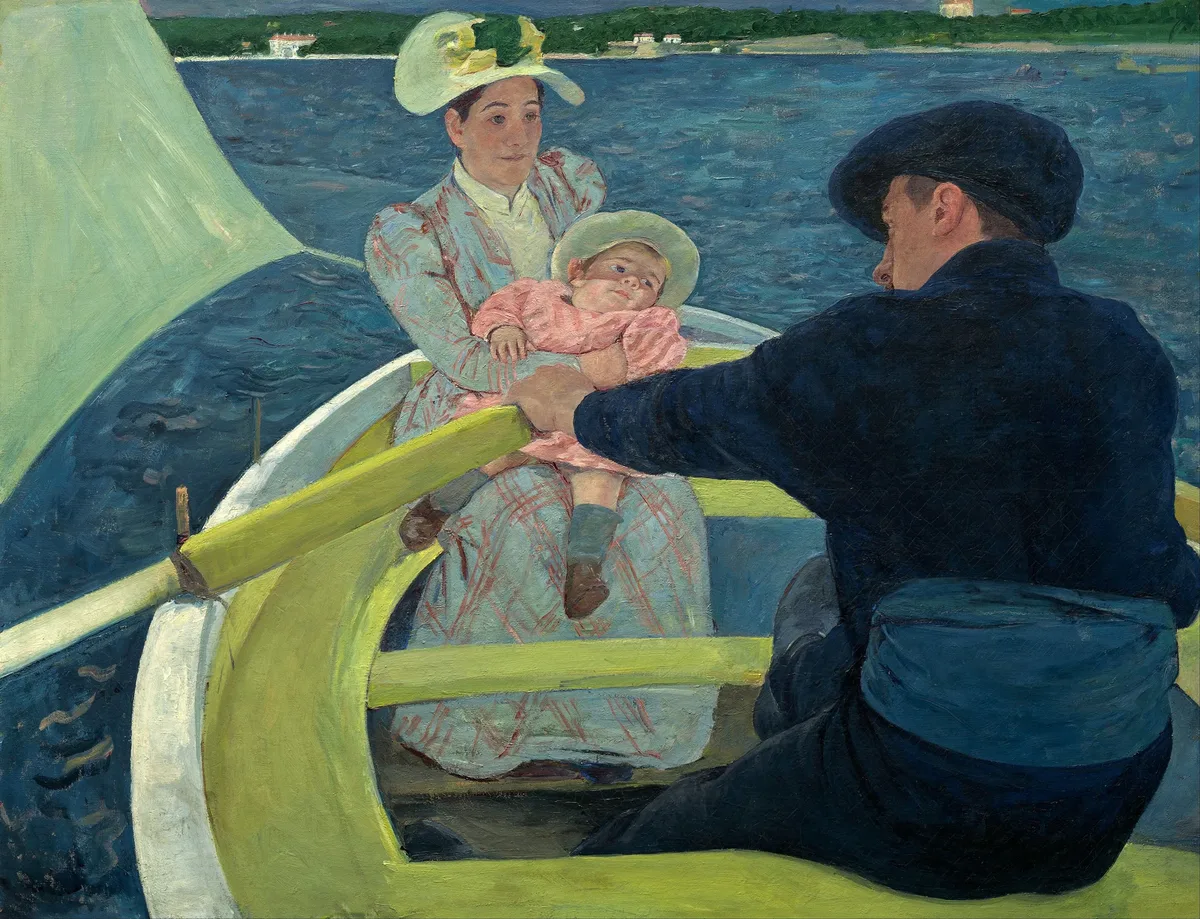
The viewpoint is taken from inside the boat, almost over the rower's shoulder. The rower fills the whole right third of the picture as a single dark blue mass, the pale oar runs from the left edge across the middle to his hand, and opposite him, in the stern, sits a woman in a hat with a large yellow bow, with a heavy child in a pink dress gone limp on her lap, looking at the rower. The inside of the boat is painted in a flat lemon green, and the white side of the boat curves round the whole lower half of the picture like a frame. The gallery links these flat patches of colour and the unusual angle of view with the Japanese prints Cassatt studied in Paris.
In 1966 The Boating Party was printed on a five-cent US postage stamp.
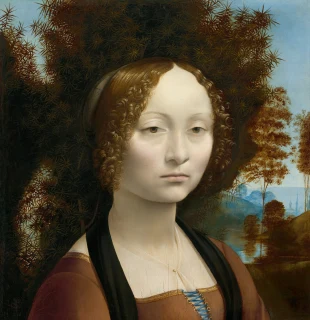
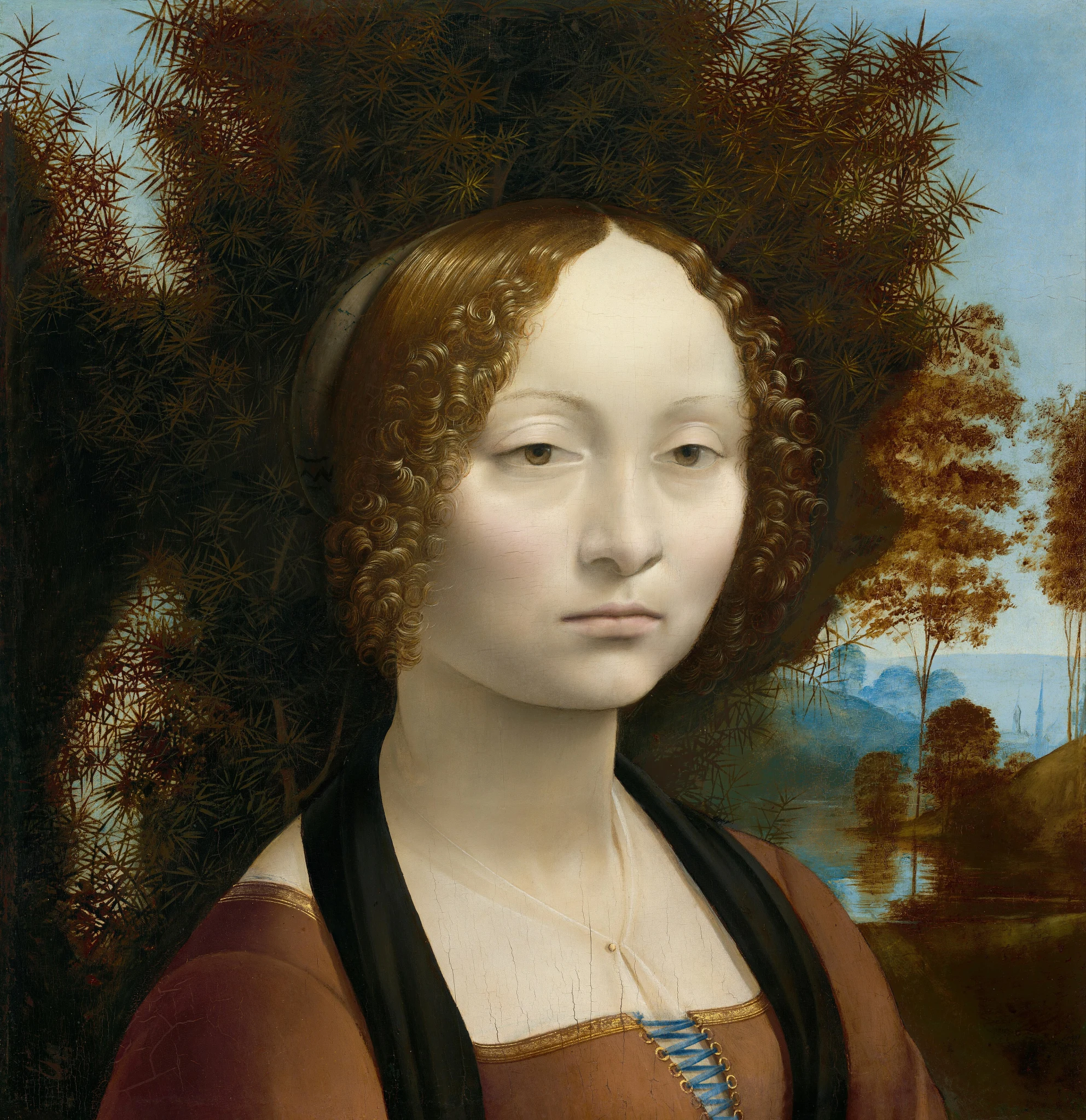
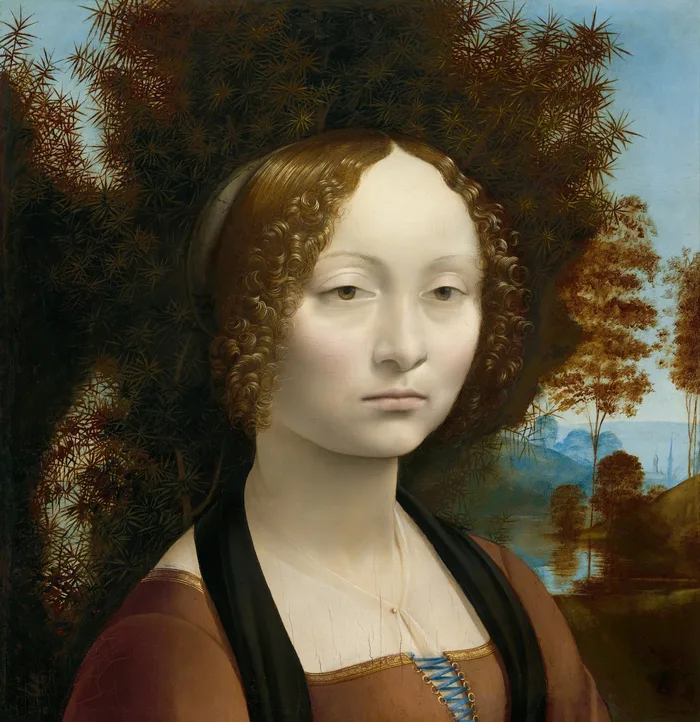
18. Ginevra de' Benci — Leonardo da Vinci, c. 1474–1478
The restorer Mario Modestini took Ginevra de' Benci to America on Swissair flight 100, in an American Tourister suitcase specially fitted to the picture, and its seat on the plane was booked in the name of “Mrs. Modestini”. That is how the only painting by Leonardo da Vinci that the public can see in the Americas arrived in the United States.
![Wreath of Laurel, Palm, and Juniper with a Scroll inscribed Virtutem Forma Decorat [reverse]](https://artgabmlhtb6ca6sy.blob.core.windows.net/article-media/derivatives/131e6e30-6695-4cdb-9a29-2f8aace4f533/1f0d889e-3dd3-4f12-b344-464a85109390-mobile-700-8d4eaffd264ed90a.webp)
The gallery bought the portrait on 10 February 1967 from Prince Franz Josef II of Liechtenstein, who in those years was selling other pictures from the family collection as well. It reportedly paid about five million dollars, more than anyone had paid for a painting until then, and the money came from the fund of Ailsa Mellon Bruce, the founder's daughter (more on her and her brother in the next entry). The Liechtensteins probably bought the portrait in Florence before 1712, under Prince Johann Adam Andreas I. In 1733 a round red wax seal with their arms was put on the back of the panel, and by that year the portrait certainly belonged to them. During the Second World War the picture was taken from Vienna to Vaduz.
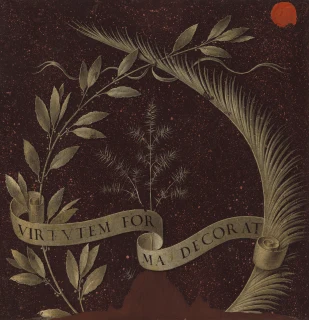
Ginevra, daughter of the Florentine banker Amerigo de' Benci, married Luigi Niccolini in 1474, at the age of 16. The gallery thinks the portrait was most likely commissioned by Bernardo Bembo, the Venetian ambassador in Florence and her platonic admirer, and infrared imaging found Bembo's own motto, VIRTUS ET HONOR, on the back, under Ginevra's motto. Leonardo was then in his early twenties and working in Florence, and this is one of his first paintings in oil.
Ginevra's face is pale, almost like porcelain, her eyelids heavy and her lips pressed together, behind her head stands a dark, prickly juniper bush, and on the right a landscape opens out, with water and two slender spires in the distance. The gallery notes that women at that time were painted indoors, with a landscape seen through a window, while Leonardo brought Ginevra out under the open sky. Her hands are not in the portrait, because the panel was cut down at the bottom. Where they were is disputed: a drawing of a woman's hands at Windsor has been proposed as connected with Ginevra, although the Royal Collection dates it to about 1490, well after the portrait.
On the back, against a dark red ground painted to look like porphyry, is a wreath of laurel and palm round a sprig of juniper, and a scroll inscribed VIRTVTEM FORMA DECORAT, “Beauty adorns virtue”, winds through it. The laurel and palm stems run off the bottom edge without meeting, because the lower part of the wreath was cut away along with the panel.
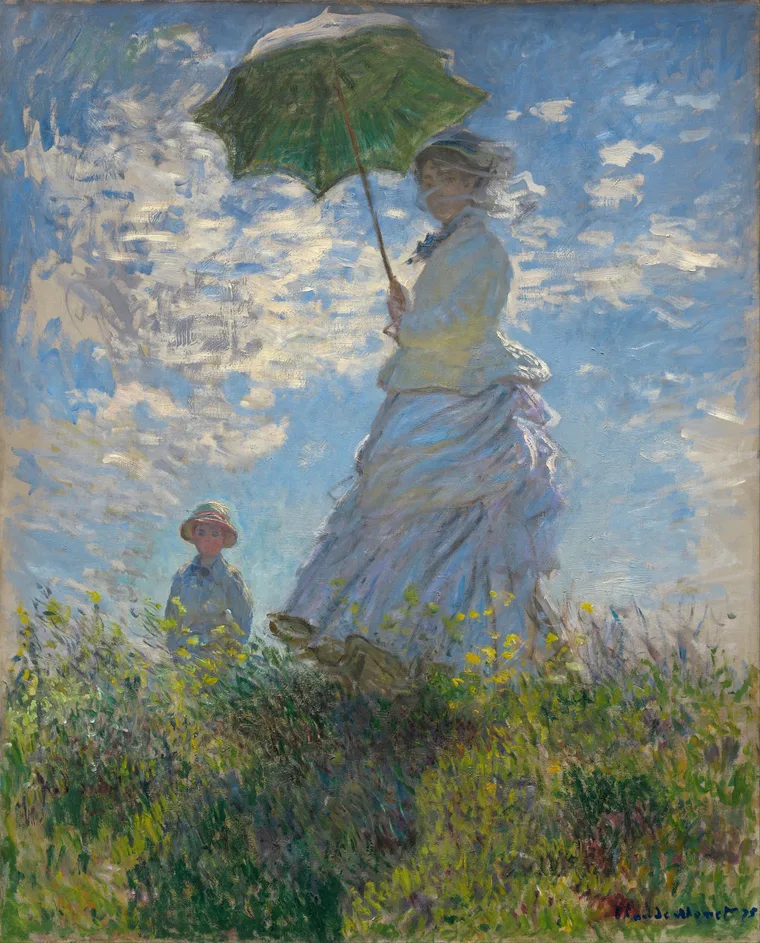
19. Woman with a Parasol – Madame Monet and Her Son — Claude Monet, 1875
In 1967 Paul Mellon, the founder's son, said that he and Bunny, and he thought he could say the same for his sister Ailsa Mellon Bruce, had always loved nature and life out of doors, and that this might explain their attraction to the Impressionists. Paul Mellon (1907–1999) sat on the gallery's board of trustees for almost 50 years and was its first president, and together with his sister Ailsa Mellon Bruce (1901–1969) and the Andrew W. Mellon Foundation he paid for the East Building and gave the gallery more than 1,000 works. He collected with his wife, Rachel, known as Bunny, and bought only what he wanted to live with and to have in front of him every day.
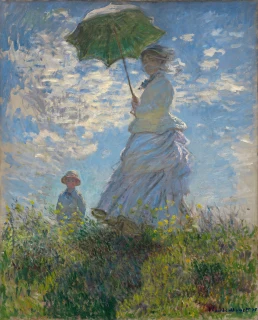
Woman with a Parasol was bought for him by the Paris dealer Hector Brame on 15 June 1965 at the Palais Galliera, at the auction of Georges Menier's collection, and in 1983 Paul and Bunny Mellon gave it to the gallery.
Camille, Monet's wife, stands on the crest of a grassy rise, seen entirely against the sky. She wears a white dress whose shaded side is painted in blue, lilac and violet, she holds a green parasol in her right hand, and the wind blows a sheer veil across her face and carries it to the right. Their son Jean stands behind her, lower down the slope, and the grass cuts him off at the waist. Monet painted them in the summer of 1875 near Argenteuil, where he was then living, and signed the canvas at lower right “Claude Monet 75”.
The first to buy the picture from Monet, in 1876, was the Paris doctor Georges de Bellio, one of his most faithful buyers, and two years later the same de Bellio bought Impression, Sunrise for 210 francs.
20. Girl with a Flute — Studio of Johannes Vermeer, c. 1669–1675
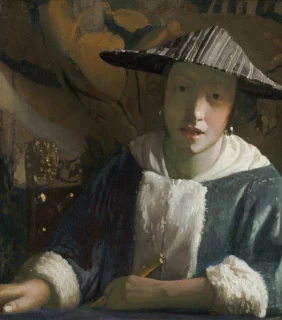
In October 2022 the National Gallery's curators, conservators and scientists, who had spent two years studying the pigments and scans of Girl with a Flute, concluded that Vermeer had not painted it, and the gallery relabelled it “Studio of Johannes Vermeer”. According to the findings, published that same year in the Journal of Historians of Netherlandish Art, its painter knew Vermeer's methods from the inside and followed his working sequence step by step, but carried out each step more crudely. This painter worked on an oak panel with a coarse grey ground, which appears in no other Vermeer examined, whereas Vermeer himself usually painted on canvas.
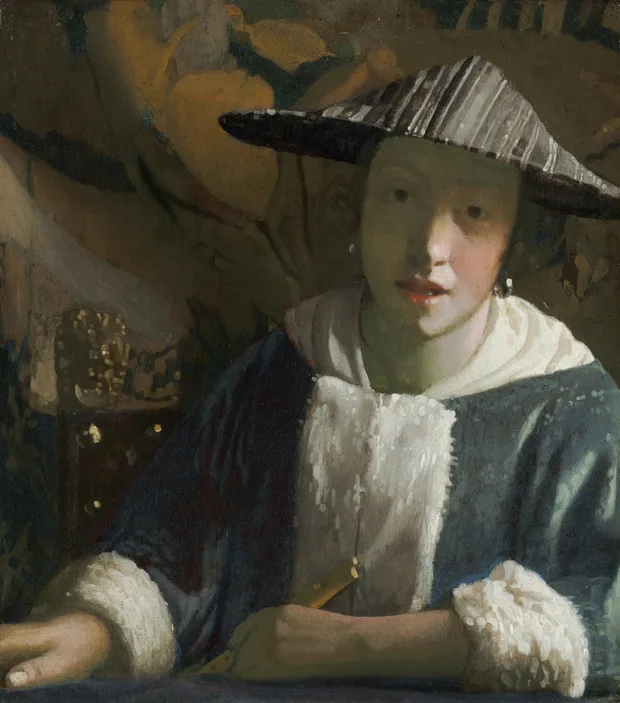
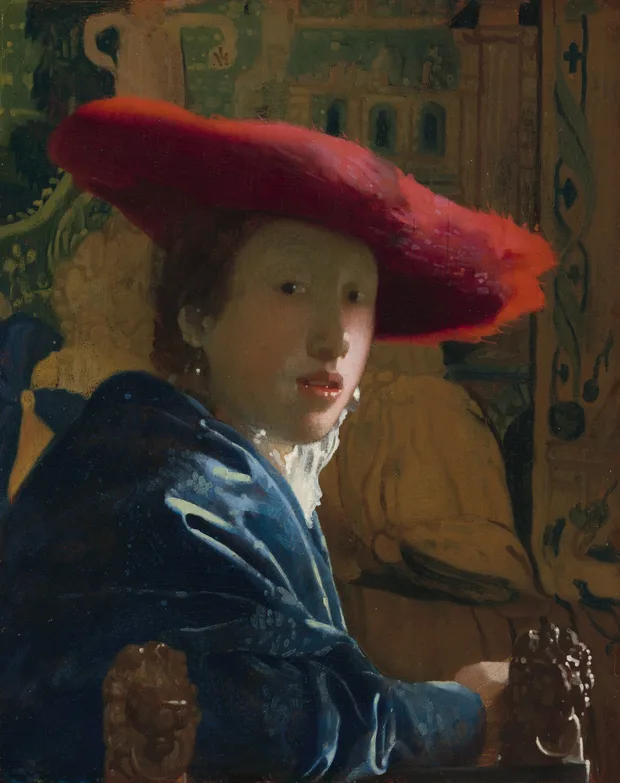
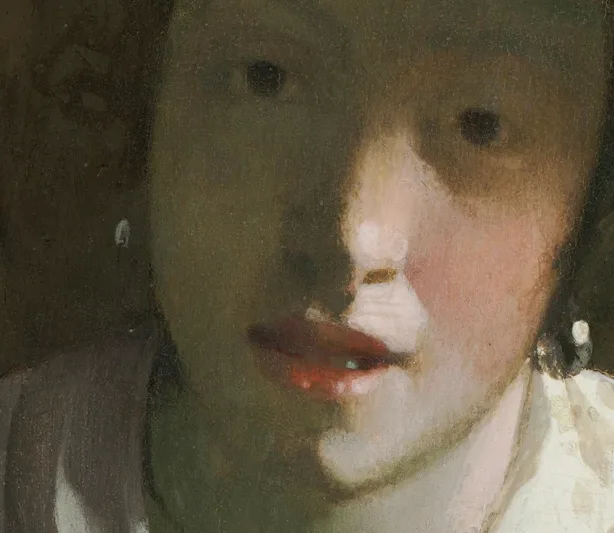
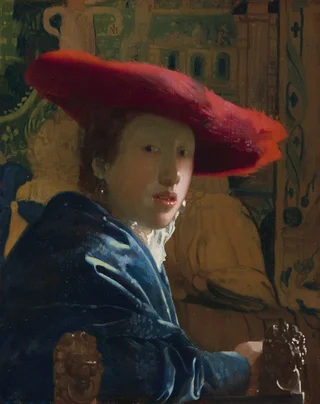
The girl looks straight at us from under a wide conical hat striped in grey, white and brown, almost her whole face is in greenish shadow, and only her left cheek and nose are lit, in one broad pink plane. A blue-green dot of highlight is set between her parted red lips, and the authors of the study see it as a misunderstood copy of Vermeer's habit of tinting highlights with the colour of whatever surrounds them. The fingers of the hand holding the golden flute have almost no joints, and the finial of the chair on the left has turned into a few patches of light. In Girl with a Red Hat, which Mellon gave the gallery in 1937, a lion's head on the same chair is painted in a few strokes, and that picture passed the same examination.
Joseph Widener bought Girl with a Flute in 1923, and in 1942, when it came to the gallery with his gift, it was welcomed, in the words of the study's authors, as the museum's fifth Vermeer. By their account, two of those five pictures, The Smiling Girl and The Lacemaker from the Mellon collection, were recognised as 20th-century forgeries in a study of 1974.
The Rijksmuseum disagreed with the gallery's conclusion. In the list of pictures for its Vermeer exhibition, published on 1 November 2022, it gave Girl with a Flute as a work by Vermeer of 1664–1667, the head of its paintings department, Pieter Roelofs, said the museum would hang it “as a real Vermeer”, and in 2023 the Rijksmuseum showed it as one.
What else to see
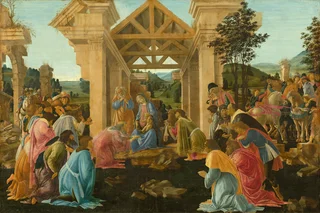
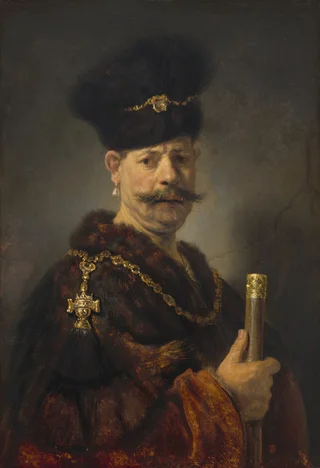
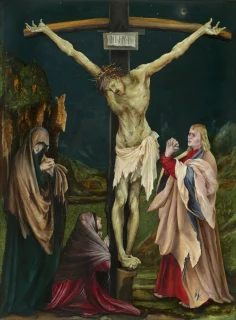
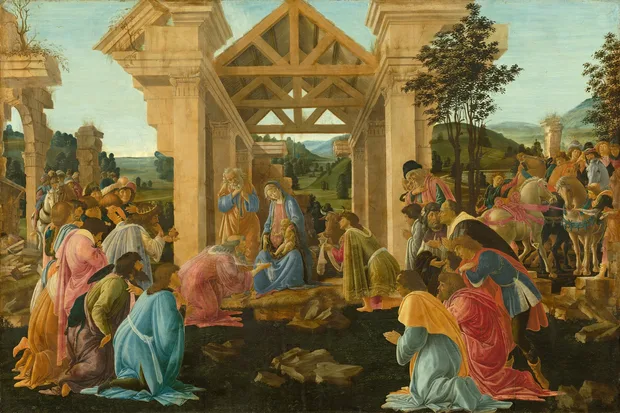
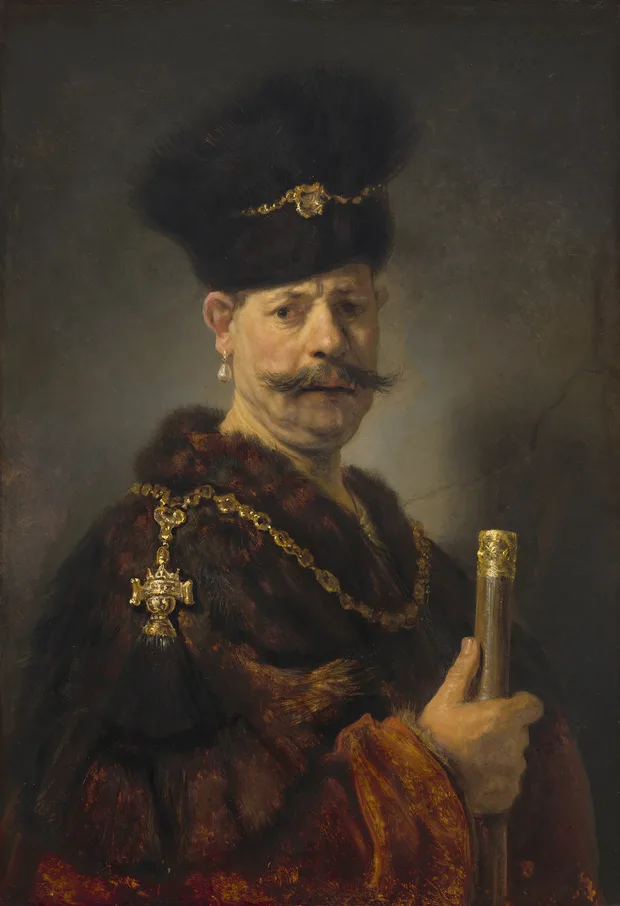
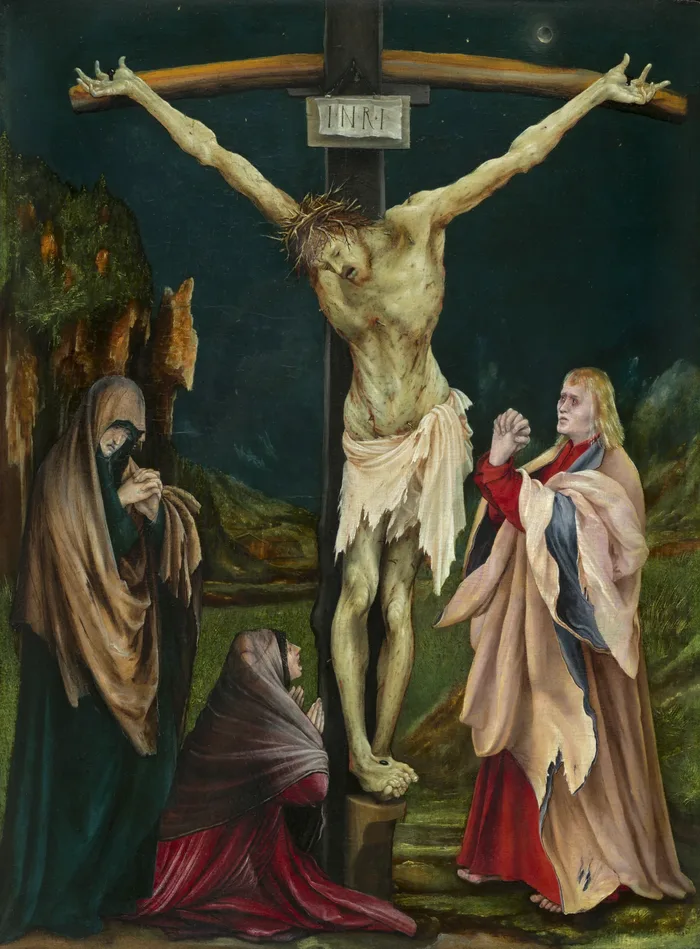
Among Mellon's Hermitage purchases the gallery also has Raphael's Saint George and the Dragon, in which the garter of the Order of the Garter is tied round the knight's leg, Botticelli's Adoration of the Magi, Rembrandt's A Polish Nobleman and Perugino's Galitzin Triptych. From the Dale bequest, look for Picasso's Family of Saltimbanques, Manet's The Old Musician and Renoir's A Girl with a Watering Can. The Ailsa Mellon Bruce gift includes Fragonard's A Young Girl Reading, under which another figure, the one first painted, was found in 2015. The Kress Foundation gave the gallery Grünewald's The Small Crucifixion in 1961. Twentieth-century art is gathered in the East Building, designed by I. M. Pei, from Rothko and Pollock's Lavender Mist to a mobile by Calder.