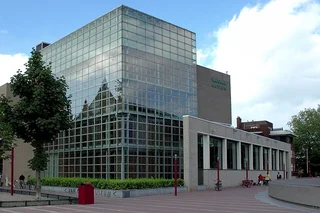
The story
Vincent van Gogh sold almost nothing in his lifetime, so when he died in 1890 the paintings passed to his younger brother Theo, an art dealer who had supported him for years. Theo died six months later, and the whole hoard of hundreds of canvases and letters went to his widow, Jo van Gogh-Bonger, who set about getting her late brother-in-law taken seriously. The collection stayed in the family until 1962, when Vincent's nephew handed it to a national foundation, and this museum was built to hold it.
That is why the Van Gogh Museum can do something no other can: show one restless painter's whole arc, roughly 200 paintings, in the order he made them. You climb from the dark Dutch years and the muddy browns of 'The Potato Eaters', painted in 1885, up into the sunlight of the south of France.
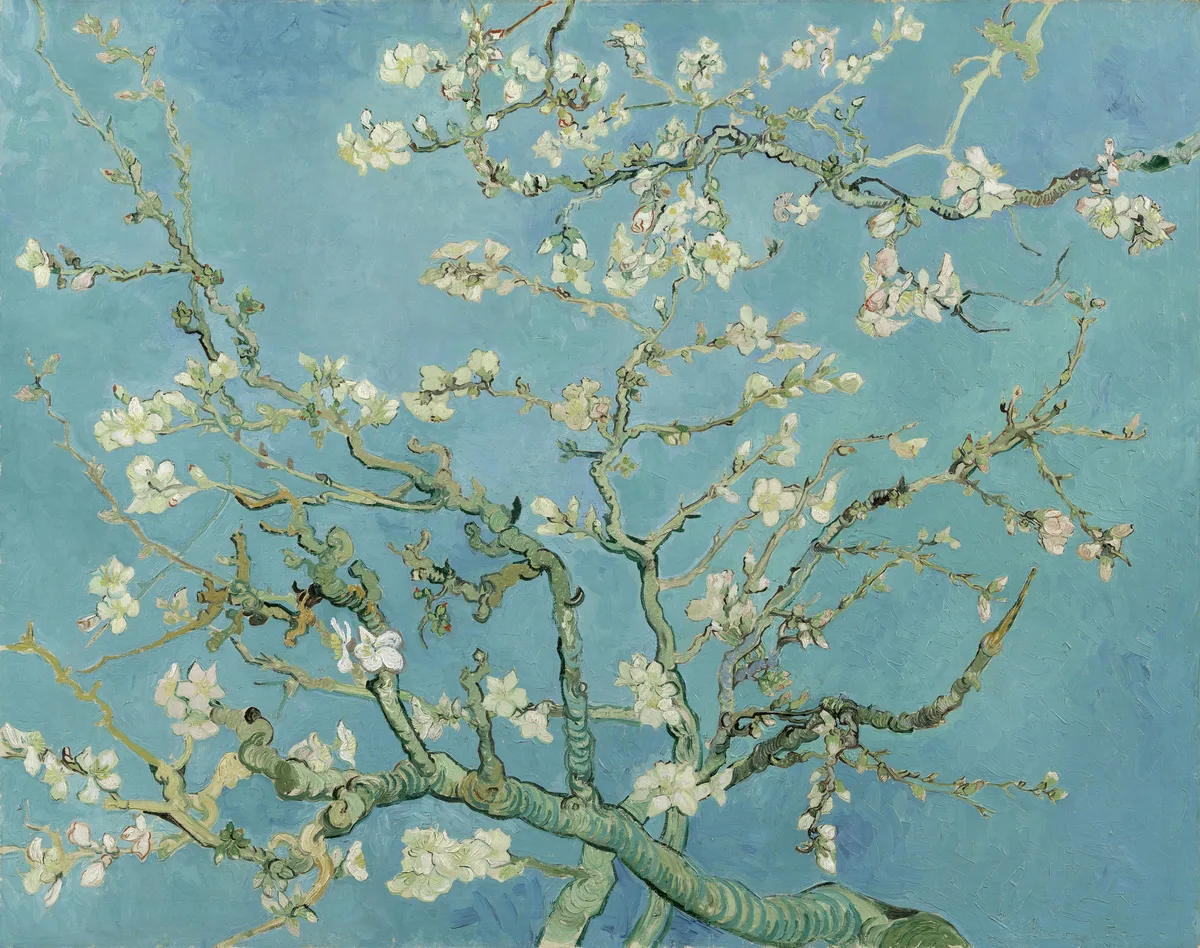
There the walls turn yellow. 'Sunflowers', the 'Bedroom' at Arles with its tilting floor and two green chairs, and the blue-and-white 'Almond Blossom', painted for his newborn nephew as a gift. The building around them is deliberately plain, a spare grey block designed by Gerrit Rietveld of the De Stijl group and opened in 1973, with a curved glass wing added later. Rietveld died in 1964, nine years before the doors opened.
More articles
Collection
344 works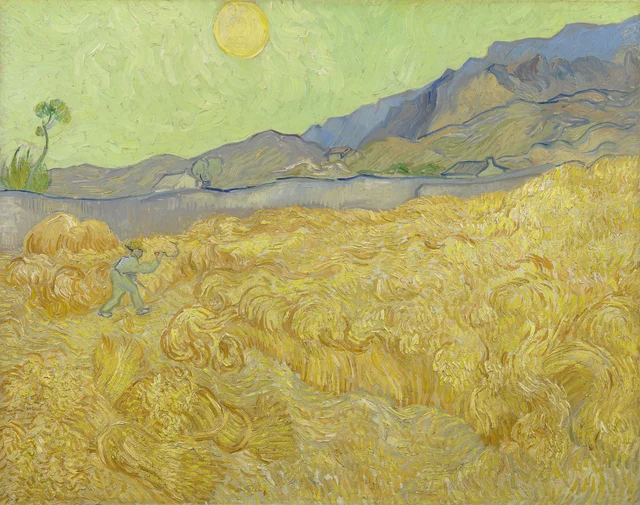 Wheatfield with a ReaperVincent van Gogh, 1889
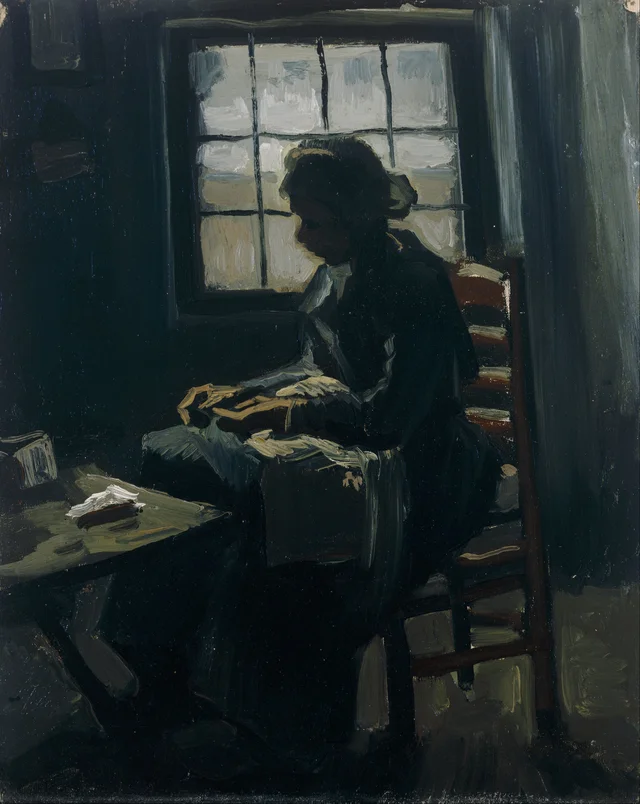 Woman SewingVincent van Gogh, 1885
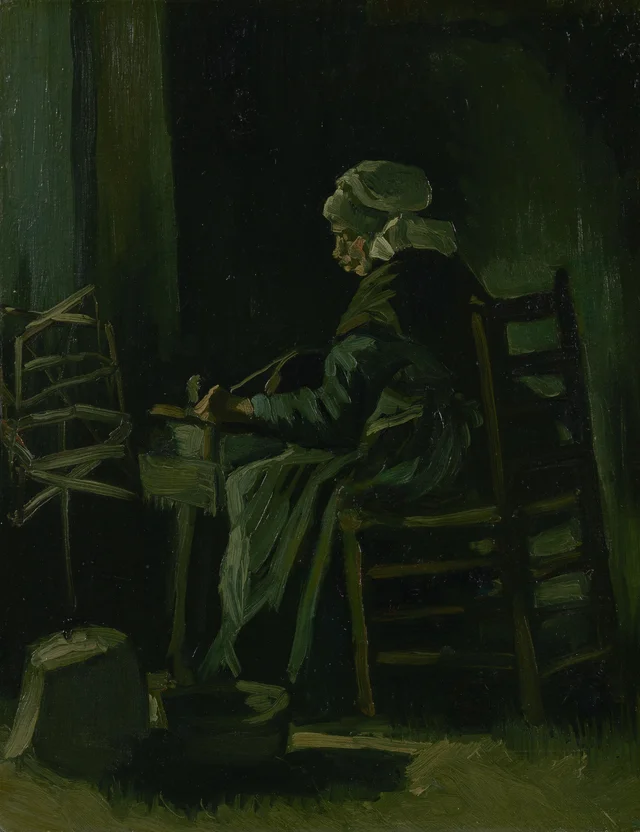 Woman Winding YarnVincent van Gogh, 1885
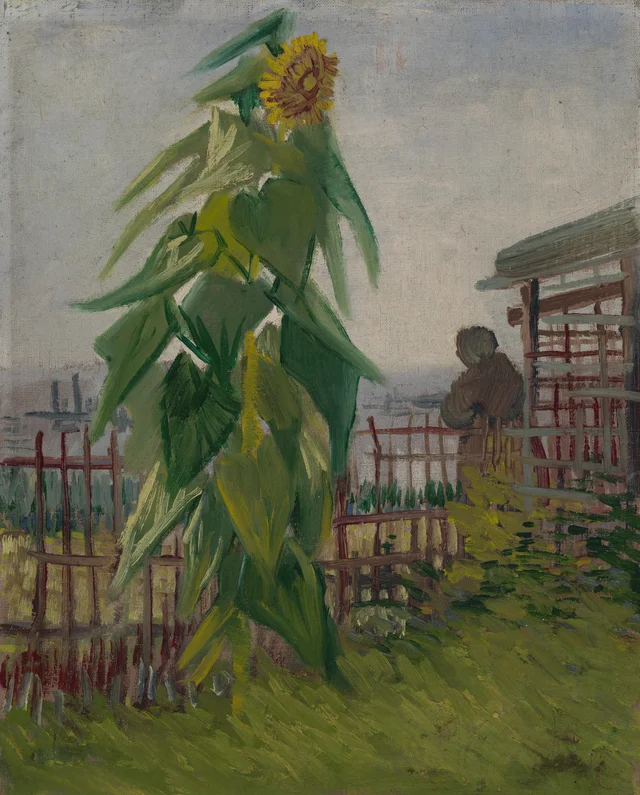 Allotment with SunflowerVincent van Gogh, 1887
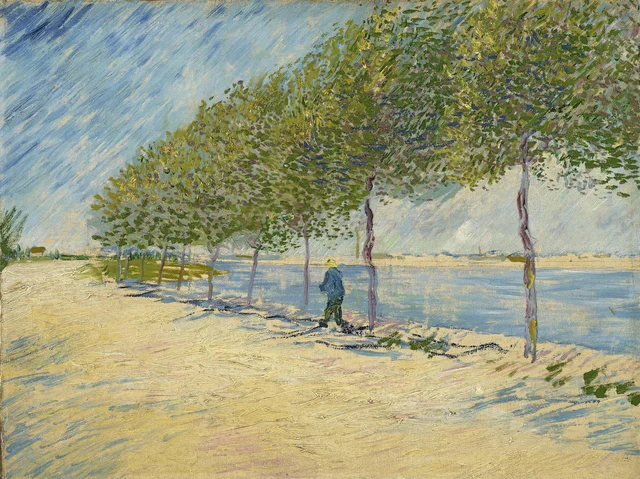 Along the SeineVincent van Gogh, 1887
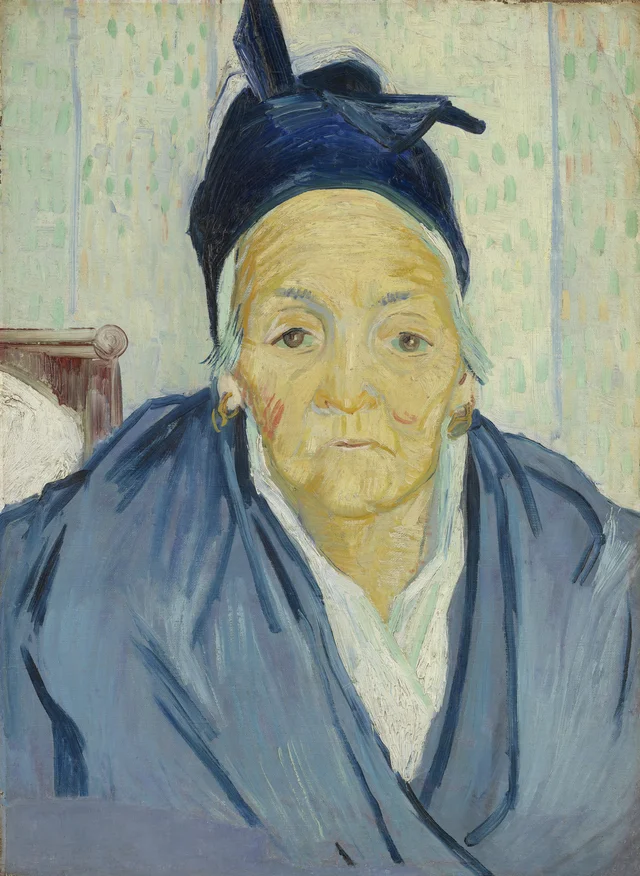 An Old Woman of ArlesVincent van Gogh, 1888
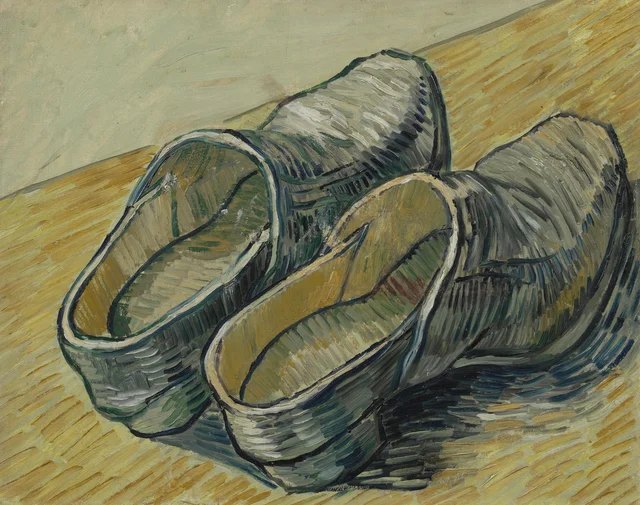 A Pair of Leather ClogsVincent van Gogh, 1889
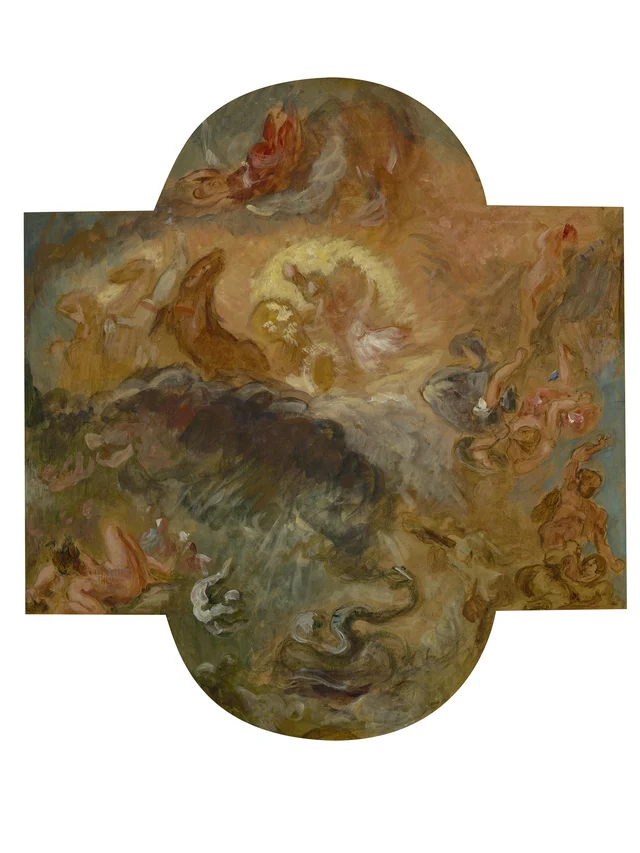 Apollo Slays PythonEugène Delacroix, 1850
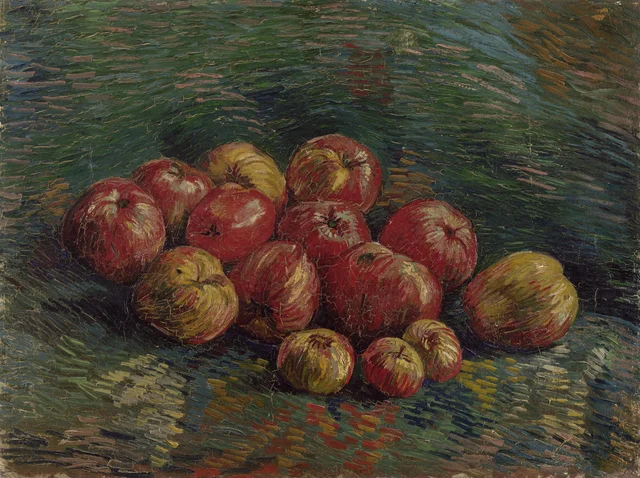 ApplesVincent van Gogh, 1887
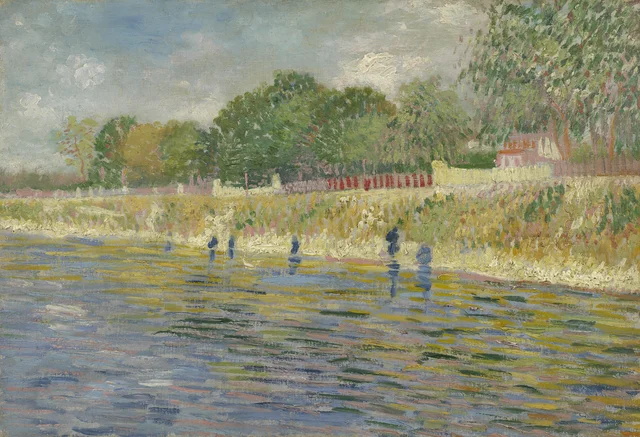 Bank of the SeineVincent van Gogh, 1887
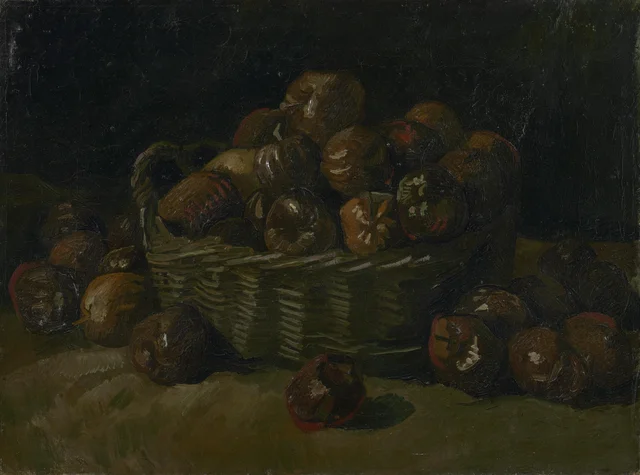 Basket of ApplesVincent van Gogh, 1885
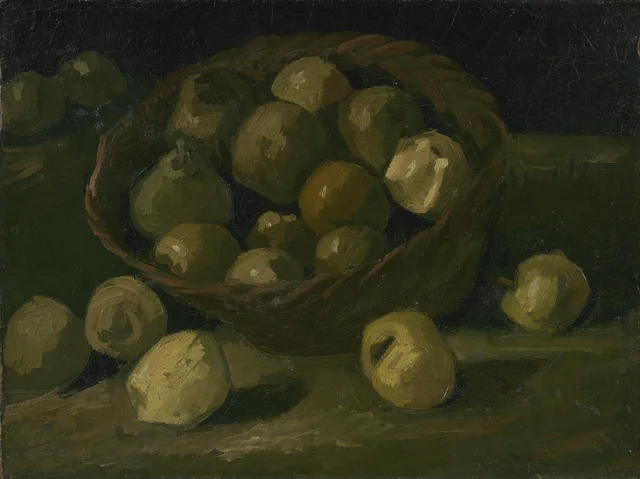 Basket of ApplesVincent van Gogh, 1885
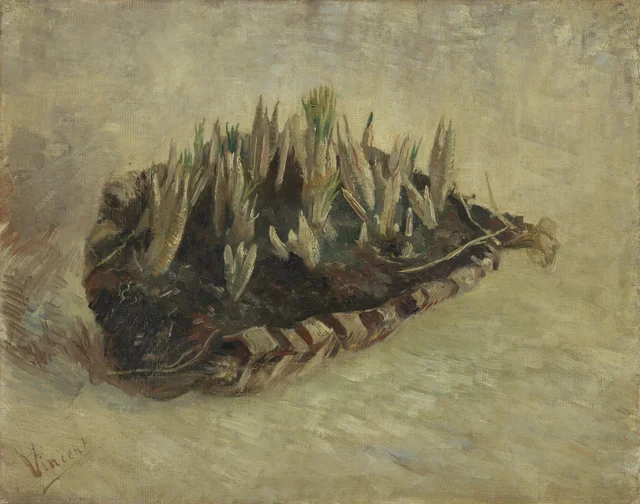 Basket of Crocus BulbsVincent van Gogh, 1887
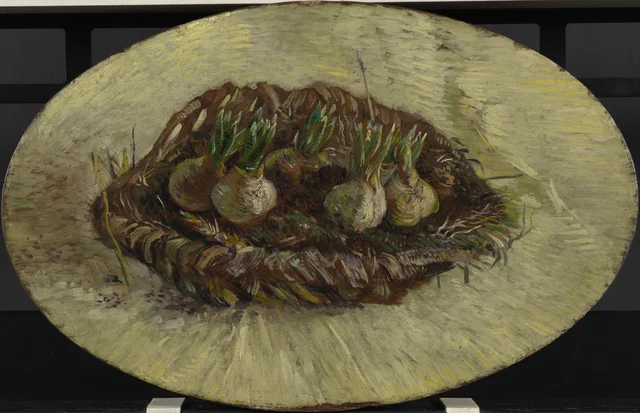 Basket of Hyacinth BulbsVincent van Gogh, 1887
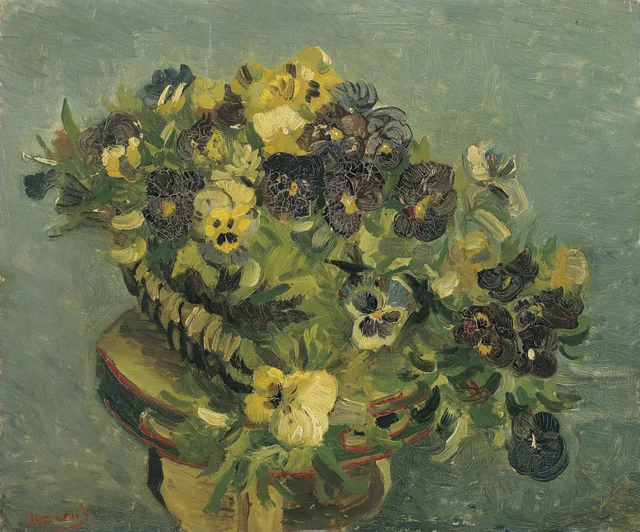 Basket of pansies on a small tableVincent van Gogh, 1887
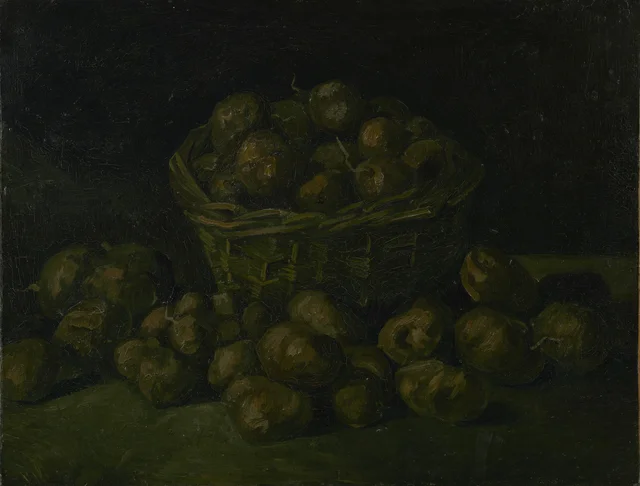 Basket of PotatoesVincent van Gogh, 1885
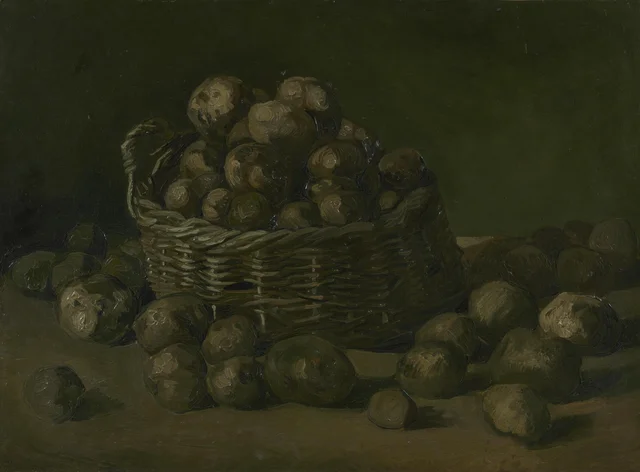 Basket of PotatoesVincent van Gogh, 1885
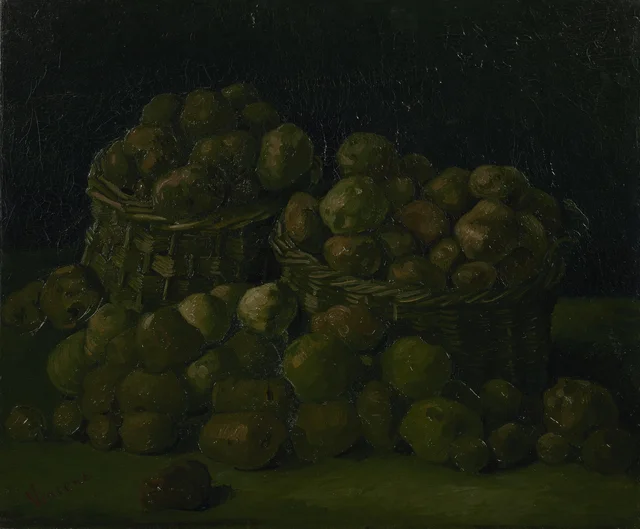 Baskets of PotatoesVincent van Gogh, 1885
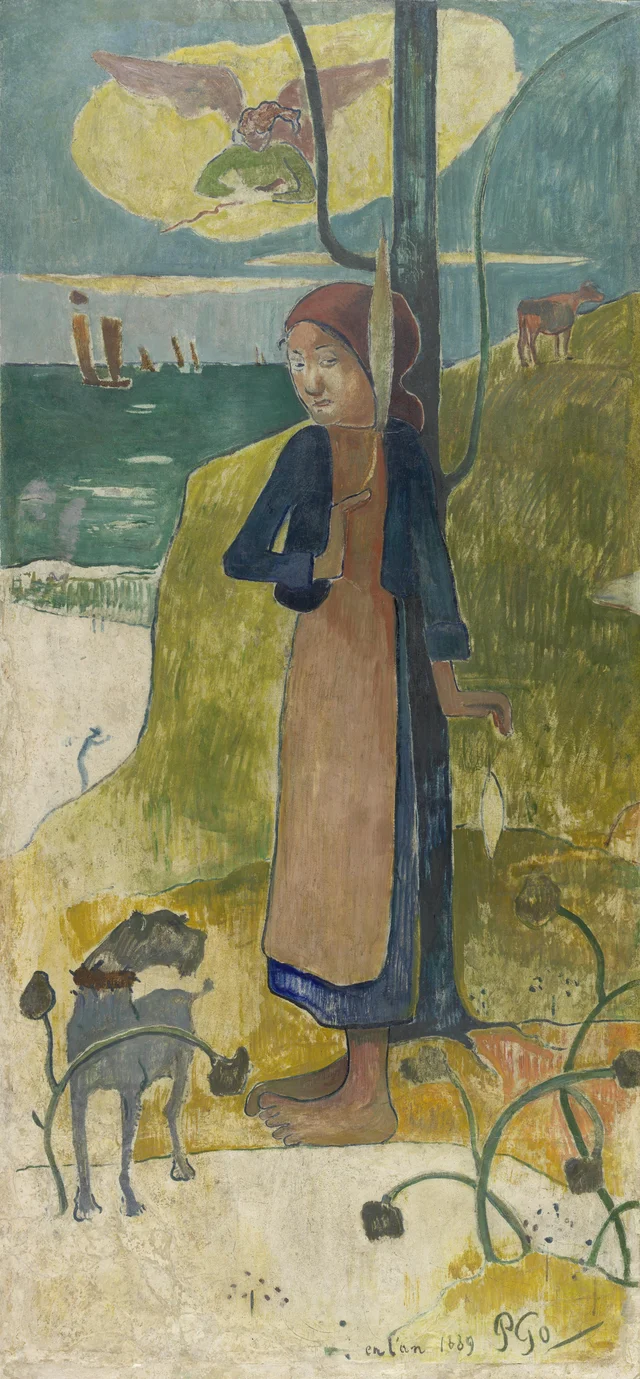 Breton Girl SpinningPaul Gauguin, 1889
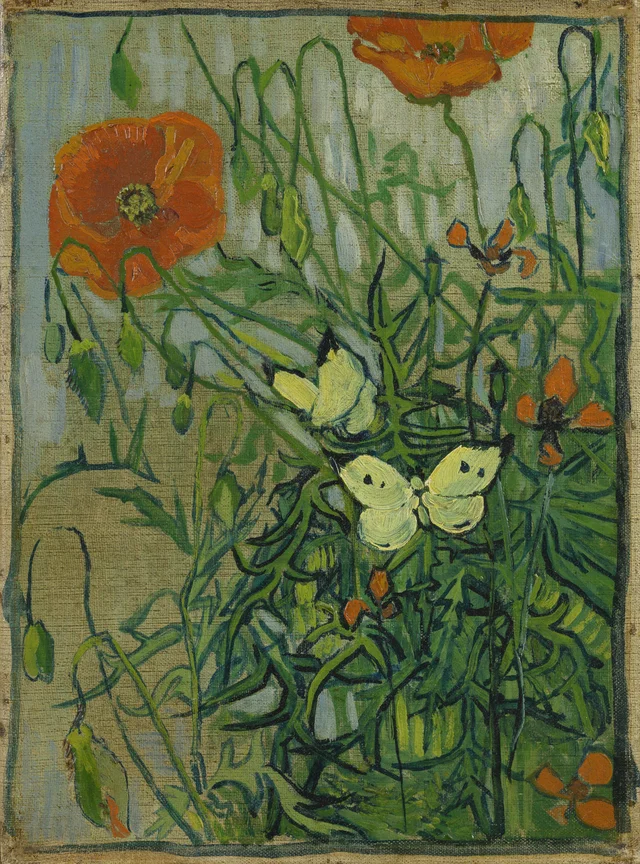 Butterflies and PoppiesVincent van Gogh, 1889
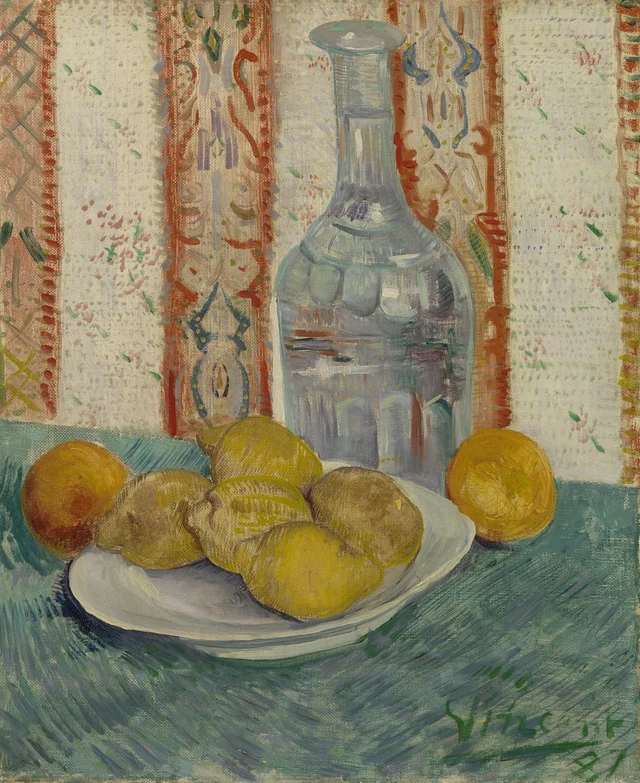 Carafe and Dish with Citrus FruitVincent van Gogh, 1887
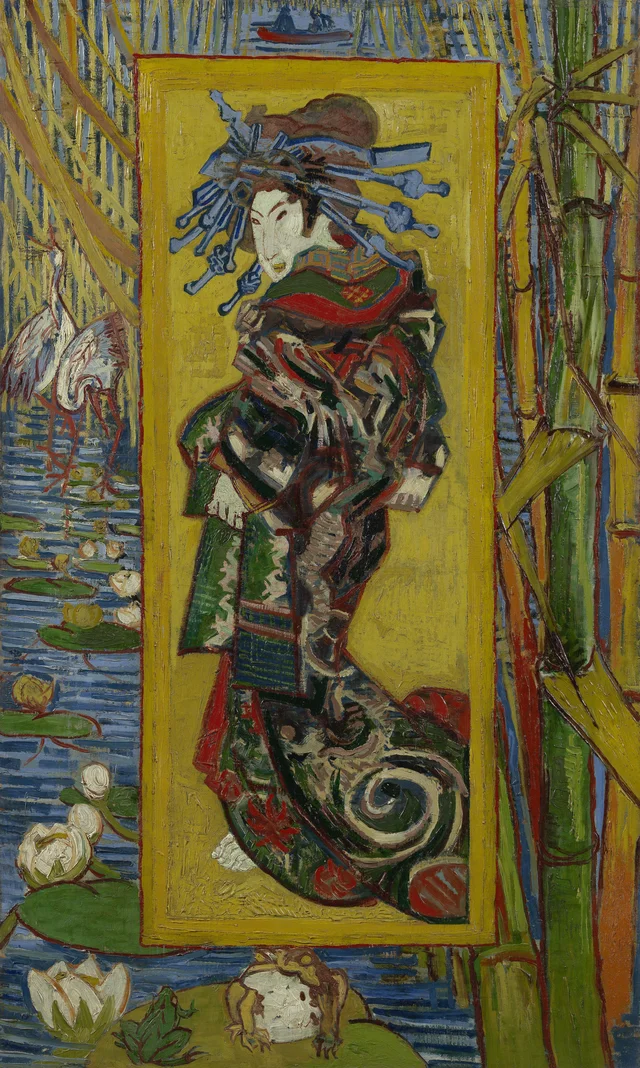 Courtesan (after Eisen)Vincent van Gogh, 1887
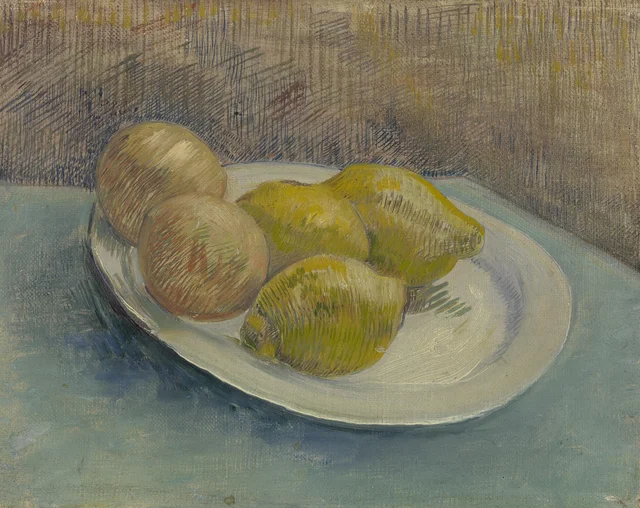 Dish with Citrus FruitVincent van Gogh, 1887
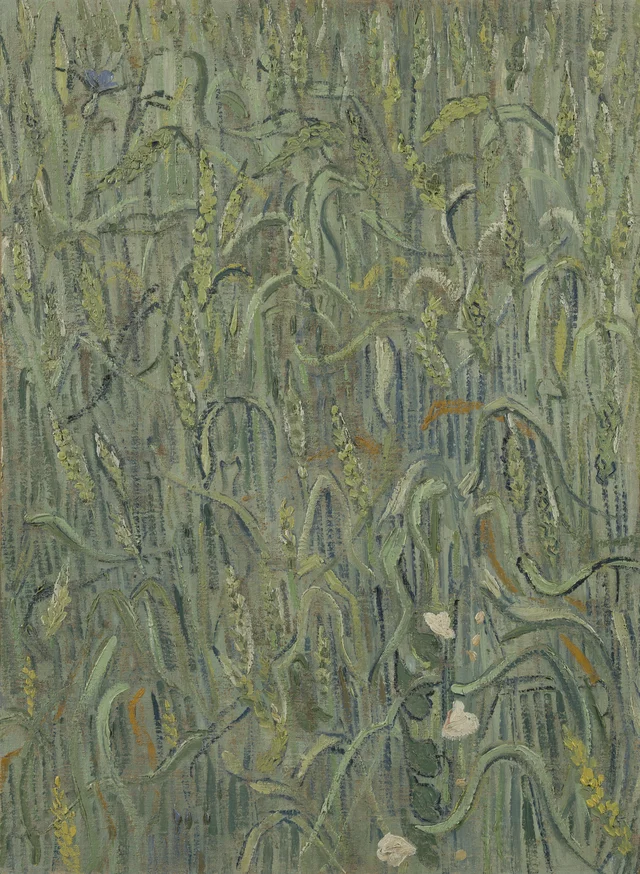 Ears of WheatVincent van Gogh, 1890
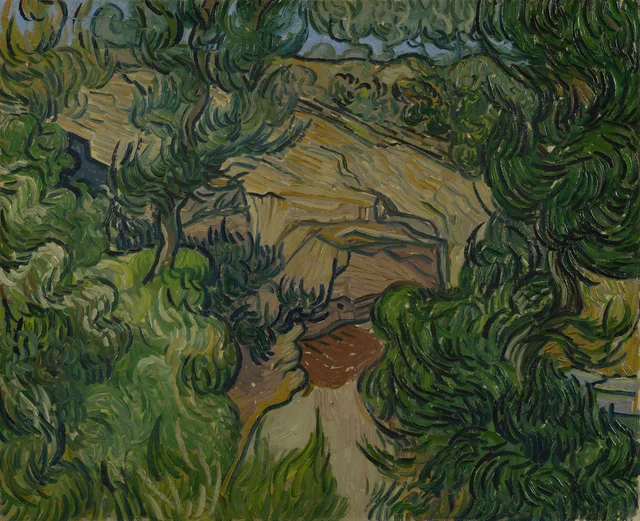 Entrance to a QuarryVincent van Gogh, 1889