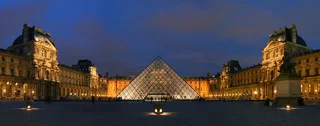
A história
O Louvre começou como uma fortaleza. Filipe II a ergueu na margem direita do Sena por volta de 1190 para guardar a Paris medieval, e ao longo dos séculos seguintes os reis franceses a reconstruíram como um palácio real, até que Luís XIV mudou sua corte para Versalhes em 1682 e deixou os salões inacabados para a coleção real e os artistas ali alojados.
A Revolução o transformou em museu público. Em 10 de agosto de 1793 o Muséum central des arts abriu suas portas, mostrando a arte confiscada da coroa e da igreja a qualquer cidadão que quisesse entrar. Napoleão o encheu com os espólios de suas campanhas e por um tempo o rebatizou com o próprio nome. Muito foi devolvido depois de Waterloo, mas a ideia se manteve, a de uma coleção nacional organizada para o estudo e gratuita ao público.
Hoje o Louvre guarda mais de 35.000 obras, da Vênus de Milo à Balsa da Medusa de Géricault. A multidão, porém, se aperta em direção a um pequeno retrato. Em agosto de 1911 ele sumiu: Vincenzo Peruggia, um faz-tudo italiano que trabalhara no museu, tirou a Mona Lisa de Leonardo da parede e a levou embora sob o casaco. Por dois anos a moldura ficou vazia enquanto os visitantes vinham olhar o vão, e a pintura só voltou em 1913, depois que Peruggia tentou vendê-la a um negociante em Florença. A pirâmide de vidro de I. M. Pei, instalada no pátio em 1989, marca hoje a entrada.
Mais artigos
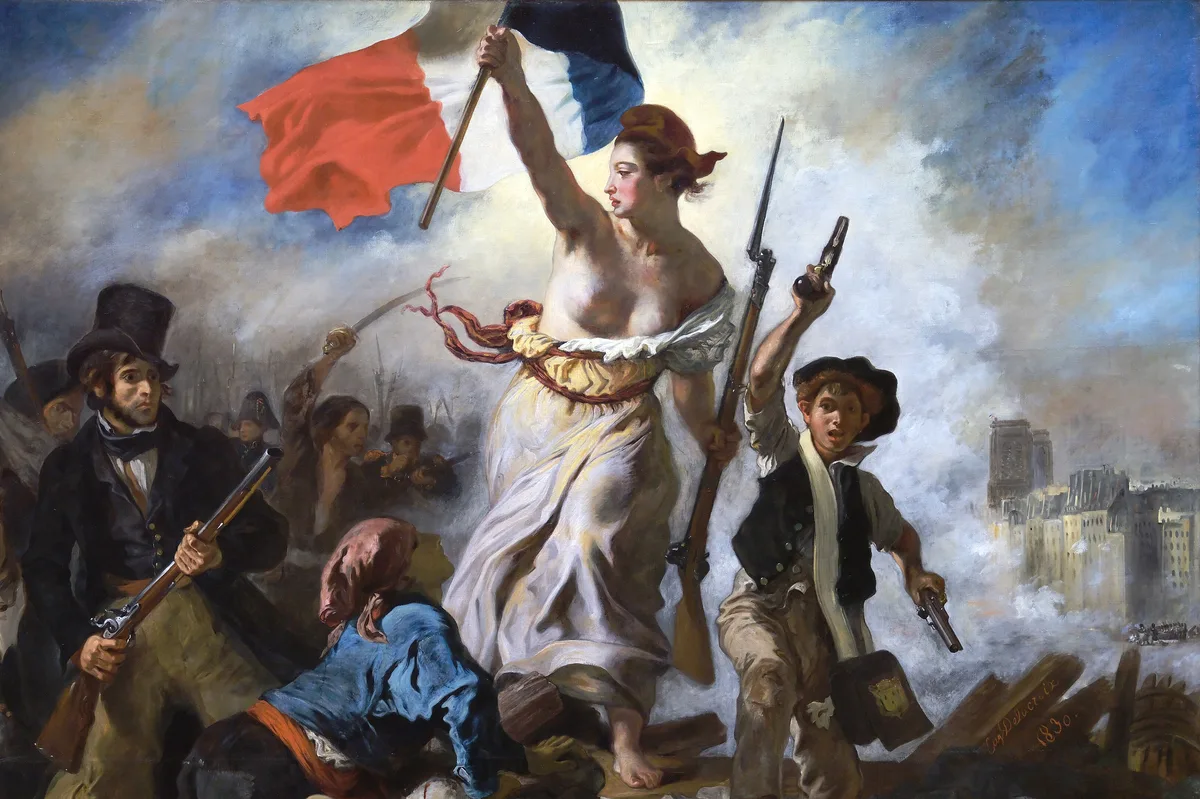
Acervo
1.174 obras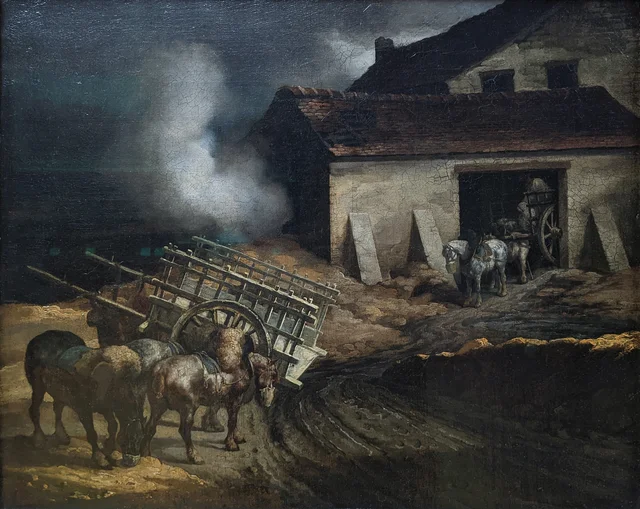 O Forno de GessoThéodore Géricault, 1821
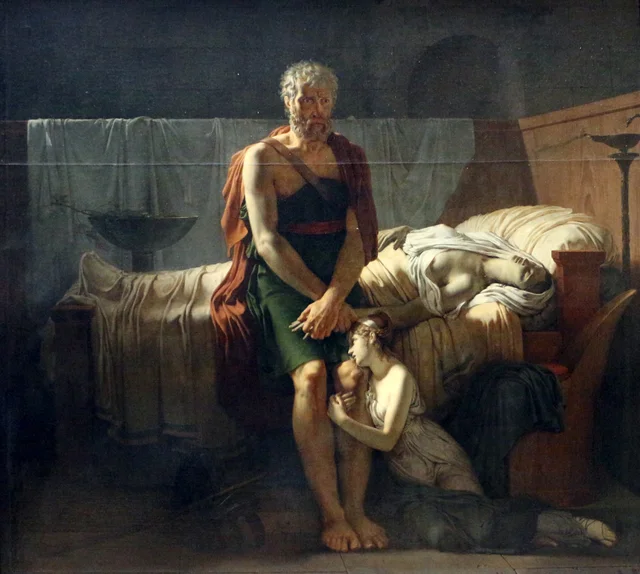 O Retorno de Marco SextoPierre-Narcisse Guérin, 1799
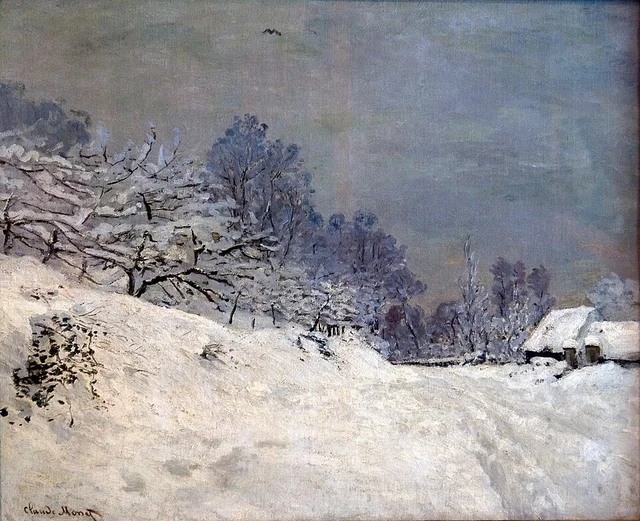 A Estrada em Frente à Fazenda Saint-Siméon no InvernoClaude Monet, 1867
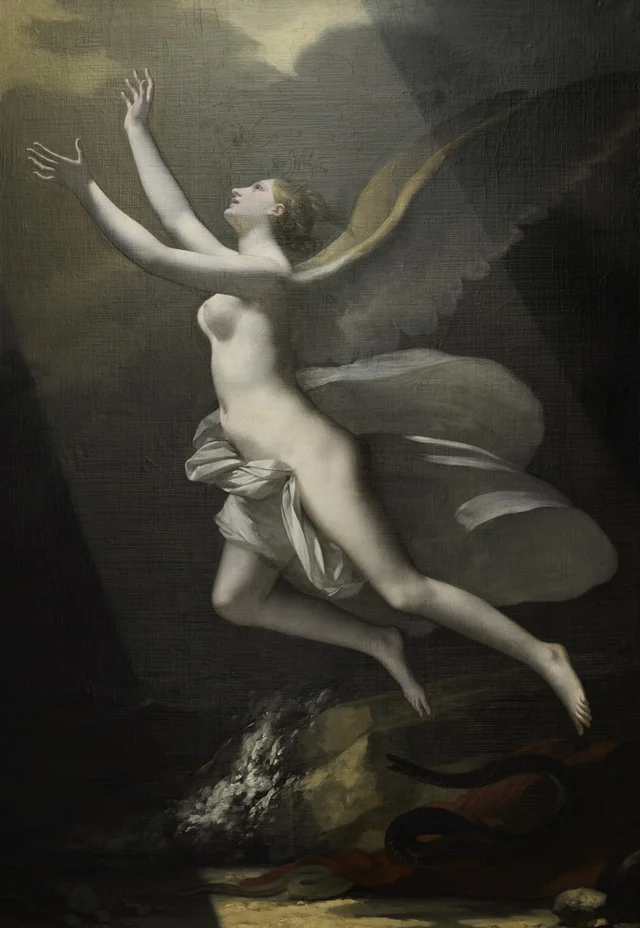 A Alma Rompendo os Laços que a Prendem à TerraPierre-Paul Prud'hon, 1822
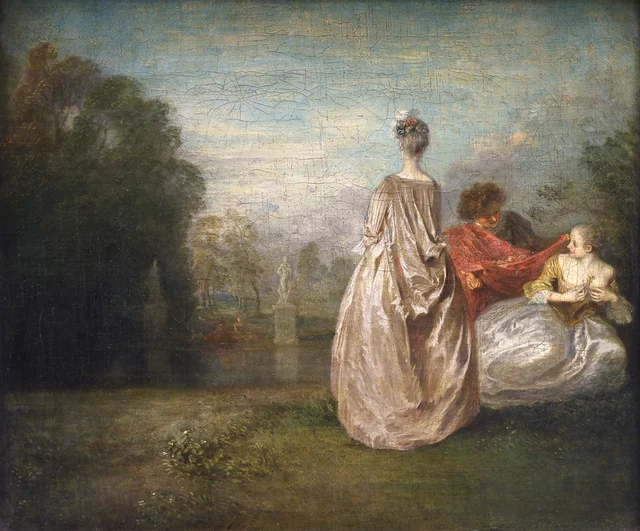 As Duas PrimasJean-Antoine Watteau, 1716
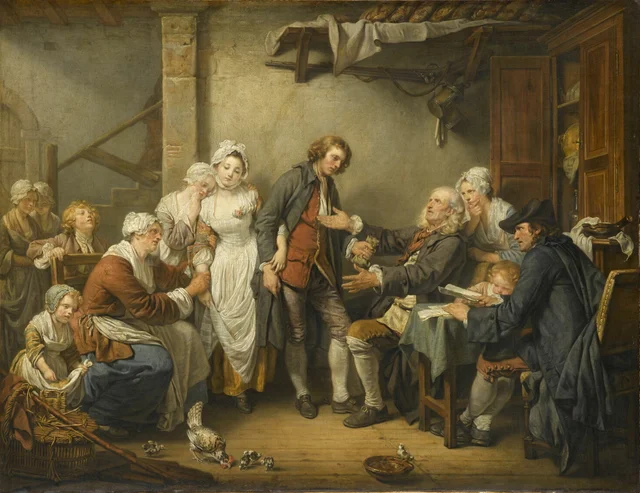 A noiva da aldeiaJean-Baptiste Greuze, 1761
 Apolo apaixonado por DafneNicolas Poussin, 1664
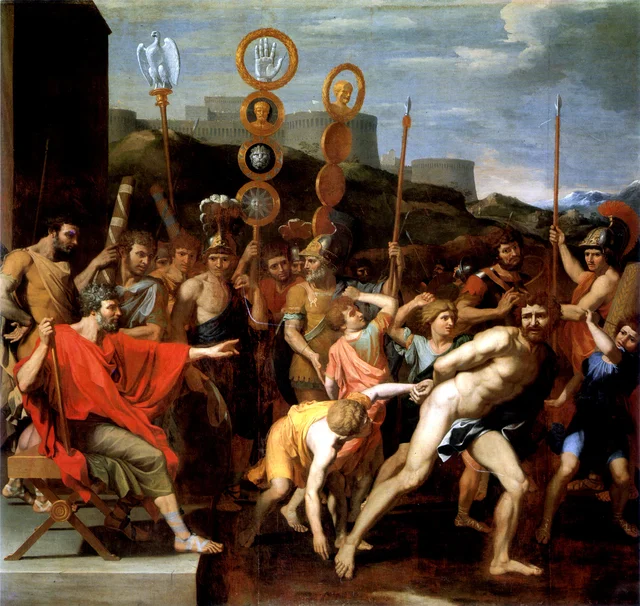 Camilo entrega o mestre-escola de Falérios a seus alunosNicolas Poussin, 1637
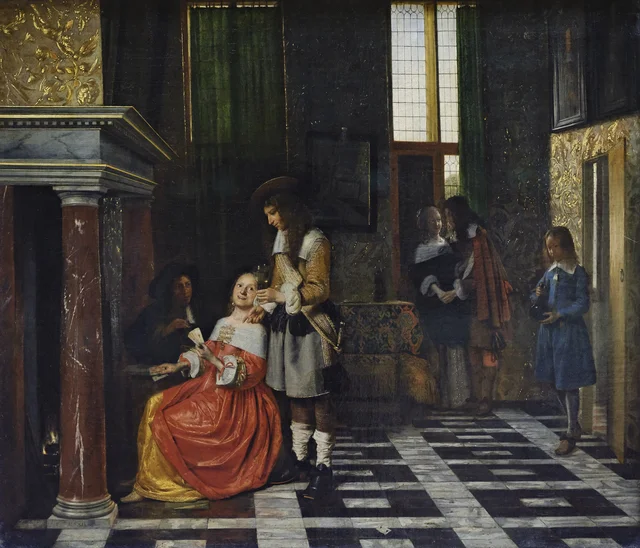 Jogadores de cartas em um interior opulentoPieter de Hooch, 1663
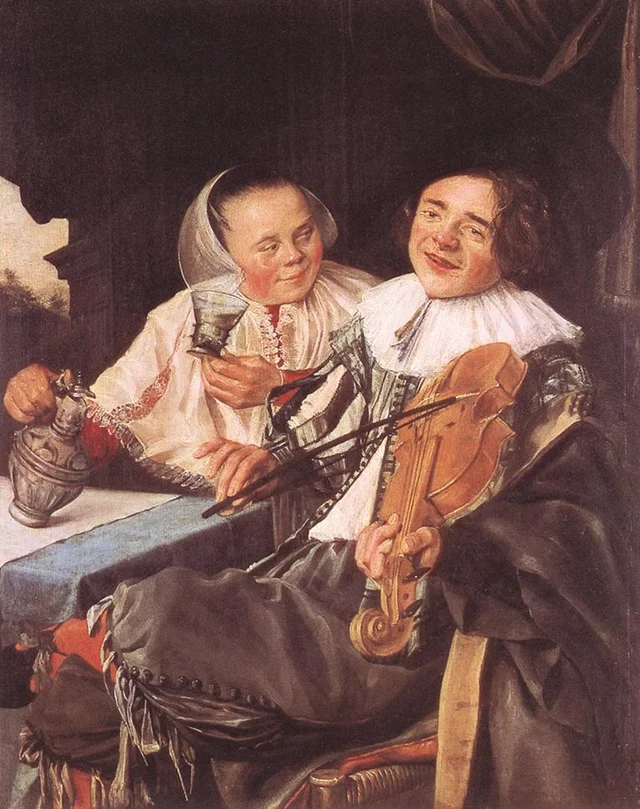 Casal em FarraJudith Leyster, 1630
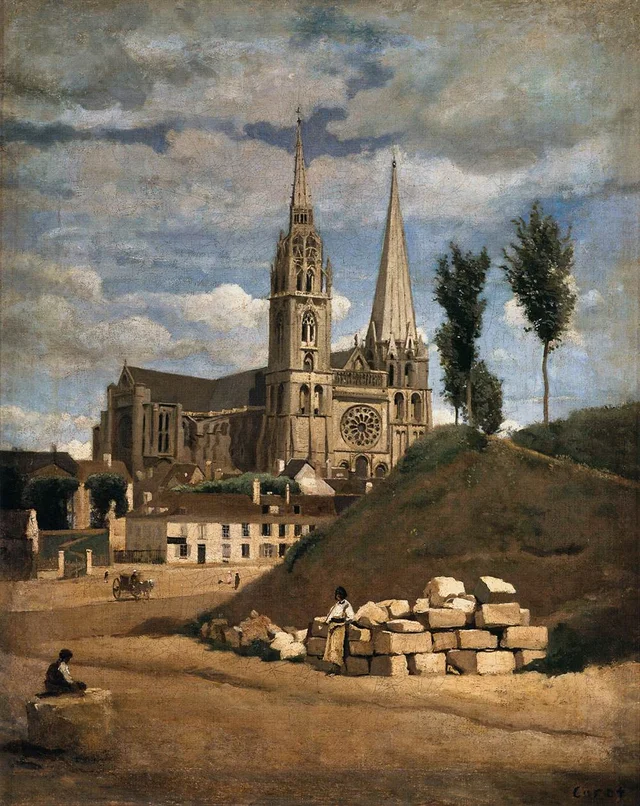 Catedral de ChartresJean-Baptiste Camille Corot, 1830
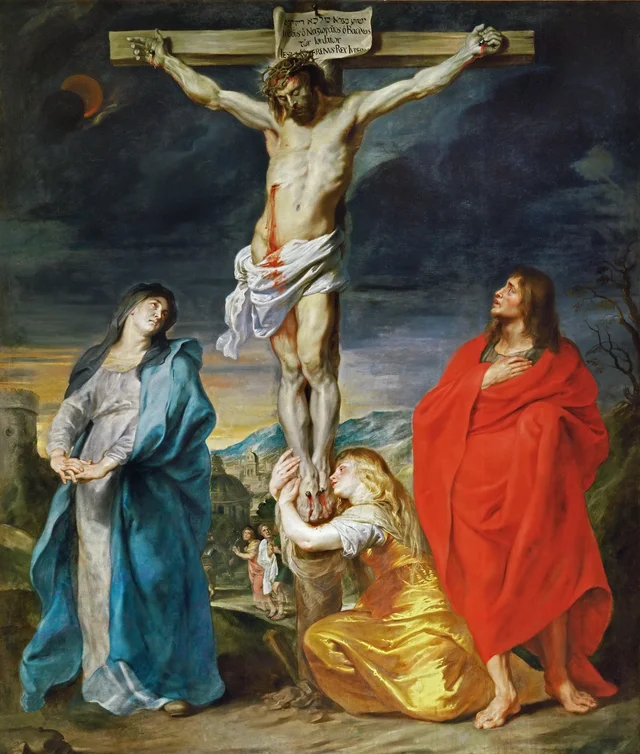 Crucificação com a Virgem Maria, São João e Santa Maria MadalenaAnton van Dyck, 1618
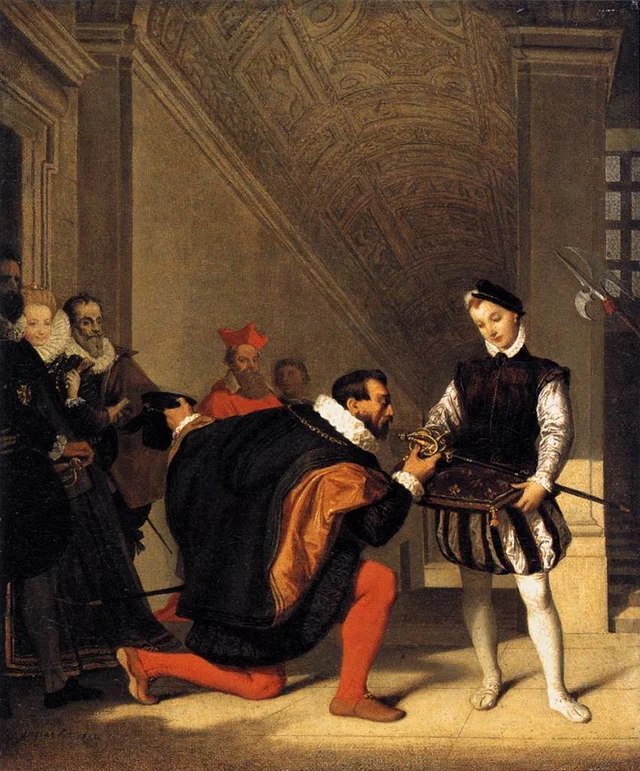 Don Pedro de Toledo Beijando a Espada de Henrique IVJean-Auguste-Dominique Ingres, 1831
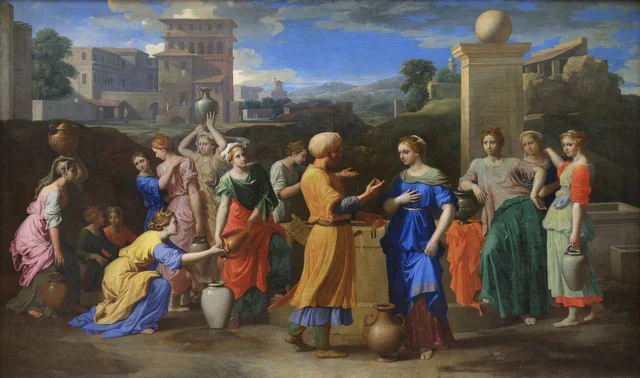 Eliézer e RebecaNicolas Poussin, 1648
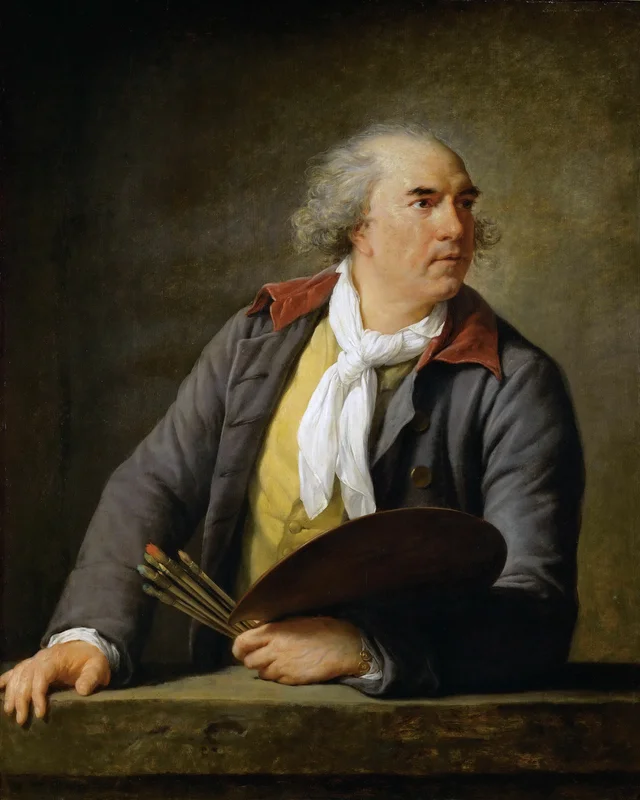 Hubert RobertÉlisabeth Louise Vigée Le Brun, 1788
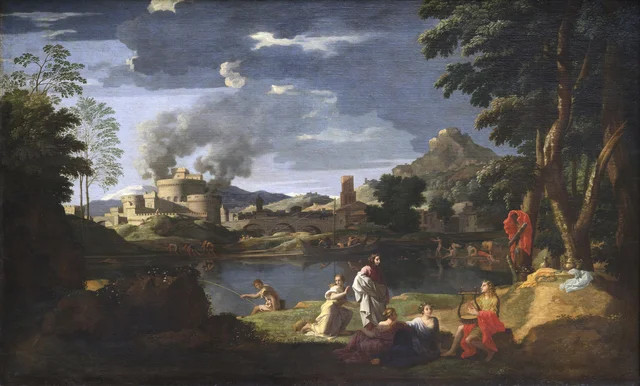 Paisagem com Orfeu e EurídiceNicolas Poussin, 1650
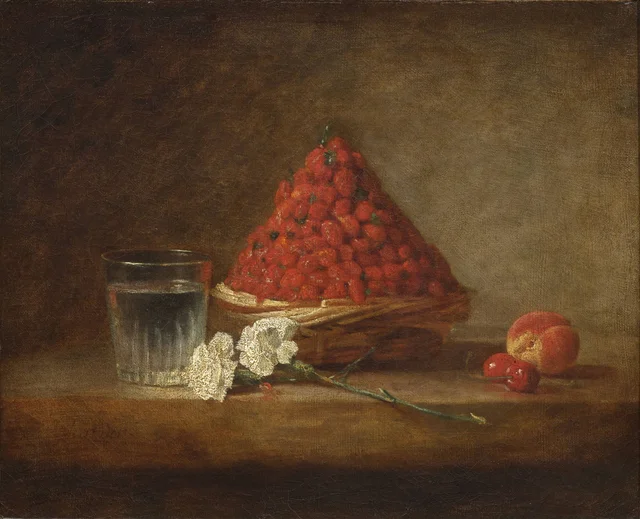 A Cesta de Morangos SilvestresJean-Baptiste-Siméon Chardin, 1761
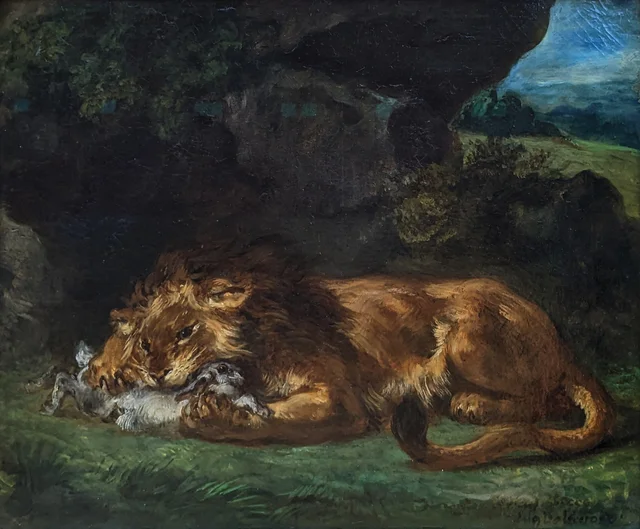 Leão devorando um coelhoEugène Delacroix, 1853
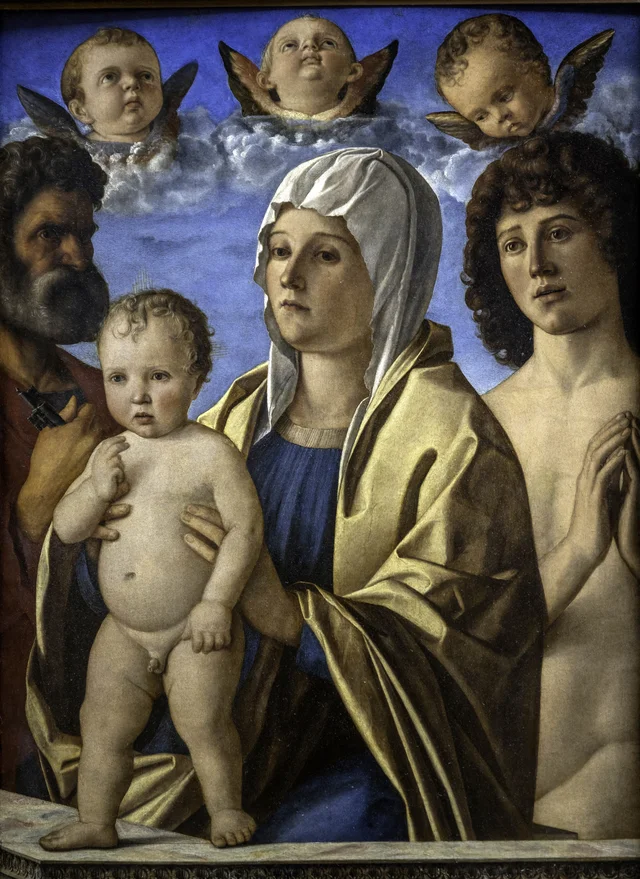 Virgem com o Menino, São Pedro e São SebastiãoGiovanni Bellini, 1480
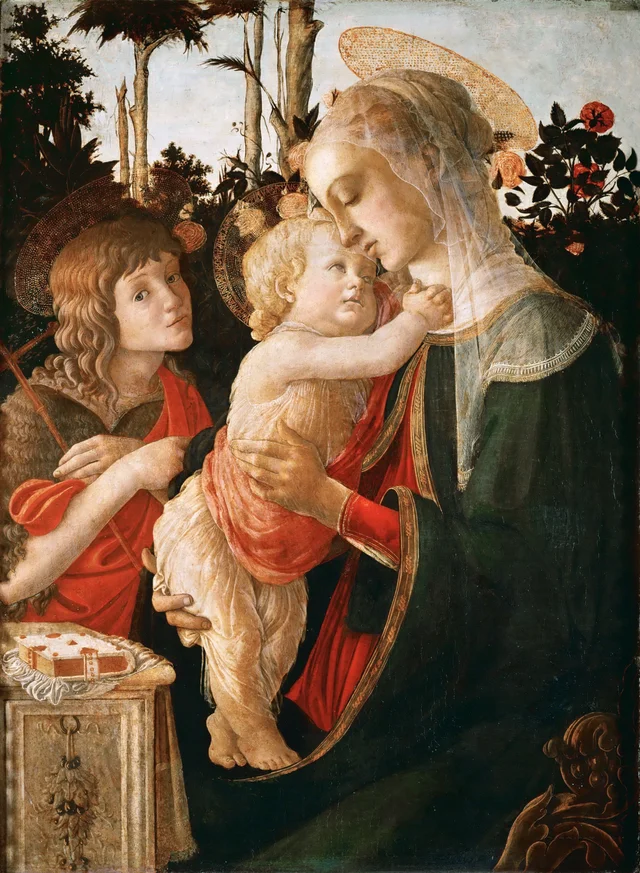 Virgem com o Menino e o jovem São João BatistaSandro Botticelli, 1500
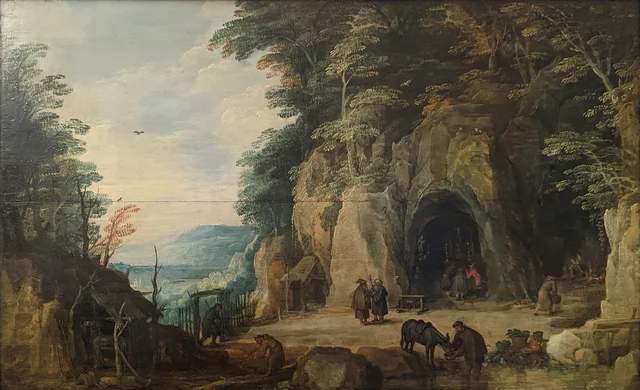 Eremitério de um Monge numa GrutaJoos de Momper, o Jovem, 1600
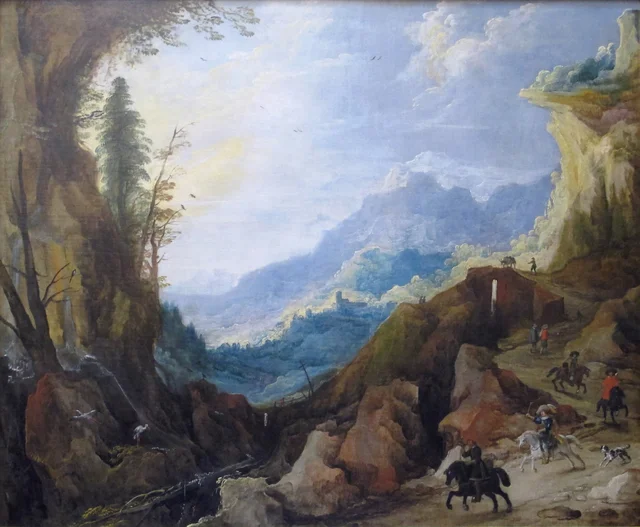 Paisagem montanhosa com uma ponte e quatro cavaleirosJoos de Momper, o Jovem, 1600
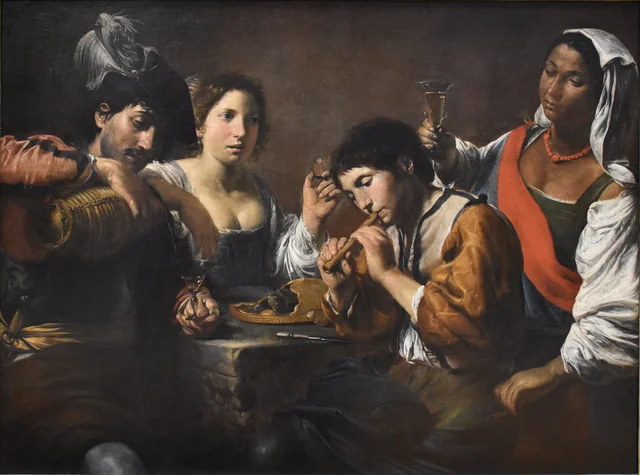 Músico e BebedoresValentin de Boulogne, 1623
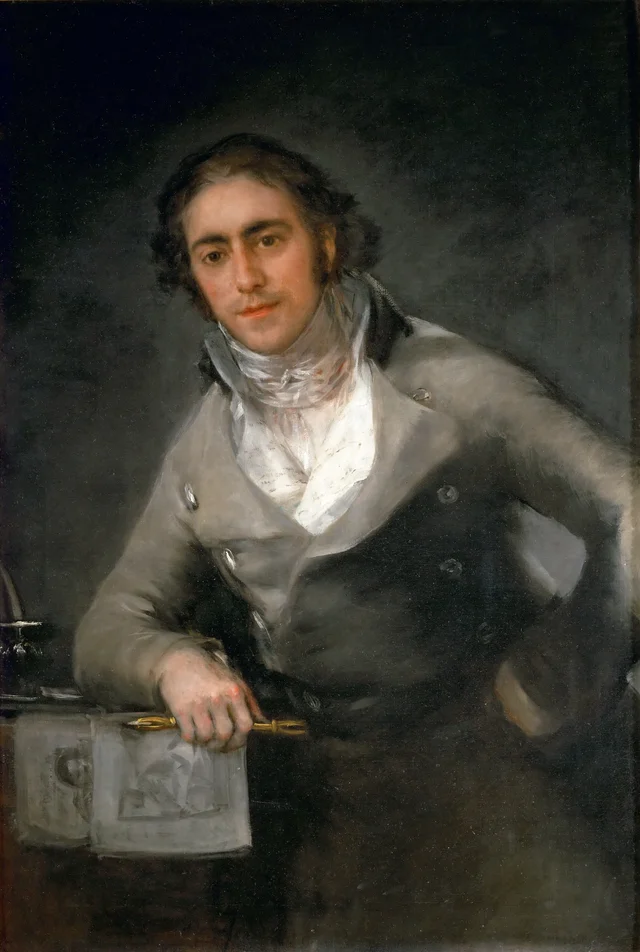 Retrato de um HomemFrancisco Goya, 1806
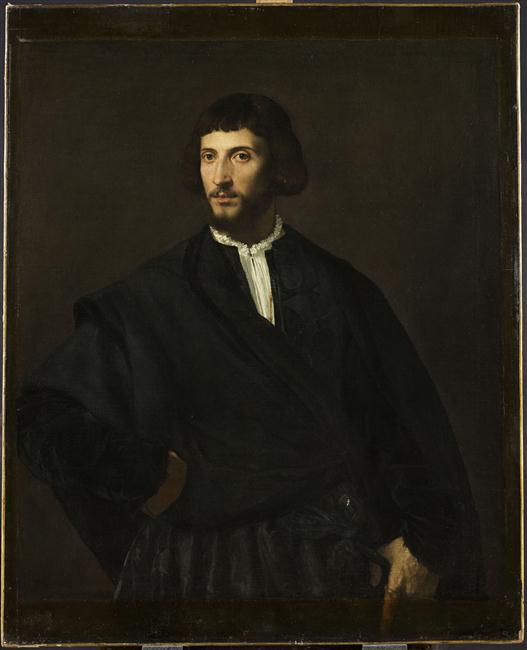 Retrato de um Homem com a Mão no CintoTiciano, 1520